
Click on image to view the full photo gallery
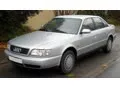
Honda Domani II 1.5 (105 Hp)
Overall Rating
Honda Domani:
The Honda Domani is a car made by Honda and marketed in east Asia, including Japan. The car was mutually developed during Rover's collaboration with Honda. It was introduced on 4 November 1992, replacing the Concerto in Honda's lineup, although that model lasted until 1995 in Europe.
The Domani was another example of Honda taking one product and selling multiple versions at different dealership sales channels in Japan, called Honda Clio for the more upscale Domani, Honda Integra SJ at Honda Verno locations from 1996 to 2000....(Read more on Wikipedia)
II Overview:
Honda Domani (II). With 133 Nm of torque, it offers ample pulling power. Weighing only 1030 kg, it’s quite light. Front‑wheel drive delivers efficiency and easy handling. A four-door car with a separate trunk, ideal for families and daily commuting. Seating for 5 makes it ideal for daily use.
While the Domani II itself was not directly tested by Euro NCAP, its platform-mate, the Honda Civic (EK generation), received a 3-star rating for adult occupant protection in 1998, which was an average performance for its era.
1.5 (105 Hp) Verdict:

Performance Verdict
A reliable and smooth engine, providing sufficient power for daily commuting and city driving, though highway overtakes might require more planning due to its modest output.
Fuel Economy
Excellent fuel economy is a highlight, making it a cost-effective choice for drivers prioritizing efficiency and low running costs over outright power.
Pros and Cons:
Pros:
- • Exceptional Honda reliability and durability
- • Good fuel efficiency across the engine lineup
- • Practical and comfortable interior for its class
- • Smooth and refined engine operation
- • Low maintenance costs
Cons:
- • Modest performance from base engines
- • Dated interior design by modern standards
- • Limited availability outside specific Asian markets
- • Basic safety features compared to newer vehicles
- • Road noise can be noticeable at higher speeds
Specifications:
Specifications are compared to those of the previous generation(Domani: 1993 - 1996).
| General: | |
|---|---|
| Brand: | Honda |
| Model: | Domani |
| Generation: | II |
| Modification (Engine): | 1.5 (105 Hp) |
| Start of production: | 1997 |
| End of production: | 2000 |
| Powertrain Architecture: | Internal Combustion engine |
| Body type: | Sedan |
| Seats: | 5 |
| Doors: | 4 |
| Engine: | |
|---|---|
| Power: | 105 Hp @ 6500 rpm. Same horsepower |
| Power per litre: | 70.3 Hp/l [65mm more] |
| Torque: | 133 Nm @ 3600 rpm. |
| Engine Model/Code: | D15B More details about the engine D15B |
| Engine displacement: | 1493 |
| Number of cylinders: | 4 |
| Engine configuration: | Inline |
| Number of valves per cylinder: | 4 |
| Fuel injection system: | Multi-port manifold injection |
| Engine aspiration: | Naturally aspirated engine |
| Valvetrain: | SOHC |
| Engine layout: | Front, Transverse |
| Cylinder Bore: | 75 mm mm |
| Piston Stroke: | 84.5 mm mm |
| Compression ratio: | 9:1 |
| Performance: | |
|---|---|
| Fuel Type: | Petrol (Gasoline) |
| Weight-to-power ratio: | 9.8 kg/Hp, 101.9 Hp/tonne |
| Weight-to-torque ratio: | 7.7 kg/Nm, 129.1 Nm/tonne |
| Space: | |
|---|---|
| Kerb Weight: | 1030 |
| Fuel tank capacity: | 45 l |
| Size: | |
|---|---|
| Length: | 4480 mm mm [65mm more] |
| Width: | 1695 mm mm [Same width.] |
| Height: | 1390 mm mm [Same height.] |
| Wheelbase: | 2620 mm mm [Same wheelbase.] |
| Minimum turning circle (turning diameter): | 10 m [above average] |
| Powertrain: | |
|---|---|
| Drivetrain Architecture | The Internal combustion engine (ICE) drives the front wheels of the vehicle. |
| Drive wheel | Front wheel drive |
| Number of gears | 4 |
| Transmission type | Manual |
| Front brakes | Disc [bad for performance and cooling.] |
| Rear brakes | Drum [bad for performance and cooling.] |
| Tires size | 175/ 70R13 82S |
| Front suspension | Double wishbone |
| Rear suspension | Double wishbone |




Driven it? Loved it? Hated it? Share your honest review!