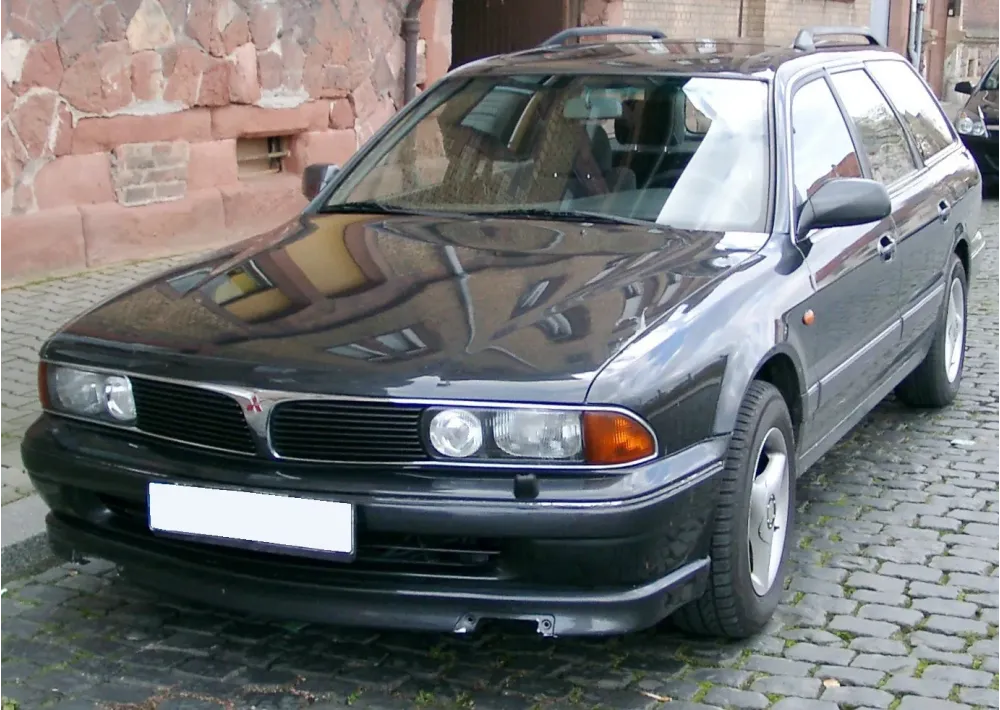
Click on image to view the full photo gallery
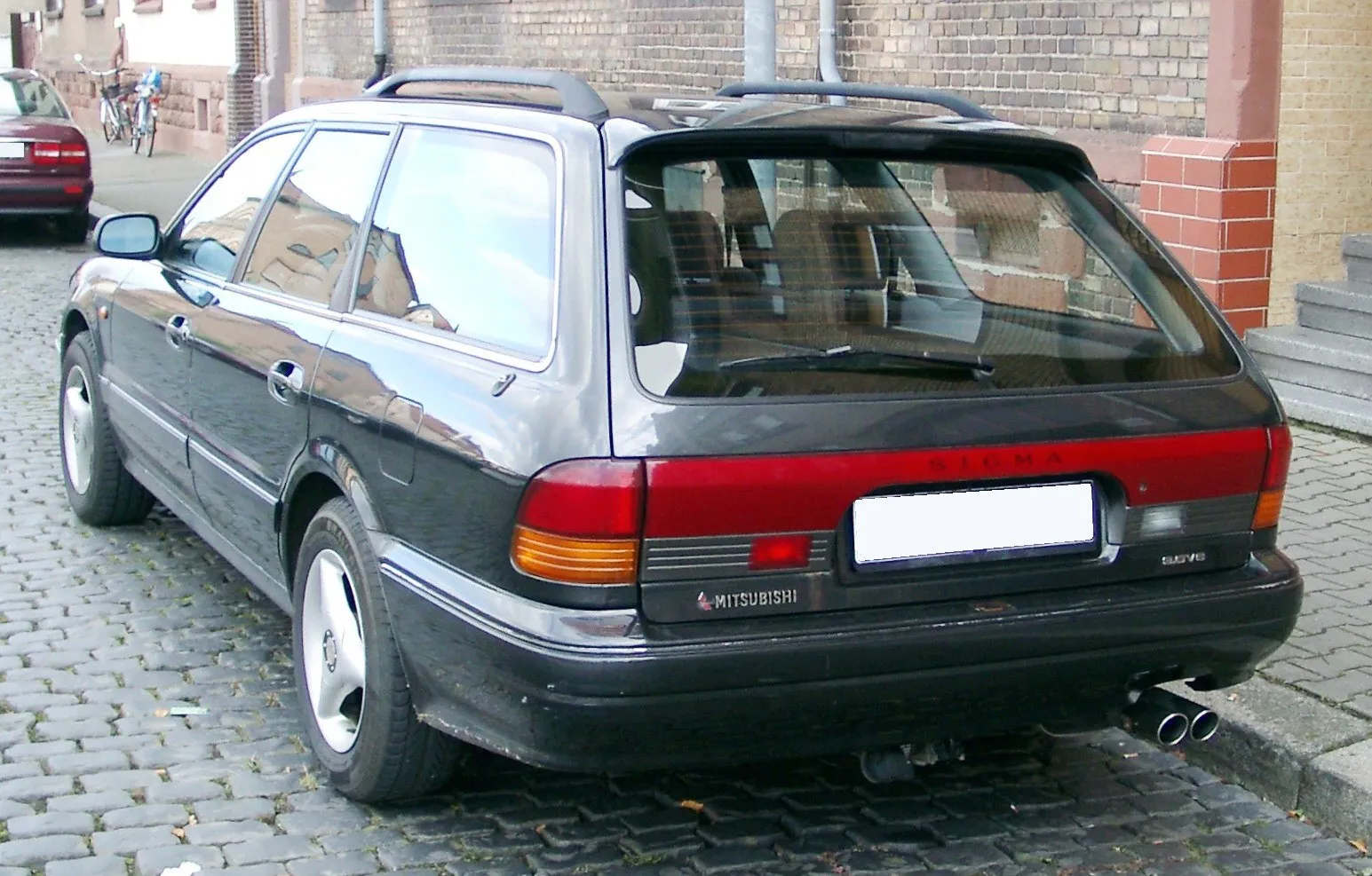
Mitsubishi Sigma Station Wagon (F07W) 3.0 V6 (177 Hp)
Overall Rating
Mitsubishi Sigma:
Mitsubishi Sigma is a model name that was used by the Japanese automobile manufacturer Mitsubishi Motors between 1976 and 1996. Mitsubishi has utilized the "Sigma" name on several different vehicles based on Mitsubishi Galant and Mitsubishi Diamante sold in various markets during this time. The GSX-R 2. 0 turbo model was fitted with a Single Overhead Cam cyclone motor which was the precursor to the infamous 4G63T twin cam motor.
Between 1976 and 1987 over three generations, the Mitsubishi Galant sedan sold in Japan was suffixed with the "Σ" badge....(Read more on Wikipedia)
Station Wagon (F07W) Overview:
Mitsubishi Sigma (Station Wagon (F07W)). With 251 Nm of torque, it offers ample pulling power. With a weight of 1575 kg, it falls in the mid‑range. Front‑wheel drive delivers efficiency and easy handling. Acceleration is relatively slow (0–100 km/h in 9.6 s). The top speed reaches 210 km/h. A car with an extended rear cargo area, combining passenger comfort with increased storage. Seating for 5 makes it ideal for daily use.
3.0 V6 (177 Hp) Verdict:

Performance Verdict
Offers strong, smooth acceleration for a family wagon, making highway cruising effortless. Not overtly sporty, but capable and refined for its class.
Fuel Economy
Fuel consumption is typical for a naturally aspirated 3.0 V6 from this era, acceptable for its power output but not class-leading by modern standards.
Pros and Cons:
Pros:
- • Spacious interior and large boot capacity
- • Smooth and capable 3.0 V6 engine
- • Comfortable ride quality, ideal for long journeys
- • Good build quality for its era
- • Hydraulic power steering for ease of maneuverability
Cons:
- • Fuel economy is average by modern standards
- • Design might be considered dated
- • Limited availability of parts for older models
- • No official Euro NCAP safety rating (due to age)
- • Front-wheel drive might not appeal to all driving enthusiasts
Specifications:
Specifications are compared to those of the previous generation(F16A: 1990 - 1996).
| General: | |
|---|---|
| Brand: | Mitsubishi |
| Model: | Sigma |
| Generation: | Station Wagon (F07W) |
| Modification (Engine): | 3.0 V6 (177 Hp) |
| Start of production: | 1993 |
| End of production: | 1996 |
| Powertrain Architecture: | Internal Combustion engine |
| Body type: | Station wagon (estate) |
| Seats: | 5 |
| Doors: | 5 |
| Engine: | |
|---|---|
| Power: | 177 Hp @ 5500 rpm. |
| Power per litre: | 59.6 Hp/l |
| Torque: | 251 Nm @ 3000 rpm. |
| Engine displacement: | 2972 |
| Number of cylinders: | 6 |
| Engine configuration: | V-engine |
| Number of valves per cylinder: | 2 |
| Fuel injection system: | Multi-port manifold injection |
| Engine aspiration: | Naturally aspirated engine |
| Valvetrain: | OHC |
| Engine layout: | Front, Transverse |
| Cylinder Bore: | 91.1 mm mm |
| Piston Stroke: | 76 mm mm |
| Compression ratio: | 10:1 |
| Performance: | |
|---|---|
| Fuel Type: | Petrol (Gasoline) |
| Fuel consumption (economy) - combined: | 9.9 l/100 km |
| Acceleration 0 - 100 km/h: | 9.6 sec |
| Acceleration 0 - 62 mph: | 9.6 sec |
| Maximum speed: | 210 km/h |
| Weight-to-power ratio: | 8.9 kg/Hp, 112.4 Hp/tonne |
| Weight-to-torque ratio: | 6.3 kg/Nm, 159.4 Nm/tonne |
| Acceleration 0 - 60 mph: | 9.1 sec |
| Space: | |
|---|---|
| Kerb Weight: | 1575 |
| Max. weight: | 2130 |
| Max load: | 555 |
| Trunk (boot) space - maximum: | 737 l |
| Trunk (boot) space - minimum: | 428 l |
| Fuel tank capacity: | 71 l |
| Size: | |
|---|---|
| Length: | 4800 mm mm [50mm more] |
| Width: | 1775 mm mm [Same width.] |
| Height: | 1505 mm mm [70mm more] |
| Wheelbase: | 2720 mm mm [Same wheelbase.] |
| Front track: | 1535 mm |
| Rear (Back) track: | 1505 mm |
| Powertrain: | |
|---|---|
| Drivetrain Architecture | The Internal combustion engine (ICE) drives the front wheels of the vehicle. |
| Drive wheel | Front wheel drive |
| Number of gears | 5 |
| Transmission type | Manual |
| Front brakes | Ventilated discs [Best for performance and cooling.] |
| Rear brakes | Ventilated discs [Best for performance and cooling.] |
| Assisting systems | ABS (Anti-lock braking system) |
| Steering type | Steering rack and pinion |
| Power steering | Hydraulic Steering |
| Tires size | 205/65 R15 |
| Front suspension | Wishbone |
| Rear suspension | Spring Strut |




Better than its competitors? Tell us why the Mitsubishi Sigma stands out.