Renault Symbol I (facelift 2002) 1.4 (75 Hp)
People\'s Opinion
N/A / 5
Renault Symbol:
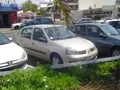
The Renault Symbol, Clio or Thalia in some markets, is a subcompact sedan produced by the French automobile manufacturer Renault. It was introduced in late 1999, under the Clio Symbol name, as the derivative version of the second generation Renault Clio, and unlike the hatchback it was marketed only in those countries where saloons were traditionally preferred over hatchbacks, while it was not sold in Western Europe. It was actually sold in France, but only in overseas departments/regions....(Read more on Wikipedia)
I (facelift 2002) Overview:
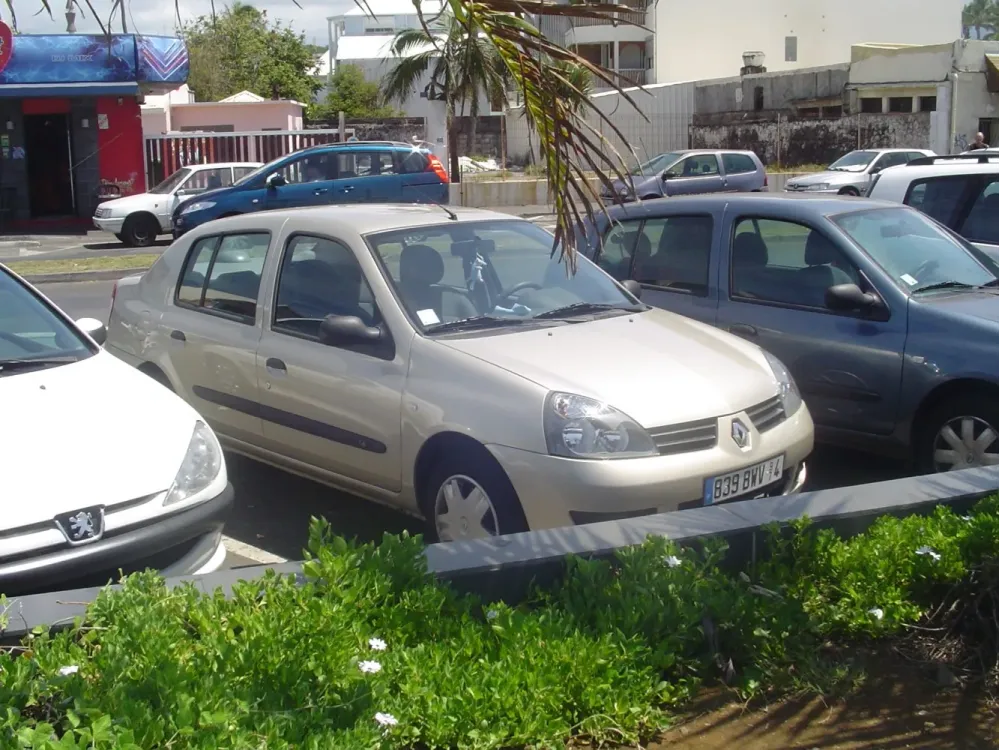
Renault Symbol (I (facelift 2002)). With 114 Nm of torque, it offers ample pulling power. It has moderate fuel consumption (~9.7 l/100km). Weighing only 940 kg, it’s quite light. Front‑wheel drive delivers efficiency and easy handling. Acceleration is relatively slow (0–100 km/h in 12.5 s). The top speed reaches 170 km/h. A four-door car with a separate trunk, ideal for families and daily commuting. Seating for 5 makes it ideal for daily use.
Performance Verdict
An entry-level engine that provides adequate power for urban environments but feels strained on open roads and at higher speeds.
Fuel Economy
Acceptable fuel economy for its class, though not a standout performer compared to more modern engines.
Best Use Case:
City
Pros and Cons:
Pros:
- • Generous boot space for its class
- • Comfortable ride quality, typical of Renault
- • Affordable purchase price and running costs (especially diesel)
- • Simple, proven mechanicals (Clio platform)
- • Good fuel economy on diesel variants
Cons:
- • Dated interior design and materials
- • Modest performance from base petrol engines
- • Automatic transmissions can be sluggish
- • Some reliability concerns with electronics and minor components
- • Not directly tested by Euro NCAP as a Symbol
Specifications:
| General: |
| Brand: | Renault |
|---|
| Model: | Symbol |
|---|
| Generation: | I (facelift 2002) |
|---|
| Modification (Engine): | 1.4 (75 Hp) |
|---|
| Start of production: | 2002 |
|---|
| End of production: | 2008 |
|---|
| Powertrain Architecture: | Internal Combustion engine |
|---|
| Body type: | Sedan |
|---|
| Seats: | 5 |
|---|
| Doors: | 4 |
|---|
| Engine: |
| Power: | 75 Hp @ 5800 rpm. |
|---|
| Power per litre: | 54 Hp/l |
|---|
| Torque: | 114 Nm @ 4250 rpm. |
|---|
| Engine Model/Code: | K7J 700 |
|---|
| Engine displacement: | 1390 |
|---|
| Number of cylinders: | 4 |
|---|
| Engine configuration: | Inline |
|---|
| Number of valves per cylinder: | 2 |
|---|
| Fuel injection system: | Multi-port manifold injection |
|---|
| Engine aspiration: | Naturally aspirated engine |
|---|
| Valvetrain: | OHC |
|---|
| Engine oil capacity: | 3.1 l |
|---|
| Coolant: | 5.5 l |
|---|
| Engine layout: | Front, Transverse |
|---|
| Cylinder Bore: | 79.5 mm mm |
|---|
| Piston Stroke: | 70 mm mm |
|---|
| Compression ratio: | 9.5:1 |
|---|
| Performance: |
| Fuel Type: | Petrol (Gasoline) |
|---|
| Fuel consumption (economy) - urban: | 9.7 l/100 km |
|---|
| Fuel consumption (economy) - extra urban: | 5.7 l/100 km |
|---|
| Acceleration 0 - 100 km/h: | 12.5 sec |
|---|
| Acceleration 0 - 62 mph: | 12.5 sec |
|---|
| Maximum speed: | 170 km/h |
|---|
| Weight-to-power ratio: | 12.5 kg/Hp, 79.8 Hp/tonne |
|---|
| Weight-to-torque ratio: | 8.2 kg/Nm, 121.3 Nm/tonne |
|---|
| Acceleration 0 - 60 mph: | 11.9 sec |
|---|
| Space: |
| Kerb Weight: | 940 |
|---|
| Max. weight: | 1425 |
|---|
| Max load: | 485 |
|---|
| Trunk (boot) space - minimum: | 510 l |
|---|
| Fuel tank capacity: | 50 l |
|---|
| Size: |
| Length: | 4171 mm mm |
|---|
| Width: | 1639 mm mm |
|---|
| Height: | 1437 mm mm |
|---|
| Wheelbase: | 2472 mm mm |
|---|
| Front track: | 1406 mm |
|---|
| Rear (Back) track: | 1385 mm |
|---|
| Powertrain: |
| Drivetrain Architecture | The Internal combustion engine (ICE) drives the front wheels of the vehicle. |
|---|
| Drive wheel | Front wheel drive |
|---|
| Number of gears | 5 |
|---|
| Transmission type | Manual |
|---|
| Front brakes | Ventilated discs |
|---|
| Rear brakes | Drum |
|---|
| Steering type | Steering rack and pinion |
|---|
| Power steering | Hydraulic Steering |
|---|
| Tires size | 175/65 R14 |
|---|
| Wheel rims size | 14 |
|---|
| Front suspension | Coil spring |
|---|
| Rear suspension | Coil spring |
|---|






Fuel, speed, and comfort: How does the Renault Symbol rank in your book?