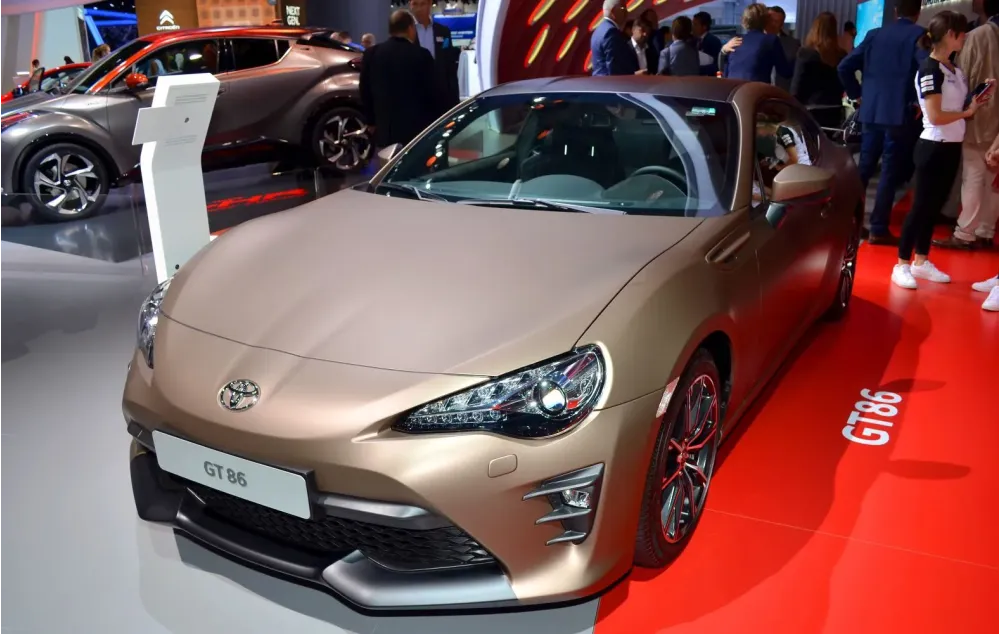
Click on image to view the full photo gallery
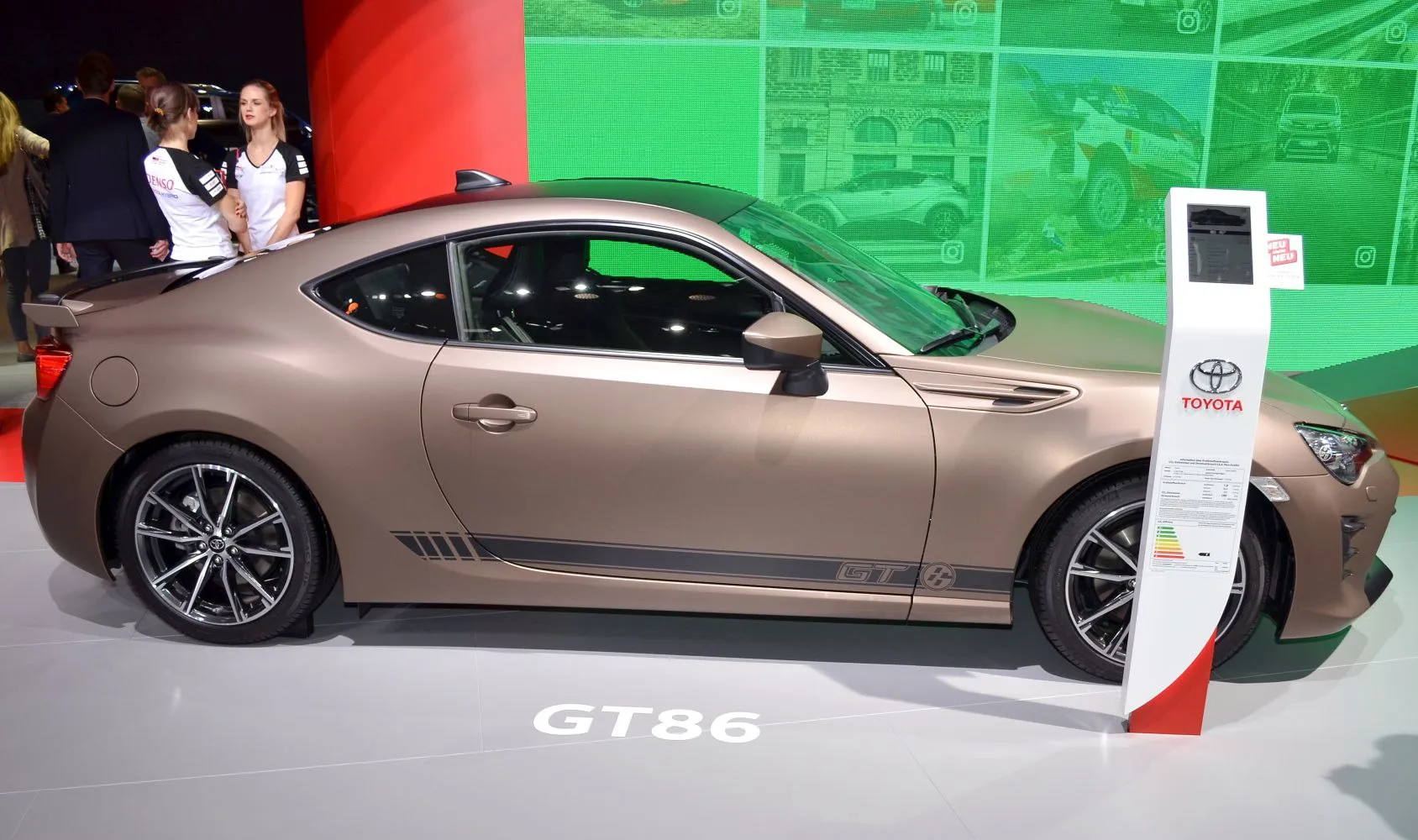
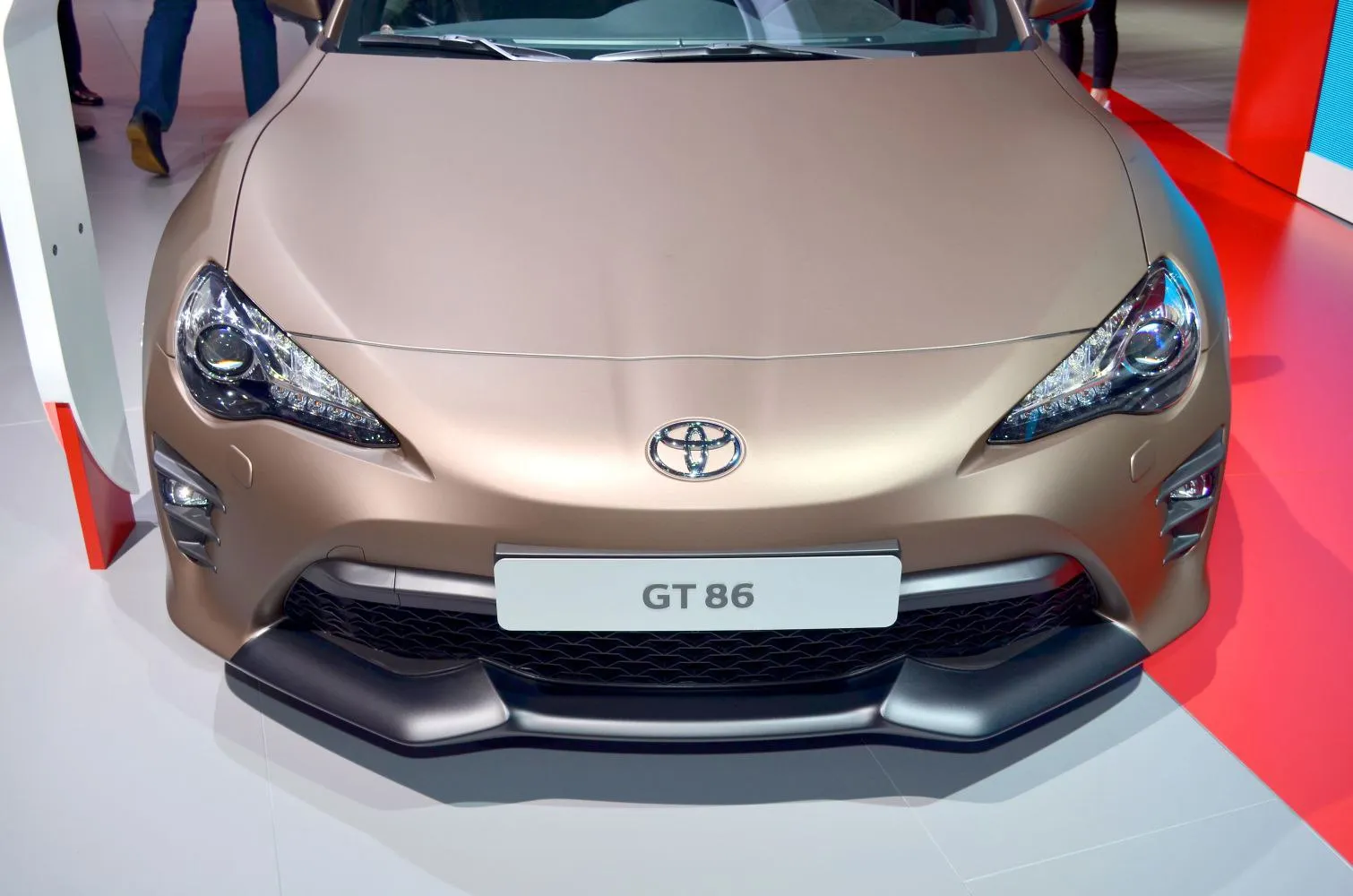
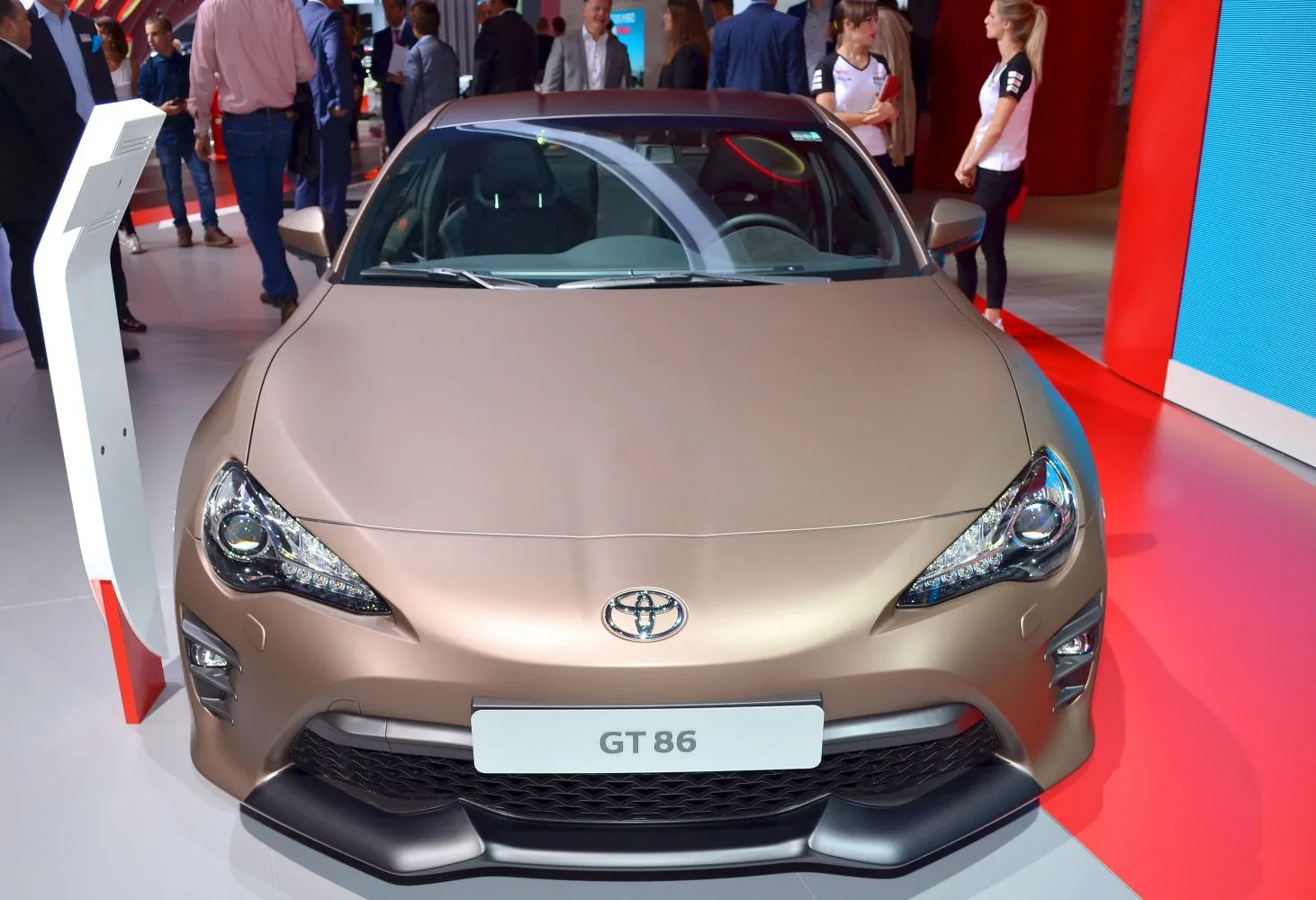
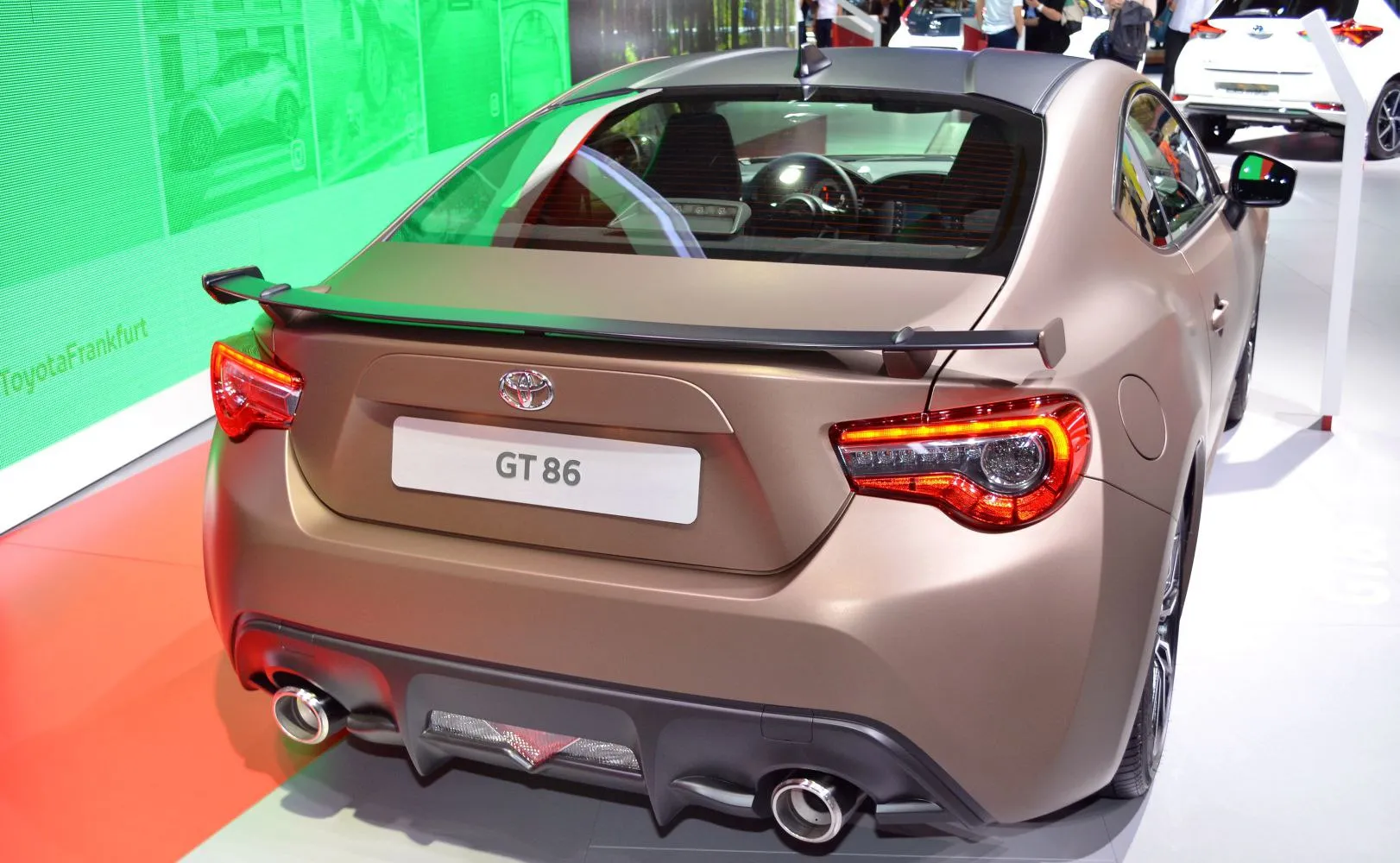
Toyota 86 I (facelift 2016) GT 2.0 (200 Hp) Automatic
Overall Rating
Toyota 86:
The Toyota 86 and the Subaru BRZ are 2+2 sports cars jointly developed by Toyota and Subaru, manufactured at Subaru's Gunma assembly plant.
The 2+2 fastback coupé has a naturally aspirated boxer engine, front-engined, rear-wheel-drive configuration, 53/47 front/rear weight balance and low centre of gravity; it was inspired by Toyota's earlier AE86, a small, light, front-engine/rear-drive Corolla variant widely popular for Showroom Stock, Group A, Group N, Rally, Club and drift racing.
For the first-generation model, Toyota marketed the sports car as the 86 in Asia, Australia, North America , South Africa, and South America; as the Toyota GT86 in Europe; as the 86 and GT86 in New Zealand; as the Toyota FT86 in Brunei, Nicaragua and Jamaica and as the Scion FR-S in the United States and Canada....(Read more on Wikipedia)
I (facelift 2016) Overview:
Toyota 86 (I (facelift 2016)). With 205 Nm of torque, it offers ample pulling power. It has moderate fuel consumption (~9.8 l/100km). Weighing only 1259 kg, it’s quite light. Rear‑wheel drive offers dynamic handling and sporty feedback. A two-door car with a fixed roof, known for its sporty design and dynamic performance. Seating for 4 makes it ideal for daily use.
GT 2.0 (200 Hp) Automatic Verdict:

Performance Verdict
Offers adequate power for spirited driving, though the automatic transmission slightly blunts the raw driver engagement compared to the manual. Responsive at higher RPMs, delivering a smooth power band.
Fuel Economy
Combined fuel consumption of 8.7 l/100 km is acceptable for a sports coupe, balancing performance with reasonable efficiency for daily use.
Pros and Cons:
Pros:
- • Exceptional handling and balanced chassis
- • Engaging and pure driving dynamics
- • Affordable rear-wheel-drive sports car experience
- • Reliable FA20 boxer engine
- • Good steering feel and feedback
Cons:
- • Modest straight-line power for some enthusiasts
- • Firm ride quality may not suit all drivers
- • Limited rear passenger and cargo space
- • Interior materials are functional rather than premium
- • Engine can feel breathless at lower RPMs
Specifications:
Specifications are compared to those of the previous generation(I: 2012 - 2016).
| General: | |
|---|---|
| Brand: | Toyota |
| Model: | 86 |
| Generation: | I (facelift 2016) |
| Modification (Engine): | GT 2.0 (200 Hp) Automatic |
| Start of production: | 2016 |
| End of production: | April, 2021 |
| Powertrain Architecture: | Internal Combustion engine |
| Body type: | Coupe |
| Seats: | 4 |
| Doors: | 2 |
| Engine: | |
|---|---|
| Power: | 200 Hp @ 7000 rpm. |
| Power per litre: | 100.1 Hp/l |
| Torque: | 205 Nm @ 6400-6600 rpm. |
| Engine Model/Code: | FA20 [Same engine] More details about the engine FA20 |
| Engine displacement: | 1998 |
| Number of cylinders: | 4 |
| Engine configuration: | Boxer |
| Number of valves per cylinder: | 4 |
| Fuel injection system: | Direct injection |
| Engine aspiration: | Naturally aspirated engine |
| Valvetrain: | DOHC, DVVT |
| Engine oil capacity: | 5.4 l |
| Coolant: | 7.5 l |
| Engine layout: | Front, Longitudinal |
| Cylinder Bore: | 86 mm mm |
| Piston Stroke: | 86 mm mm |
| Compression ratio: | 12.5:1 |
| Performance: | |
|---|---|
| Fuel Type: | Petrol (Gasoline) |
| Fuel consumption (economy) - urban: | 9.8 l/100 km |
| Fuel consumption (economy) - extra urban: | 7.4 l/100 km |
| Fuel consumption (economy) - combined: | 8.7 l/100 km |
| Weight-to-power ratio: | 6.3 kg/Hp, 158.9 Hp/tonne |
| Weight-to-torque ratio: | 6.1 kg/Nm, 162.8 Nm/tonne |
| Space: | |
|---|---|
| Kerb Weight: | 1259 |
| Max. weight: | 1670 |
| Max load: | 411 |
| Trunk (boot) space - minimum: | 195 l |
| Fuel tank capacity: | 50 l |
| Size: | |
|---|---|
| Length: | 4234 mm mm [6mm less] |
| Width: | 1775 mm mm [Same width.] |
| Height: | 1285 mm mm [Same height.] |
| Wheelbase: | 2570 mm mm [Same wheelbase.] |
| Front track: | 1519 mm |
| Rear (Back) track: | 1539 mm |
| Ride height (ground clearance): | 124 mm |
| Minimum turning circle (turning diameter): | 11.0 m [above average] |
| Powertrain: | |
|---|---|
| Drivetrain Architecture | The Internal combustion engine (ICE) drives the rear wheels of the vehicle. |
| Drive wheel | Rear wheel drive |
| Number of gears | 6 |
| Transmission type | Automatic |
| Gearbox type | ECT-i |
| Front brakes | Ventilated discs, 294x24 mm [Best for performance and cooling.] |
| Rear brakes | Ventilated discs, 290x18 mm [Best for performance and cooling.] |
| Assisting systems | ABS (Anti-lock braking system) |
| Steering type | Steering rack and pinion |
| Power steering | Electric Steering |
| Tires size | 215/45 R17 |
| Wheel rims size | 7J x 17 |
| Front suspension | Independent, type McPherson with coil spring and anti-roll bar |
| Rear suspension | Double wishbone |








Rate the Toyota 86 from 1 to 10!