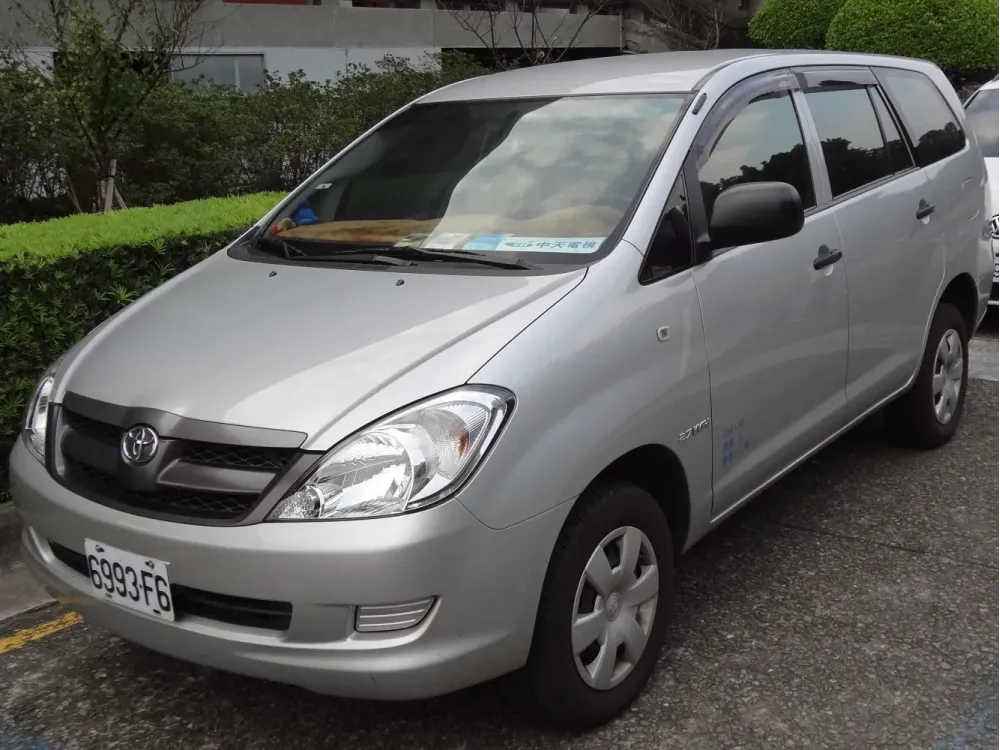
Click on image to view the full photo gallery
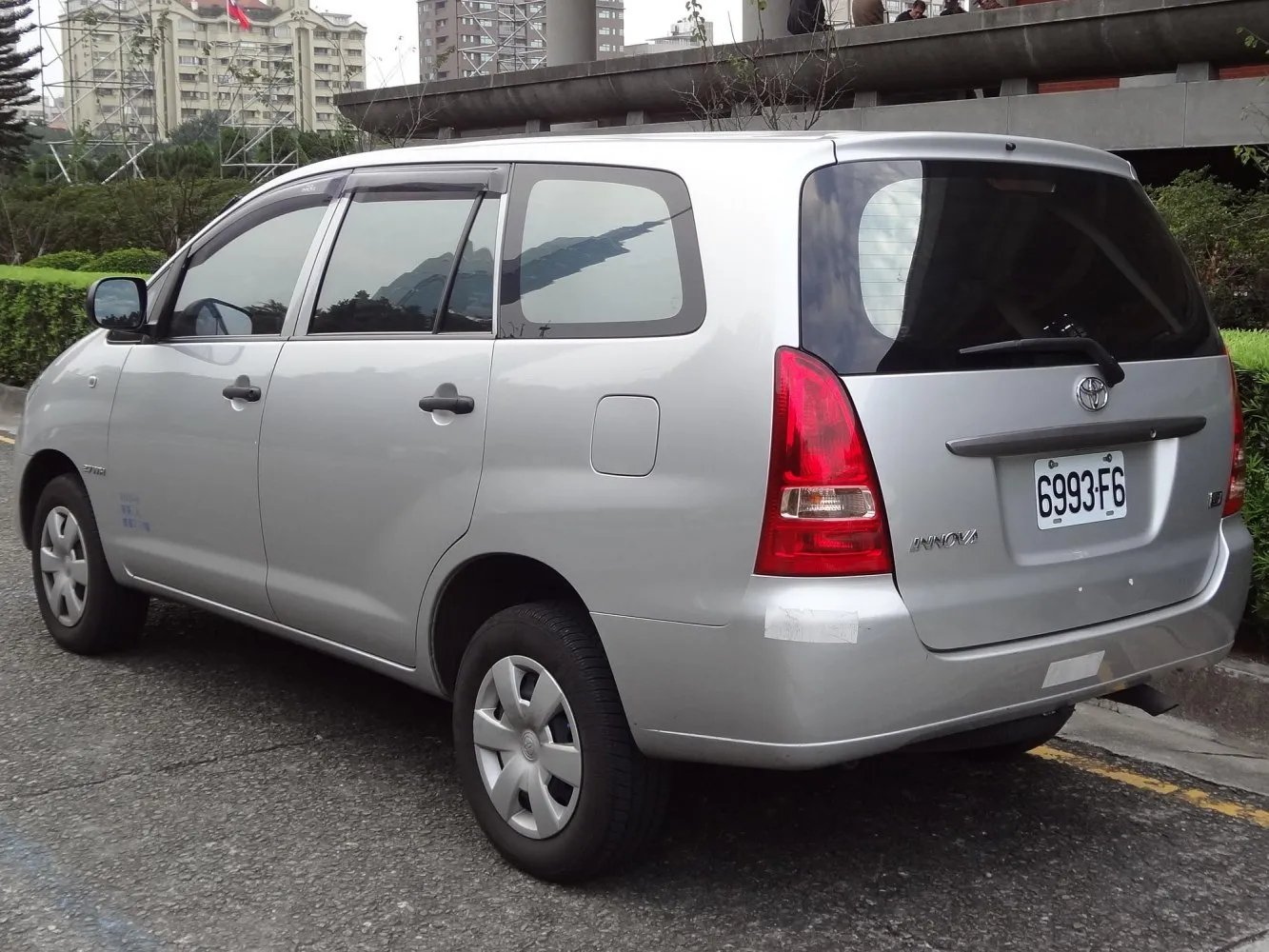
Toyota Innova I 2.0 VVT-i (136 Hp) Automatic
Overall Rating
Toyota Innova:
The Toyota Innova is a series of multi-purpose vehicles manufactured by the Japanese carmaker Toyota since 2004, mainly sold with three-row seating.
The Innova is the replacement for wagon versions of Kijang , which was also marketed under different names such as Tamaraw FX/Revo, Unser, Zace and Condor. Like the outgoing Kijang, the first two generations of the Innova are rear-wheel-drive vehicles built on the body-on-frame chassis shared with the Hilux pickup truck and the Fortuner SUV under the IMV project, instead of the unibody construction commonly used by MPVs of its era. The chassis was adopted due to the perceived strength and durability which are preferred by customers mainly in Indonesia. The third-generation model introduced in 2022 switched to front-wheel-drive layout, using the GA-C platform with a unibody chassis. The change was made to make use of the hybrid powertrain , and to provide the comfort and efficiency benefits of the front-wheel-drive layout....(Read more on Wikipedia)
I Overview:
Toyota Innova (I). It has moderate fuel consumption (~10.2 l/100km). With a weight of 1665 kg, it falls in the mid‑range. Rear‑wheel drive offers dynamic handling and sporty feedback. A multi-purpose vehicle designed to transport passengers with ample interior space. With seating for 6, it’s perfect for larger families.
The Toyota Innova I generation was not tested by Euro NCAP. However, it received good ratings in regional NCAP tests like ASEAN NCAP for its time, indicating a reasonable level of passive safety.
2.0 VVT-i (136 Hp) Automatic Verdict:

Performance Verdict
Offers a smooth and convenient driving experience with the automatic transmission, though acceleration might feel less immediate than the manual, especially from a standstill.
Fuel Economy
Fuel economy will be slightly lower than the manual 2.0 VVT-i, particularly in stop-and-go traffic. Still acceptable for daily use, but not a standout for efficiency.
Pros and Cons:
Pros:
- • Exceptional reliability and durability, typical of Toyota
- • Spacious and versatile interior, ideal for families
- • Comfortable ride quality, absorbing road imperfections well
- • Strong resale value due to high demand and reputation
- • Good range of efficient diesel engines for lower running costs
Cons:
- • Dated interior design and features by modern standards
- • Petrol engines can be thirsty, especially the 2.7L variant
- • Limited active safety features compared to newer vehicles
- • Not particularly engaging or dynamic to drive
- • Noticeable body roll in corners due to its MPV stature
Specifications:
| General: | |
|---|---|
| Brand: | Toyota |
| Model: | Innova |
| Generation: | I |
| Modification (Engine): | 2.0 VVT-i (136 Hp) Automatic |
| Start of production: | 2004 |
| End of production: | 2008 |
| Powertrain Architecture: | Internal Combustion engine |
| Body type: | MPV |
| Seats: | 6 |
| Doors: | 5 |
| Engine: | |
|---|---|
| Power: | 136 Hp |
| Engine Model/Code: | 1TR-FE |
| Engine aspiration: | Naturally aspirated engine |
| Engine oil capacity: | 5.6 l |
| Coolant: | 7.3 l |
| Performance: | |
|---|---|
| Fuel Type: | Petrol (Gasoline) |
| Fuel consumption (economy) - urban: | 10.2 l/100 km |
| Weight-to-power ratio: | 12.2 kg/Hp, 81.7 Hp/tonne |
| Space: | |
|---|---|
| Kerb Weight: | 1665 |
| Fuel tank capacity: | 55 l |
| Size: | |
|---|---|
| Length: | 4555 mm mm |
| Width: | 1770 mm mm |
| Height: | 1750 mm mm |
| Wheelbase: | 2750 mm mm |
| Powertrain: | |
|---|---|
| Drivetrain Architecture | The Internal combustion engine (ICE) drives the rear wheels of the vehicle. |
| Drive wheel | Rear wheel drive |
| Number of gears | 4 |
| Transmission type | Automatic |








Does the Toyota Innova live up to the hype? Give us your verdict!