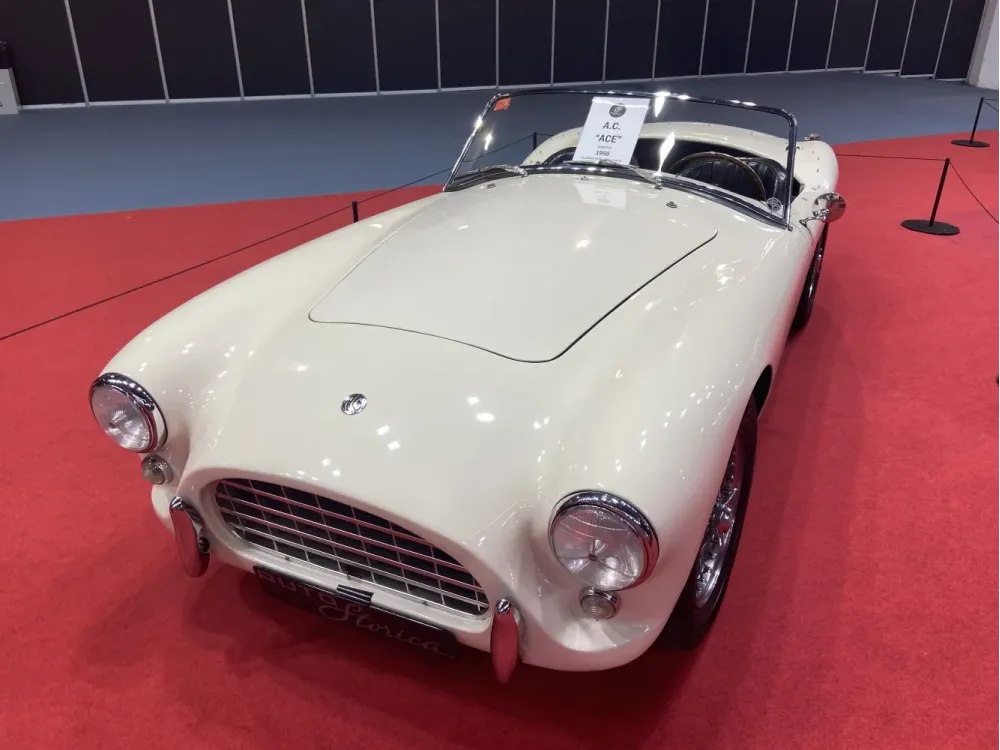
Click on image to view the full photo gallery
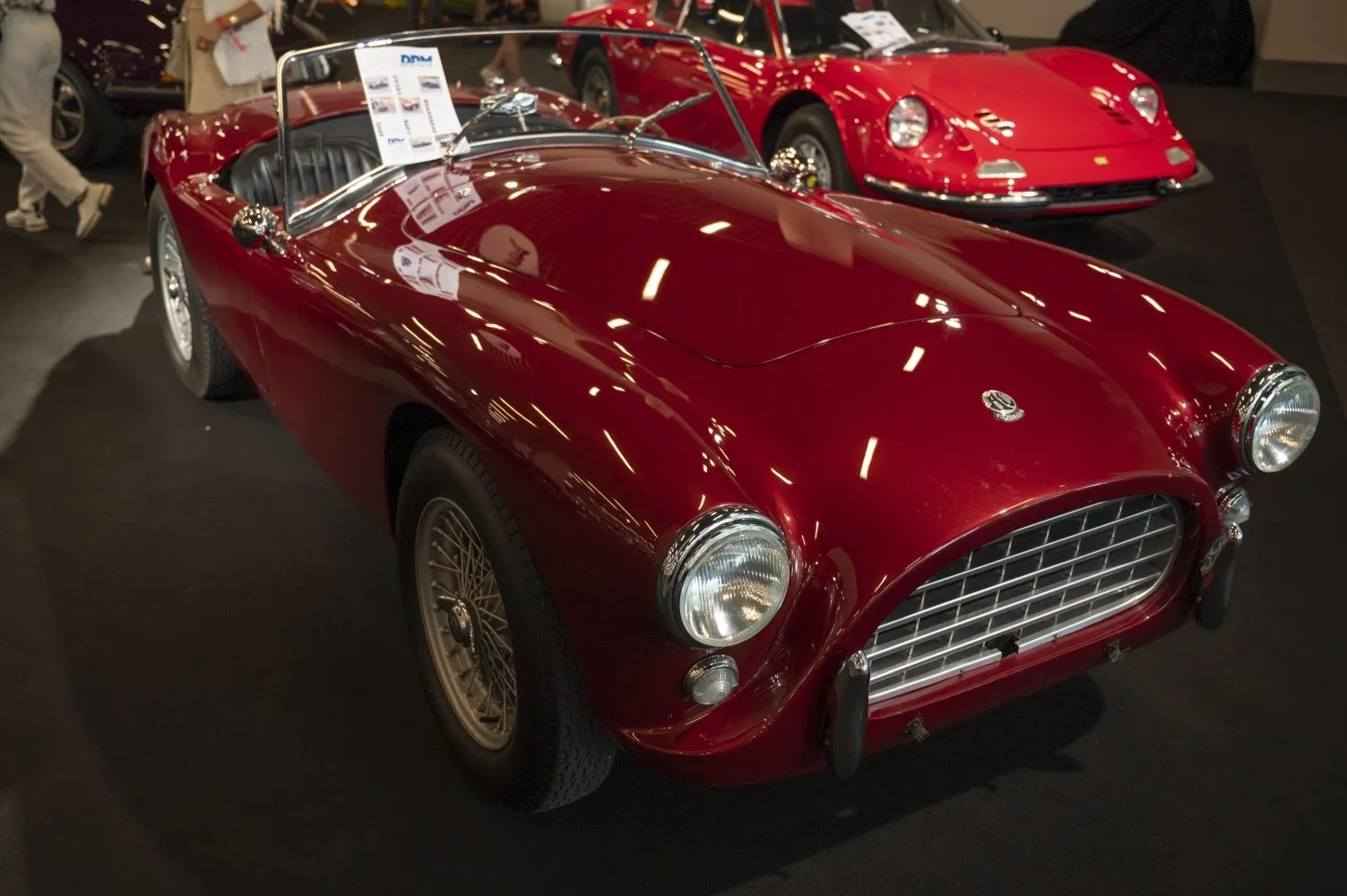
AC Ace Bristol 2.0i (120 Hp)
Overall Rating
AC Ace:
The AC Ace is a sports car produced by AC Cars of Thames Ditton, England, from 1953 until 1963. There were three main versions: the original AC Ace, the Ace Bristol, and the Ace 2. 6, differentiated by the type of engine installed. About 220 AC Aces and 466 Ace-Bristol cars were produced during its 10 year run. The AC Ace was the base car from which the original AC Cobra was developed.
AC resumed civilian production after the Second World War with the 2-Litre range of cars in 1947, but it was with the Ace sports car of 1953 that the company really made its reputation in the post war years. Casting around for a replacement for the ageing 2-Litre, AC took up a design by John Tojeiro that used a light, ladder-type tubular frame, all independent transverse leaf spring suspension, and an open two-seater alloy body possibly inspired by the Ferrari 166 MM barchetta....(Read more on Wikipedia)
Bristol Overview:
AC Ace (Bristol). With 165 Nm of torque, it offers ample pulling power. Weighing only 815 kg, it’s quite light. Rear‑wheel drive offers dynamic handling and sporty feedback. The top speed reaches 186 km/h. A two-seater convertible designed for open-top driving pleasure. Seating for 2 makes it ideal for daily use.
As a vehicle from 1956, the AC Ace Bristol predates modern safety standards and Euro NCAP testing. It lacks contemporary safety features like airbags, ABS, or crumple zones, relying on basic structural integrity and driver skill for occupant protection.
2.0i (120 Hp) Verdict:

Performance Verdict
The 2.0L Bristol engine, with 120 Hp, provided excellent performance for its lightweight chassis, enabling a top speed of 186 km/h and spirited acceleration, making it highly competitive in period sports car racing.
Fuel Economy
Fuel economy is not a strong suit by modern standards, typical of carburetted engines from the 1950s. Owners prioritize driving experience over efficiency, with consumption varying based on driving style.
Pros and Cons:
Pros:
- • Iconic classic British sports car design
- • Engaging and pure driving experience
- • Historically significant Bristol engine heritage
- • Excellent power-to-weight ratio for its era
- • Strong collector's value and appreciation potential
Cons:
- • Lacks modern safety features and creature comforts
- • High maintenance requirements typical of classic cars
- • Limited practicality for daily use
- • Drum brakes offer less stopping power than modern discs
- • Susceptible to rust if not properly cared for
Specifications:
| General: | |
|---|---|
| Brand: | AC |
| Model: | Ace |
| Generation: | Bristol |
| Modification (Engine): | 2.0i (120 Hp) |
| Start of production: | 1956 |
| End of production: | 1960 |
| Powertrain Architecture: | Internal Combustion engine |
| Body type: | Roadster |
| Seats: | 2 |
| Doors: | 2 |
| Engine: | |
|---|---|
| Power: | 120 Hp @ 5750 rpm. |
| Power per litre: | 60.9 Hp/l |
| Torque: | 165 Nm @ 4500 rpm. |
| Engine Model/Code: | 100D2 |
| Engine displacement: | 1971 |
| Number of cylinders: | 6 |
| Engine configuration: | Inline |
| Number of valves per cylinder: | 2 |
| Fuel injection system: | Carburettor |
| Valvetrain: | OHV |
| Engine layout: | Front, Longitudinal |
| Cylinder Bore: | 66 mm mm |
| Piston Stroke: | 96 mm mm |
| Compression ratio: | 8.5:1 |
| Maximum engine speed: | 6000 rpm. |
| Performance: | |
|---|---|
| Fuel Type: | Petrol (Gasoline) |
| Maximum speed: | 186 km/h |
| Weight-to-power ratio: | 6.8 kg/Hp, 147.2 Hp/tonne |
| Weight-to-torque ratio: | 4.9 kg/Nm, 202.5 Nm/tonne |
| Space: | |
|---|---|
| Kerb Weight: | 815 |
| Fuel tank capacity: | 54 l |
| Size: | |
|---|---|
| Length: | 3780 mm mm |
| Width: | 1510 mm mm |
| Height: | 1220 mm mm |
| Wheelbase: | 2286 mm mm |
| Front track: | 1270 mm |
| Rear (Back) track: | 1270 mm |
| Powertrain: | |
|---|---|
| Drivetrain Architecture | The Internal combustion engine (ICE) drives the rear wheels of the vehicle. |
| Drive wheel | Rear wheel drive |
| Number of gears | 4 |
| Transmission type | Manual |
| Front brakes | Drum |
| Rear brakes | Drum |
| Front suspension | Leaf spring |
| Rear suspension | Leaf spring |


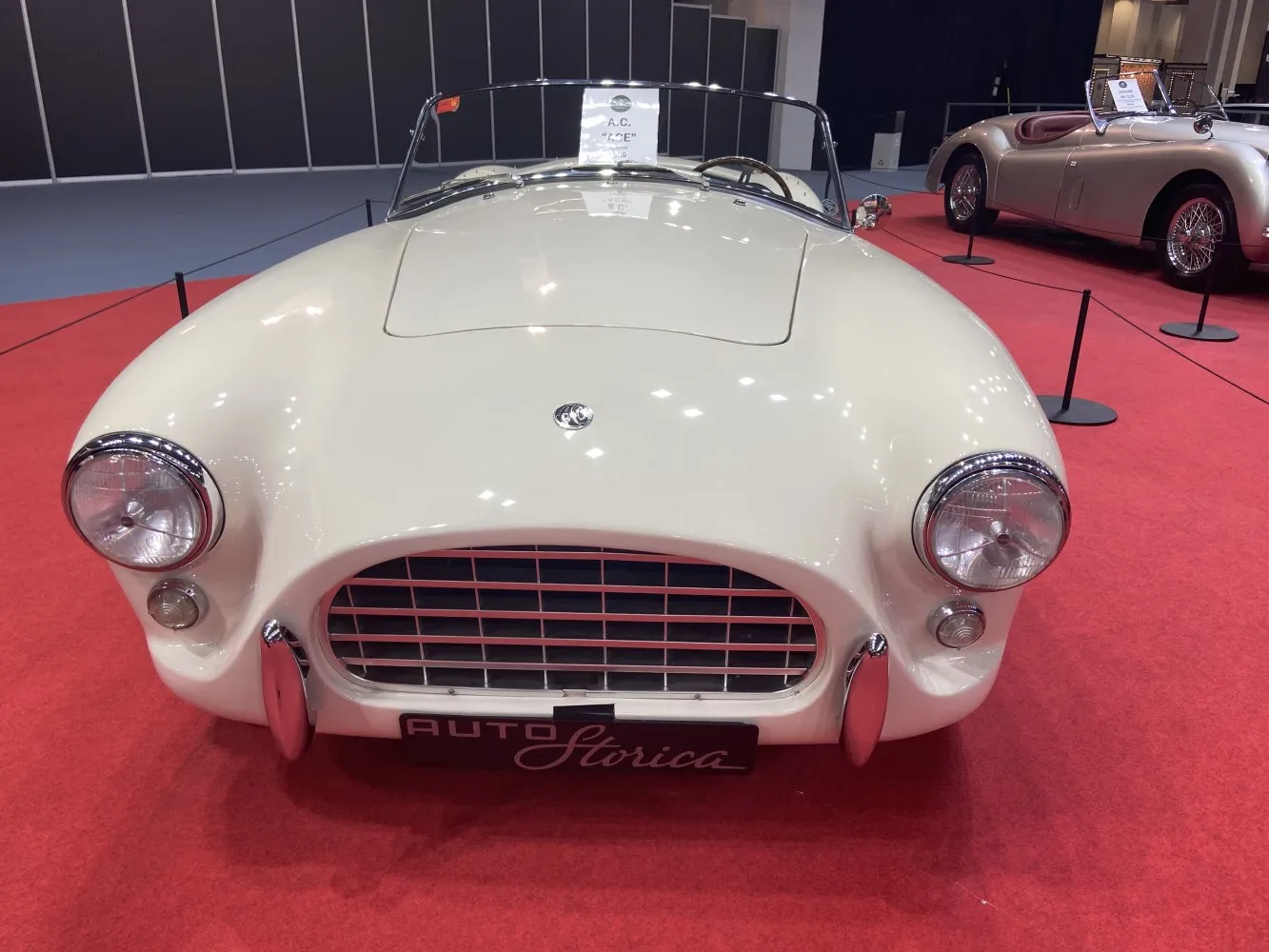
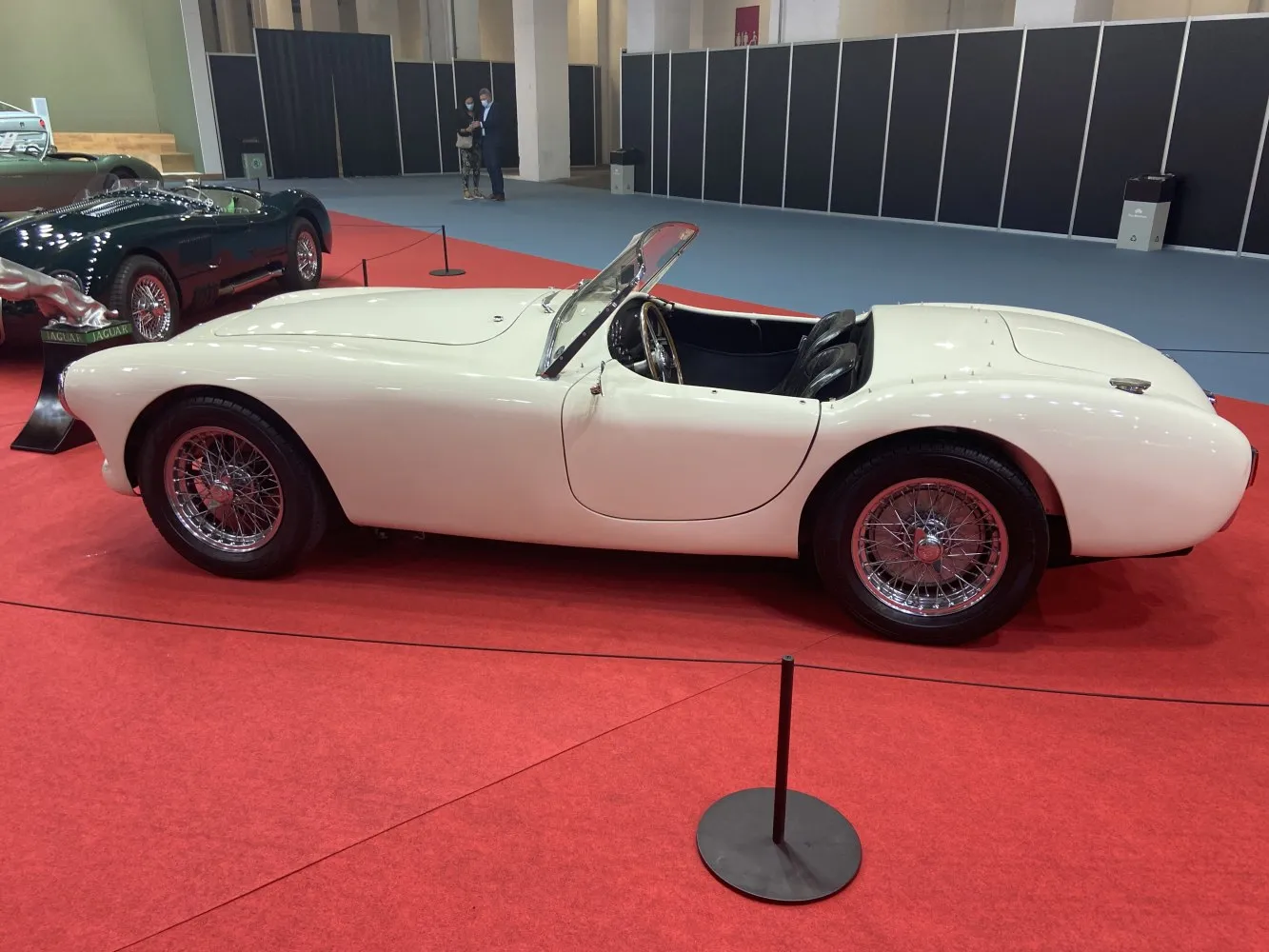
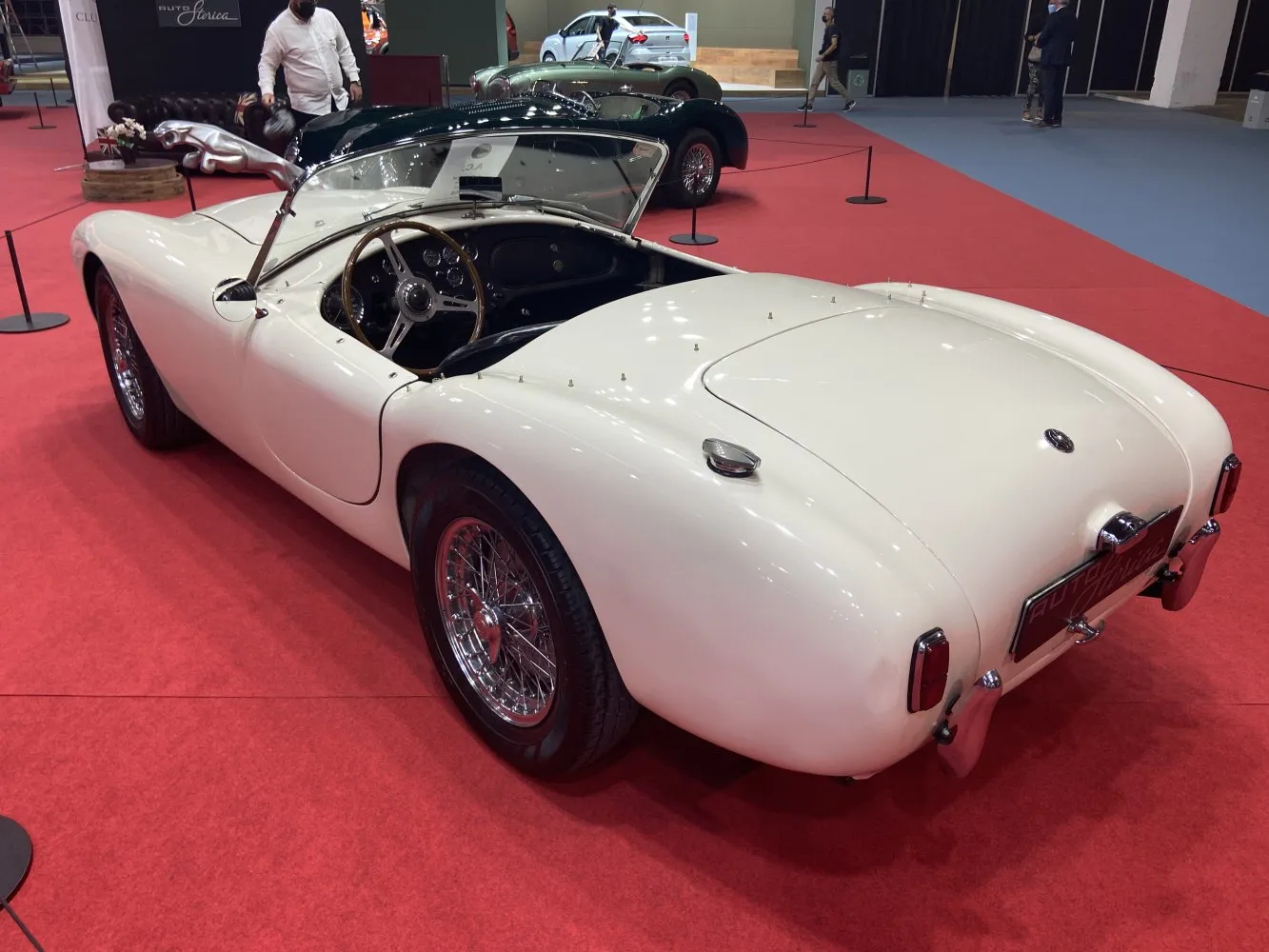
Better than its competitors? Tell us why the AC Ace stands out.