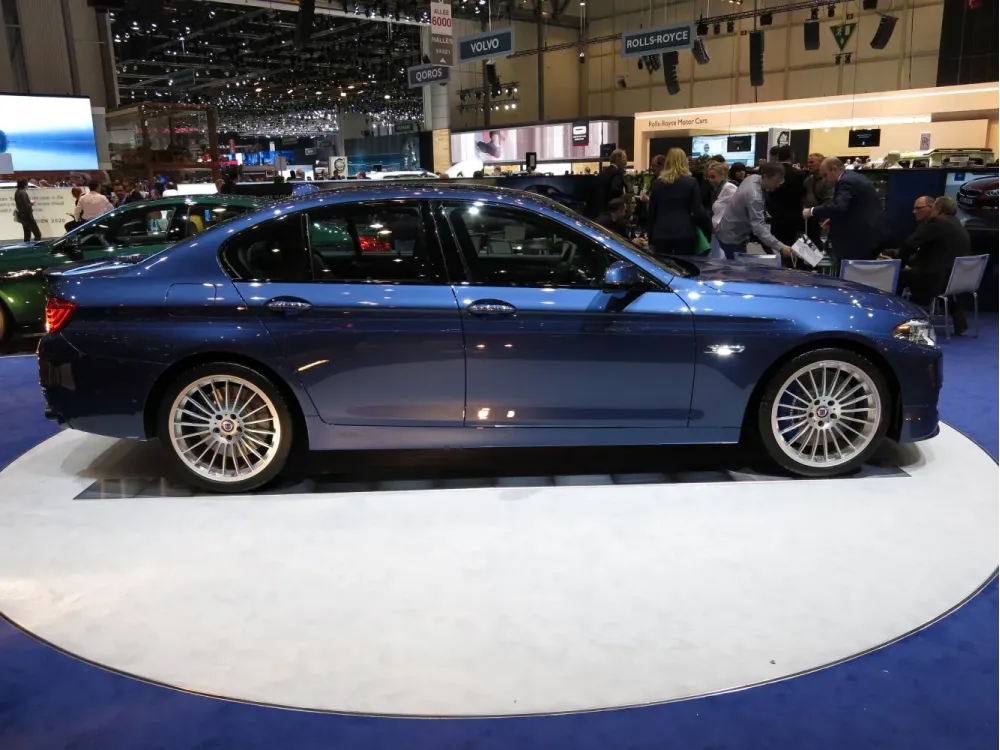
Click on image to view the full photo gallery
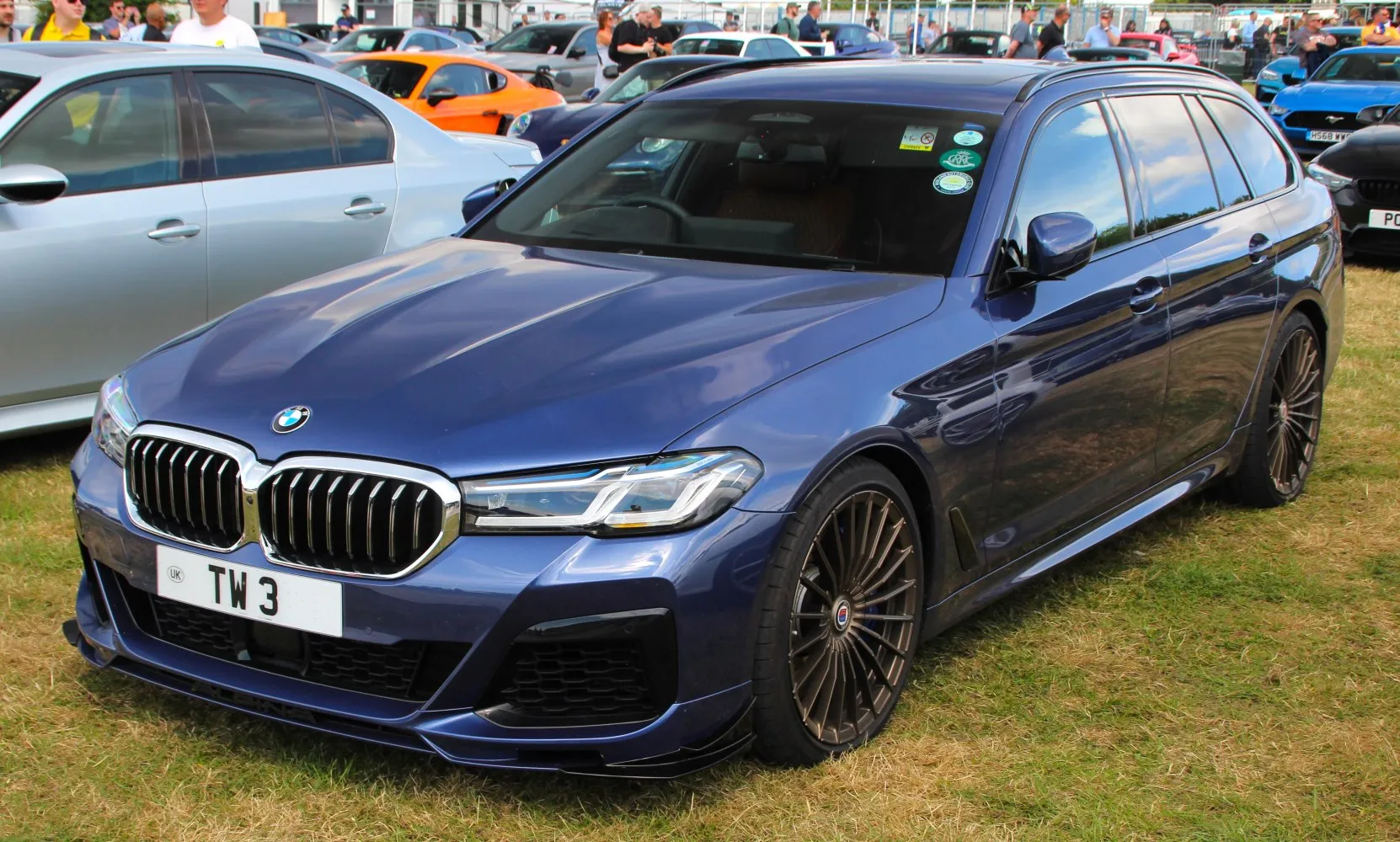
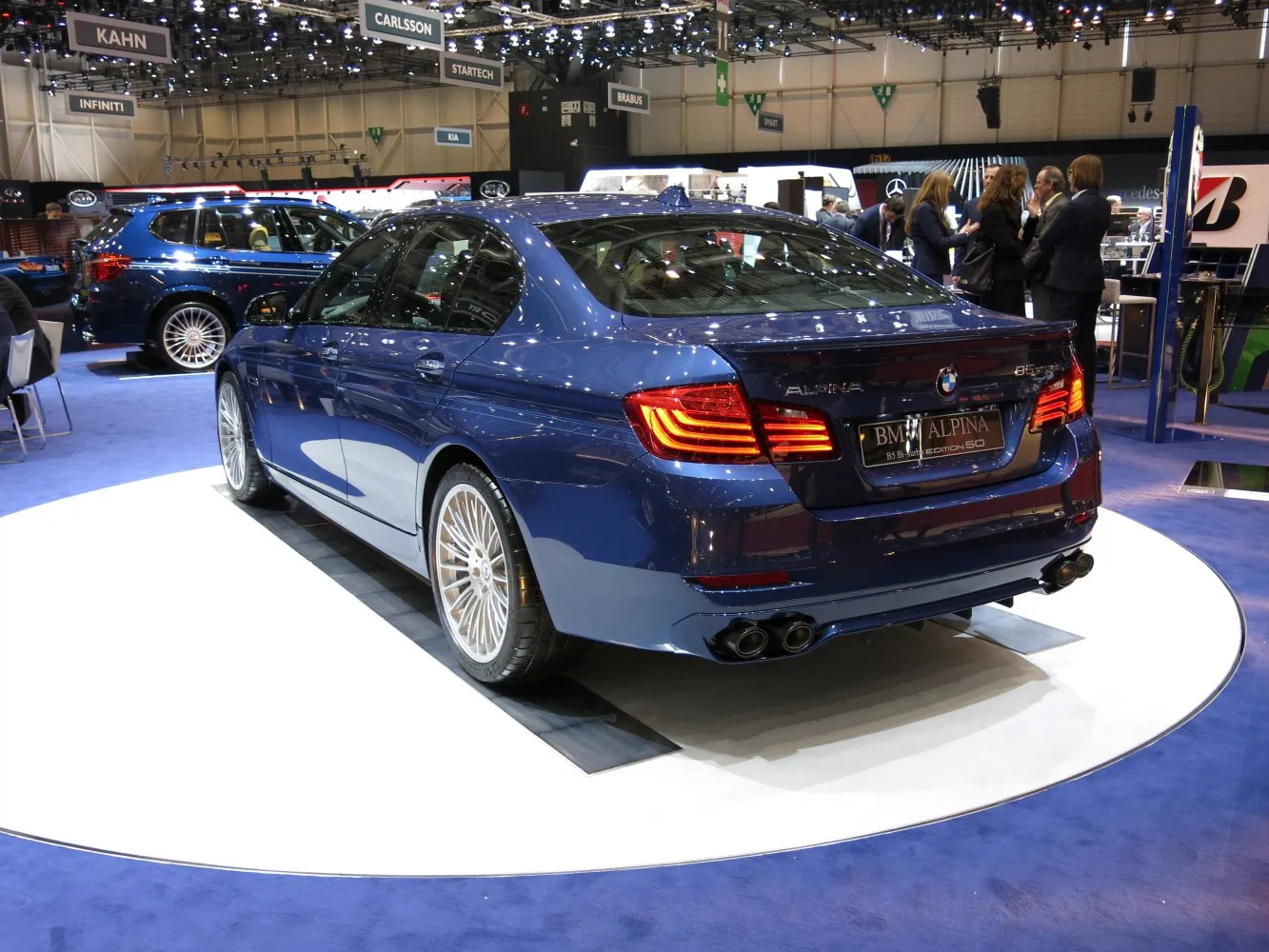
Alpina B5 Sedan (F10 LCI, Facelift 2013) 4.4 V8 (600 Hp) Switch-Tronic
Overall Rating
Alpina B5:
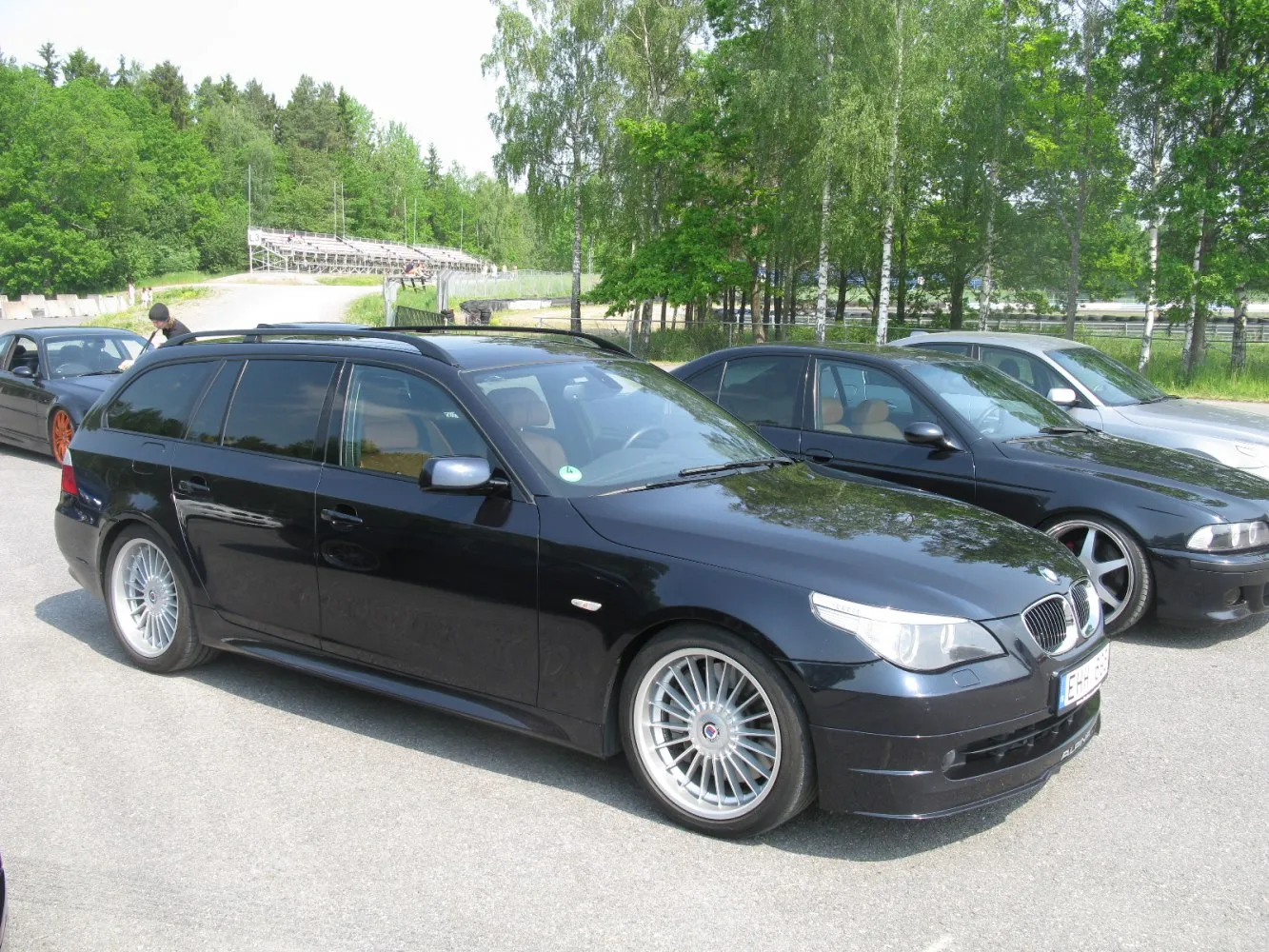
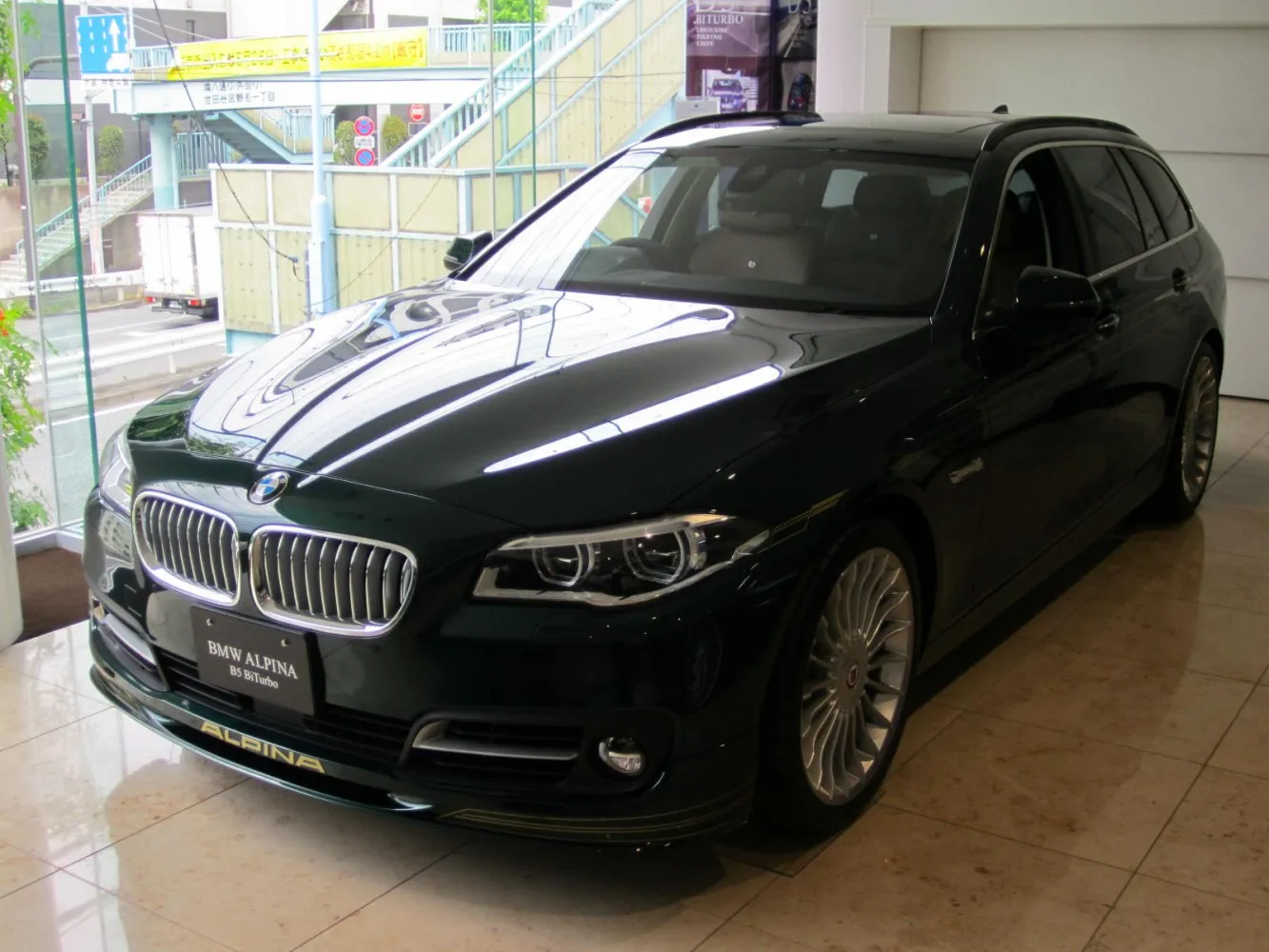
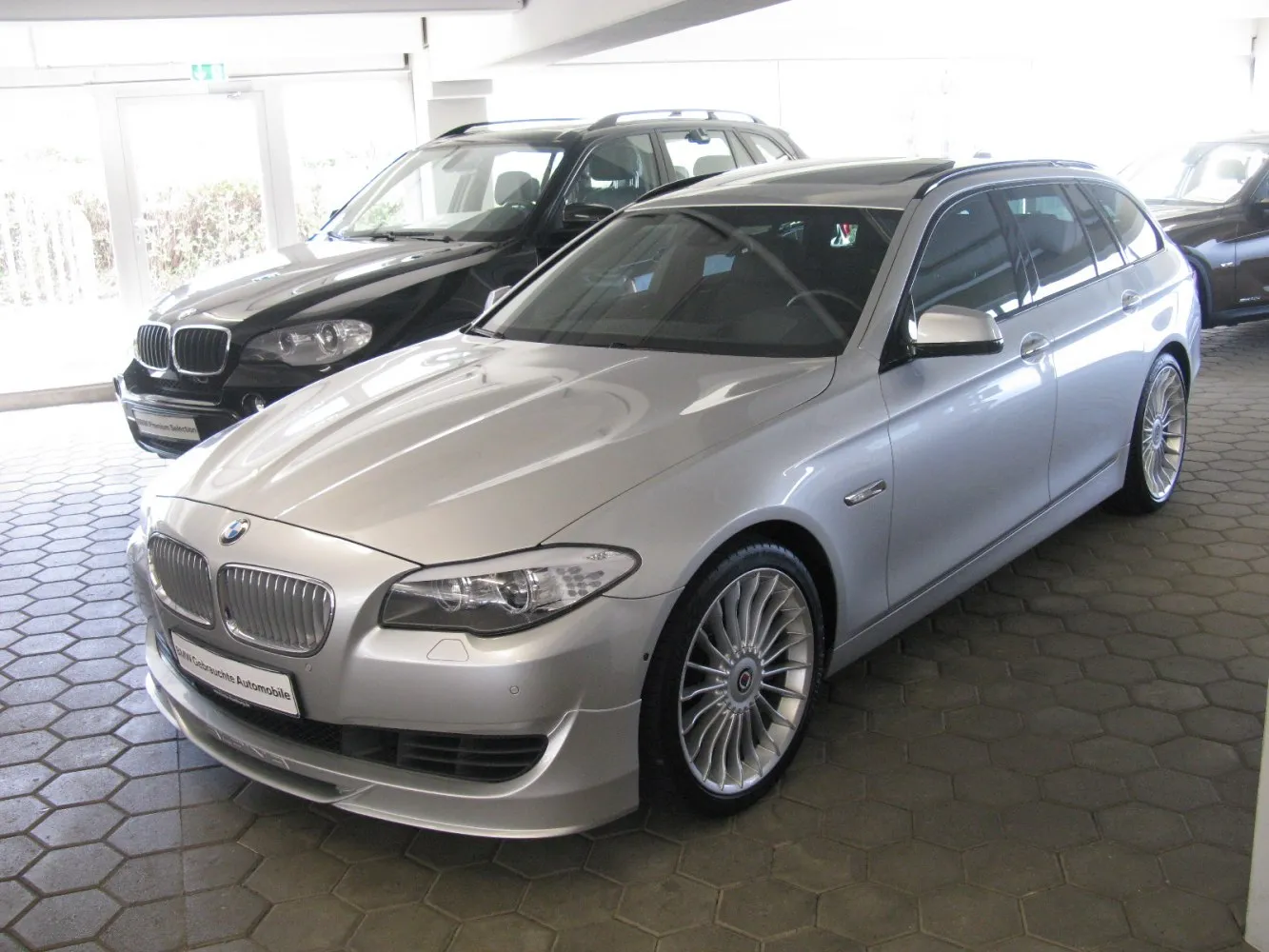
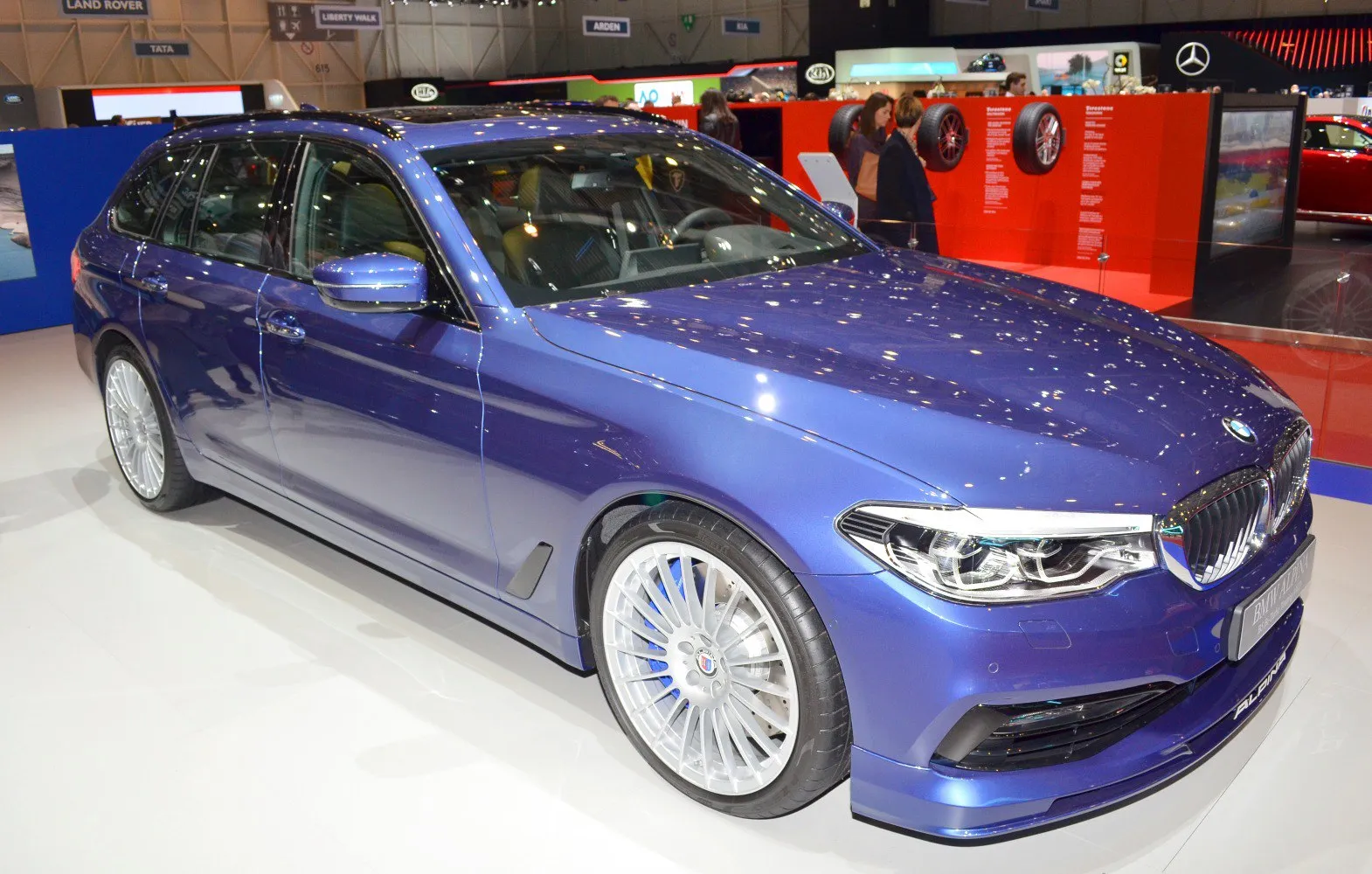
The Alpina B5 and D5 are a series of high performance executive cars manufactured by German Automobile manufacturer Alpina. Introduced at the 2017 Geneva Motor Show, the car is the third generation of the B5 and succeeds the Alpina B5. Based on the BMW 5 Series , the car is available in both saloon and wagon bodystyles.
Based on the 540i X-Drive, but the B5 uses a modified 4. 4-litre N63 twin-turbocharged V8 called the N63TU2. Modifications include a re-designed air intake, cooling system, higher compression Mahle pistons, twin-scroll Garrett turbos, a larger intercooler, new NGK spark plugs and revised ECU map. A lighter exhaust system also reduces back pressure. This allows a higher power output of 447 kW and 800 N⋅m of torque. Due to the higher torque output, the 8-speed automatic transmission, manufactured by ZF, uses stronger internals. Alpina TCU mapping allows quicker shift times and launch control. The transmission allows 100 launches before disabling the feature to preserve reliability....(Read more on Wikipedia)
Sedan (F10 LCI, Facelift 2013) Overview:
Alpina B5 (Sedan (F10 LCI, Facelift 2013)). With 800 Nm of torque, it offers ample pulling power. With a weight of 1970 kg, it falls in the mid‑range. Rear‑wheel drive offers dynamic handling and sporty feedback. Acceleration is excellent (0–100 km/h in 4.2 s). The top speed reaches 328 km/h. A four-door car with a separate trunk, ideal for families and daily commuting. Seating for 5 makes it ideal for daily use.
4.4 V8 (600 Hp) Switch-Tronic Verdict:

Performance Verdict
This 4.4L BiTurbo V8 delivers exhilarating performance with 600 Hp and 800 Nm of torque, propelling the B5 from 0-100 km/h in a rapid 4.2 seconds. Its power delivery is smooth yet relentless, characteristic of Alpina's high-performance luxury tuning.
Fuel Economy
Achieving 9.5 l/100 km combined, the fuel economy is remarkably efficient for a 600 Hp V8, thanks to advanced engine technology and the smooth Switch-Tronic transmission. However, real-world spirited driving will naturally see higher consumption.
Pros and Cons:
Pros:
- • Exceptional performance with refined power delivery
- • Luxurious and comfortable interior for long journeys
- • Understated styling offers exclusivity over M models
- • Superb ride quality, balancing sportiness with comfort
- • High-quality craftsmanship and attention to detail
Cons:
- • High purchase price and running costs
- • Potentially complex maintenance for a highly tuned engine
- • Limited availability and specialist servicing required
- • Fuel consumption can be high during spirited driving
- • Steering feel might be less direct than an M5 for some enthusiasts
Specifications:
Specifications are compared to those of the previous generation(Touring (F11): 2011 - 2013).
| General: | |
|---|---|
| Brand: | Alpina |
| Model: | B5 |
| Generation: | Sedan (F10 LCI, Facelift 2013) |
| Modification (Engine): | 4.4 V8 (600 Hp) Switch-Tronic |
| Start of production: | 2013 |
| End of production: | 2017 |
| Powertrain Architecture: | Internal Combustion engine |
| Body type: | Sedan |
| Seats: | 5 |
| Doors: | 4 |
| Engine: | |
|---|---|
| Power: | 600 Hp @ 6000 rpm. |
| Power per litre: | 136.5 Hp/l |
| Torque: | 800 Nm @ 3500-4500 rpm. |
| Engine displacement: | 4395 |
| Number of cylinders: | 8 |
| Engine configuration: | V-engine |
| Fuel injection system: | Direct injection |
| Engine aspiration: | BiTurbo, Intercooler |
| Engine layout: | Front, Longitudinal |
| Cylinder Bore: | 89 mm mm |
| Piston Stroke: | 88.3 mm mm |
| Compression ratio: | 10:1 |
| Performance: | |
|---|---|
| Fuel Type: | Petrol (Gasoline) |
| Fuel consumption (economy) - urban: | 13.1 l/100 km |
| Fuel consumption (economy) - extra urban: | 7.4 l/100 km |
| Fuel consumption (economy) - combined: | 9.5 l/100 km |
| Emission standard: | Euro 6 |
| Acceleration 0 - 100 km/h: | 4.2 sec |
| Acceleration 0 - 62 mph: | 4.2 sec |
| Maximum speed: | 328 km/h |
| Weight-to-power ratio: | 3.3 kg/Hp, 304.6 Hp/tonne |
| Weight-to-torque ratio: | 2.5 kg/Nm, 406.1 Nm/tonne |
| Acceleration 0 - 60 mph: | 4 sec |
| Space: | |
|---|---|
| Kerb Weight: | 1970 |
| Max. weight: | 2470 |
| Max load: | 500 |
| Trunk (boot) space - minimum: | 520 l |
| Permitted trailer load with brakes (12%): | 2000 kg |
| Fuel tank capacity: | 70 l |
| Permitted trailer load without brakes: | 750 kg |
| Size: | |
|---|---|
| Length: | 4913 mm mm [Same length.] |
| Width: | 1860 mm mm [Same width.] |
| Height: | 1469 mm mm [16mm more] |
| Wheelbase: | 2968 mm mm [Same wheelbase.] |
| Width including mirrors: | 2102 mm |
| Front track: | 1599 mm |
| Rear (Back) track: | 1585 mm |
| Front overhang: | 838 mm |
| Rear overhang: | 1107 mm |
| Powertrain: | |
|---|---|
| Drivetrain Architecture | The Internal combustion engine (ICE) drives the rear wheels of the vehicle. |
| Drive wheel | Rear wheel drive |
| Number of gears | 8 |
| Transmission type | Automatic |
| Gearbox type | Switch-Tronic |
| Front brakes | Ventilated discs [Best for performance and cooling.] |
| Rear brakes | Ventilated discs [Best for performance and cooling.] |
| Assisting systems | ABS (Anti-lock braking system) |
| Steering type | Steering rack and pinion |
| Power steering | Electric Steering |
| Tires size | 255/35 ZR20; 295/30 ZR20 |
| Wheel rims size | 8.5J x 20; 10J x 20 |



Help others decide – share your experience!