
Click on image to view the full photo gallery
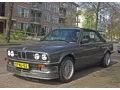
BMW 7 Series E32 735i (220 Hp) Automatic
Overall Rating
BMW 7 Series:
The BMW 7 Series is a full-size luxury sedan manufactured and marketed by the German automaker BMW since 1977. It is the successor to the BMW E3 "New Six" sedan and is now in its seventh generation.
The 7 Series is BMW's flagship car and is only available in a sedan bodystyle. It traditionally introduces technologies and exterior design themes before other models in BMW's lineup.
The first generation of the 7 Series was powered by straight-6 petrol engines, and following generations have been powered by inline-4, straight-6, V8 and V12 engines with both natural aspiration and turbocharging. Since 1995, diesel engines have been optional in the 7 Series....(Read more on Wikipedia)
E32 Overview:
BMW 7 Series (E32). With 315 Nm of torque, it offers ample pulling power. With a weight of 1630 kg, it falls in the mid‑range. Rear‑wheel drive offers dynamic handling and sporty feedback. Acceleration is relatively slow (0–100 km/h in 9.2 s). The top speed reaches 225 km/h. A four-door car with a separate trunk, ideal for families and daily commuting. Seating for 5 makes it ideal for daily use.
735i (220 Hp) Automatic Verdict:

Performance Verdict
While the 220 Hp engine is strong, the automatic transmission slightly dulls its full potential, offering smooth but less urgent acceleration.
Fuel Economy
Moderate fuel consumption, similar to other automatic 735i variants. Not the most efficient, but acceptable for the class.
Pros and Cons:
Pros:
- • Timeless, elegant design and strong road presence.
- • Exceptional ride comfort and refined cabin.
- • Powerful and smooth inline-six and V12 engine options.
- • High-quality interior materials and build.
- • Advanced features for its era (e.g., ABS, traction control).
- • Good value on the classic car market today.
Cons:
- • Fuel consumption can be high, especially with V12 and older automatics.
- • Maintenance and parts can be expensive for a classic luxury car.
- • Some electronic systems can be complex and prone to age-related issues.
- • Rear legroom is adequate but not as expansive as some later models.
- • Lack of modern safety features (e.g., multiple airbags, advanced driver aids).
Specifications:
Specifications are compared to those of the previous generation(E23, facelift 1983: 1983 - 1986).
| General: | |
|---|---|
| Brand: | BMW |
| Model: | 7 Series |
| Generation: | E32 |
| Modification (Engine): | 735i (220 Hp) Automatic |
| Start of production: | 1986 |
| End of production: | 1992 |
| Powertrain Architecture: | Internal Combustion engine |
| Body type: | Sedan |
| Seats: | 5 |
| Doors: | 4 |
| Engine: | |
|---|---|
| Power: | 220 Hp @ 5700 rpm. Same horsepower |
| Power per litre: | 64.1 Hp/l [50mm more] |
| Torque: | 315 Nm @ 4000 rpm. |
| Engine Model/Code: | M30B35 More details about the engine M30B35 |
| Engine displacement: | 3430 |
| Number of cylinders: | 6 |
| Engine configuration: | Inline |
| Number of valves per cylinder: | 2 |
| Fuel injection system: | Multi-port manifold injection |
| Engine aspiration: | Naturally aspirated engine |
| Engine oil capacity: | 5.75 l |
| Coolant: | 12 l |
| Engine layout: | Front, Longitudinal |
| Cylinder Bore: | 92 mm mm |
| Piston Stroke: | 86 mm mm |
| Compression ratio: | 9.2:1 |
| Performance: | |
|---|---|
| Fuel Type: | Petrol (Gasoline) |
| Fuel consumption (economy) - urban: | 16.7 l/100 km |
| Fuel consumption (economy) - extra urban: | 7.6 l/100 km |
| Fuel consumption (economy) - combined: | 11.3 l/100 km |
| Acceleration 0 - 100 km/h: | 9.2 sec |
| Acceleration 0 - 62 mph: | 9.2 sec |
| Maximum speed: | 225 km/h |
| Weight-to-power ratio: | 7.4 kg/Hp, 135 Hp/tonne |
| Weight-to-torque ratio: | 5.2 kg/Nm, 193.3 Nm/tonne |
| Acceleration 0 - 60 mph: | 8.7 sec |
| Space: | |
|---|---|
| Kerb Weight: | 1630 |
| Max. weight: | 2150 |
| Max load: | 520 |
| Trunk (boot) space - minimum: | 500 l |
| Fuel tank capacity: | 90 l |
| Size: | |
|---|---|
| Length: | 4910 mm mm [50mm more] |
| Width: | 1845 mm mm [45mm more] |
| Height: | 1411 mm mm [19mm less] |
| Wheelbase: | 2832 mm mm [37mm more] |
| Front track: | 1527 mm |
| Rear (Back) track: | 1550 mm |
| Minimum turning circle (turning diameter): | 11.6 m [above average] |
| Powertrain: | |
|---|---|
| Drivetrain Architecture | The Internal combustion engine (ICE) drives the rear wheels of the vehicle. |
| Drive wheel | Rear wheel drive |
| Number of gears | 4 |
| Transmission type | Automatic |
| Front brakes | Ventilated discs [Best for performance and cooling.] |
| Rear brakes | Disc [above average] |
| Assisting systems | ABS (Anti-lock braking system) |
| Steering type | Steering rack and pinion |
| Power steering | Hydraulic Steering |
| Tires size | 225/60 VR 15 |
| Wheel rims size | 15 |
| Front suspension | Coil spring |
| Rear suspension | Coil spring |






Behind the wheel of the BMW 7 Series. How does it handle on the road?