
Click on image to view the full photo gallery
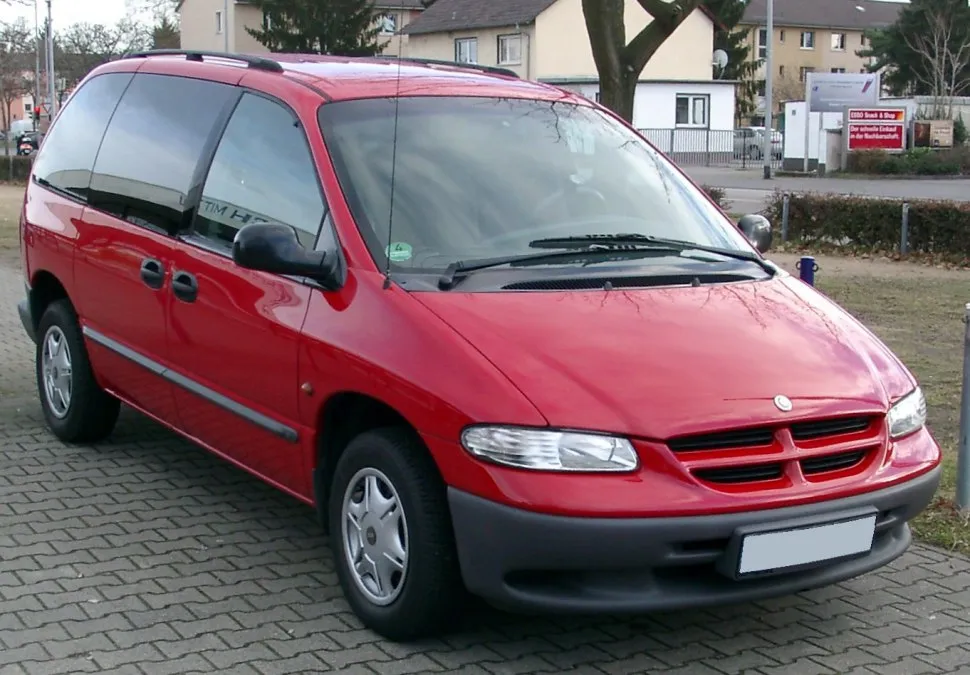
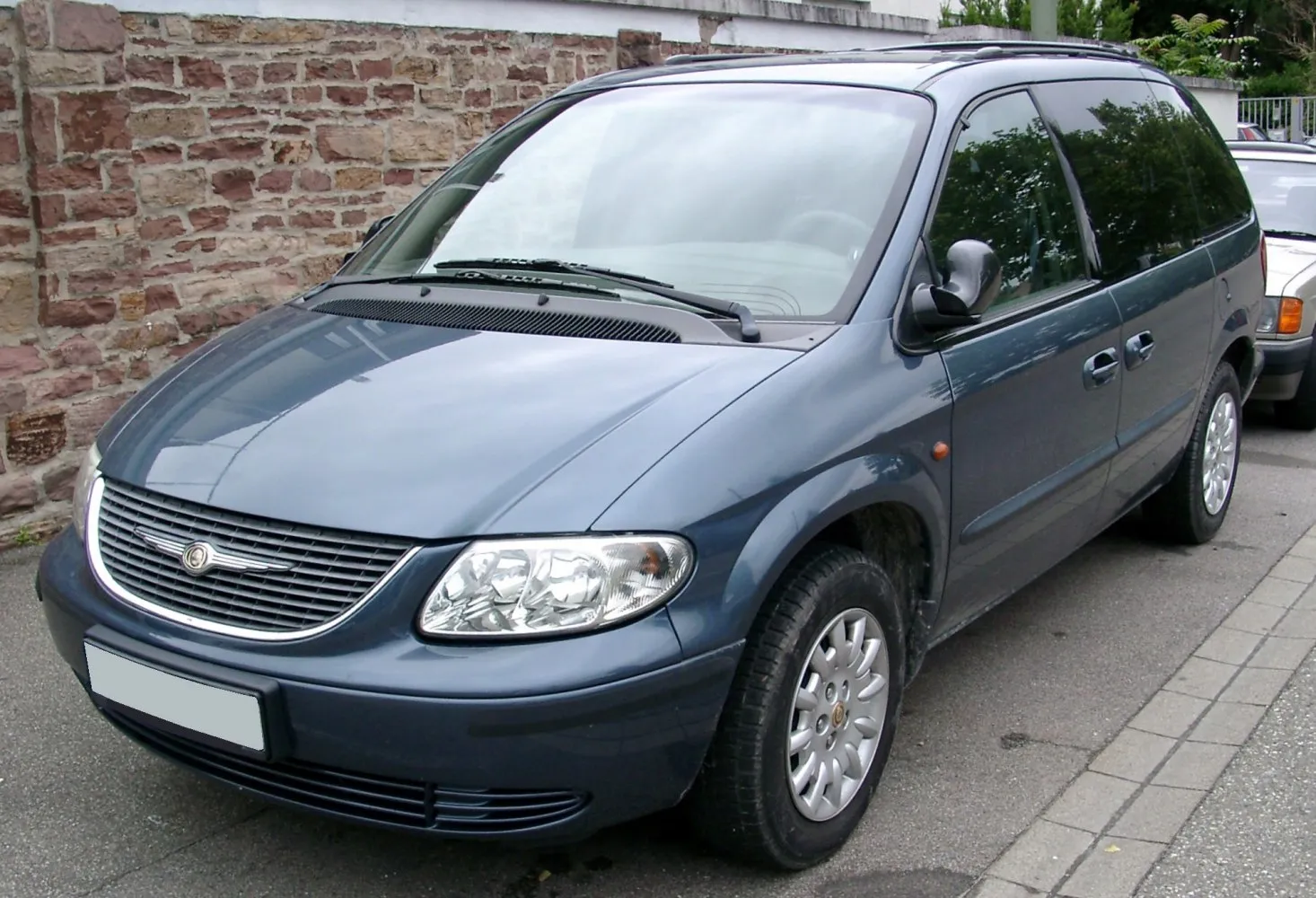
Chrysler Voyager Grand Voyager III 2.5 TD (115 Hp)
Overall Rating
Chrysler Voyager:
The Chrysler Voyager is a minivan produced by the Chrysler division of Stellantis. In the current lineup, it is positioned as the lower-end Chrysler minivan, having replaced the Dodge Grand Caravan in 2020, below the Chrysler Pacifica.
The Chrysler Voyager was introduced in Europe in 1988, and was a rebadged version of the Dodge Caravan in the United States. It originally evolved with the Caravan, the Plymouth Voyager, and the Chrysler Town & Country. In the United States, the Chrysler Voyager nameplate replaced the short-wheelbase version of the Plymouth Voyager following the folding of the Plymouth division by DaimlerChrysler AG in 2001, and was discontinued in 2003. The nameplate was revived for the 2021 model year following the discontinuation of the Dodge Grand Caravan after the 2020 model year, and is rebadged as the Chrysler Grand Caravan in Canada....(Read more on Wikipedia)
Grand Voyager III Overview:
Chrysler Voyager (Grand Voyager III). With 262 Nm of torque, it offers ample pulling power. It has moderate fuel consumption (~11.4 l/100km). With a weight of 1930 kg, it falls in the mid‑range. Front‑wheel drive delivers efficiency and easy handling. Acceleration is relatively slow (0–100 km/h in 12.6 s). The top speed reaches 175 km/h. A spacious vehicle designed to transport passengers comfortably, often with sliding doors. With seating for 7, it’s perfect for larger families.
2.5 TD (115 Hp) Verdict:

Performance Verdict
Offers adequate performance for a large minivan, with good low-end torque making it suitable for hauling passengers and luggage.
Fuel Economy
The most fuel-efficient option in the lineup, providing reasonable economy for its size, especially on longer highway journeys.
Pros and Cons:
Pros:
- • Extremely spacious and versatile interior with flexible seating
- • Comfortable and smooth ride quality, ideal for long journeys
- • Good value on the used market for a large family vehicle
- • Practical sliding doors for easy access in tight spaces
Cons:
- • Dated safety ratings by modern standards (2-star Euro NCAP)
- • Petrol V6 engines can be very thirsty, especially the 3.8L 4x4
- • Some reliability concerns, particularly with older models and transmissions
- • Large exterior dimensions can make city driving and parking challenging
Specifications:
Specifications are compared to those of the previous generation(II: 1992 - 1995).
| General: | |
|---|---|
| Brand: | Chrysler |
| Model: | Voyager |
| Generation: | Grand Voyager III |
| Modification (Engine): | 2.5 TD (115 Hp) |
| Start of production: | 1995 |
| End of production: | 2000 |
| Powertrain Architecture: | Internal Combustion engine |
| Body type: | Minivan |
| Seats: | 7 |
| Doors: | 4 |
| Engine: | |
|---|---|
| Power: | 115 Hp @ 4000 rpm. Same horsepower |
| Power per litre: | 46 Hp/l [545mm more] |
| Torque: | 262 Nm @ 1800 rpm. |
| Engine Model/Code: | ENC More details about the engine ENC |
| Engine displacement: | 2499 |
| Number of cylinders: | 4 |
| Engine configuration: | Inline |
| Number of valves per cylinder: | 2 |
| Fuel injection system: | Precombustion chamber injection |
| Engine aspiration: | Turbocharger |
| Engine oil capacity: | 6.5 l |
| Coolant: | 10 l |
| Engine layout: | Front, Transverse |
| Cylinder Bore: | 92 mm mm |
| Piston Stroke: | 94 mm mm |
| Compression ratio: | 21:1 |
| Performance: | |
|---|---|
| Fuel Type: | Diesel |
| Fuel consumption (economy) - urban: | 11.4 l/100 km |
| Fuel consumption (economy) - extra urban: | 7.2 l/100 km |
| Acceleration 0 - 100 km/h: | 12.6 sec |
| Acceleration 0 - 62 mph: | 12.6 sec |
| Maximum speed: | 175 km/h |
| Weight-to-power ratio: | 16.8 kg/Hp, 59.6 Hp/tonne |
| Weight-to-torque ratio: | 7.4 kg/Nm, 135.8 Nm/tonne |
| Acceleration 0 - 60 mph: | 12 sec |
| Space: | |
|---|---|
| Kerb Weight: | 1930 |
| Max. weight: | 2580 |
| Max load: | 650 |
| Trunk (boot) space - maximum: | 4880 l |
| Trunk (boot) space - minimum: | 671 l |
| Fuel tank capacity: | 75 l |
| Size: | |
|---|---|
| Length: | 5070 mm mm [545mm more] |
| Width: | 1950 mm mm [120mm more] |
| Height: | 1740 mm mm [33mm more] |
| Wheelbase: | 3030 mm mm [177mm more] |
| Front track: | 1600 mm |
| Rear (Back) track: | 1626 mm |
| Powertrain: | |
|---|---|
| Drivetrain Architecture | The Internal combustion engine (ICE) drives the front wheels of the vehicle. |
| Drive wheel | Front wheel drive |
| Number of gears | 5 |
| Transmission type | Manual |
| Front brakes | Ventilated discs [Best for performance and cooling.] |
| Rear brakes | Drum [bad for performance and cooling.] |
| Assisting systems | ABS (Anti-lock braking system) |
| Steering type | Steering rack and pinion |
| Power steering | Hydraulic Steering |
| Tires size | 215/65 R15 S |
| Front suspension | Wishbone |
| Rear suspension | Rigid axle suspension |






What’s the best feature of the Chrysler Voyager? Tell us in the comments!