
Click on image to view the full photo gallery
Daihatsu MAX 0.7 i 12V R (64 Hp)
Overall Rating
Daihatsu MAX:
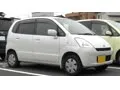
The Daihatsu Fellow Max is a small Japanese automobile in the Kei car class. Originally introduced as the Daihatsu Fellow, the name was partially retained for its successor, the Max Cuore , and then revived in 2000 for the Daihatsu Max.
On 9 November 1966, Daihatsu introduced the Fellow, also known as Daihatsu 360 in export markets. Originally available only in DeLuxe and Super DeLuxe equipment levels, a Standard version joined in February 1967. Also available with a wagon body , as a mini-pickup truck and as a panel van from June 1967, the L37 was conventionally built with a front-mounted engine and rear wheel drive. It used a 23 PS iteration of the 356 cc, water-cooled two-cylinder two-stroke "ZM" engine already seen in the Hijet and a four-speed manual transmission. The self-lubricating little engine weighed only 58 kg. The Fellow was the first Japanese car to be equipped with rectangular headlights....(Read more on Wikipedia)
MAX Overview:
Daihatsu MAX (MAX). With 107 Nm of torque, it offers ample pulling power. Weighing only 870 kg, it’s quite light. Front‑wheel drive delivers efficiency and easy handling. A compact car with a rear door that swings upward to provide access to the cargo area. Seating for 4 makes it ideal for daily use.
The Daihatsu Max generation was not tested by Euro NCAP. As a kei car from this era, its safety features are likely basic compared to larger, contemporary vehicles.
0.7 i 12V R (64 Hp) Verdict:

Performance Verdict
Surprisingly sprightly for its class, thanks to the turbocharged 64 Hp engine, offering adequate acceleration for urban driving and maintaining pace on lighter highways.
Fuel Economy
Expected to be very fuel-efficient, especially in city conditions, benefiting from the small displacement and lightweight design, though the turbo might slightly impact economy under heavy load.
Pros and Cons:
Pros:
- • Excellent maneuverability and compact size for city driving
- • Surprisingly peppy turbocharged engine for its class
- • Good fuel efficiency and low running costs
- • Reliable and practical for daily urban commutes
Cons:
- • Limited interior space for passengers and cargo
- • Basic interior amenities and materials
- • Potentially noisy at higher speeds or on highways
- • Limited crash safety features compared to larger vehicles
Specifications:
| General: | |
|---|---|
| Brand: | Daihatsu |
| Model: | MAX |
| Generation: | MAX |
| Modification (Engine): | 0.7 i 12V R (64 Hp) |
| Start of production: | 2001 |
| End of production: | 2003 |
| Powertrain Architecture: | Internal Combustion engine |
| Body type: | Hatchback |
| Seats: | 4 |
| Doors: | 5 |
| Engine: | |
|---|---|
| Power: | 64 Hp @ 6400 rpm. |
| Power per litre: | 97.1 Hp/l |
| Torque: | 107 Nm @ 3600 rpm. |
| Engine displacement: | 659 |
| Number of cylinders: | 3 |
| Engine configuration: | Inline |
| Number of valves per cylinder: | 4 |
| Fuel injection system: | Multi-port manifold injection |
| Engine aspiration: | Turbocharger, Intercooler |
| Engine layout: | Front, Transverse |
| Cylinder Bore: | 68 mm mm |
| Piston Stroke: | 60.5 mm mm |
| Compression ratio: | 8.5:1 |
| Performance: | |
|---|---|
| Fuel Type: | Petrol (Gasoline) |
| Weight-to-power ratio: | 13.6 kg/Hp, 73.6 Hp/tonne |
| Weight-to-torque ratio: | 8.1 kg/Nm, 123 Nm/tonne |
| Space: | |
|---|---|
| Kerb Weight: | 870 |
| Max. weight: | 1090 |
| Max load: | 220 |
| Fuel tank capacity: | 40 l |
| Size: | |
|---|---|
| Length: | 3395 mm mm |
| Width: | 1475 mm mm |
| Height: | 1550 mm mm |
| Wheelbase: | 2360 mm mm |
| Front track: | 1300 mm |
| Rear (Back) track: | 1280 mm |
| Powertrain: | |
|---|---|
| Drivetrain Architecture | The Internal combustion engine (ICE) drives the front wheels of the vehicle. |
| Drive wheel | Front wheel drive |
| Number of gears | 4 |
| Transmission type | Automatic |
| Front brakes | Disc |
| Rear brakes | Drum |
| Assisting systems | ABS (Anti-lock braking system) |
| Steering type | Steering rack and pinion |
| Power steering | Hydraulic Steering |
| Tires size | 165/55 R14 |
| Front suspension | Coil spring |
| Rear suspension | Coil spring |



Is the Daihatsu MAX the king of its class? Share your thoughts.