De Tomaso Mangusta II 4.8 i V8 32V (305 Hp)
People\'s Opinion
N/A / 5
De Tomaso Mangusta:
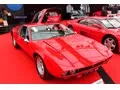
The De Tomaso Mangusta is a sports car produced by Italian automobile manufacturer De Tomaso between 1967 and 1971. It was succeeded by the De Tomaso Pantera.
The Mangusta replaced the Vallelunga model, on which its chassis was based. The word "mangusta" is Italian for "mongoose", an animal that can kill cobras. It was rumoured that the car was so named in retaliation to a failed deal between De Tomaso and Carroll Shelby. Alejandro de Tomaso offered to help Carroll Shelby to build a new Can-Am race car at the end of 1964 when Shelby found that the Shelby Cobra would not be able to compete there. De Tomaso was planning to develop a new 7. 0-litre V8 engine for racing so he saw this as a perfect opportunity. Shelby agreed to finance the project and also sent a SCCA approved design team headed by Pete Brock to Italy in order to handle the design work. De Tomaso had conflicts on the design of the car. He also failed to deliver the agreed 5 race cars within the deadline for the 1965 Can-Am season. This caused Shelby to eventually back out of the project and join the development team of the Ford GT40. Peter Brock and his team were able to finish the car according to their will. De Tomaso engaged Carrozzeria Ghia to finalise the design of the car which was being developed under the project name of P70. The single completed car was displayed at the 1965 Turin Motor Show as the Ghia De Tomaso Sport 5000. De Tomaso then modified the steel backbone chassis of the P70 and it became the basis for the Mangusta, which was designed by Giorgetto Giugiaro at Ghia. The Mangusta entered production in 1967, at the same time De Tomaso had purchased Ghia....(Read more on Wikipedia)
II Overview:
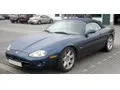
De Tomaso Mangusta (II). With 557 Nm of torque, it offers ample pulling power. Weighing only 1185 kg, it’s quite light. Rear‑wheel drive offers dynamic handling and sporty feedback. The top speed reaches 250 km/h. A convertible car with a retractable roof, offering open-air driving experiences. Seating for 2 makes it ideal for daily use.
Performance Verdict
This 4.8L V8 delivers strong, naturally aspirated performance with 305 Hp and a substantial 557 Nm of torque. Its mid-engine layout and light kerb weight (1185 kg) ensure brisk acceleration and a top speed of 250 km/h, offering a thrilling driving experience.
Fuel Economy
Fuel economy is a significant drawback, with a combined consumption of 16-18 l/100 km. This reflects the large displacement V8 and performance-oriented nature, making it an expensive car to run in terms of fuel.
Best Use Case:
Spirited weekend drives and highway cruising, where its power and sound can be fully appreciated without constant concern for fuel consumption.
Pros and Cons:
Pros:
- • Exhilarating V8 performance and sound
- • Striking and unique Italian design
- • Rare and exclusive collector's item
- • Engaging manual transmission and RWD dynamics
- • Lightweight construction for agile handling
Cons:
- • Very high fuel consumption (16-18 l/100 km)
- • Limited practicality with only two seats
- • Potentially challenging parts availability and maintenance costs
- • Lack of modern safety features and crash test ratings
- • Firm ride quality due to sporty suspension
Specifications:
| General: |
| Brand: | De Tomaso |
|---|
| Model: | Mangusta |
|---|
| Generation: | II |
|---|
| Modification (Engine): | 4.8 i V8 32V (305 Hp) |
|---|
| Start of production: | 1996 |
|---|
| End of production: | 2001 |
|---|
| Powertrain Architecture: | Internal Combustion engine |
|---|
| Body type: | Cabriolet |
|---|
| Seats: | 2 |
|---|
| Doors: | 2 |
|---|
| Engine: |
| Power: | 305 Hp @ 6200 rpm. |
|---|
| Power per litre: | 64.5 Hp/l |
|---|
| Torque: | 557 Nm @ 3500 rpm. |
|---|
| Engine Model/Code: | M60B40 |
|---|
| Engine displacement: | 4728 |
|---|
| Number of cylinders: | 8 |
|---|
| Engine configuration: | V-engine |
|---|
| Number of valves per cylinder: | 2 |
|---|
| Fuel injection system: | Multi-port manifold injection |
|---|
| Engine aspiration: | Naturally aspirated engine |
|---|
| Valvetrain: | OHV |
|---|
| Engine oil capacity: | 7.5 l |
|---|
| Engine layout: | Middle, Longitudinal |
|---|
| Cylinder Bore: | 101.6 mm |
|---|
| Piston Stroke: | 72.89 mm |
|---|
| Compression ratio: | 9.85:1 |
|---|
| Performance: |
| Fuel Type: | Petrol (Gasoline) |
|---|
| Fuel consumption (economy) - combined: | 16-18 l/100 km |
|---|
| Maximum speed: | 250 km/h |
|---|
| Weight-to-power ratio: | 3.9 kg/Hp, 257.4 Hp/tonne |
|---|
| Weight-to-torque ratio: | 2.1 kg/Nm, 470 Nm/tonne |
|---|
| Space: |
| Kerb Weight: | 1185 |
|---|
| Fuel tank capacity: | 90 l |
|---|
| Size: |
| Length: | 4275 mm |
|---|
| Width: | 1830 mm |
|---|
| Height: | 1100 mm |
|---|
| Wheelbase: | 2500 mm |
|---|
| Front track: | 1395 mm |
|---|
| Rear (Back) track: | 1450 mm |
|---|
| Front overhang: | 915 mm |
|---|
| Rear overhang: | 860 mm |
|---|
| Powertrain: |
| Drivetrain Architecture | The Internal combustion engine (ICE) drives the rear wheels of the vehicle. |
|---|
| Drive wheel | Rear wheel drive |
|---|
| Number of gears | 5 |
|---|
| Transmission type | Manual |
|---|
| Front brakes | Disc, 292 mm |
|---|
| Rear brakes | Disc, 280 mm |
|---|
| Assisting systems | ABS (Anti-lock braking system) |
|---|
| Steering type | Steering rack and pinion |
|---|
| Front suspension | Independent multi-link suspension |
|---|
| Rear suspension | Trailing arm |
|---|













Describe your experience with the De Tomaso Mangusta using only emojis!