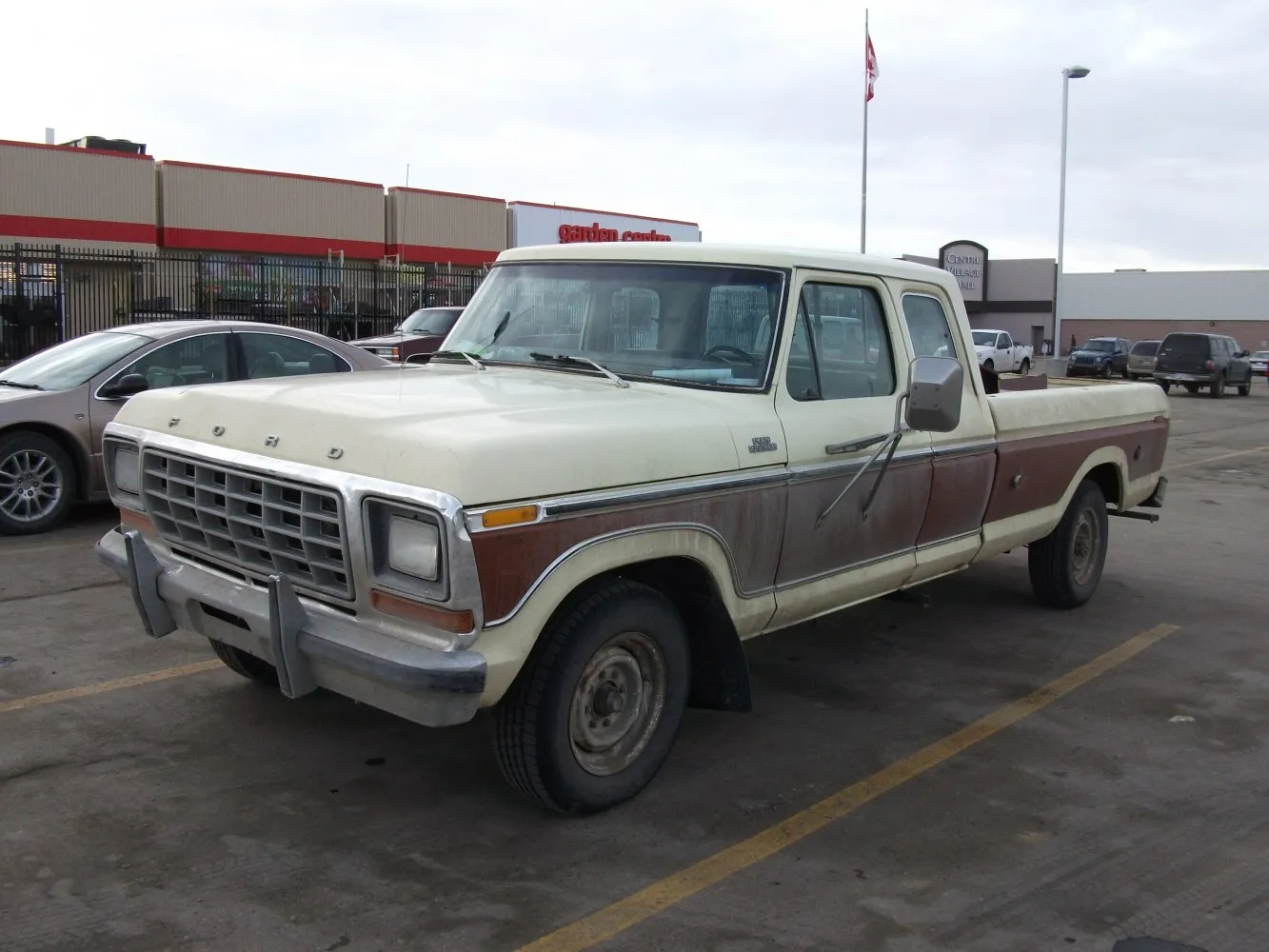
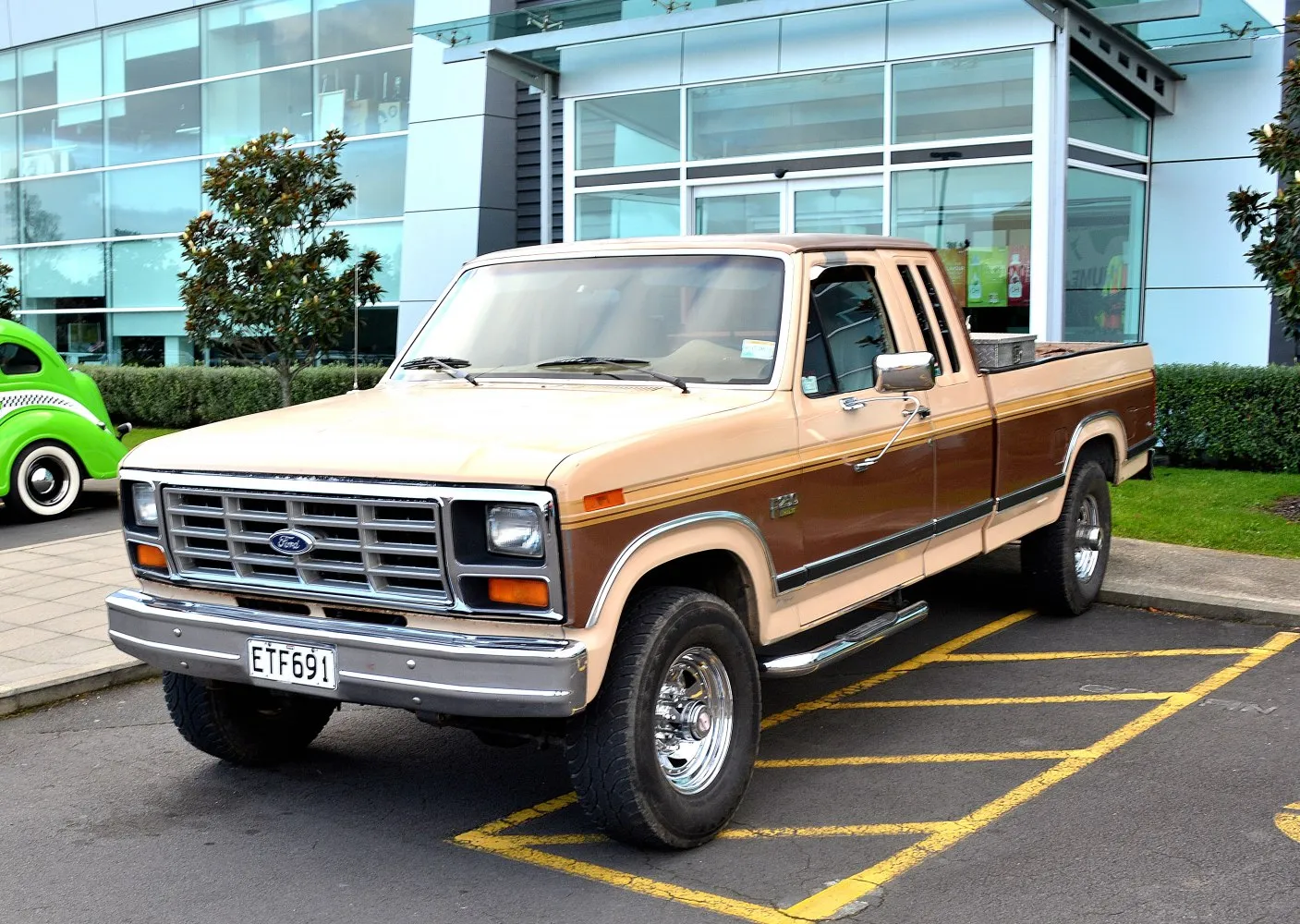
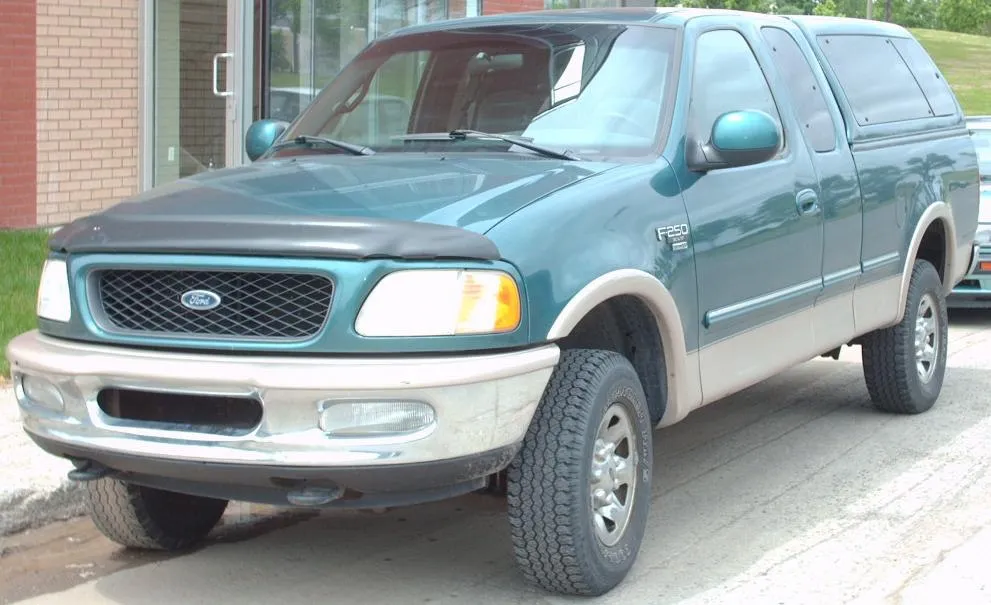
Ford F-Series F-250 VI Regular Cab 4.9 300 Six (113 Hp) Automatic
People\'s Opinion
N/A / 5
Ford F-Series F-250:
The Ford F-Series is a series of light-duty trucks marketed and manufactured by the Ford Motor Company since model year 1948 as a range of full-size pickup trucks — positioned between Ford's Ranger and Super Duty pickup trucks. Alongside the F-150 , the F-Series also includes the Super Duty series , which includes the heavier-duty F-250 through F-450 pickups, F-450/F-550 chassis cabs, and F-600/F-650/F-750 Class 6–8 commercial trucks.
The most popular version of the model line is the F-150 pickup truck, currently in its fourteenth generation. From 1953 to 1983, the entry-level F-Series pickup was the. mw-parser-output. frac. mw-parser-output. frac. num,. mw-parser-output. frac. den. mw-parser-output. frac. den. mw-parser-output. sr-only1⁄2 ton F-100. Starting in 1984, the F-150 became the entry-level. The F-150 has a long-running high-performance off-road trim level introduced for 2010, the Raptor currently consisting of three generations. Production of the F-150 SVT Raptor ended in 2014 and was succeeded in 2017 by a new F-150 Raptor, which is based on the thirteenth and fourteenth generation F-150....(Read more on Wikipedia)
VI Regular Cab Overview:
Ford F-Series F-250 (VI Regular Cab). Rear‑wheel drive offers dynamic handling and sporty feedback. A vehicle with an open cargo bed at the back, suitable for transporting goods. Seating for 3 makes it ideal for daily use.
Performance Verdict
The 113 Hp 300 Six with an automatic transmission, providing a smooth and reliable option for basic truck duties and ease of driving.
Fuel Economy
Good fuel economy for its class, prioritizing longevity and ease of use over raw power, making it a practical choice.
Best Use Case:
Economical daily driver, light hauling, and long-term reliability with automatic convenience for urban or highway use.
Pros and Cons:
Pros:
- • Legendary durability and robust construction, built to last
- • Wide range of powerful V8 and reliable Inline-6 engine options
- • Excellent towing and hauling capabilities for its era
- • Simple, easy-to-maintain mechanicals, appealing to DIYers
- • Classic American truck styling with a strong enthusiast following
Cons:
- • Poor fuel economy across all engine options by modern standards
- • Lack of modern safety features and crash test ratings
- • Basic interior comfort and amenities, not designed for luxury
- • Rough ride quality, especially when unloaded, typical of heavy-duty trucks
- • Steering and handling are typical of a heavy-duty truck of its age, requiring effort
Specifications:
| General: |
| Brand: | Ford |
|---|
| Model: | F-Series F-250 |
|---|
| Generation: | VI Regular Cab |
|---|
| Modification (Engine): | 4.9 300 Six (113 Hp) Automatic |
|---|
| Start of production: | 1975 |
|---|
| End of production: | 1979 |
|---|
| Powertrain Architecture: | Internal Combustion engine |
|---|
| Body type: | Pick-up |
|---|
| Seats: | 3 |
|---|
| Doors: | 2 |
|---|
| Engine: |
| Power: | 113 Hp |
|---|
| Power per litre: | 23 Hp/l |
|---|
| Engine displacement: | 4916 |
|---|
| Number of cylinders: | 6 |
|---|
| Engine configuration: | Inline |
|---|
| Fuel injection system: | Carburettor |
|---|
| Engine aspiration: | Naturally aspirated engine |
|---|
| Engine layout: | Front, Longitudinal |
|---|
| Cylinder Bore: | 101.6 mm mm |
|---|
| Piston Stroke: | 101.09 mm mm |
|---|
| Performance: |
| Fuel Type: | Petrol (Gasoline) |
|---|
| Space: |
| Max. weight: | 3674 |
|---|
| Trunk (boot) space - minimum: | 1852-2084 l |
|---|
| Size: |
| Wading depth: | 681 mm |
|---|
| Length: | 5215 mm mm |
|---|
| Wheelbase: | 3378 mm mm |
|---|
| Powertrain: |
| Drivetrain Architecture | The Internal combustion engine (ICE) drives the rear wheels of the vehicle. |
|---|
| Drive wheel | Rear wheel drive |
|---|
| Transmission type | Automatic |
|---|
| Gearbox type | Cruise-O-Matic |
|---|
| Front brakes | Disc |
|---|
| Rear brakes | Drum |
|---|
| Tires size | 215/85 R16.5 |
|---|
| Wheel rims size | 6J x 16.5 |
|---|
| Front suspension | Independent coil spring |
|---|
| Rear suspension | Leaf spring |
|---|










Every driver has a story. What’s yours with the Ford F-Series F-250?