
Click on image to view the full photo gallery
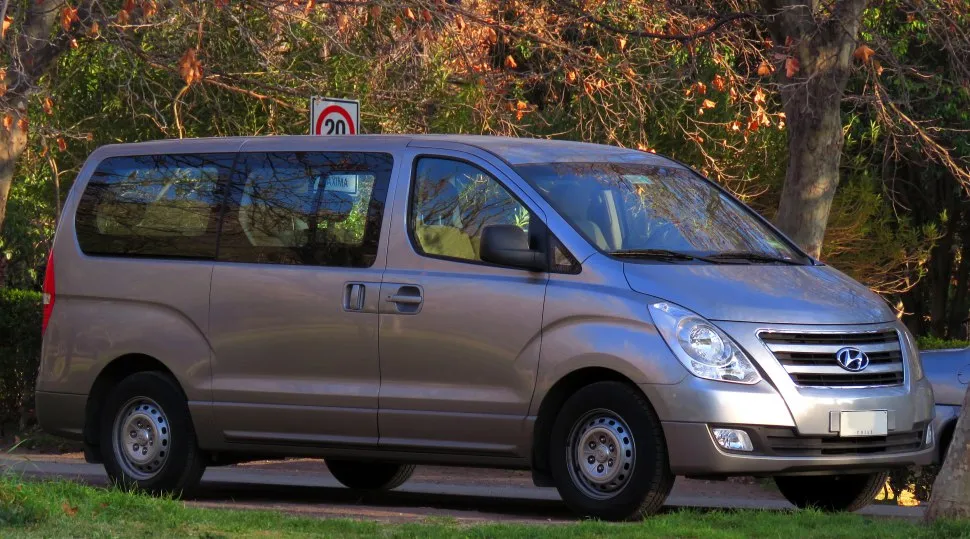
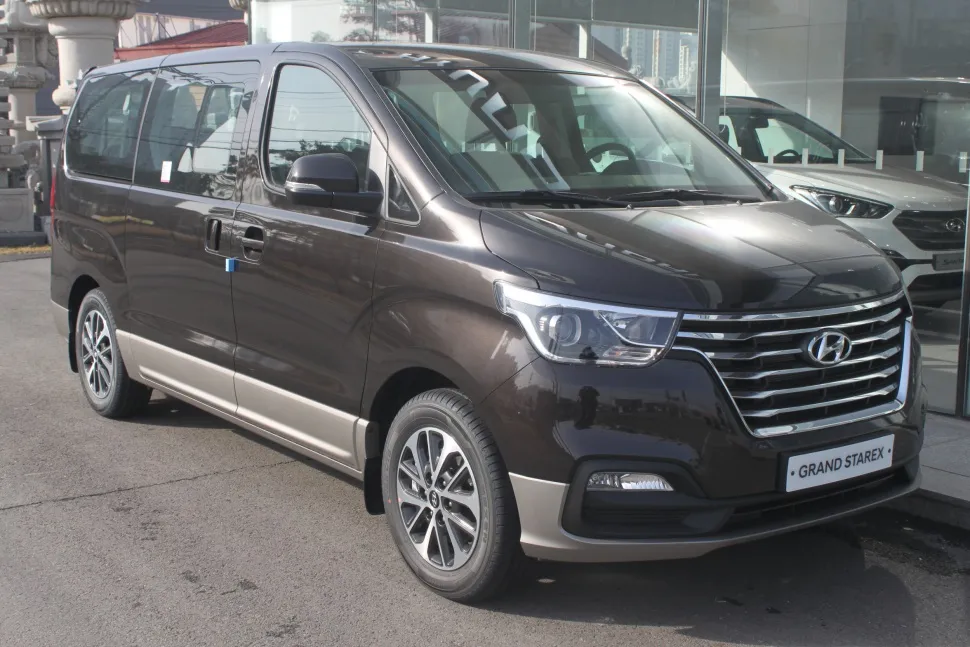
Hyundai H-1 II Cargo 2.5 CRDi (116 Hp)
Overall Rating
Hyundai H-1:
Hyundai H-1 is a nameplate of a van and pickup truck used by Hyundai Motor Company in European export markets for three related models:....(Read more on Wikipedia)
II Cargo Overview:
Hyundai H-1 (II Cargo). With 343 Nm of torque, it offers ample pulling power. It has moderate fuel consumption (~9.3 l/100km). At around 2036 kg, it’s on the heavier side. Rear‑wheel drive offers dynamic handling and sporty feedback. Acceleration is relatively slow (0–100 km/h in 22.1 s). The top speed reaches 154 km/h. A spacious vehicle designed to transport passengers comfortably, often with sliding doors. Seating for 3 makes it ideal for daily use.
2.5 CRDi (116 Hp) Verdict:

Performance Verdict
Entry-level power, best suited for light-duty tasks and city driving. Acceleration is slow, requiring patience, especially when carrying significant loads.
Fuel Economy
Offers the best potential for fuel efficiency among the manual options, with a combined 7.6 l/100 km, making it cost-effective for urban operations.
Pros and Cons:
Pros:
- • Spacious and versatile cargo capacity (up to 5190L)
- • Robust and proven D4CB diesel engines
- • Good towing capacity for its class (up to 2300 kg with brakes)
- • Competitive pricing and strong value proposition for commercial use
- • Available in multiple power outputs and seating configurations
Cons:
- • Basic interior comfort and amenities, typical for a commercial van
- • Lower trims offer sluggish acceleration, especially when loaded
- • No specific Euro NCAP safety rating available for this generation
- • Higher fuel consumption on the more powerful automatic variants
- • Rear-wheel drive layout might be less ideal in snowy conditions for some users
Specifications:
Specifications are compared to those of the previous generation(II Travel: 2008 - 2015).
| General: | |
|---|---|
| Brand: | Hyundai |
| Model: | H-1 |
| Generation: | II Cargo |
| Modification (Engine): | 2.5 CRDi (116 Hp) |
| Start of production: | 2011 |
| End of production: | 2015 |
| Powertrain Architecture: | Internal Combustion engine |
| Body type: | Minivan |
| Seats: | 3 |
| Doors: | 5 |
| Engine: | |
|---|---|
| Engine systems: | Particulate filter |
| Power: | 116 Hp @ 3800 rpm. |
| Power per litre: | 46.5 Hp/l |
| Torque: | 343 Nm @ 1500-2250 rpm. |
| Engine Model/Code: | D4CB [Same engine] More details about the engine D4CB |
| Engine displacement: | 2497 |
| Number of cylinders: | 4 |
| Engine configuration: | Inline |
| Number of valves per cylinder: | 4 |
| Fuel injection system: | Diesel Commonrail |
| Engine aspiration: | Turbocharger, Intercooler |
| Engine oil capacity: | 7.4 l |
| Coolant: | 10 l |
| Engine layout: | Front, Longitudinal |
| Cylinder Bore: | 91 mm mm |
| Piston Stroke: | 96 mm mm |
| Compression ratio: | 16.4:1 |
| Performance: | |
|---|---|
| Fuel Type: | Diesel |
| Fuel consumption (economy) - urban: | 9.3 l/100 km |
| Fuel consumption (economy) - extra urban: | 6.5 l/100 km |
| Fuel consumption (economy) - combined: | 7.6 l/100 km |
| Emission standard: | Euro 5 |
| Acceleration 0 - 100 km/h: | 22.1 sec |
| Acceleration 0 - 62 mph: | 22.1 sec |
| Maximum speed: | 154 km/h |
| Weight-to-power ratio: | 17 kg/Hp, 58.8 Hp/tonne |
| Weight-to-torque ratio: | 5.8 kg/Nm, 173.8 Nm/tonne |
| Acceleration 0 - 60 mph: | 21 sec |
| Space: | |
|---|---|
| Kerb Weight: | 1974-2098 |
| Max. weight: | 3160 |
| Max. roof load: | 80 kg |
| Max load: | 1062-1186 |
| Trunk (boot) space - maximum: | 5190 l |
| Permitted trailer load with brakes (12%): | 2300 kg |
| Fuel tank capacity: | 75 l |
| Permitted trailer load without brakes: | 750 kg |
| Permitted towbar download: | 100 kg |
| Size: | |
|---|---|
| Length: | 5150 mm mm [Same length.] |
| Width: | 1920 mm mm [Same width.] |
| Height: | 1925 mm mm [Same height.] |
| Wheelbase: | 3200 mm mm [Same wheelbase.] |
| Front track: | 1685 mm |
| Rear (Back) track: | 1660 mm |
| Front overhang: | 880 mm |
| Rear overhang: | 1070 mm |
| Minimum turning circle (turning diameter): | 11.22 m [above average] |
| Powertrain: | |
|---|---|
| Drivetrain Architecture | The Internal combustion engine (ICE) drives the rear wheels of the vehicle. |
| Drive wheel | Rear wheel drive |
| Number of gears | 6 |
| Transmission type | Manual |
| Front brakes | Ventilated discs [Best for performance and cooling.] |
| Rear brakes | Disc [above average] |
| Assisting systems | ABS (Anti-lock braking system) |
| Steering type | Steering rack and pinion |
| Tires size | 215/70 R16 |
| Wheel rims size | 6.5 J x 16 |




Behind the wheel of the Hyundai H-1. How does it handle on the road?