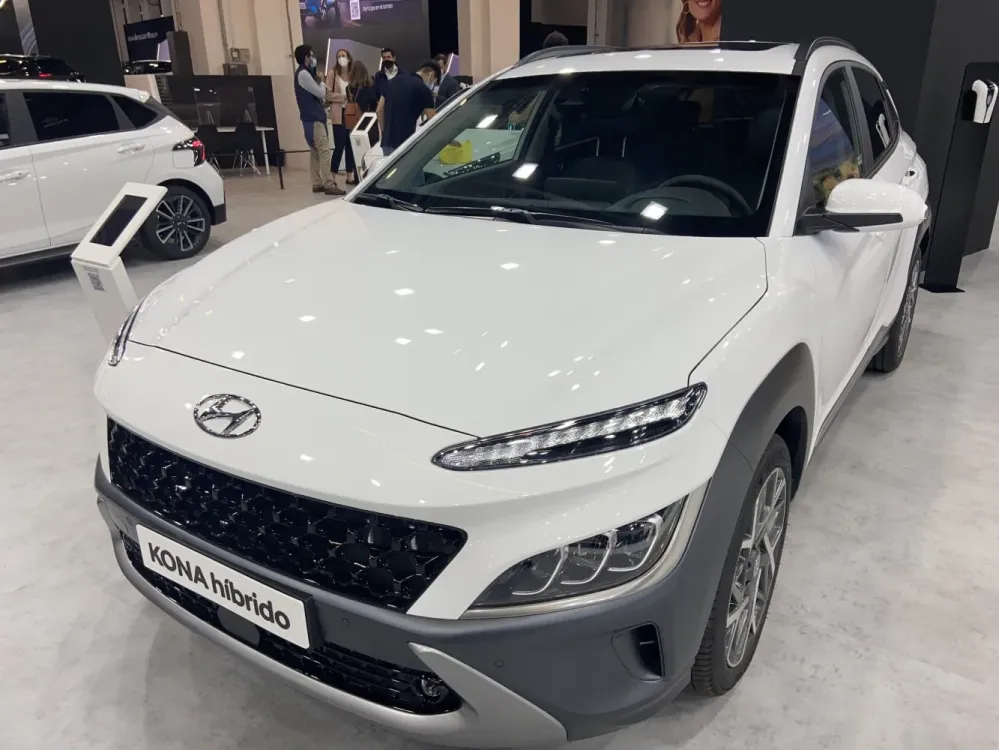
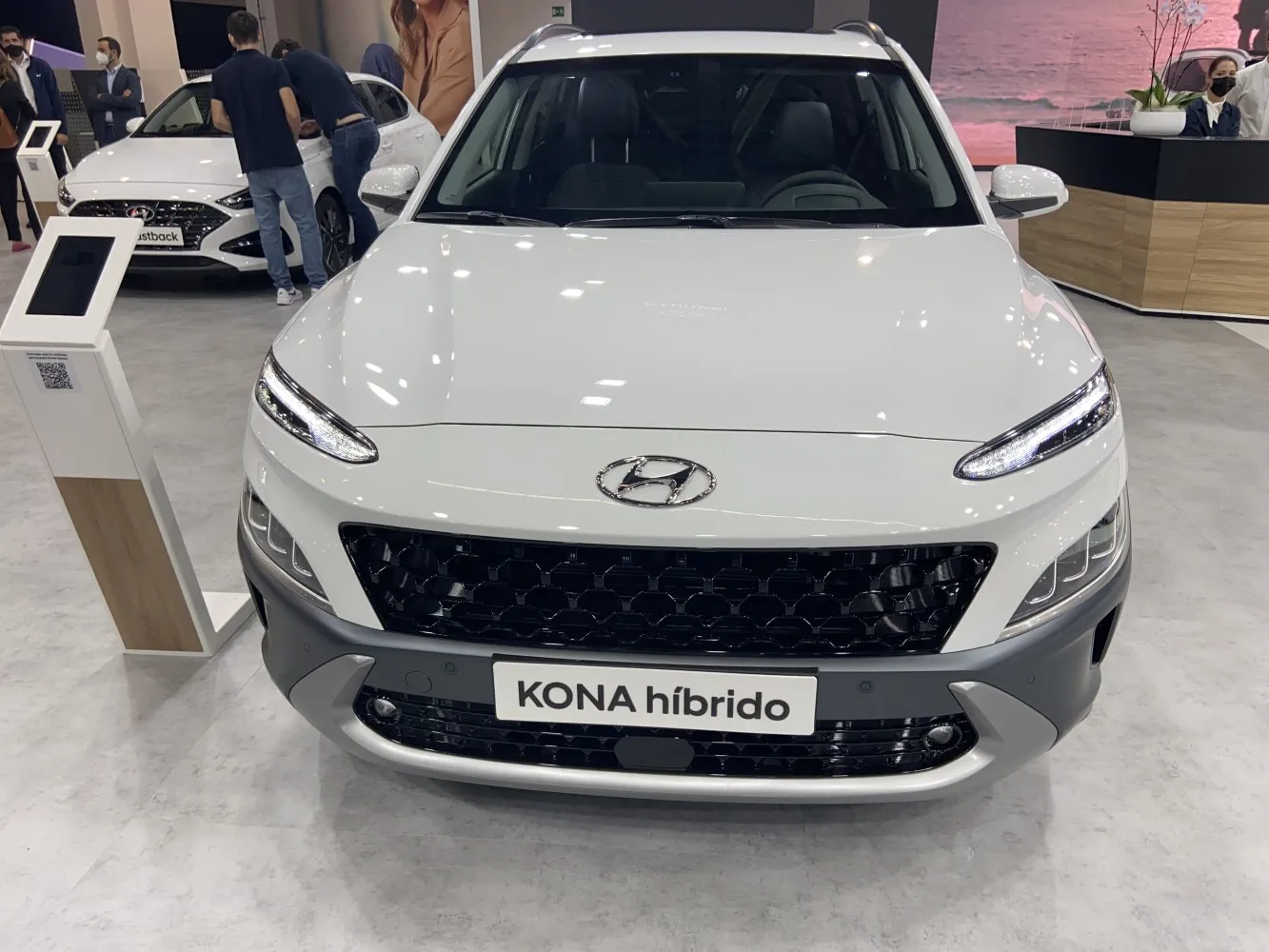
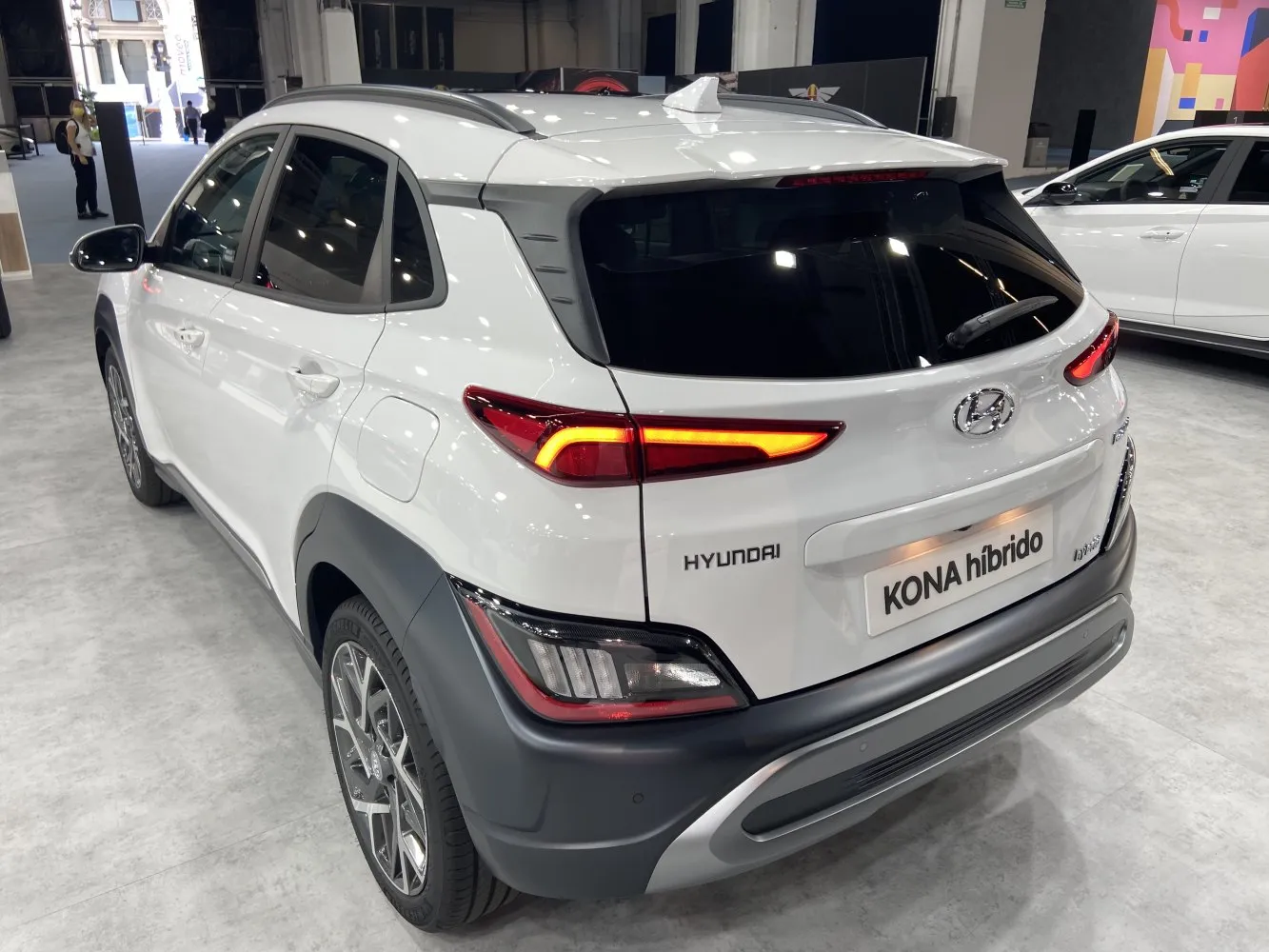
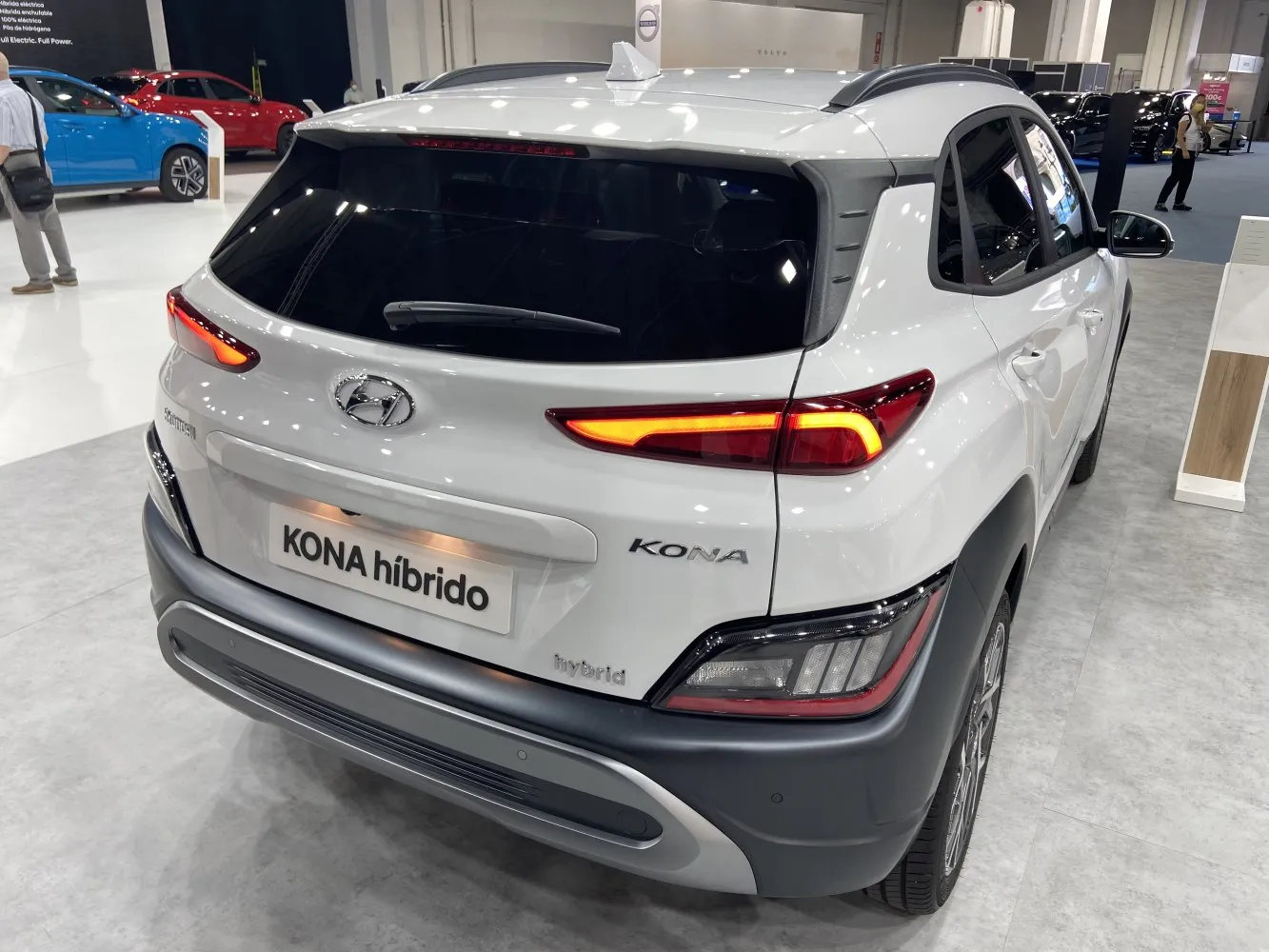
Hyundai Kona I (facelift 2020) 1.0 T-GDi (120 Hp) Mild Hybrid
Hyundai Kona:
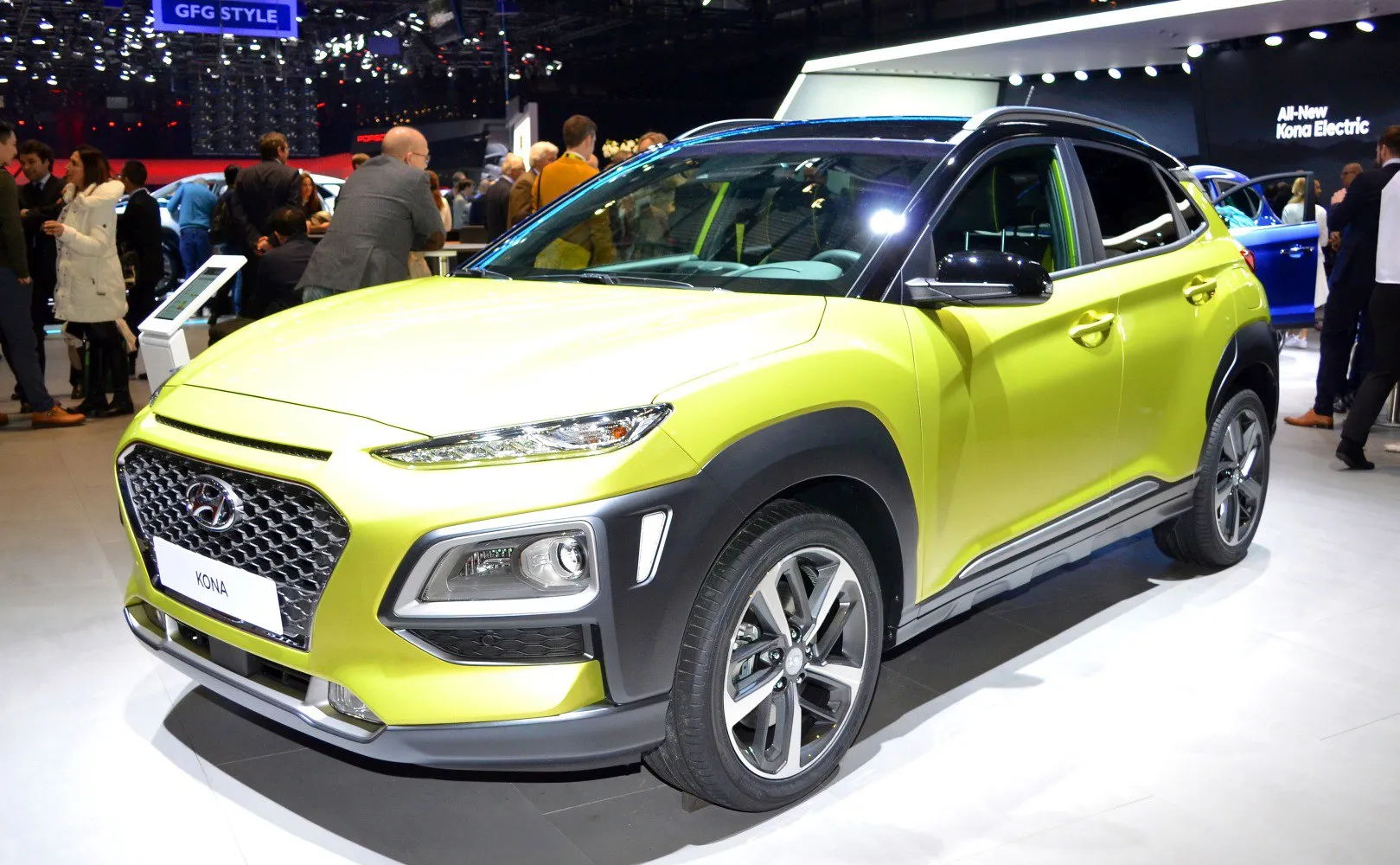
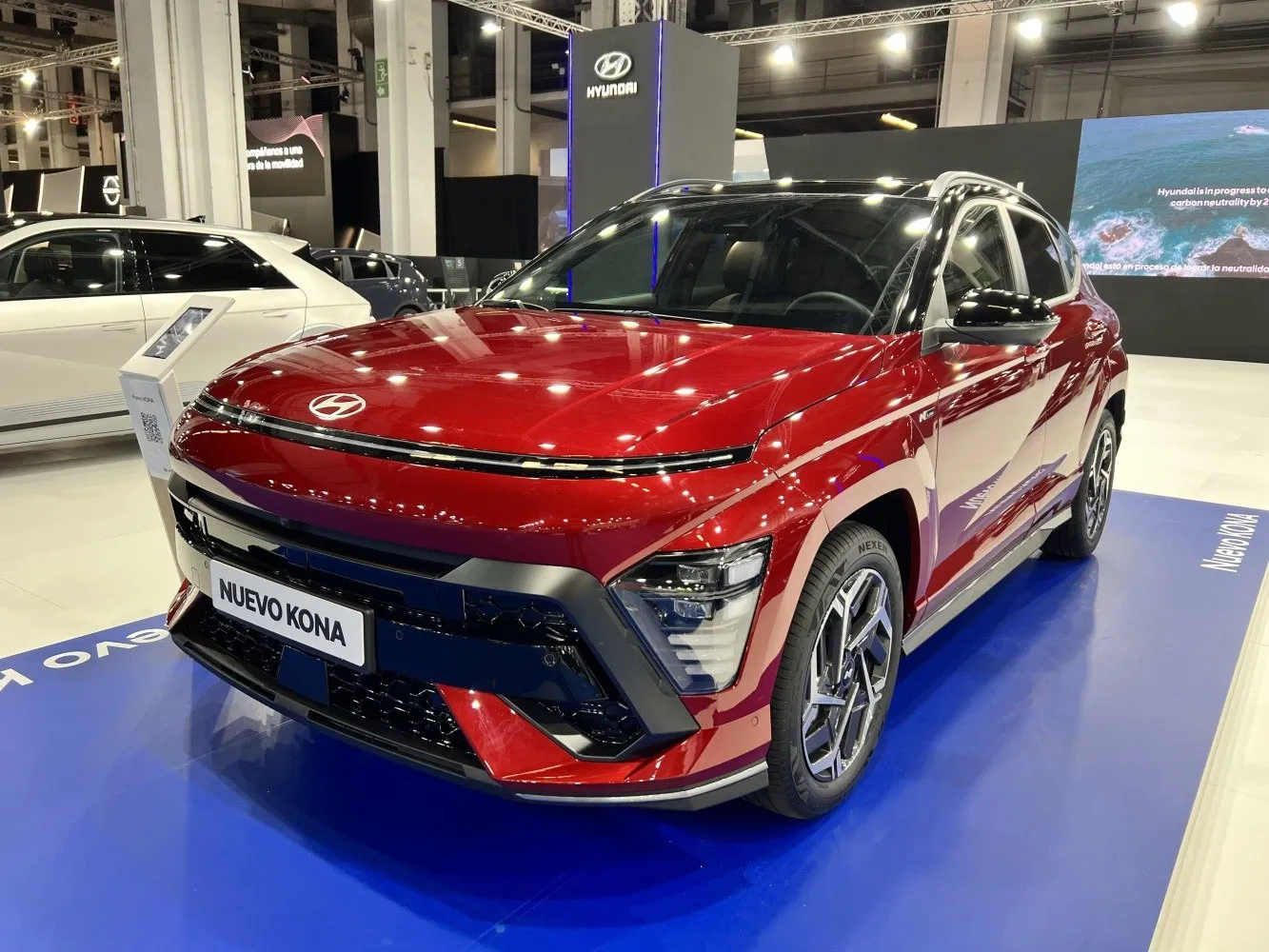
The Hyundai Kona is a subcompact crossover SUV produced by the South Korean manufacturer Hyundai. The first-generation Kona debuted in June 2017 and the production version was revealed later that year. It is positioned between the Venue or Bayon and the Tucson in Hyundai crossover SUV line-up. The battery electric version called the Kona Electric was first launched in South Korea during the first half of 2018 and rolled out gradually worldwide afterwards.
The Kona is named after the western district of the island of Hawaiʻi. The company stated the name "reflects the lifestyle of modern customers", in line with its "progressive design" that it adopts. The Kona naming also continues Hyundai's tradition of naming crossover SUV models after famous travel destinations, including the Creta, Santa Fe, Tucson and Veracruz....(Read more on Wikipedia)
I (facelift 2020) Overview:
Hyundai Kona (I (facelift 2020)). With 172 Nm of torque, it offers ample pulling power. Weighing only 1265 kg, it’s quite light. Front‑wheel drive delivers efficiency and easy handling. Acceleration is relatively slow (0–100 km/h in 11.9 s). The top speed reaches 180 km/h. A sport utility vehicle offering higher ground clearance and versatile cargo space. Seating for 5 makes it ideal for daily use.
Pros and Cons:
Pros:
- • Efficiency-focused engine (120 hp), ideal for city commuting.
- • Steady and predictable acceleration (0-100 km/h in 11.9 sec).
- • Balanced fuel consumption of 5.7 L/100 km for its class.
- • Ventilated disc brakes for reliable cooling and stopping power.
- • Standard trunk space (374 L) suitable for daily needs.
- • Turbocharged engine ensures better torque delivery at low RPMs.
- • Direct fuel injection technology for optimized combustion.
Specifications:
Specifications are compared to those of the previous generation(I: December, 2018 - November, 2020).
| General: |
| Brand: | Hyundai |
|---|
| Model: | Kona |
|---|
| Generation: | I (facelift 2020) |
|---|
| Modification (Engine): | 1.0 T-GDi (120 Hp) Mild Hybrid |
|---|
| Start of production: | January, 2021 |
|---|
| End of production: | April, 2023 |
|---|
| Powertrain Architecture: | MHEV (Mild Hybrid Electric Vehicle, power-assist hybrid, battery-assisted hybrid vehicles, BAHV) |
|---|
| Body type: | SUV |
|---|
| Seats: | 5 |
|---|
| Doors: | 5 |
|---|
| Engine: |
| Engine systems: | Start & Stop System |
|---|
| Power: | 120 Hp @ 6000 rpm. [0hp less] |
|---|
| Power per litre: | 120.2 Hp/l [worst than previous generation] |
|---|
| Torque: | 172 Nm @ 1500-4000 rpm. |
|---|
| Engine Model/Code: | Smartstream / G3LF More details about the engine Smartstream / G3LF |
|---|
| Engine displacement: | 998 |
|---|
| Number of cylinders: | 3 |
|---|
| Engine configuration: | Inline |
|---|
| Number of valves per cylinder: | 4 |
|---|
| Fuel injection system: | Direct injection |
|---|
| Engine aspiration: | Turbocharger, Intercooler |
|---|
| Engine oil capacity: | 3.6 l |
|---|
| Coolant: | 5.9 l |
|---|
| Engine layout: | Front, Transverse |
|---|
| Cylinder Bore: | 71 mm |
|---|
| Piston Stroke: | 84 mm |
|---|
| Performance: |
| Fuel Type: | Petrol (Gasoline) |
|---|
| Combined fuel consumption (WLTP): | 5.7-6.1 l/100 km |
|---|
| Emission standard: | Euro 6d |
|---|
| Acceleration 0 - 100 km/h: | 11.9 sec |
|---|
| Acceleration 0 - 62 mph: | 11.9 sec |
|---|
| Maximum speed: | 180 km/h |
|---|
| Weight-to-power ratio: | 10.5 kg/Hp, 94.9 Hp/tonne |
|---|
| Weight-to-torque ratio: | 7.4 kg/Nm, 136 Nm/tonne |
|---|
| Acceleration 0 - 60 mph: | 11.3 sec |
|---|
| Space: |
| Kerb Weight: | 1265 |
|---|
| Max. weight: | 1795 |
|---|
| Max. roof load: | 80 kg |
|---|
| Max load: | 530 |
|---|
| Trunk (boot) space - maximum: | 1156 l |
|---|
| Trunk (boot) space - minimum: | 374 l |
|---|
| Permitted trailer load with brakes (12%): | 1200 kg |
|---|
| Fuel tank capacity: | 50 l |
|---|
| Permitted trailer load without brakes: | 600 kg |
|---|
| Size: |
| Length: | 4205 mm [25mm more] |
|---|
| Width: | 1800 mm [Same width.] |
|---|
| Height: | 1565 mm [5mm less] |
|---|
| Wheelbase: | 2600 mm [Same wheelbase.] |
|---|
| Front track: | 1559-1575 mm |
|---|
| Rear (Back) track: | 1568-1584 mm |
|---|
| Front overhang: | 870 mm |
|---|
| Rear overhang: | 735 mm |
|---|
| Ride height (ground clearance): | 170 mm |
|---|
| Minimum turning circle (turning diameter): | 10.6 m [above average] |
|---|
| Powertrain: |
| Drivetrain Architecture | The Internal combustion engine (ICE) and electric motor drive the front wheels of the car with the ability to work only in mixed mode. |
|---|
| Drive wheel | Front wheel drive |
|---|
| Number of gears | 6 |
|---|
| Transmission type | Manual |
|---|
| Gearbox type | iMT |
|---|
| Front brakes | Ventilated discs [Best for performance and cooling.] |
|---|
| Rear brakes | Disc [above average] |
|---|
| Assisting systems | ABS (Anti-lock braking system) |
|---|
| Steering type | Steering rack and pinion |
|---|
| Power steering | Electric Steering |
|---|
| Tires size | 205/60 R16; 215/55 R17; 235/45 R18 |
|---|
| Wheel rims size | 6.5J x 16; 7.0J x 17; 7.5J x 18 |
|---|
| Front suspension | Independent, type McPherson with coil spring and anti-roll bar |
|---|
| Rear suspension | Torsion |
|---|
| Electric: |
| Gross battery capacity: | 0.46 kWh |
|---|
| Electric motor power: | 14 Hp |
|---|








Driven it? Loved it? Hated it? Share your honest review!