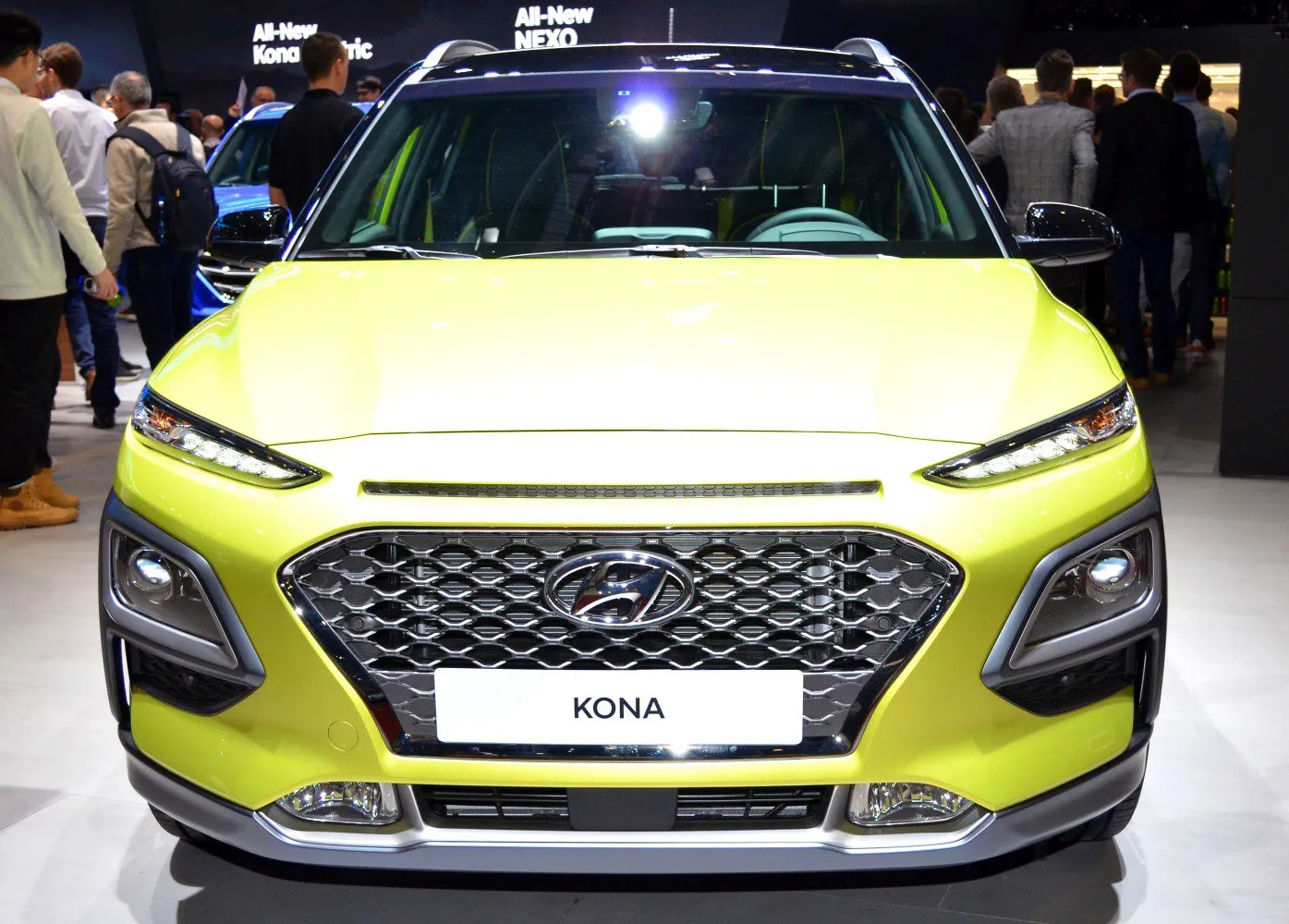
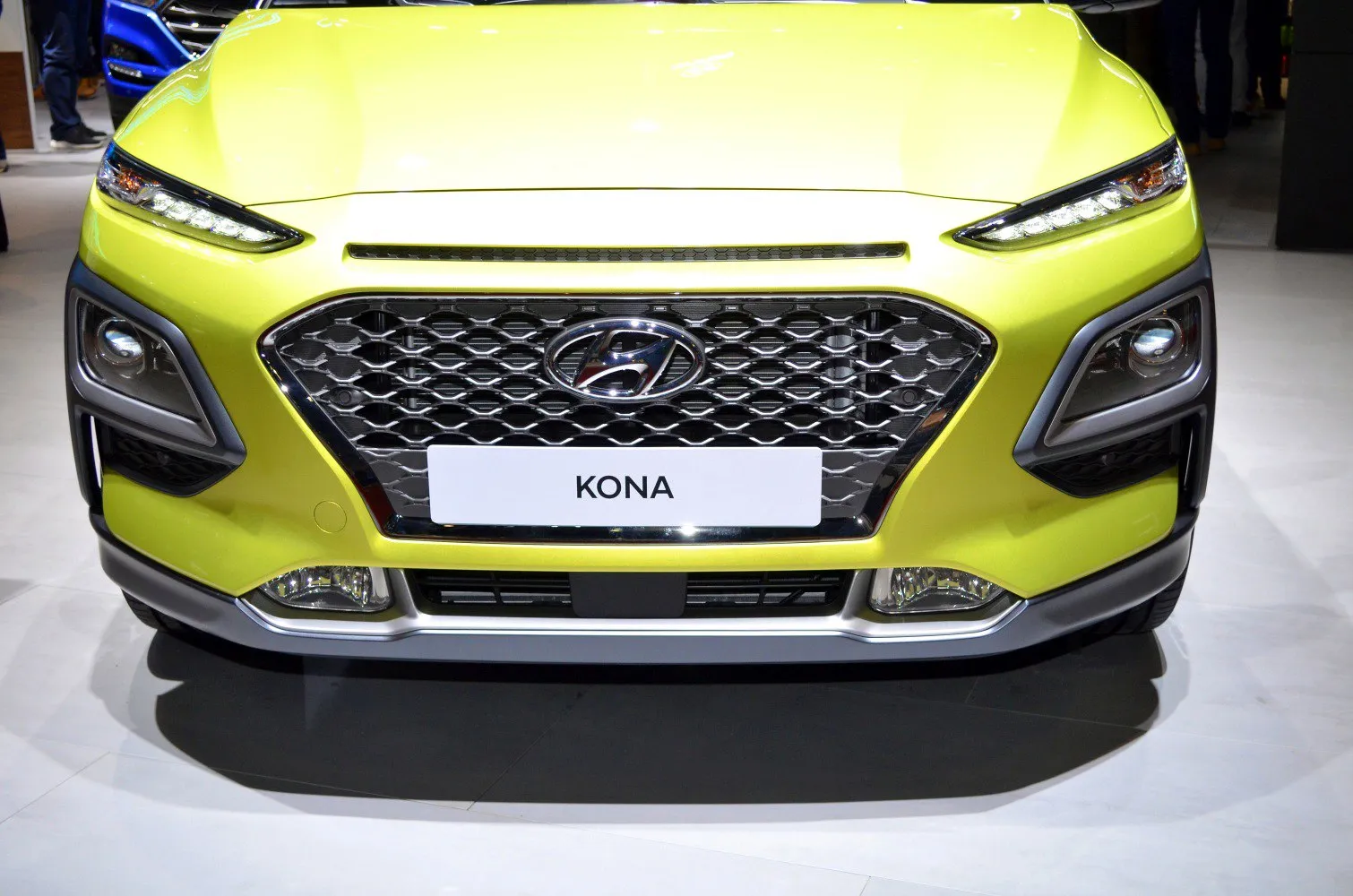
Hyundai Kona I 1.6 CRDi (136 Hp) DCT
Hyundai Kona:
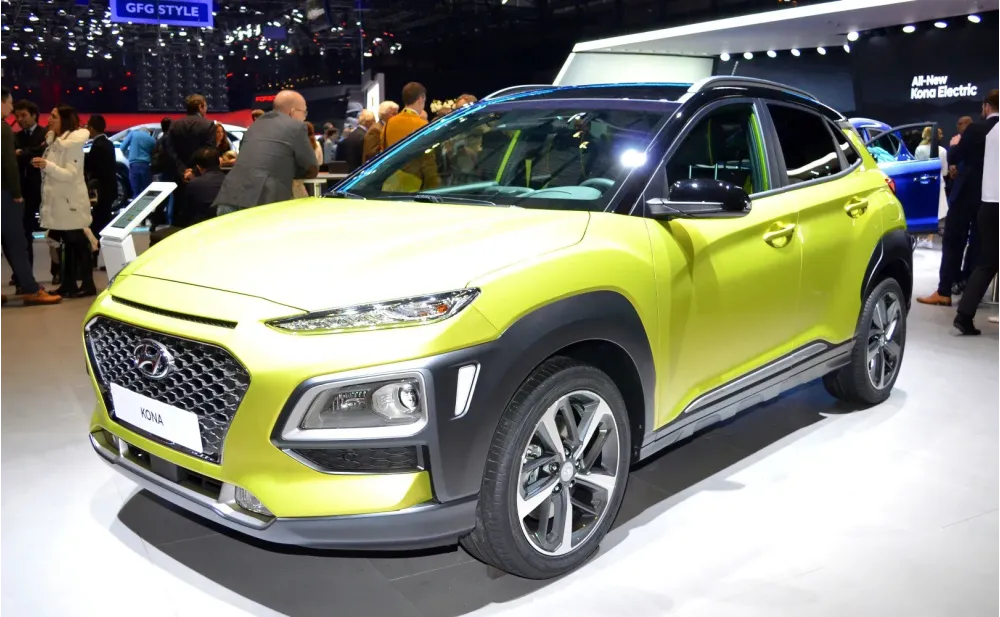
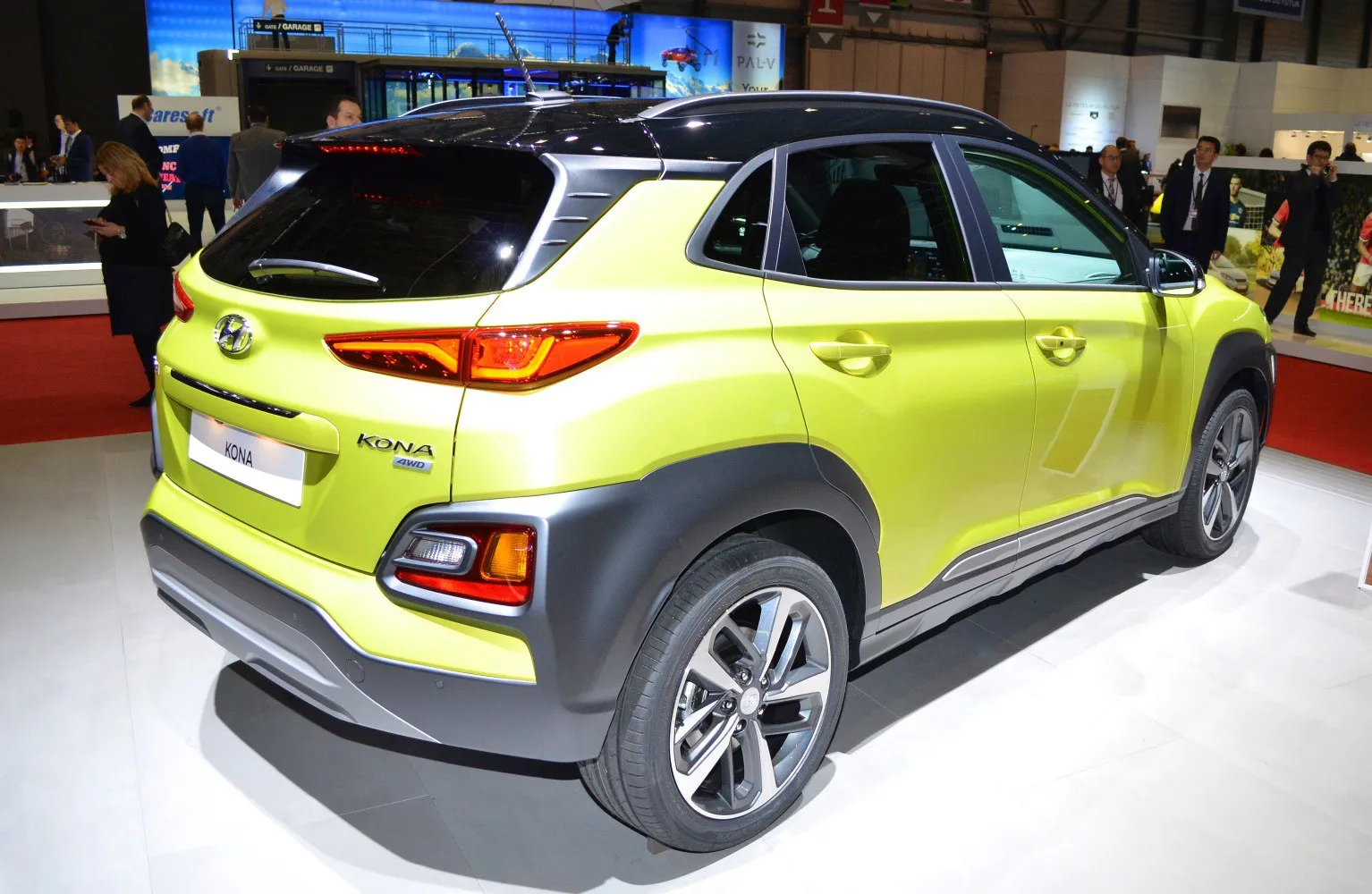
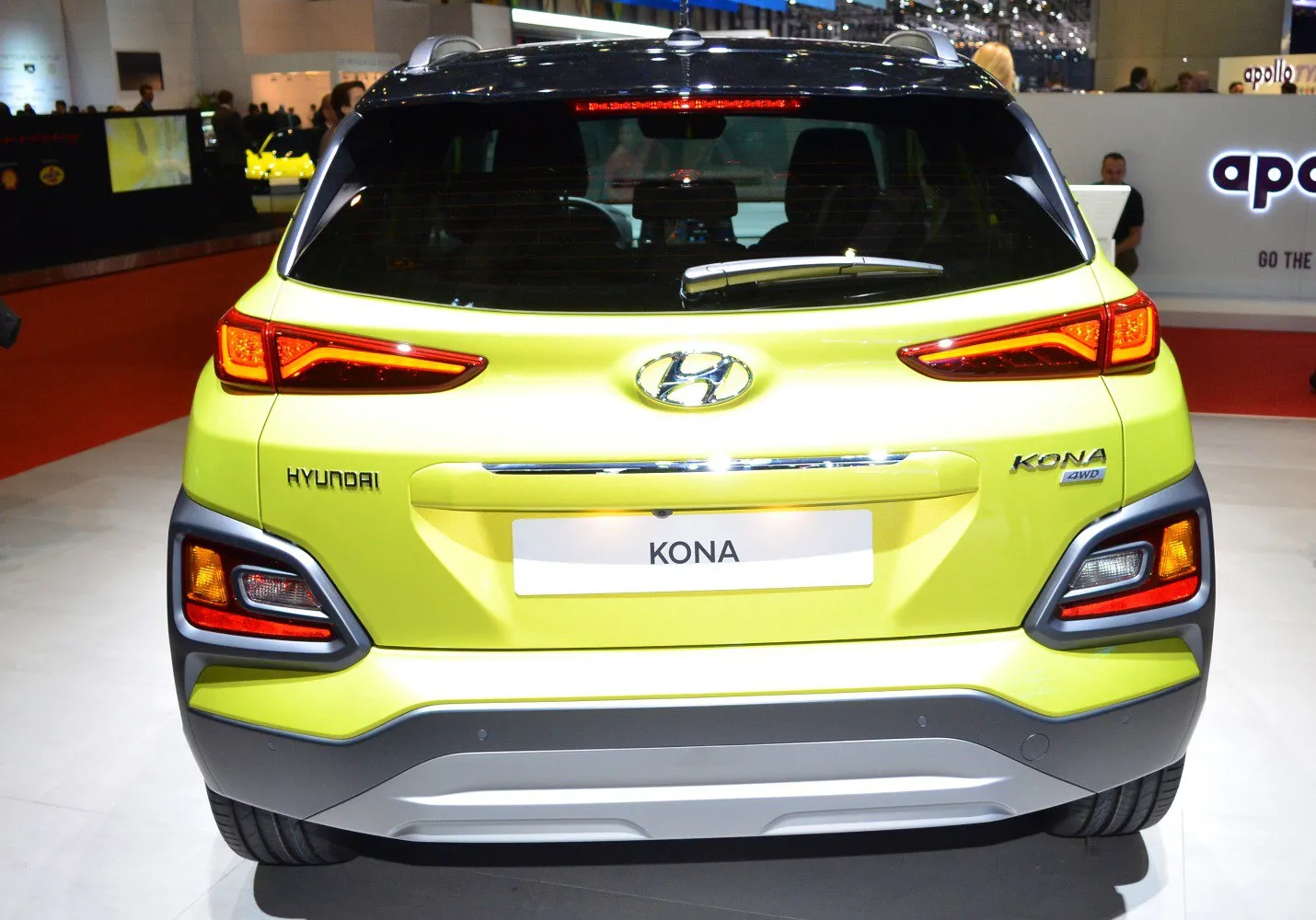
The Hyundai Kona is a subcompact crossover SUV produced by the South Korean manufacturer Hyundai. The first-generation Kona debuted in June 2017 and the production version was revealed later that year. It is positioned between the Venue or Bayon and the Tucson in Hyundai crossover SUV line-up. The battery electric version called the Kona Electric was first launched in South Korea during the first half of 2018 and rolled out gradually worldwide afterwards.
The Kona is named after the western district of the island of Hawaiʻi. The company stated the name "reflects the lifestyle of modern customers", in line with its "progressive design" that it adopts. The Kona naming also continues Hyundai's tradition of naming crossover SUV models after famous travel destinations, including the Creta, Santa Fe, Tucson and Veracruz....(Read more on Wikipedia)
I Overview:
Hyundai Kona (I). With 320 Nm of torque, it offers ample pulling power. It boasts low fuel consumption (~4.65 l/100km). With a weight of 1476 kg, it falls in the mid‑range. Front‑wheel drive delivers efficiency and easy handling. Acceleration is relatively slow (0–100 km/h in 10.2 s). The top speed reaches 191 km/h. A sport utility vehicle offering higher ground clearance and versatile cargo space. Seating for 5 makes it ideal for daily use.
Pros and Cons:
Pros:
- • Adequate and balanced power output (136 hp) for versatile driving.
- • Respectable acceleration of 10.2 sec, suitable for most driving situations.
- • Exceptional fuel efficiency: 4.2 L/100 km.
- • Ventilated disc brakes for reliable cooling and stopping power.
- • Standard trunk space (361 L) suitable for daily needs.
- • Turbocharged engine ensures better torque delivery at low RPMs.
Specifications:
Specifications are compared to those of the previous generation(I: 2017 - September, 2020).
| General: |
| Brand: | Hyundai |
|---|
| Model: | Kona |
|---|
| Generation: | I |
|---|
| Modification (Engine): | 1.6 CRDi (136 Hp) DCT |
|---|
| Start of production: | 2018 |
|---|
| End of production: | September, 2020 |
|---|
| Powertrain Architecture: | Internal Combustion engine |
|---|
| Body type: | SUV |
|---|
| Seats: | 5 |
|---|
| Doors: | 5 |
|---|
| Engine: |
| Engine systems: | Particulate filter |
|---|
| Power: | 136 Hp @ 4000 rpm. Same horsepower |
|---|
| Power per litre: | 85.1 Hp/l [Same length.] |
|---|
| Torque: | 320 Nm @ 1750-2250 rpm. |
|---|
| Engine Model/Code: | Smartstream / D4FE More details about the engine Smartstream / D4FE |
|---|
| Engine displacement: | 1598 |
|---|
| Number of cylinders: | 4 |
|---|
| Engine configuration: | Inline |
|---|
| Number of valves per cylinder: | 4 |
|---|
| Fuel injection system: | Diesel Commonrail |
|---|
| Engine aspiration: | Turbocharger, Intercooler |
|---|
| Engine oil capacity: | 5.3 l |
|---|
| Coolant: | 7.8 l |
|---|
| Engine layout: | Front, Transverse |
|---|
| Cylinder Bore: | 77 mm mm |
|---|
| Piston Stroke: | 85.8 mm mm |
|---|
| Compression ratio: | 15.9:1 |
|---|
| Performance: |
| Fuel Type: | Diesel |
|---|
| Fuel consumption (economy) - urban: | 4.5-4.8 l/100 km |
|---|
| Fuel consumption (economy) - extra urban: | 4.1-4.3 l/100 km |
|---|
| Fuel consumption (economy) - combined: | 4.2-4.5 l/100 km |
|---|
| Emission standard: | Euro 6d |
|---|
| Acceleration 0 - 100 km/h: | 10.2 sec |
|---|
| Acceleration 0 - 62 mph: | 10.2 sec |
|---|
| Maximum speed: | 191 km/h |
|---|
| Weight-to-power ratio: | 10.4 kg/Hp, 96 Hp/tonne |
|---|
| Weight-to-torque ratio: | 4.4 kg/Nm, 225.8 Nm/tonne |
|---|
| Acceleration 0 - 60 mph: | 9.7 sec |
|---|
| Space: |
| Kerb Weight: | 1417-1535 |
|---|
| Max. weight: | 1880 |
|---|
| Max. roof load: | 80 kg |
|---|
| Max load: | 345-463 |
|---|
| Trunk (boot) space - maximum: | 1143 l |
|---|
| Trunk (boot) space - minimum: | 361 l |
|---|
| Permitted trailer load with brakes (12%): | 1250 kg |
|---|
| Fuel tank capacity: | 50 l |
|---|
| Permitted trailer load without brakes: | 600 kg |
|---|
| Permitted towbar download: | 80 kg |
|---|
| Size: |
| Ramp-over (brakeover) angle: | 16.0° |
|---|
| Wading depth: | 500 mm |
|---|
| Length: | 4165 mm mm [Same length.] |
|---|
| Width: | 1800 mm mm [1mm less] |
|---|
| Height: | 1565 mm mm [Same height.] |
|---|
| Wheelbase: | 2600 mm mm [Same wheelbase.] |
|---|
| Width including mirrors: | 2070 mm |
|---|
| Front track: | 1559-1575 mm |
|---|
| Rear (Back) track: | 1568-1584 mm |
|---|
| Front overhang: | 845 mm |
|---|
| Rear overhang: | 720 mm |
|---|
| Ride height (ground clearance): | 171 mm |
|---|
| Minimum turning circle (turning diameter): | 10.6 m [above average] |
|---|
| Approach angle: | 15.7° |
|---|
| Departure angle: | 29.0° |
|---|
| Powertrain: |
| Drivetrain Architecture | The Internal combustion engine (ICE) drives the front wheels of the vehicle. |
|---|
| Drive wheel | Front wheel drive |
|---|
| Number of gears | 7 |
|---|
| Transmission type | Automatic |
|---|
| Gearbox type | DCT |
|---|
| Front brakes | Ventilated discs [Best for performance and cooling.] |
|---|
| Rear brakes | Disc [above average] |
|---|
| Assisting systems | ABS (Anti-lock braking system) |
|---|
| Steering type | Steering rack and pinion |
|---|
| Power steering | Electric Steering |
|---|
| Tires size | 205/60 R16; 215/55 R17; 235/45 R18 |
|---|
| Wheel rims size | 6.5J x 16; 7.0J x 17; 7.5J x 18 |
|---|
| Front suspension | Independent, type McPherson with coil spring and anti-roll bar |
|---|
| Rear suspension | independent torsion suspension |
|---|






Help others decide – share your experience!