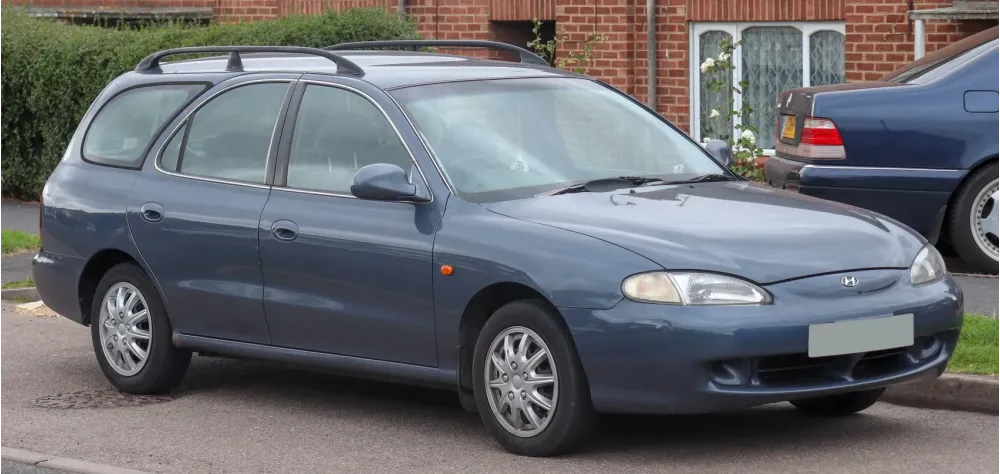
Click on image to view the full photo gallery
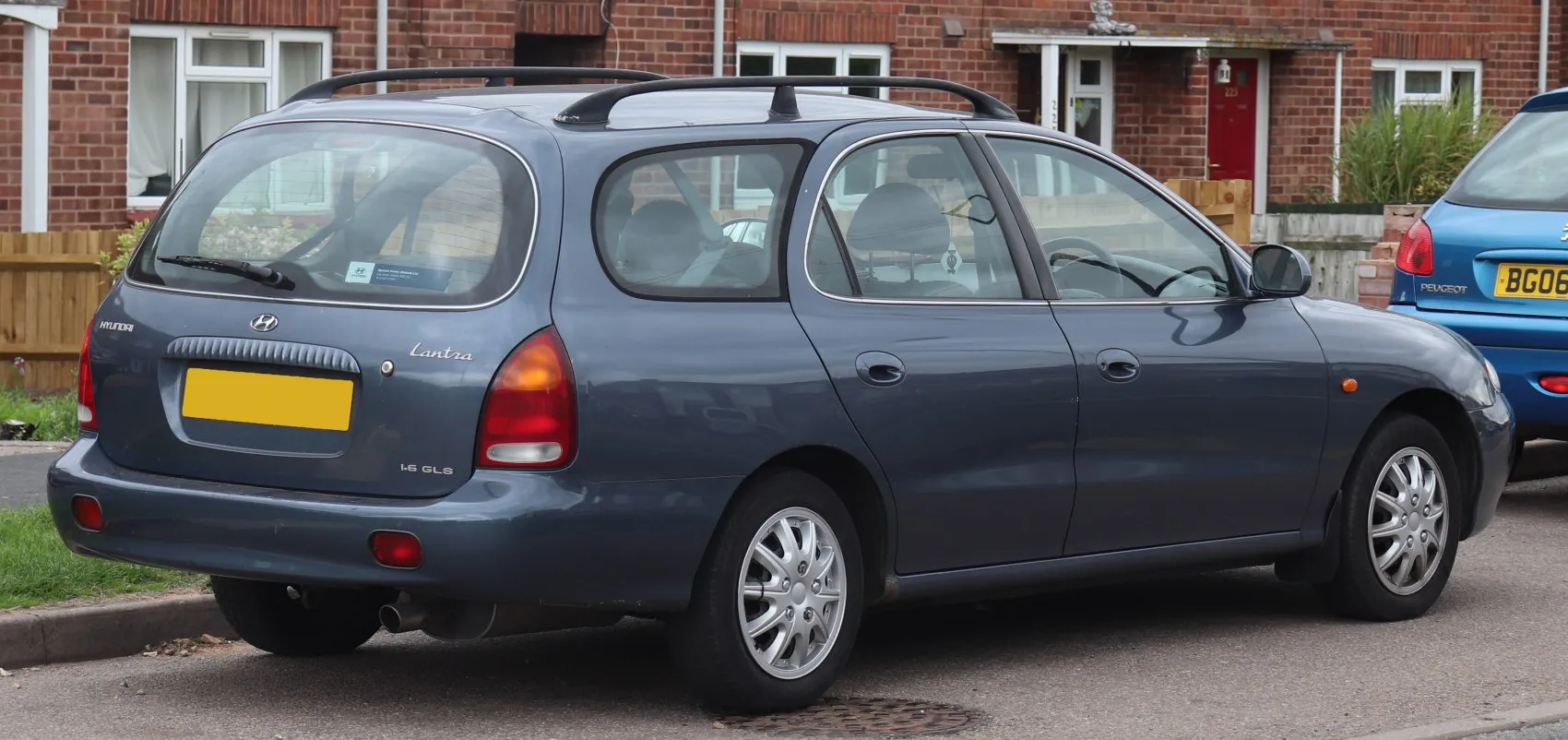
Hyundai Lantra Combi 1.9 D (68 Hp)
Overall Rating
Hyundai Lantra:
The Hyundai Elantra , also known as the Hyundai Avante , is a series of compact cars produced by the South Korean manufacturer Hyundai since 1990.
In South Korea, the first-generation model was initially sold under the "Elantra" nameplate, but starting from the second-generation, Korean models were sold under the "Avante" nameplate, with the "Elantra" name continue to be used on export models. The "Avante" name is not used in most export markets due to its similarity with Audi's "Avant" designation, used for their station wagon models. As of 2018, Singapore is the only export market outside South Korea to utilize the "Avante" name....(Read more on Wikipedia)
Combi Overview:
Hyundai Lantra (Combi). It has moderate fuel consumption (~7.5 l/100km). Front‑wheel drive delivers efficiency and easy handling. The top speed reaches 158 km/h. A car with an extended rear cargo area, combining passenger comfort with increased storage. Seating for 5 makes it ideal for daily use.
The Hyundai Lantra Combi of this generation was not officially tested by Euro NCAP. As a vehicle from the late 1990s, its passive and active safety features would be considerably less advanced compared to modern standards.
1.9 D (68 Hp) Verdict:

Performance Verdict
Performance is very modest, prioritizing economy over speed. Acceleration is leisurely, making it best suited for drivers who are not in a hurry and primarily drive on flatter terrain.
Fuel Economy
Excellent fuel economy for its time, making it a highly cost-effective option for long-distance travel and frequent driving. The 6.3 l/100 km figure is very competitive.
Pros and Cons:
Pros:
- • Practical and spacious station wagon body
- • Affordable purchase and running costs (especially diesel)
- • Generally reliable and simple mechanics
- • Comfortable ride quality for its class
- • Good cargo capacity
Cons:
- • Uninspired performance across the engine lineup
- • Basic interior design and materials
- • Limited modern safety features (typical for the era)
- • Dated exterior styling
- • Lack of refinement compared to European rivals
Specifications:
Specifications are compared to those of the previous generation(Combi: 1996 - 2000).
| General: | |
|---|---|
| Brand: | Hyundai |
| Model: | Lantra |
| Generation: | Combi |
| Modification (Engine): | 1.9 D (68 Hp) |
| Start of production: | 1997 |
| End of production: | 2000 |
| Powertrain Architecture: | Internal Combustion engine |
| Body type: | Station wagon (estate) |
| Seats: | 5 |
| Doors: | 5 |
| Engine: | |
|---|---|
| Power: | 68 Hp Same horsepower |
| Power per litre: | 35.7 Hp/l [worst than previous generation] |
| Engine Model/Code: | DJY XUD9 More details about the engine DJY XUD9 |
| Engine displacement: | 1905 |
| Number of cylinders: | 4 |
| Engine configuration: | Inline |
| Fuel injection system: | Precombustion chamber injection |
| Engine aspiration: | Naturally aspirated engine |
| Engine oil capacity: | 4.25 l |
| Engine layout: | Front, Transverse |
| Performance: | |
|---|---|
| Fuel Type: | Diesel |
| Fuel consumption (economy) - urban: | 7.5 l/100 km |
| Fuel consumption (economy) - extra urban: | 4.9 l/100 km |
| Fuel consumption (economy) - combined: | 6.3 l/100 km |
| Maximum speed: | 158 km/h |
| Space: | |
|---|---|
| Fuel tank capacity: | 55 l |
| Size: | |
|---|---|
| Minimum turning circle (turning diameter): | 10.3 m |
| Powertrain: | |
|---|---|
| Drivetrain Architecture | The Internal combustion engine (ICE) drives the front wheels of the vehicle. |
| Drive wheel | Front wheel drive |
| Number of gears | 5 |
| Transmission type | Manual |
| Tires size | 185/65 R14 |
| Wheel rims size | 6J x 14 |
| Front suspension | Independent, type McPherson with coil spring and anti-roll bar |






Driven it? Loved it? Hated it? Share your honest review!