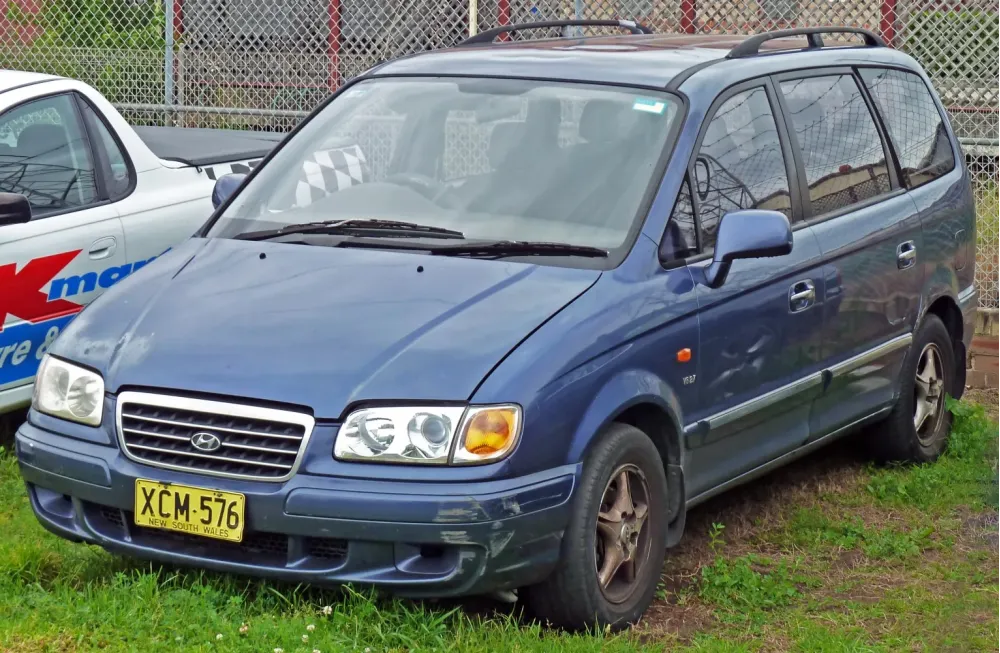
Click on image to view the full photo gallery
Hyundai Trajet FO 2.7 i V6 24V (173 Hp) Automatic
Overall Rating
Hyundai Trajet:
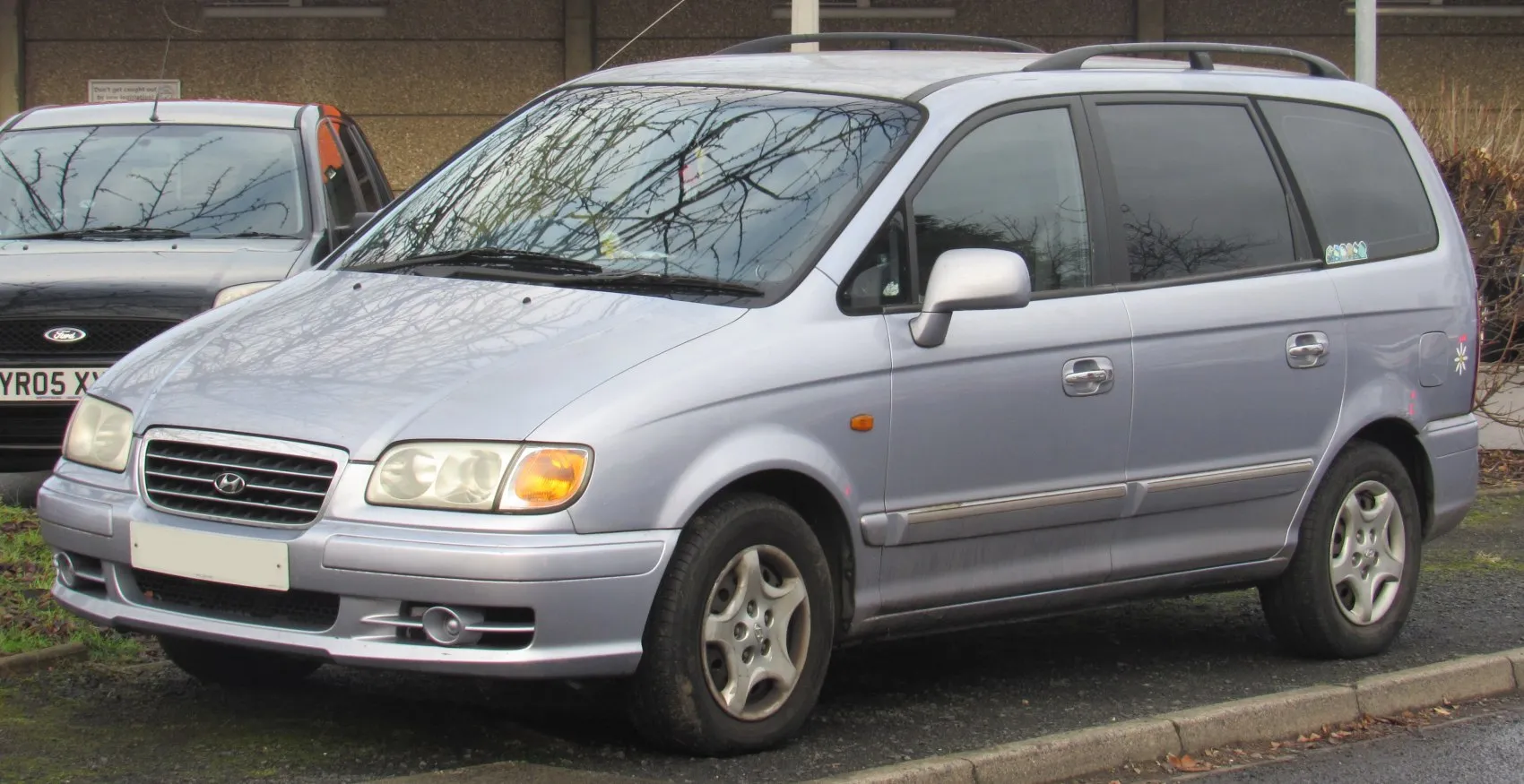
The Hyundai Trajet , is a seven-seater multi-purpose vehicle that was manufactured by Hyundai Motor Company between 1999 and 2008. The series was officially launched in 1999, with choices of gasoline, diesel, or LPG fuel. In the United Kingdom, initially only the 2. 0 GSI model was available; the limited-edition SE with a 2. 7-litre V6 engine was added in 2001.
Sales began in South Korea in spring 1999 and the UK premiere was at the London Motorfair in October of that year. Vehicle sales in Europe began in spring 2000....(Read more on Wikipedia)
FO Overview:
Hyundai Trajet (FO). With 250 Nm of torque, it offers ample pulling power. With a weight of 1852 kg, it falls in the mid‑range. Front‑wheel drive delivers efficiency and easy handling. Acceleration is relatively slow (0–100 km/h in 11.5 s). The top speed reaches 192 km/h. A spacious vehicle designed to transport passengers comfortably, often with sliding doors. With seating for 7, it’s perfect for larger families.
The Hyundai Trajet (FO) generation was not officially tested by Euro NCAP. Safety features typical for its era included ABS, but it lacks the advanced safety systems found in modern vehicles.
2.7 i V6 24V (173 Hp) Automatic Verdict:

Performance Verdict
The most powerful engine in the lineup, offering smooth power delivery and the best acceleration at 11.5 seconds. Ideal for those who prioritize refinement and effortless cruising.
Fuel Economy
The 2.7 V6 automatic is notably thirsty, with a combined fuel consumption of 11.3 l/100 km, making it expensive to run, especially in urban environments.
Pros and Cons:
Pros:
- • Spacious and versatile 7-seater interior
- • Affordable purchase price and running costs (diesel)
- • Comfortable ride quality for long journeys
- • Good visibility from the driver's seat
- • Practicality for large families
Cons:
- • Modest performance, especially with petrol engines and automatic transmission
- • High fuel consumption for petrol variants
- • Dated interior design and materials by modern standards
- • Not particularly agile or engaging to drive
- • Limited advanced safety features
Specifications:
| General: | |
|---|---|
| Brand: | Hyundai |
| Model: | Trajet |
| Generation: | FO |
| Modification (Engine): | 2.7 i V6 24V (173 Hp) Automatic |
| Start of production: | 2000 |
| End of production: | 2008 |
| Powertrain Architecture: | Internal Combustion engine |
| Body type: | Minivan |
| Seats: | 7 |
| Doors: | 5 |
| Engine: | |
|---|---|
| Power: | 173 Hp @ 6000 rpm. |
| Power per litre: | 65.1 Hp/l |
| Torque: | 250 Nm @ 4000 rpm. |
| Engine Model/Code: | Delta / G6BA |
| Engine displacement: | 2656 |
| Number of cylinders: | 6 |
| Engine configuration: | V-engine |
| Number of valves per cylinder: | 4 |
| Fuel injection system: | Multi-port manifold injection |
| Engine aspiration: | Naturally aspirated engine |
| Valvetrain: | DOHC |
| Engine oil capacity: | 4.5 l |
| Coolant: | 8.5 l |
| Engine layout: | Front, Transverse |
| Cylinder Bore: | 86.7 mm mm |
| Piston Stroke: | 75 mm mm |
| Compression ratio: | 10:1 |
| Performance: | |
|---|---|
| Fuel Type: | Petrol (Gasoline) |
| Fuel consumption (economy) - urban: | 15.8 l/100 km |
| Fuel consumption (economy) - extra urban: | 8.7 l/100 km |
| Fuel consumption (economy) - combined: | 11.3 l/100 km |
| Acceleration 0 - 100 km/h: | 11.5 sec |
| Acceleration 0 - 62 mph: | 11.5 sec |
| Maximum speed: | 192 km/h |
| Weight-to-power ratio: | 10.7 kg/Hp, 93.4 Hp/tonne |
| Weight-to-torque ratio: | 7.4 kg/Nm, 135 Nm/tonne |
| Acceleration 0 - 60 mph: | 10.9 sec |
| Space: | |
|---|---|
| Kerb Weight: | 1852 |
| Max. weight: | 2440 |
| Max load: | 588 |
| Trunk (boot) space - maximum: | 2716 l |
| Trunk (boot) space - minimum: | 304 l |
| Fuel tank capacity: | 65 l |
| Size: | |
|---|---|
| Length: | 4695 mm mm |
| Width: | 1840 mm mm |
| Height: | 1710 mm mm |
| Wheelbase: | 2830 mm mm |
| Front track: | 1565 mm |
| Rear (Back) track: | 1565 mm |
| Powertrain: | |
|---|---|
| Drivetrain Architecture | The Internal combustion engine (ICE) drives the front wheels of the vehicle. |
| Drive wheel | Front wheel drive |
| Number of gears | 4 |
| Transmission type | Automatic |
| Front brakes | Ventilated discs |
| Rear brakes | Ventilated discs |
| Assisting systems | ABS (Anti-lock braking system) |
| Steering type | Steering rack and pinion |
| Power steering | Hydraulic Steering |
| Tires size | 215/65 R15 |
| Front suspension | Wishbone |
| Rear suspension | Coil spring |








What’s the best feature of the Hyundai Trajet? Tell us in the comments!