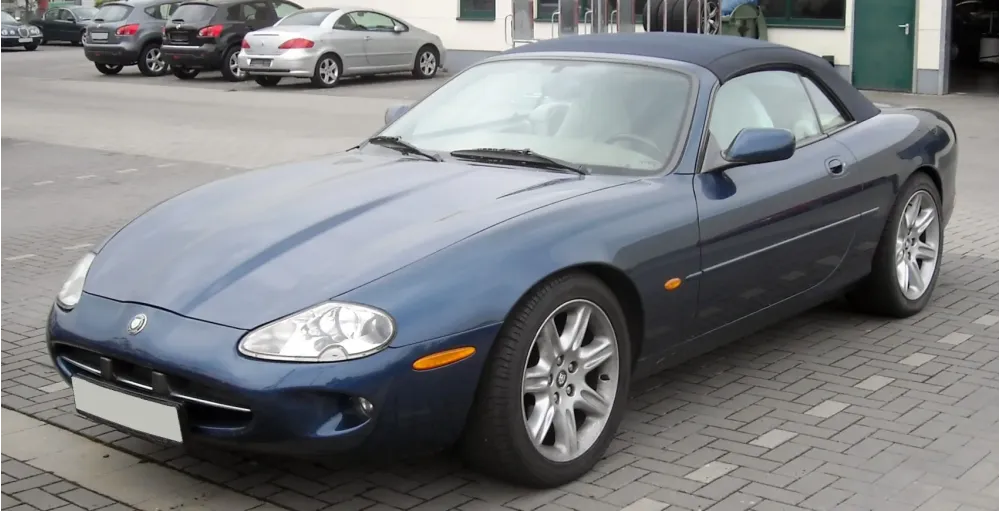
Click on image to view the full photo gallery
Jaguar XK Convertible (X100) R 4.0 V8 (363 Hp) Automatic
Overall Rating
Jaguar XK:
The Jaguar XK is an inline 6-cylinder dual overhead camshaft engine produced by Jaguar Cars between 1949 and 1992. Introduced as a 3. 4-litre, it earned fame on both the road and track, being produced in five hemispherical head displacements between 2. 4 and 4. 2-litres for Jaguar passenger cars, with other sizes being made by Jaguar and privateers for racing. A de-rated version was also used in certain military vehicles built by Alvis and Daimler.
Prior to World War II, SS Cars used three engines produced by the Standard Motor Company: a 1. 5-litre 4-cylinder and 6-cylinder engines of 2. 5- and 3. 5-litres. Sir William Lyons and his engine designers; William Heynes , Walter Hassan, Claude Baily, and Harry Weslake are widely reported to have discussed a new range of replacements whilst fire-watching on the roof of the SS factory in Swallow Road, Coventry, during German World War II bombing raids. Rather than developing prototype engines immediately after the war, it is claimed that Jaguar's wartime engine developments went far beyond mere discussion and design, extending to the construction and testing of several prototype engines as early as 1943....(Read more on Wikipedia)
Convertible (X100) Overview:
Jaguar XK (Convertible (X100)). With 505 Nm of torque, it offers ample pulling power. With a weight of 1825 kg, it falls in the mid‑range. Rear‑wheel drive offers dynamic handling and sporty feedback. Acceleration is excellent (0–100 km/h in 5.6 s). The top speed reaches 250 km/h. A convertible car with a retractable roof, offering open-air driving experiences. Seating for 4 makes it ideal for daily use.
R 4.0 V8 (363 Hp) Automatic Verdict:

Performance Verdict
Offers exhilarating supercharged performance, delivering strong acceleration and effortless cruising, ideal for spirited driving.
Fuel Economy
As expected for a supercharged V8, fuel economy is modest, requiring frequent stops at the pump, particularly in urban settings.
Pros and Cons:
Pros:
- • Timeless, elegant styling
- • Powerful and refined V8 engines
- • Comfortable and luxurious interior
- • Excellent grand touring capabilities
- • Strong performance from R models
Cons:
- • Can be prone to electrical issues
- • Fuel economy is poor, especially on supercharged models
- • Rear seats are very cramped
- • Maintenance costs can be high
- • Some interior plastics feel dated
Specifications:
Specifications are compared to those of the previous generation(Coupe (X100): 1996 - 2002).
| General: | |
|---|---|
| Brand: | Jaguar |
| Model: | XK |
| Generation: | Convertible (X100) |
| Modification (Engine): | R 4.0 V8 (363 Hp) Automatic |
| Start of production: | 1998 |
| End of production: | 2002 |
| Powertrain Architecture: | Internal Combustion engine |
| Body type: | Cabriolet |
| Seats: | 4 |
| Doors: | 2 |
| Engine: | |
|---|---|
| Power: | 363 Hp @ 6150 rpm. Same horsepower |
| Power per litre: | 90.8 Hp/l [Same length.] |
| Torque: | 505 Nm @ 3600 rpm. |
| Engine Model/Code: | AJ26S, AJ27S More details about the engine AJ26S, AJ27S |
| Engine displacement: | 3996 |
| Number of cylinders: | 8 |
| Engine configuration: | V-engine |
| Number of valves per cylinder: | 4 |
| Fuel injection system: | Multi-port manifold injection |
| Engine aspiration: | Supercharger |
| Valvetrain: | DOHC |
| Engine oil capacity: | 6.5 l |
| Coolant: | 11.5 l |
| Engine layout: | Front, Longitudinal |
| Cylinder Bore: | 86 mm mm |
| Piston Stroke: | 86 mm mm |
| Compression ratio: | 8.9:1 |
| Performance: | |
|---|---|
| Fuel Type: | Petrol (Gasoline) |
| Fuel consumption (economy) - urban: | 18 l/100 km |
| Fuel consumption (economy) - extra urban: | 9.6 l/100 km |
| Fuel consumption (economy) - combined: | 12.7 l/100 km |
| Acceleration 0 - 100 km/h: | 5.6 sec |
| Acceleration 0 - 62 mph: | 5.6 sec |
| Maximum speed: | 250 km/h |
| Weight-to-power ratio: | 5 kg/Hp, 198.9 Hp/tonne |
| Weight-to-torque ratio: | 3.6 kg/Nm, 276.7 Nm/tonne |
| Acceleration 0 - 60 mph: | 5.3 sec |
| Space: | |
|---|---|
| Kerb Weight: | 1825 |
| Max. weight: | 2100 |
| Max load: | 275 |
| Trunk (boot) space - minimum: | 307 l |
| Fuel tank capacity: | 75 l |
| Size: | |
|---|---|
| Length: | 4760 mm mm [Same length.] |
| Width: | 1829 mm mm [Same width.] |
| Height: | 1306 mm mm [Same height.] |
| Wheelbase: | 2588 mm mm [Same wheelbase.] |
| Front track: | 1504 mm |
| Rear (Back) track: | 1498 mm |
| Powertrain: | |
|---|---|
| Drivetrain Architecture | The Internal combustion engine (ICE) drives the rear wheels of the vehicle. |
| Drive wheel | Rear wheel drive |
| Number of gears | 5 |
| Transmission type | Automatic |
| Front brakes | Ventilated discs [Best for performance and cooling.] |
| Rear brakes | Ventilated discs [Best for performance and cooling.] |
| Assisting systems | ABS (Anti-lock braking system) |
| Steering type | Steering rack and pinion |
| Power steering | Hydraulic Steering |
| Tires size | 245/45 R18; 255/45 R18 |
| Front suspension | Double wishbone |
| Rear suspension | Double wishbone |


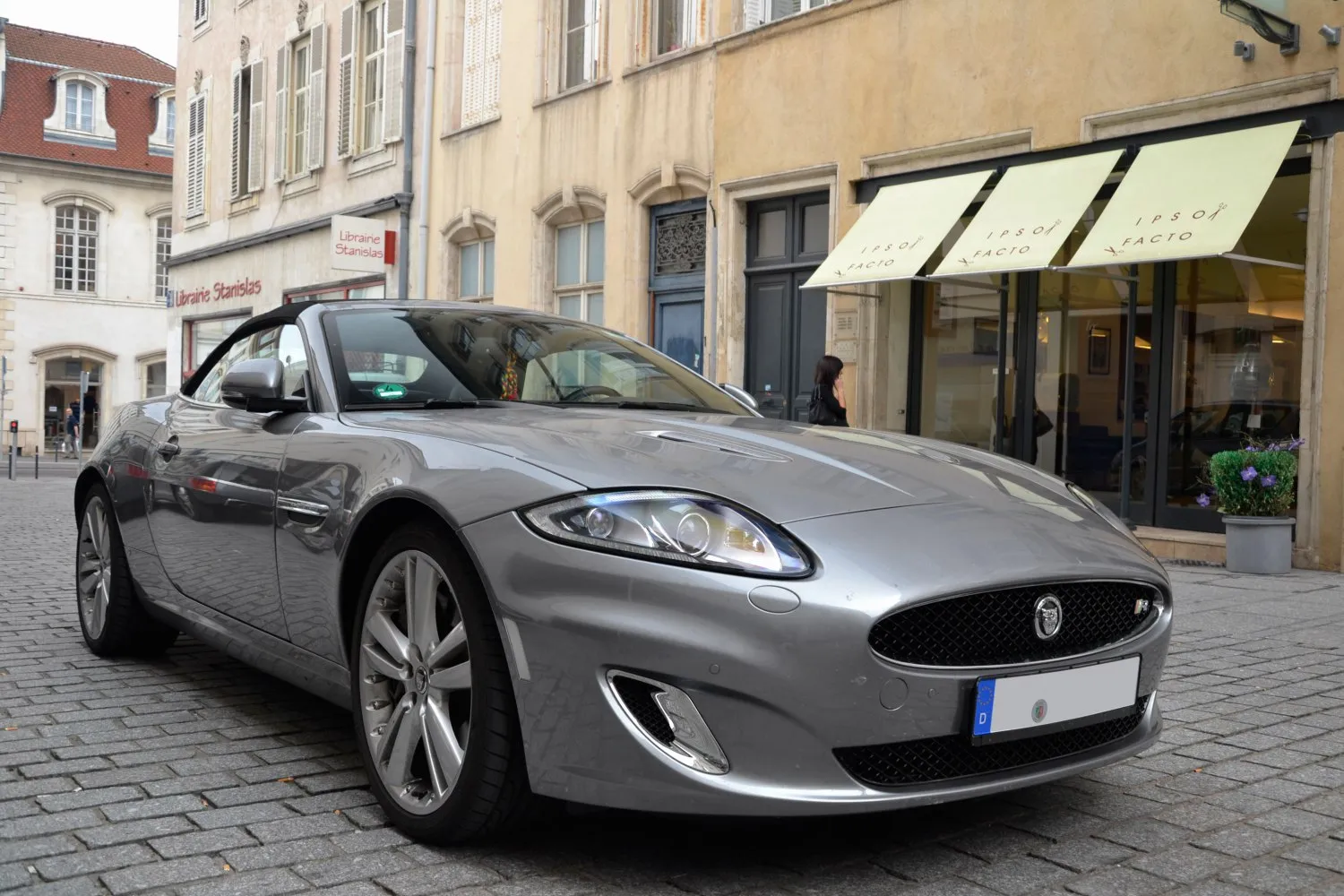
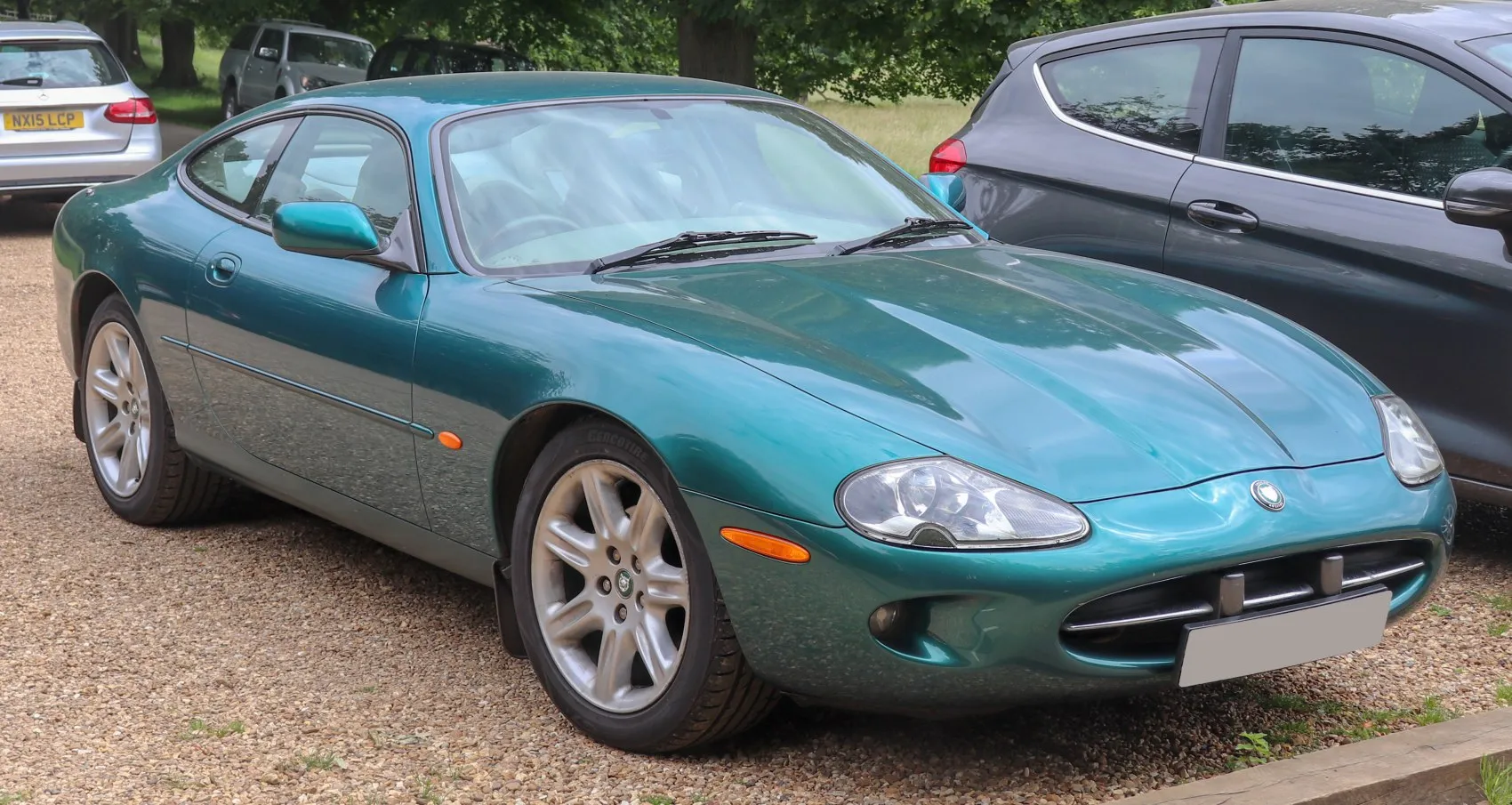







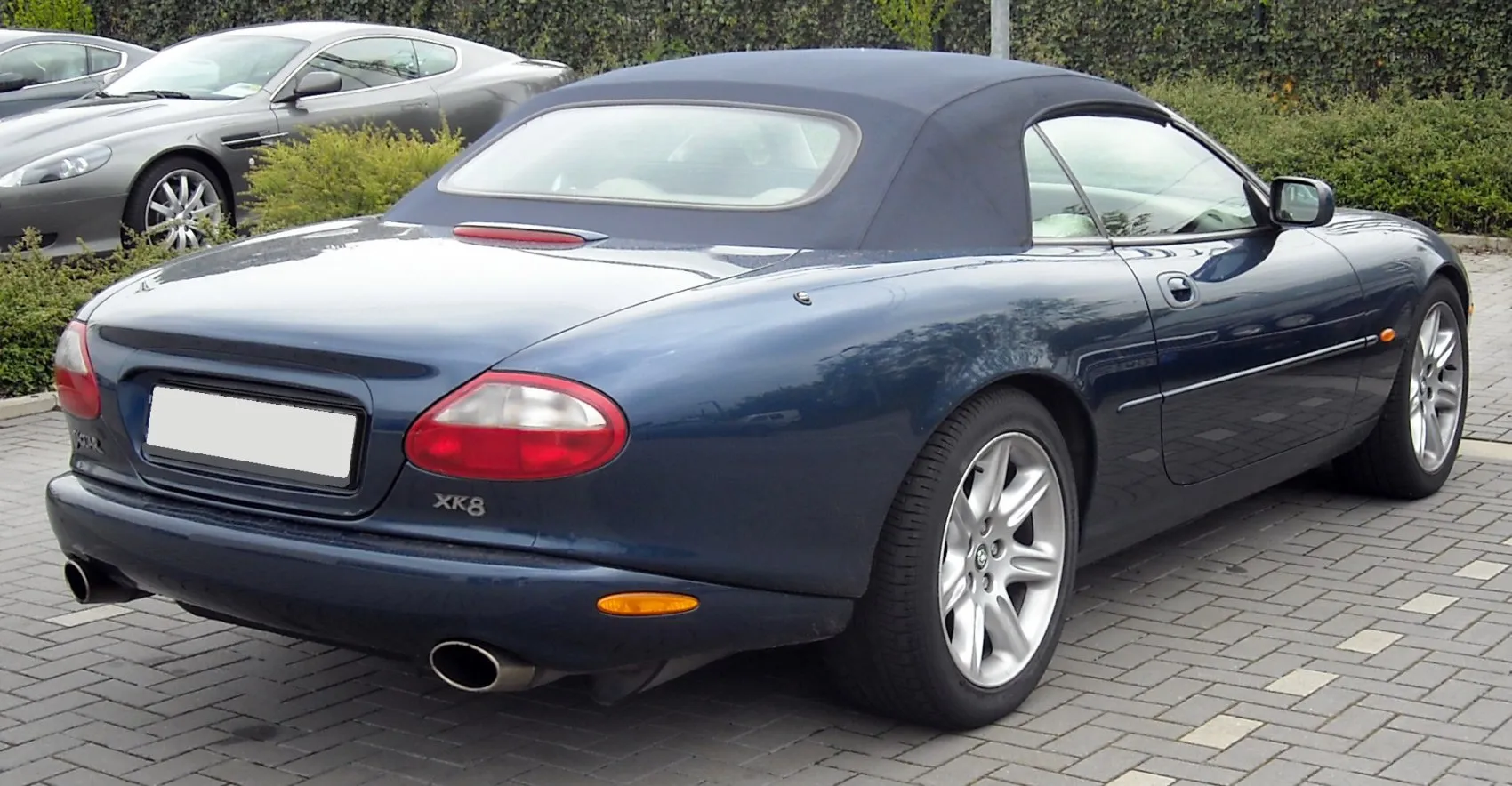
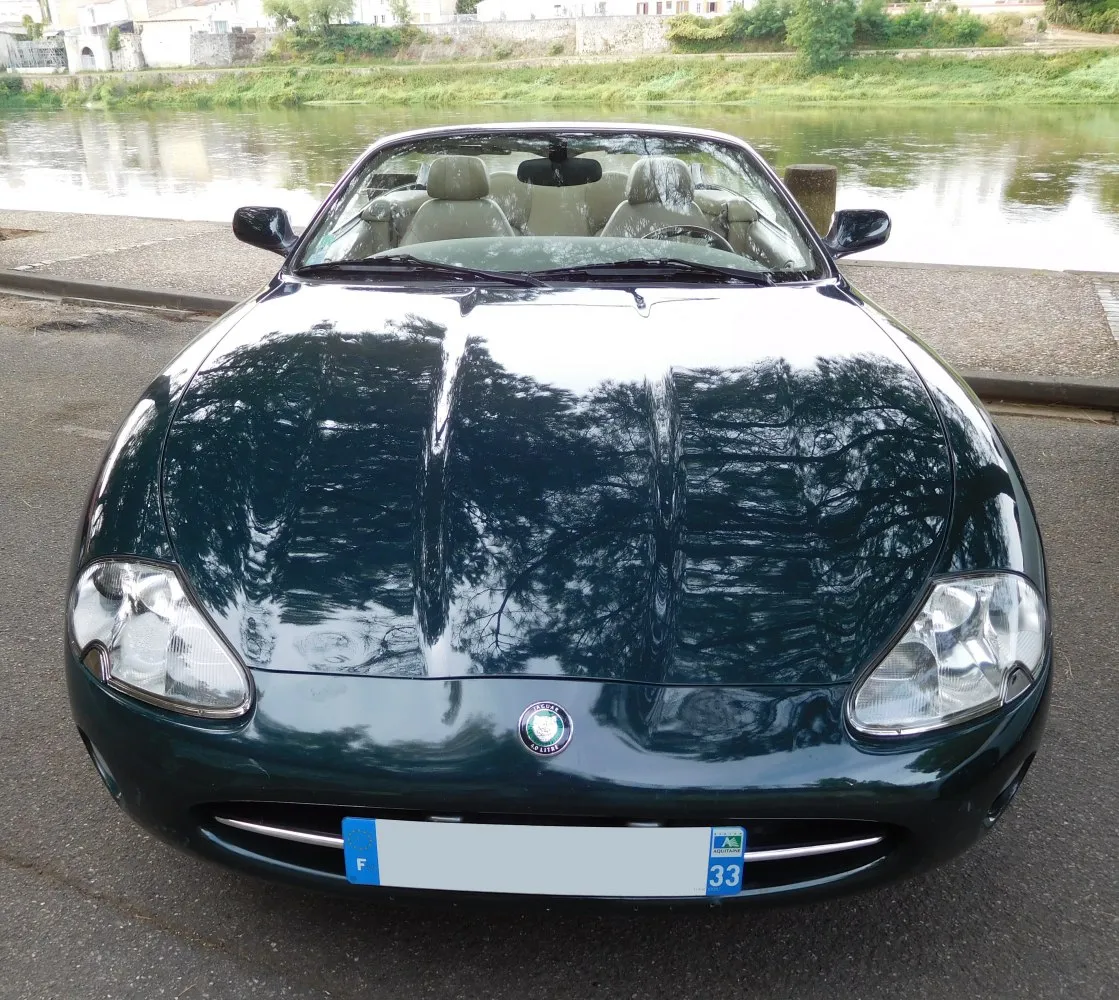
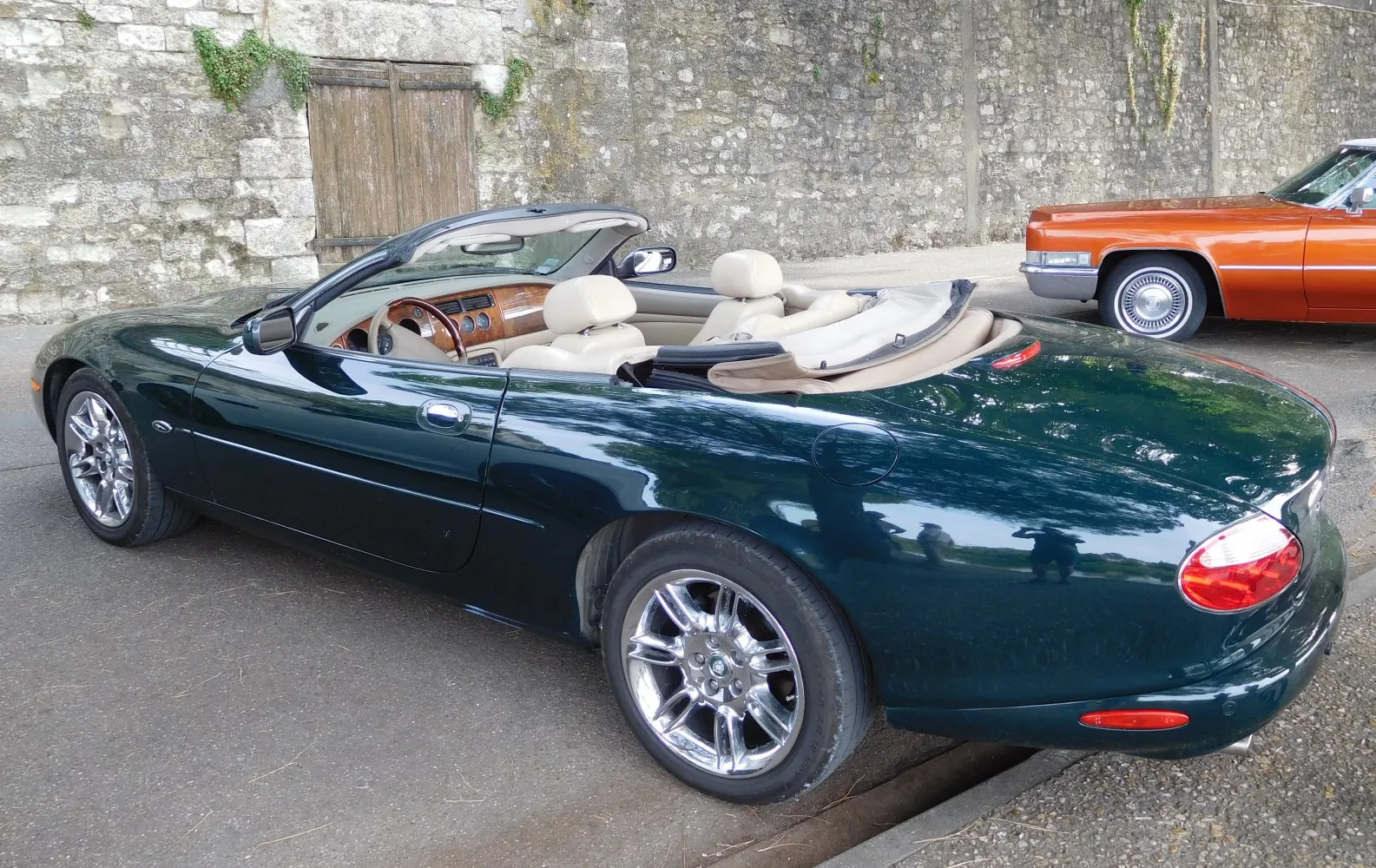
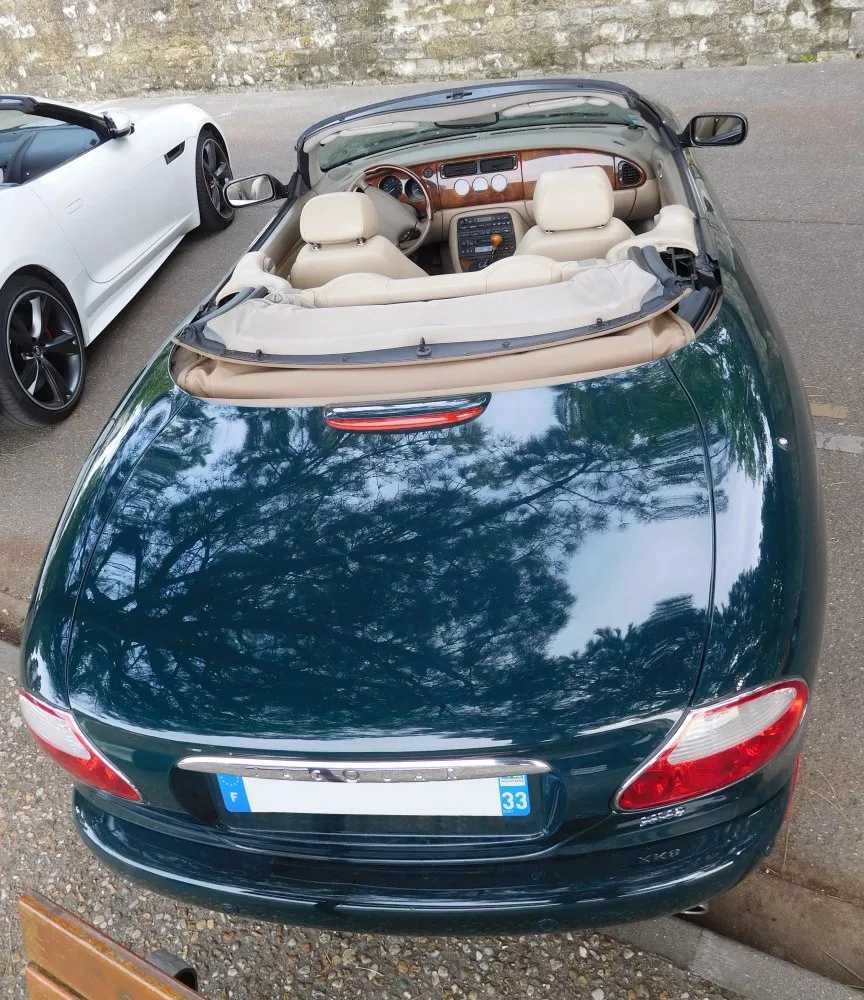
Behind the wheel of the Jaguar XK. How does it handle on the road?