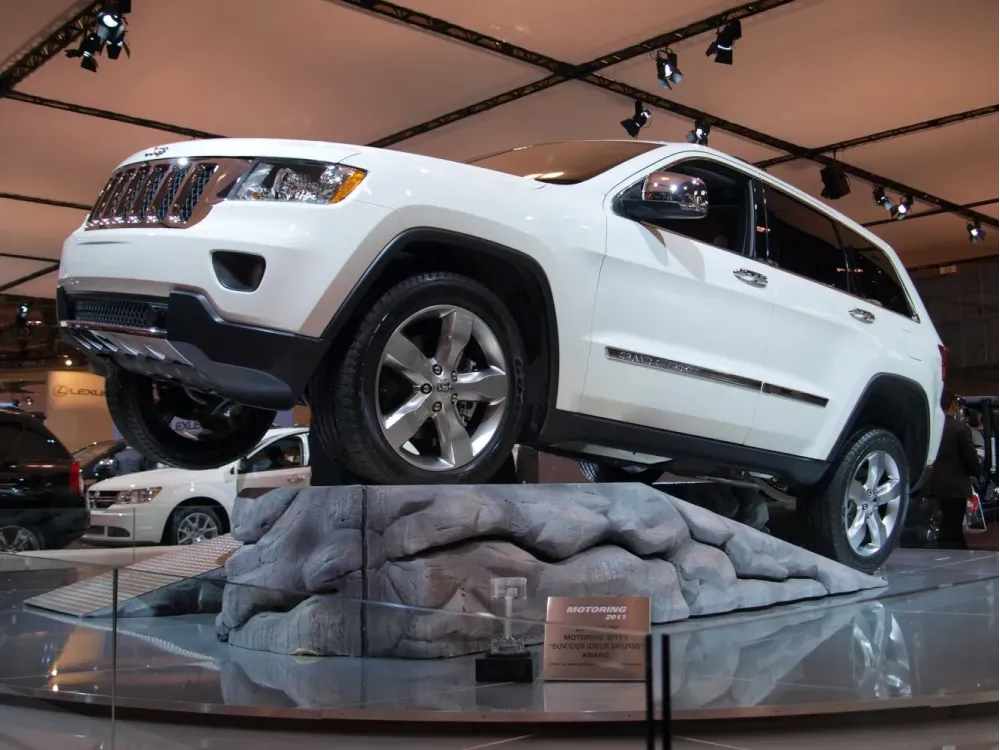
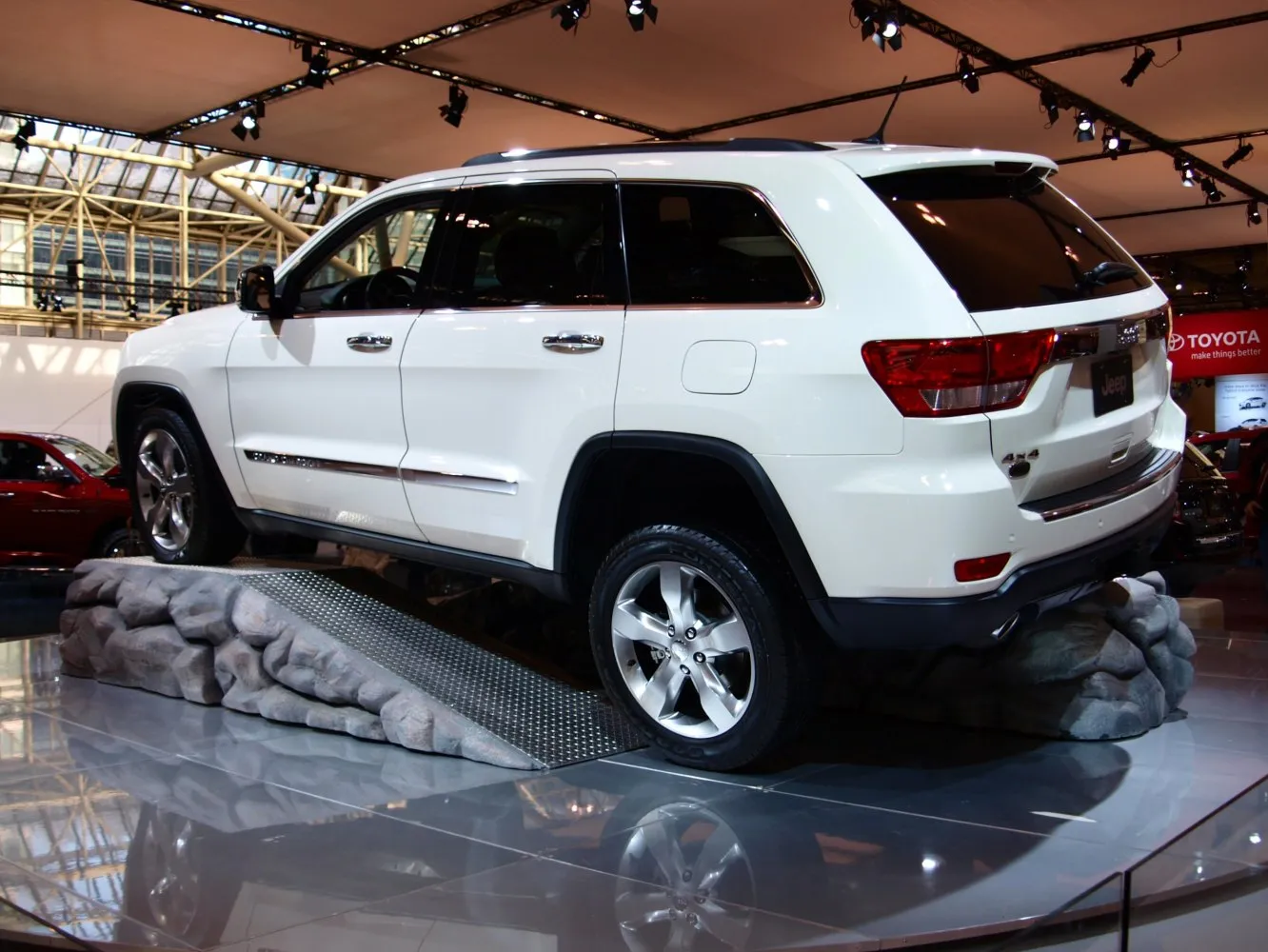
Jeep Grand Cherokee IV (WK2) 3.6 V6 (294 Hp) 4x4 Automatic
Jeep Grand Cherokee:
The Jeep Grand Cherokee is a range of mid-sized sport utility vehicles produced by American manufacturer Jeep. At its introduction, while most SUVs were still manufactured with body-on-frame construction, the Grand Cherokee has used a unibody chassis from the start.
The Grand Cherokee's origins date back to 1983, when American Motors Corporation was designing a successor to the Jeep Cherokee. Three outside designers—Larry Shinoda, Alain Clenet, and Giorgetto Giugiaro—were also under contract with AMC to create and build a clay model of the Cherokee XJ replacement, then known as the "XJC" project. However, the basic design for the Cherokee's replacement was well underway by AMC's in-house designers and the 1989 Jeep Concept 1 show car foretold the basic design....(Read more on Wikipedia)
IV (WK2) Overview:
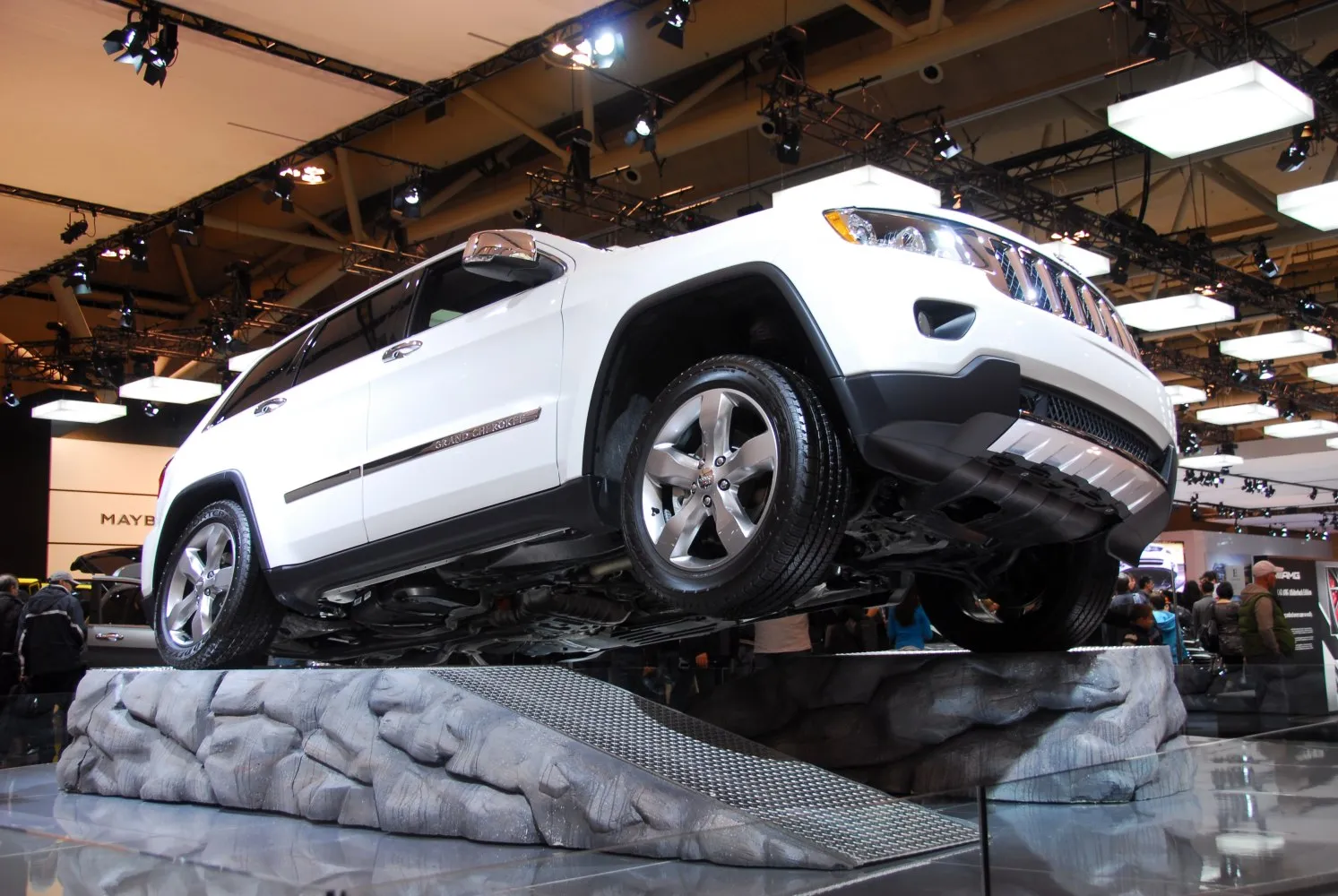
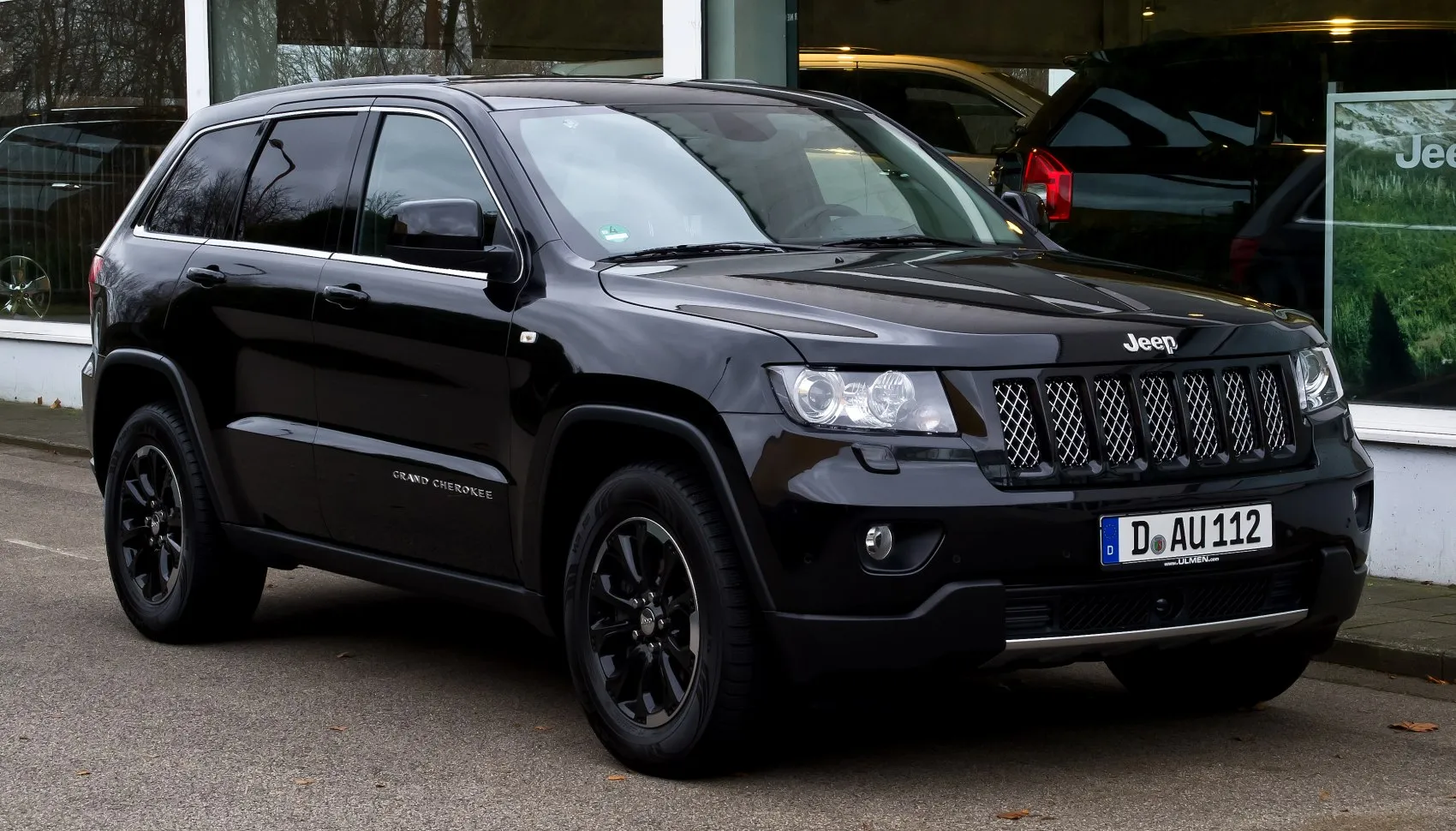
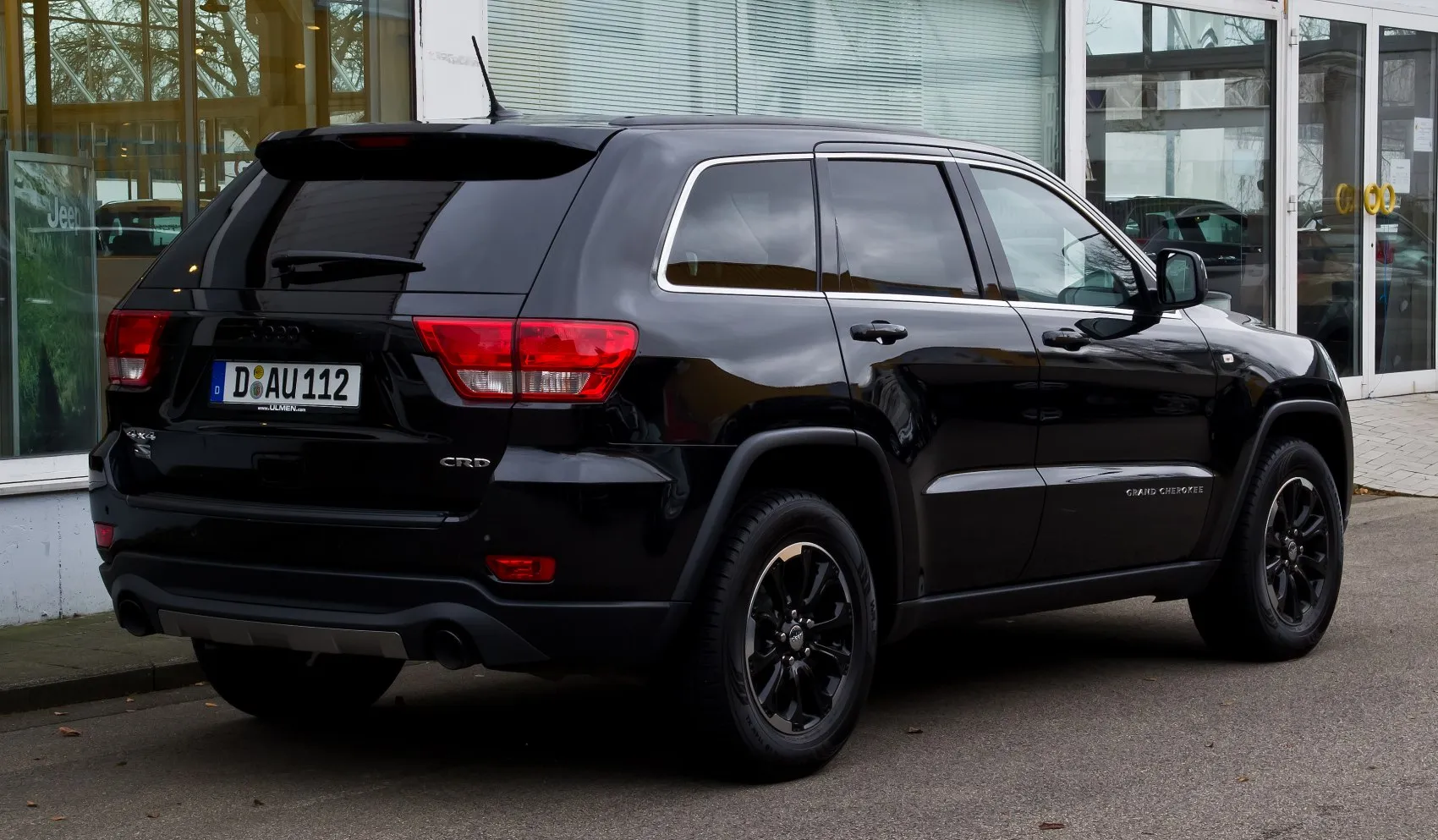
Jeep Grand Cherokee (IV (WK2)). With 353 Nm of torque, it offers ample pulling power. At around 2114 kg, it’s on the heavier side. All‑wheel drive provides excellent grip, ideal for off‑road use. A sport utility vehicle offering higher ground clearance and versatile cargo space. Seating for 5 makes it ideal for daily use.
Pros and Cons:
Pros:
- • High-performance engine delivering 294 hp.
- • All-wheel drive for superior traction in all conditions.
- • Independent multi-link suspension for premium ride comfort.
- • Ventilated disc brakes for reliable cooling and stopping power.
- • Generous trunk capacity of 782 Liters.
Cons:
- • Relatively high fuel consumption: 13.1 L/100 km combined.
- • Previous generation model; may lack the latest driver-assist technologies.
Specifications:
Specifications are compared to those of the previous generation(IV (WK2): 2010 - 2013).
| General: |
| Brand: | Jeep |
|---|
| Model: | Grand Cherokee |
|---|
| Generation: | IV (WK2) |
|---|
| Modification (Engine): | 3.6 V6 (294 Hp) 4x4 Automatic |
|---|
| Start of production: | 2011 |
|---|
| End of production: | 2013 |
|---|
| Powertrain Architecture: | Internal Combustion engine |
|---|
| Body type: | SUV |
|---|
| Seats: | 5 |
|---|
| Doors: | 5 |
|---|
| Engine: |
| Power: | 294 Hp @ 6400 rpm. Same horsepower |
|---|
| Power per litre: | 81.6 Hp/l [Same length.] |
|---|
| Torque: | 353 Nm @ 4800 rpm. |
|---|
| Engine Model/Code: | ERB More details about the engine ERB |
|---|
| Engine displacement: | 3604 |
|---|
| Number of cylinders: | 6 |
|---|
| Engine configuration: | V-engine |
|---|
| Number of valves per cylinder: | 4 |
|---|
| Fuel injection system: | Multi-port manifold injection |
|---|
| Engine aspiration: | Naturally aspirated engine |
|---|
| Valvetrain: | DOHC |
|---|
| Engine oil capacity: | 5.6 l |
|---|
| Coolant: | 9.9 l |
|---|
| Engine layout: | Front, Longitudinal |
|---|
| Cylinder Bore: | 96 mm |
|---|
| Piston Stroke: | 83 mm |
|---|
| Compression ratio: | 9.6:1 |
|---|
| Performance: |
| Fuel Type: | Petrol (Gasoline) |
|---|
| Fuel consumption (economy) - urban: | 14.7 l/100 km |
|---|
| Fuel consumption (economy) - extra urban: | 10.7 l/100 km |
|---|
| Fuel consumption (economy) - combined: | 13.1 l/100 km |
|---|
| Weight-to-power ratio: | 7.2 kg/Hp, 139.1 Hp/tonne |
|---|
| Weight-to-torque ratio: | 6 kg/Nm, 167 Nm/tonne |
|---|
| Space: |
| Kerb Weight: | 2114 |
|---|
| Max. weight: | 2948 |
|---|
| Max load: | 834 |
|---|
| Trunk (boot) space - maximum: | 1554 l |
|---|
| Trunk (boot) space - minimum: | 782 l |
|---|
| Permitted trailer load with brakes (12%): | 2269 kg |
|---|
| Fuel tank capacity: | 93 l |
|---|
| Size: |
| Ramp-over (brakeover) angle: | 18.8° |
|---|
| Length: | 4822 mm [Same length.] |
|---|
| Width: | 1938 mm [5mm less] |
|---|
| Height: | 1761 mm [20mm less] |
|---|
| Wheelbase: | 2915 mm [Same wheelbase.] |
|---|
| Front track: | 1623 mm |
|---|
| Rear (Back) track: | 1628 mm |
|---|
| Ride height (ground clearance): | 218 mm |
|---|
| Minimum turning circle (turning diameter): | 11.3 m [above average] |
|---|
| Approach angle: | 26.3° |
|---|
| Departure angle: | 26.5° |
|---|
| Powertrain: |
| Drive wheel | All wheel drive (4x4) |
|---|
| Number of gears | 5 |
|---|
| Transmission type | Automatic |
|---|
| Front brakes | Ventilated discs [Best for performance and cooling.] |
|---|
| Rear brakes | Disc [above average] |
|---|
| Assisting systems | ABS (Anti-lock braking system) |
|---|
| Steering type | Steering rack and pinion |
|---|
| Tires size | 245/70 R17 |
|---|
| Wheel rims size | 17 |
|---|
| Front suspension | Double wishbone |
|---|
| Rear suspension | Independent multi-link suspension |
|---|






Help others decide – share your experience!