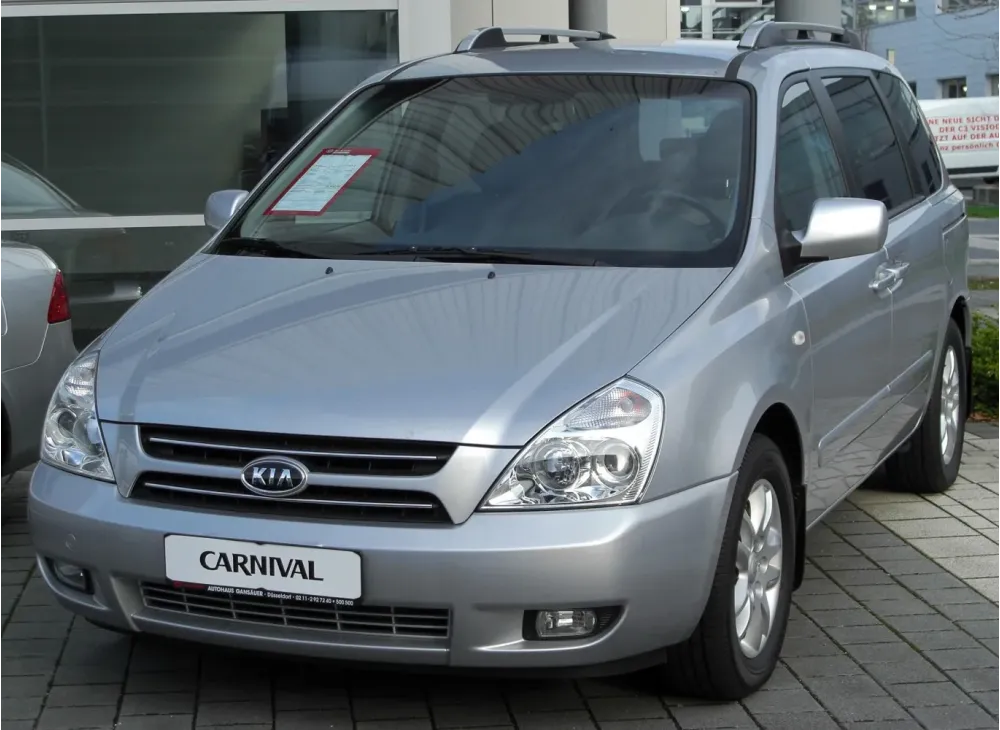
Click on image to view the full photo gallery
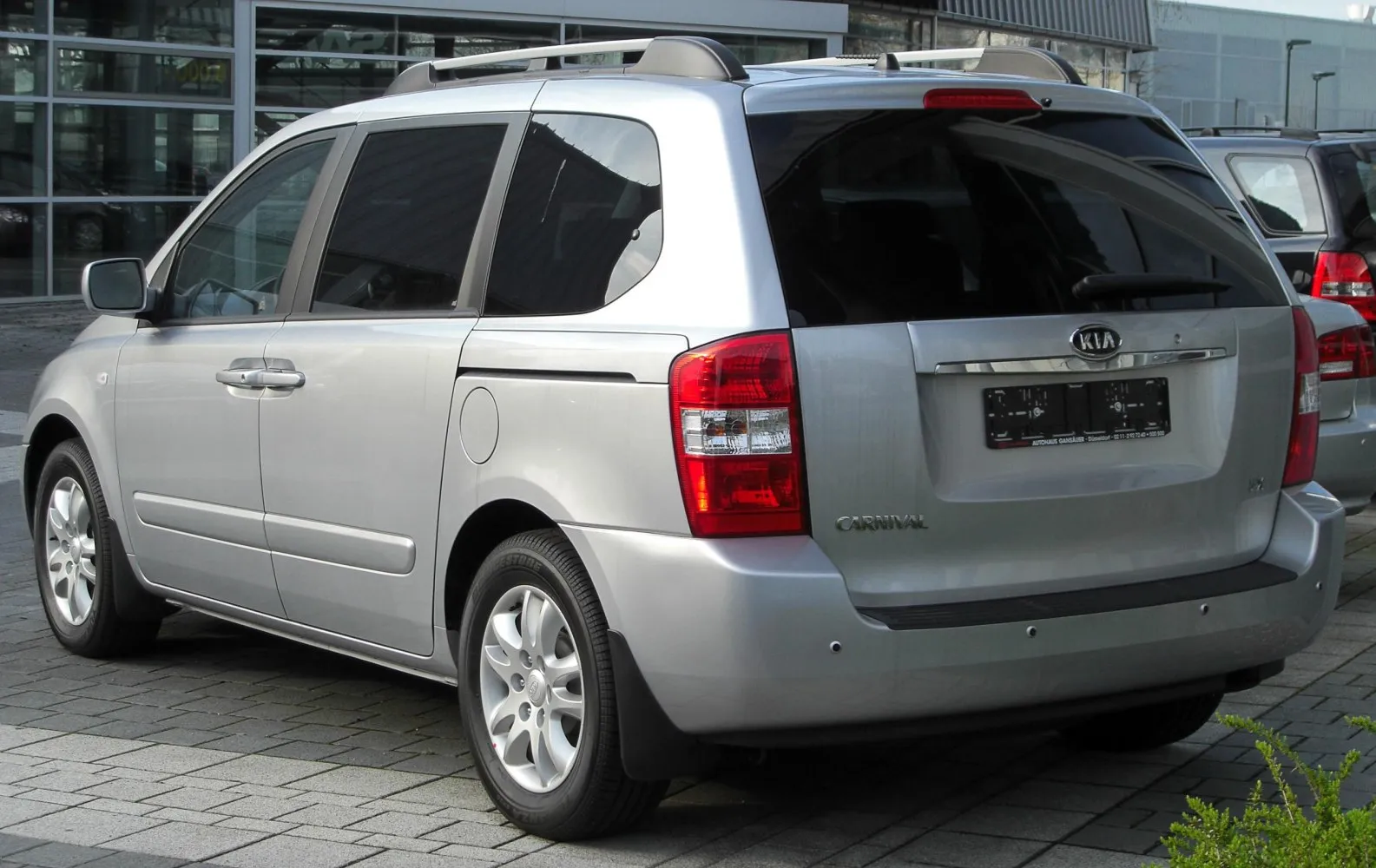
Kia Carnival II (VQ) 2.7i V6 (189 Hp) Automatic
Overall Rating
Kia Carnival:
The Kia Carnival is a minivan manufactured by the Korean automaker Kia since 1998. It is marketed globally under various nameplates, prominently as the Kia Sedona.
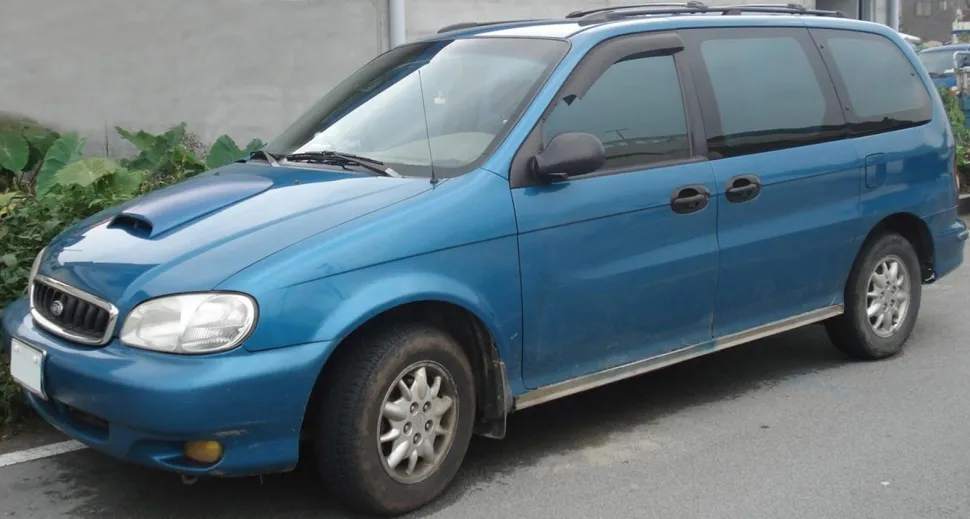
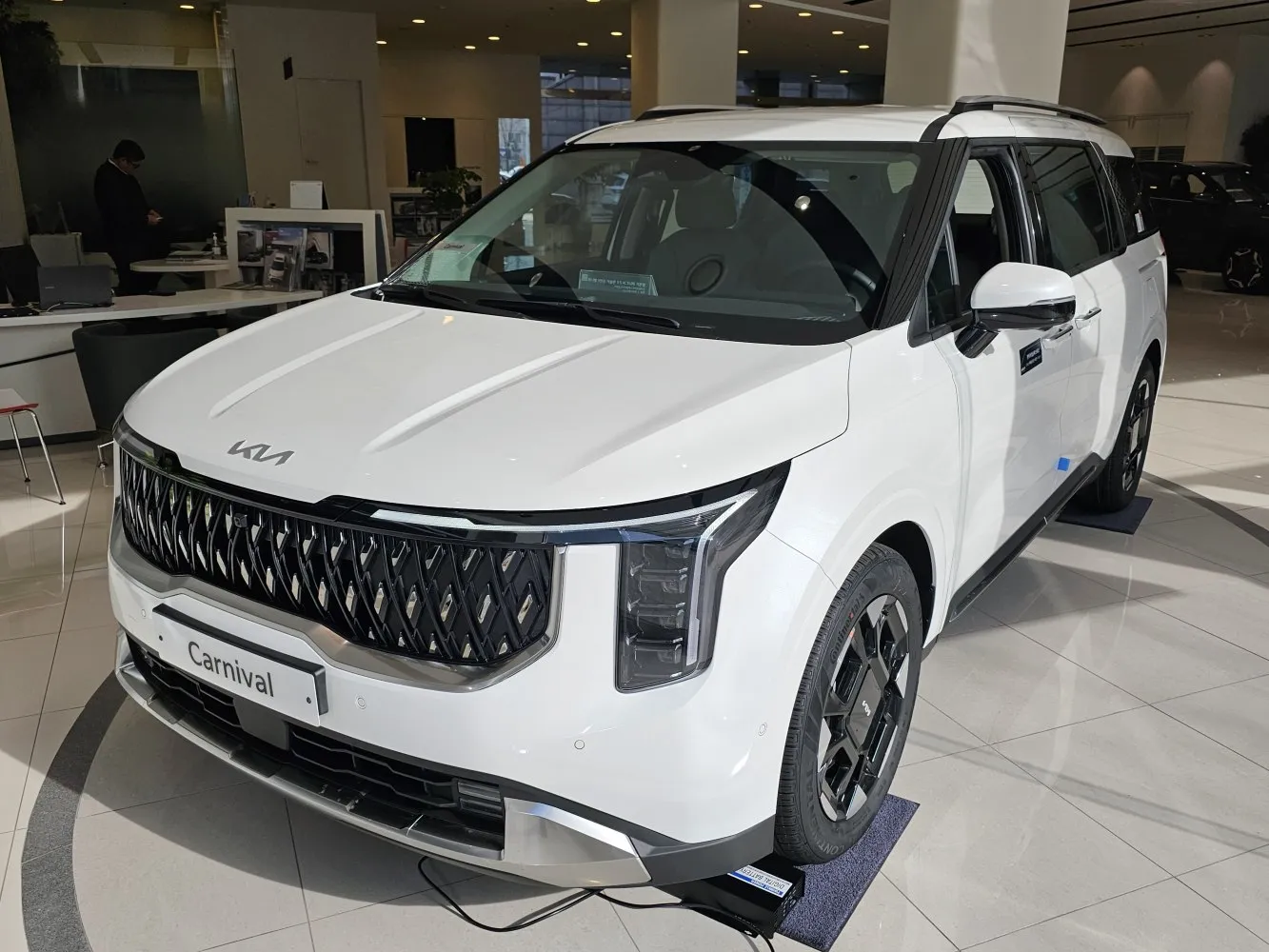
The first-generation Carnival was introduced in January 1998, and was marketed in a single, short wheelbase version. Second-generation models were marketed in short and long wheelbase variants. A rebadged variant of the second generation was offered in North America as the Hyundai Entourage. Beginning in 2010, the second-generation model received updated equipment, including Kia's corporate Tiger Nose grille, as introduced by its then new design chief, Peter Schreyer. Kia introduced its third-generation minivan in 2014, solely in a long wheelbase format. The fourth generation was introduced in 2020, when Kia also began using the Carnival nameplate worldwide....(Read more on Wikipedia)
II (VQ) Overview:
Kia Carnival (II (VQ)). With 246 Nm of torque, it offers ample pulling power. With a weight of 1971 kg, it falls in the mid‑range. Front‑wheel drive delivers efficiency and easy handling. The top speed reaches 182 km/h. A spacious vehicle designed to transport passengers comfortably, often with sliding doors. With seating for 7, it’s perfect for larger families.
2.7i V6 (189 Hp) Automatic Verdict:

Performance Verdict
The V6 engine offers smooth and refined power delivery, ideal for a quieter and more relaxed driving experience. While powerful, it's not designed for sporty performance but rather comfortable cruising.
Fuel Economy
With a combined fuel consumption of 10.9 l/100 km, this petrol V6 is significantly thirstier than its diesel counterparts, making it a less economical choice for high-mileage drivers.
Pros and Cons:
Pros:
- • Spacious and versatile interior with seating for seven
- • Comfortable ride quality, ideal for long journeys
- • Strong and fuel-efficient diesel engine options
- • Good value for money on the used market
- • Practical features for families
Cons:
- • Thirsty petrol V6 engine
- • Handling can feel ponderous due to its size
- • Some interior plastics feel less premium
- • Older models may face common reliability issues with age
- • Euro NCAP child and pedestrian safety scores were only average
Specifications:
Specifications are compared to those of the previous generation(I (UP/GQ, facelift 2001): 2002 - 2006).
| General: | |
|---|---|
| Brand: | Kia |
| Model: | Carnival |
| Generation: | II (VQ) |
| Modification (Engine): | 2.7i V6 (189 Hp) Automatic |
| Start of production: | 2006 |
| End of production: | 2010 |
| Powertrain Architecture: | Internal Combustion engine |
| Body type: | Minivan |
| Seats: | 7 |
| Doors: | 5 |
| Engine: | |
|---|---|
| Power: | 189 Hp @ 6000 rpm. Same horsepower |
| Power per litre: | 71.2 Hp/l [115mm less] |
| Torque: | 246 Nm @ 4000 rpm. |
| Engine Model/Code: | Mu / G6EA More details about the engine Mu / G6EA |
| Engine displacement: | 2656 |
| Number of cylinders: | 6 |
| Engine configuration: | V-engine |
| Number of valves per cylinder: | 4 |
| Fuel injection system: | Multi-port manifold injection |
| Engine aspiration: | Naturally aspirated engine |
| Engine oil capacity: | 4.5 l |
| Coolant: | 10.7 l |
| Engine layout: | Front, Transverse |
| Cylinder Bore: | 86.7 mm mm |
| Piston Stroke: | 75 mm mm |
| Compression ratio: | 10.4:1 |
| Performance: | |
|---|---|
| Fuel Type: | Petrol (Gasoline) |
| Fuel consumption (economy) - urban: | 15 l/100 km |
| Fuel consumption (economy) - extra urban: | 8.6 l/100 km |
| Fuel consumption (economy) - combined: | 10.9 l/100 km |
| Maximum speed: | 182 km/h |
| Weight-to-power ratio: | 10.4 kg/Hp, 95.9 Hp/tonne |
| Weight-to-torque ratio: | 8 kg/Nm, 124.8 Nm/tonne |
| Space: | |
|---|---|
| Kerb Weight: | 1971 |
| Max. weight: | 2785 |
| Max load: | 814 |
| Trunk (boot) space - maximum: | 1666 l |
| Trunk (boot) space - minimum: | 241 l |
| Fuel tank capacity: | 80 l |
| Size: | |
|---|---|
| Length: | 4810 mm mm [115mm less] |
| Width: | 1985 mm mm [85mm more] |
| Height: | 1815 mm mm [85mm more] |
| Wheelbase: | 2890 mm mm [15mm less] |
| Front track: | 1685 mm |
| Rear (Back) track: | 1685 mm |
| Minimum turning circle (turning diameter): | 11.64 m [above average] |
| Powertrain: | |
|---|---|
| Drivetrain Architecture | The Internal combustion engine (ICE) drives the front wheels of the vehicle. |
| Drive wheel | Front wheel drive |
| Number of gears | 4 |
| Transmission type | Automatic |
| Front brakes | Ventilated discs [Best for performance and cooling.] |
| Rear brakes | Drum [bad for performance and cooling.] |
| Assisting systems | ABS (Anti-lock braking system) |
| Steering type | Steering rack and pinion |
| Tires size | 235/60 R17H |
| Wheel rims size | 17 |
| Front suspension | Independent type McPherson |
| Rear suspension | Dependent spring suspension with transverse stabilizer |








How many miles have you covered in your Kia Carnival? Share your journey!