Mercedes-Benz E-class Coupe (C238, facelift 2020) E 300d (265 Hp) EQ Boost 4MATIC 9G-TRONIC
People\'s Opinion
N/A / 5
Mercedes-Benz E-class:
The Mercedes-Benz E-Class is a range of executive cars manufactured by German automaker Mercedes-Benz in various engine and body configurations. Produced since September 1953, the E-Class falls as a midrange in the Mercedes line-up, and has been marketed worldwide across five generations.
Before 1993, the E suffix in Mercedes-Benz model names referred to Einspritzmotor when in the early 1970s fuel injection began to proliferate beyond its upper-tier luxury and sporting models. By the launch of the facelifted W124 in 1993 fuel injection was ubiquitous in Mercedes engines, and the E was adopted as a prefix. The model line is referred to officially as the E-Class. All generations of the E-Class have offered either rear-wheel drive or Mercedes' 4Matic four-wheel drive system....(Read more on Wikipedia)
Coupe (C238, facelift 2020) Overview:
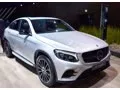
Mercedes-Benz E-class (Coupe (C238, facelift 2020)). With 550 Nm of torque, it offers ample pulling power. It has moderate fuel consumption (~7.5 l/100km). With a weight of 1895 kg, it falls in the mid‑range. All‑wheel drive provides excellent grip, ideal for off‑road use. Acceleration is good (0–100 km/h in 6.4 s). The top speed reaches 250 km/h. A two-door car with a fixed roof, known for its sporty design and dynamic performance. Seating for 4 makes it ideal for daily use.
Performance Verdict
Impressive torque and strong acceleration from this powerful diesel, complemented by EQ Boost for enhanced responsiveness and the grip of 4MATIC.
Fuel Economy
Excellent blend of performance and fuel efficiency, making it a highly economical choice for long-distance, high-power driving.
Best Use Case:
Highway / Long-Distance Touring
Pros and Cons:
Pros:
- • Elegant and timeless coupe design
- • Luxurious and high-quality interior materials
- • Comfortable ride quality, ideal for long journeys
- • Advanced MBUX infotainment system
- • Wide range of efficient and powerful engine options, including mild-hybrids
- • Excellent refinement and noise isolation
Cons:
- • Rear seats are cramped for adults on long trips
- • High purchase price and potentially expensive options
- • Some rivals offer more engaging driving dynamics
- • Limited practicality compared to the E-Class Saloon
- • Complex technology might be daunting for some users
Specifications:
Specifications are compared to those of the previous generation(Cabrio (A238, facelift 2020): 2020 - 2023).
| General: |
| Brand: | Mercedes-Benz |
|---|
| Model: | E-class |
|---|
| Generation: | Coupe (C238, facelift 2020) |
|---|
| Modification (Engine): | E 300d (265 Hp) EQ Boost 4MATIC 9G-TRONIC |
|---|
| Start of production: | 2021 |
|---|
| End of production: | 2023 |
|---|
| Powertrain Architecture: | MHEV (Mild Hybrid Electric Vehicle, power-assist hybrid, battery-assisted hybrid vehicles, BAHV) |
|---|
| Body type: | Coupe |
|---|
| Seats: | 4 |
|---|
| Doors: | 2 |
|---|
| Engine: |
| Engine systems: | Start & Stop System |
|---|
| Power: | 265 Hp Same horsepower |
|---|
| Power per litre: | 133 Hp/l [Same length.] |
|---|
| Torque: | 550 Nm |
|---|
| Engine Model/Code: | OM 654.820 More details about the engine OM 654.820 |
|---|
| Engine displacement: | 1992 |
|---|
| Number of cylinders: | 4 |
|---|
| Engine configuration: | Inline |
|---|
| Number of valves per cylinder: | 4 |
|---|
| Fuel injection system: | Diesel Commonrail |
|---|
| Engine aspiration: | BiTurbo, Intercooler |
|---|
| Valvetrain: | DOHC |
|---|
| Engine oil capacity: | 6.5 l |
|---|
| Engine layout: | Front, Longitudinal |
|---|
| Performance: |
| Fuel Type: | Diesel |
|---|
| Fuel consumption (economy) - urban: | 7.3-7.7 l/100 km |
|---|
| Fuel consumption (economy) - extra urban: | 4.5-4.8 l/100 km |
|---|
| Fuel consumption (economy) - combined (NEDC): | 5.5-5.9 l/100 km |
|---|
| Fuel consumption (economy) - urban (NEDC): | 7.3-7.7 l/100 km |
|---|
| Fuel consumption (economy) - extra urban (NEDC): | 4.5-4.8 l/100 km |
|---|
| Fuel consumption (economy) - combined: | 5.5-5.9 l/100 km |
|---|
| Emission standard: | Euro 6D-ISC-FCM |
|---|
| Acceleration 0 - 100 km/h: | 6.4 sec |
|---|
| Acceleration 0 - 62 mph: | 6.4 sec |
|---|
| Maximum speed: | 250 km/h, Electronically limited |
|---|
| Weight-to-power ratio: | 7.2 kg/Hp, 139.8 Hp/tonne |
|---|
| Weight-to-torque ratio: | 3.4 kg/Nm, 290.2 Nm/tonne |
|---|
| Acceleration 0 - 60 mph: | 6.1 sec |
|---|
| Space: |
| Kerb Weight: | 1895 |
|---|
| Max. weight: | 2510 |
|---|
| Max. roof load: | 75 kg |
|---|
| Max load: | 615 |
|---|
| Trunk (boot) space - minimum: | 405 l |
|---|
| Permitted trailer load with brakes (12%): | 1800 kg |
|---|
| Fuel tank capacity: | 50 l |
|---|
| Permitted trailer load without brakes: | 750 kg |
|---|
| Permitted towbar download: | 75 kg |
|---|
| Size: |
| Ramp-over (brakeover) angle: | 9.5° |
|---|
| Length: | 4835 mm [Same length.] |
|---|
| Width: | 1860 mm [Same width.] |
|---|
| Height: | 1428 mm [2mm less] |
|---|
| Wheelbase: | 2873 mm [Same wheelbase.] |
|---|
| Width including mirrors: | 2055 mm |
|---|
| Front track: | 1605 mm |
|---|
| Rear (Back) track: | 1609 mm |
|---|
| Front overhang: | 850 mm |
|---|
| Rear overhang: | 1112 mm |
|---|
| Ride height (ground clearance): | 98 mm |
|---|
| Minimum turning circle (turning diameter): | 11.61 m [above average] |
|---|
| Approach angle: | 12.8° |
|---|
| Departure angle: | 14.4° |
|---|
| Powertrain: |
| Drivetrain Architecture | The Internal combustion engine (ICE) and the electric motor permanently drive the four wheels of the car with the ability to work only in mixed mode. |
|---|
| Drive wheel | All wheel drive (4x4) |
|---|
| Number of gears | 9 |
|---|
| Transmission type | Automatic |
|---|
| Gearbox type | G-TRONIC |
|---|
| Front brakes | Ventilated discs [Best for performance and cooling.] |
|---|
| Rear brakes | Ventilated discs [Best for performance and cooling.] |
|---|
| Assisting systems | ABS (Anti-lock braking system) |
|---|
| Steering type | Steering rack and pinion |
|---|
| Power steering | Electric Steering |
|---|
| Tires size | Front wheel tires: 225/55 R17; 245/45 R18; 245/40 R19; 245/35 R20 |
|---|
| Wheel rims size | Front wheel rims: 7.5J x 17; 8J x 18; 8J x 19; 8J x 20 |
|---|
| Front suspension | Double wishbone |
|---|
| Rear suspension | Independent multi-link suspension |
|---|
| Electric: |
| Gross battery capacity: | 0.9 kWh |
|---|
| Battery technology: | Lithium-ion (Li-Ion) |
|---|
| Electric motor power: | 20 Hp |
|---|
| Electric motor Torque: | 200 Nm |
|---|
| Electric motor location: | Between the combustion engine and the transmission |
|---|
| Battery voltage: | 48 V |
|---|








Behind the wheel of the Mercedes-Benz E-class. How does it handle on the road?