
Click on image to view the full photo gallery
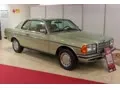
Mercedes-Benz W123 S123 250 T (129 Hp)
Overall Rating
Mercedes-Benz W123:
The Mercedes-Benz W123 is a range of executive cars produced by German manufacturer Mercedes-Benz from November 1975 to January 1986. The W123 models surpassed their predecessor, the Mercedes-Benz W114, as the most successful Mercedes-Benz, selling 2. 7 million units before production ended in the autumn of 1985 for the saloon/sedan versions and January 1986 for coupés and estates/station wagons.
Following a slow production build-up during the first year, customers who placed their orders faced a lengthy waiting period of nine to twelve months. A black market emerged for the customers who were willing to pay more for immediate delivery. The slightly used W123 commanded about 5,000 Deutsche Mark premium over its original sale price....(Read more on Wikipedia)
S123 Overview:
Mercedes-Benz W123 (S123). With 196 Nm of torque, it offers ample pulling power. With a weight of 1510 kg, it falls in the mid‑range. Rear‑wheel drive offers dynamic handling and sporty feedback. Acceleration is relatively slow (0–100 km/h in 11.9 s). The top speed reaches 185 km/h. A car with an extended rear cargo area, combining passenger comfort with increased storage. Seating for 5 makes it ideal for daily use.
The Mercedes-Benz W123/S123 generation was produced before Euro NCAP testing began in 1997 and was not officially rated. While built with robust materials for its era, its safety features are rudimentary by modern standards.
250 T (129 Hp) Verdict:

Performance Verdict
The inline-six engine offers smoother power delivery than the four-cylinders, providing adequate performance for most situations with a manual gearbox.
Fuel Economy
Fuel consumption is respectable for a six-cylinder, but not outstanding. Manual transmission helps slightly.
Pros and Cons:
Pros:
- • Exceptional build quality and durability
- • Timeless, elegant design
- • Comfortable and refined ride
- • Strong reliability and longevity
- • Good parts availability for a classic
Cons:
- • Many engines are underpowered by modern standards
- • Fuel economy can be poor on older petrol models
- • Rust can be an issue if not maintained
- • Safety features are outdated
- • Maintenance costs can be higher for specific parts
Specifications:
Specifications are compared to those of the previous generation(C123: October, 1982 - August, 1985).
| General: | |
|---|---|
| Brand: | Mercedes-Benz |
| Model: | W123 |
| Generation: | S123 |
| Modification (Engine): | 250 T (129 Hp) |
| Start of production: | September, 1977 |
| End of production: | September, 1979 |
| Powertrain Architecture: | Internal Combustion engine |
| Body type: | Station wagon (estate) |
| Seats: | 5 |
| Doors: | 5 |
| Engine: | |
|---|---|
| Power: | 129 Hp @ 5500 rpm. Same horsepower |
| Power per litre: | 51.1 Hp/l [38mm less] |
| Torque: | 196 Nm @ 3500 rpm. |
| Engine Model/Code: | M 123 V 25 / 123.920 More details about the engine M 123 V 25 / 123.920 |
| Engine displacement: | 2525 |
| Number of cylinders: | 6 |
| Engine configuration: | Inline |
| Number of valves per cylinder: | 2 |
| Fuel injection system: | Carburettor |
| Engine aspiration: | Naturally aspirated engine |
| Valvetrain: | SOHC |
| Engine oil capacity: | 7.5 l |
| Coolant: | 10 l |
| Engine layout: | Front, Longitudinal |
| Cylinder Bore: | 86 mm mm |
| Piston Stroke: | 72.45 mm mm |
| Compression ratio: | 8.7:1 |
| Performance: | |
|---|---|
| Fuel Type: | Petrol (Gasoline) |
| Fuel consumption (economy) - urban: | 16.4 l/100 km |
| Fuel consumption (economy) - extra urban: | 9.8 l/100 km |
| Acceleration 0 - 100 km/h: | 11.9 sec |
| Acceleration 0 - 62 mph: | 11.9 sec |
| Maximum speed: | 185 km/h |
| Weight-to-power ratio: | 11.7 kg/Hp, 85.4 Hp/tonne |
| Weight-to-torque ratio: | 7.7 kg/Nm, 129.8 Nm/tonne |
| Acceleration 0 - 60 mph: | 11.3 sec |
| Space: | |
|---|---|
| Kerb Weight: | 1510 |
| Max. weight: | 2130 |
| Max load: | 620 |
| Fuel tank capacity: | 70 l |
| Size: | |
|---|---|
| Length: | 4725 mm mm [38mm less] |
| Width: | 1786 mm mm [Same width.] |
| Height: | 1470 mm mm [75mm more] |
| Wheelbase: | 2795 mm mm [85mm more] |
| Front track: | 1488 mm |
| Rear (Back) track: | 1453 mm |
| Powertrain: | |
|---|---|
| Drivetrain Architecture | The Internal combustion engine (ICE) drives the rear wheels of the vehicle. |
| Drive wheel | Rear wheel drive |
| Number of gears | 4 |
| Transmission type | Manual |
| Front brakes | Disc |
| Rear brakes | Disc |
| Steering type | Cone worm with recirculation balls |
| Power steering | Hydraulic Steering |
| Tires size | Front wheel tires: 195/70 R14 |
| Wheel rims size | Front wheel rims: 6J x 14 |
| Front suspension | Double wishbone |
| Rear suspension | Trailing arm |





Driven it? Loved it? Hated it? Share your honest review!