
Click on image to view the full photo gallery
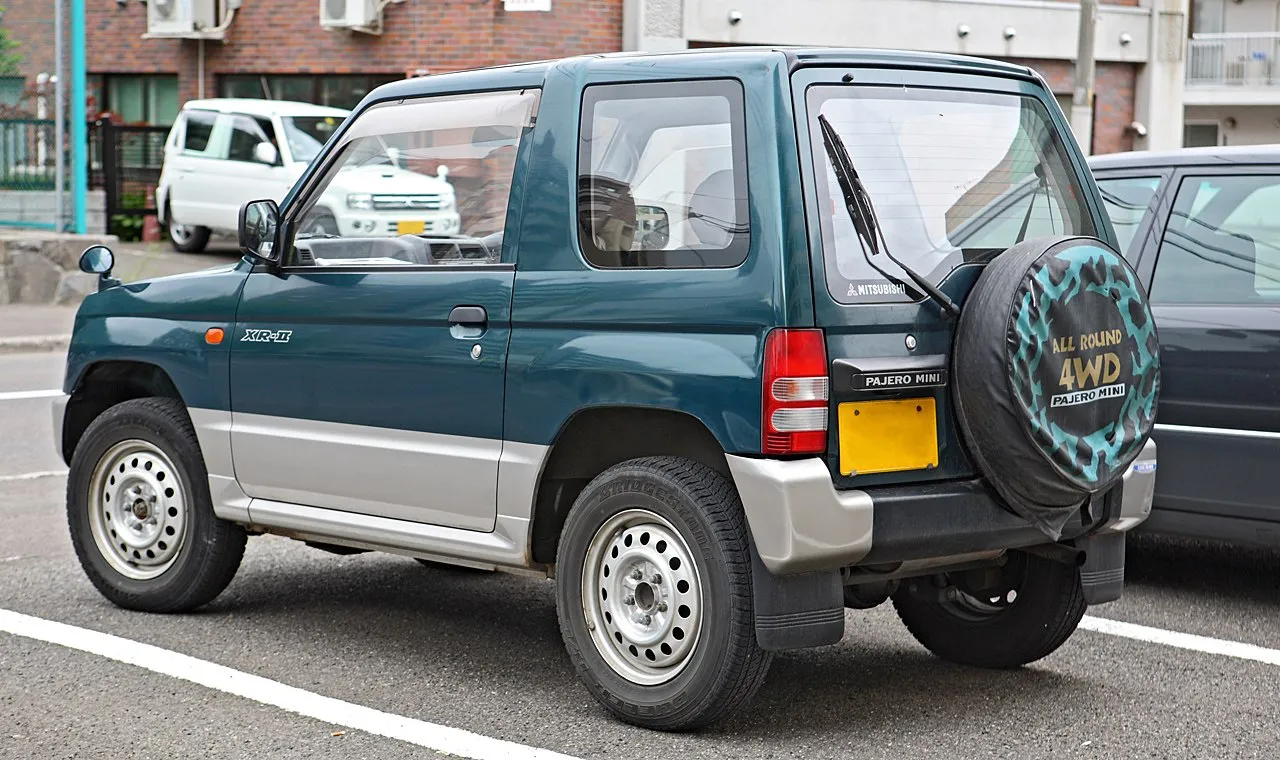
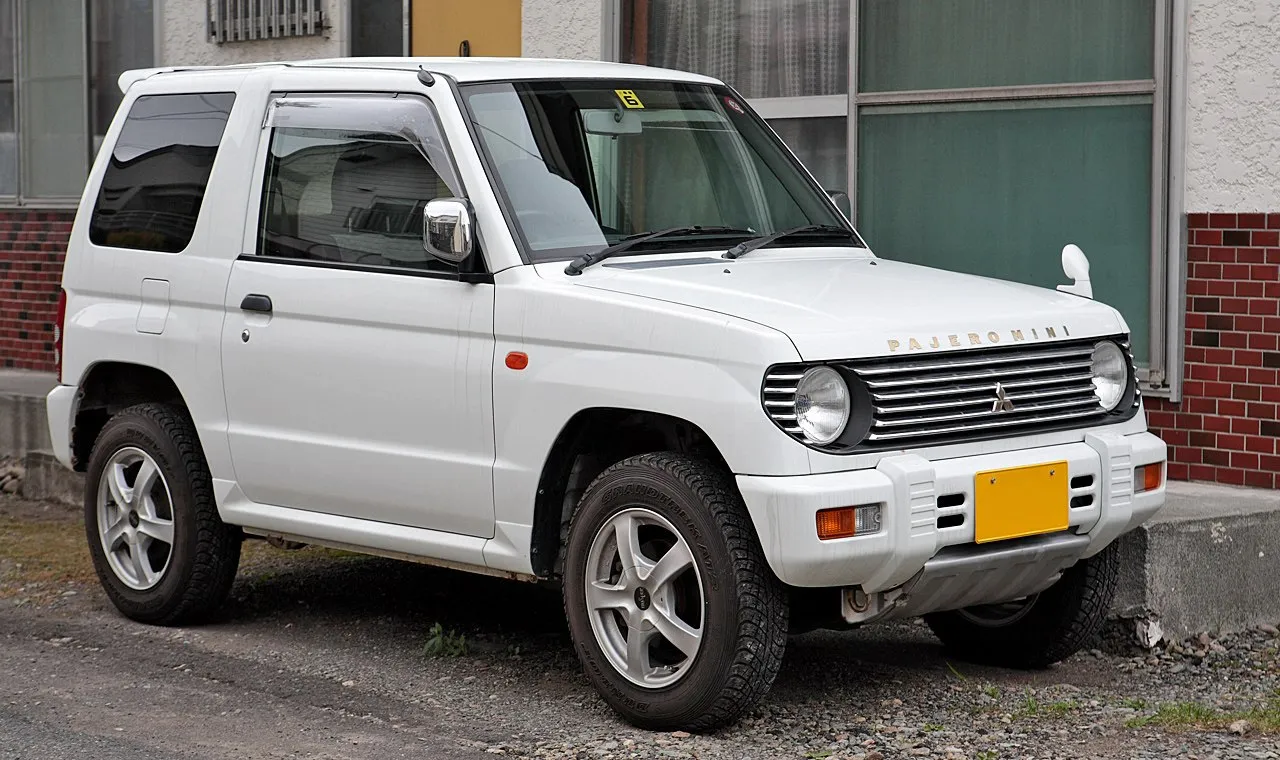
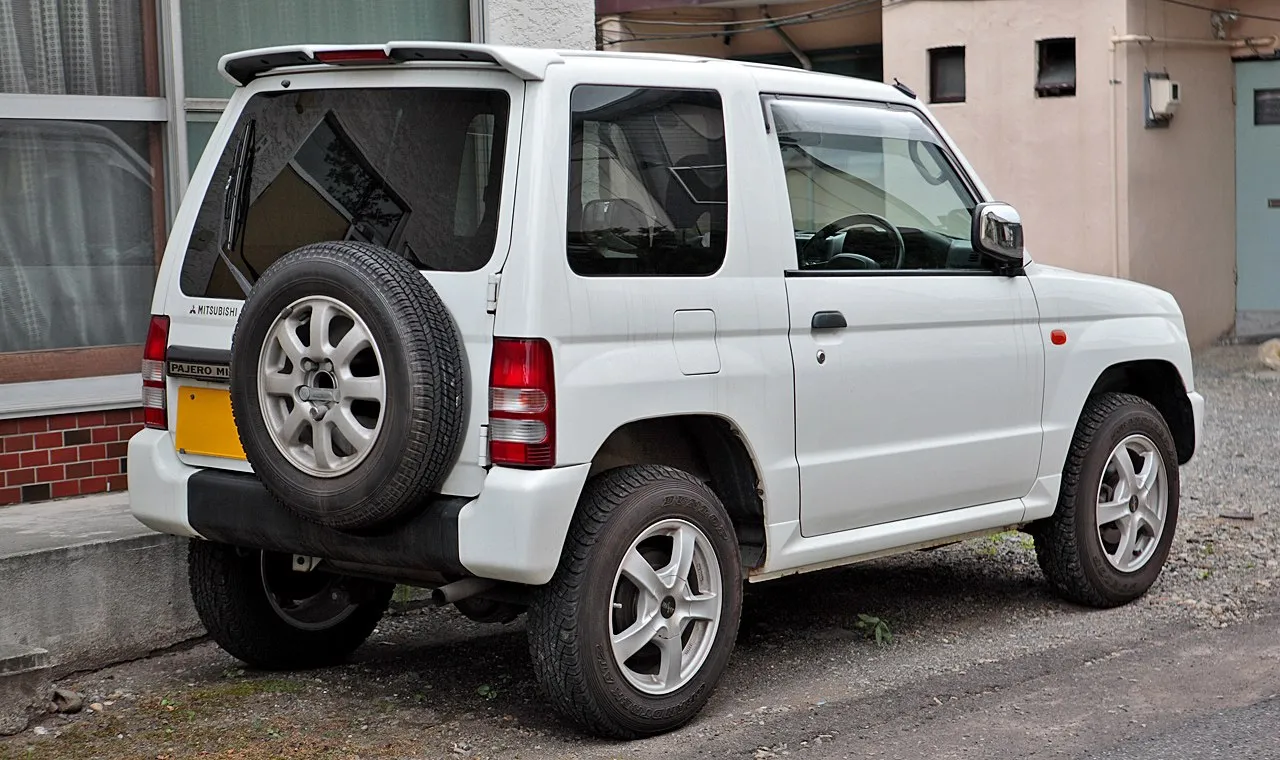
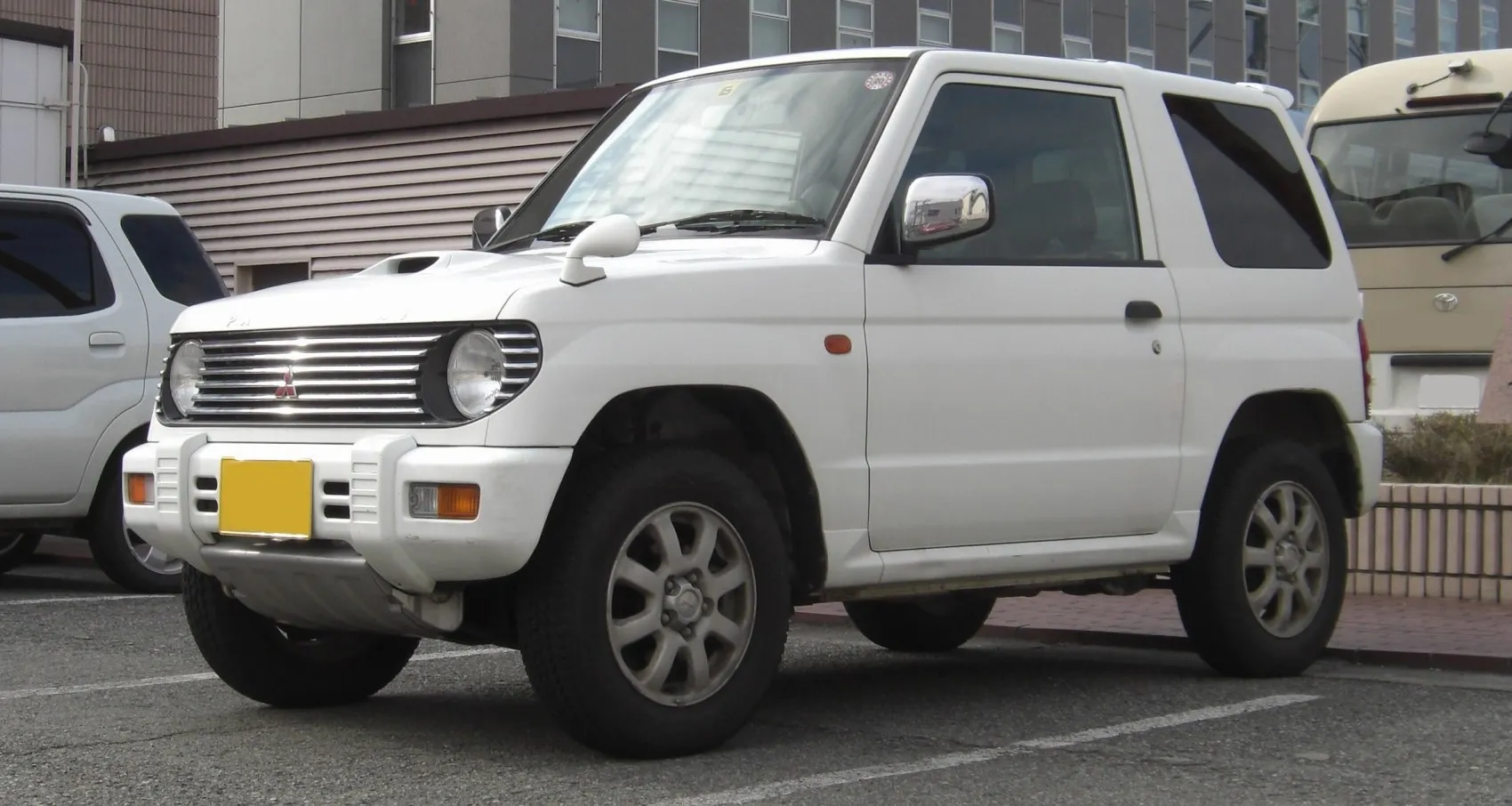
Mitsubishi Pajero Mini 0.7 16V (52 Hp)
Overall Rating
Mitsubishi Pajero:
The Mitsubishi Pajero is a full-size SUV manufactured and marketed globally by Mitsubishi over four generations—introduced in 1981 and discontinued in 2021.
The Pajero nameplate derives from Leopardus pajeros, the Pampas cat. Mitsubishi marketed the SUV as the Montero in North America, Spain, and Latin America due to the term "pajero" being derogatory in Spanish. In the United Kingdom, it was known as the Shogun, named after the Japanese word for "General. " The model was discontinued in North America in 2006....(Read more on Wikipedia)
Mini Overview:
Mitsubishi Pajero (Mini). With 58 Nm of torque, it offers ample pulling power. It has moderate fuel consumption (~7 l/100km). Weighing only 910 kg, it’s quite light. All‑wheel drive provides excellent grip, ideal for off‑road use. The top speed reaches 113 km/h. A sport utility vehicle offering higher ground clearance and versatile cargo space. Seating for 5 makes it ideal for daily use.
The Mitsubishi Pajero Mini generation was not tested by Euro NCAP. As a Kei car from the 1990s, it predates modern safety standards and testing protocols, focusing primarily on Japanese domestic market regulations.
0.7 16V (52 Hp) Verdict:

Performance Verdict
Adequate for urban commuting, this naturally aspirated engine provides sufficient power for city speeds but will struggle on highways or steep inclines, especially with passengers or cargo.
Fuel Economy
Likely the most fuel-efficient option in the lineup due to its simpler, naturally aspirated design, making it a good choice for budget-conscious drivers focused on city driving.
Pros and Cons:
Pros:
- • Excellent compact size for urban maneuverability and parking
- • Genuine 4x4 capability for light off-road adventures
- • Unique and charming styling
- • Surprisingly fun to drive, especially with the turbo engine
- • Good fuel economy for a 4x4 (especially non-turbo)
- • Low running costs (in Japan)
- • High ground clearance for its size
Cons:
- • Limited passenger and cargo space
- • Highway performance can be strained, especially with the naturally aspirated engine
- • Basic interior and amenities
- • Lack of modern safety features (common for its era)
- • Parts availability can be challenging outside of Japan
- • Firm ride quality due to short wheelbase
Specifications:
Specifications are compared to those of the previous generation(II (V2_W,V4_W): 1991 - 1999).
| General: | |
|---|---|
| Brand: | Mitsubishi |
| Model: | Pajero |
| Generation: | Mini |
| Modification (Engine): | 0.7 16V (52 Hp) |
| Start of production: | 1994 |
| End of production: | 1998 |
| Powertrain Architecture: | Internal Combustion engine |
| Body type: | SUV |
| Seats: | 5 |
| Doors: | 3 |
| Engine: | |
|---|---|
| Power: | 52 Hp @ 7000 rpm. |
| Power per litre: | 78.9 Hp/l |
| Torque: | 58 Nm @ 4000 rpm. |
| Engine displacement: | 659 |
| Number of cylinders: | 4 |
| Engine configuration: | Inline |
| Number of valves per cylinder: | 4 |
| Fuel injection system: | Multi-port manifold injection |
| Engine aspiration: | Naturally aspirated engine |
| Valvetrain: | OHC |
| Engine layout: | Front, Transverse |
| Cylinder Bore: | 60 mm mm |
| Piston Stroke: | 58.3 mm mm |
| Compression ratio: | 10:1 |
| Performance: | |
|---|---|
| Fuel Type: | Petrol (Gasoline) |
| Fuel consumption (economy) - urban: | 7 l/100 km |
| Fuel consumption (economy) - extra urban: | 4 l/100 km |
| Maximum speed: | 113 km/h |
| Weight-to-power ratio: | 17.5 kg/Hp, 57.1 Hp/tonne |
| Weight-to-torque ratio: | 15.7 kg/Nm, 63.7 Nm/tonne |
| Space: | |
|---|---|
| Kerb Weight: | 910 |
| Fuel tank capacity: | 35 l |
| Size: | |
|---|---|
| Length: | 3295 mm mm [1360mm less] |
| Width: | 1395 mm mm [300mm less] |
| Height: | 1630 mm mm [225mm less] |
| Wheelbase: | 2200 mm mm [525mm less] |
| Front track: | 1190 mm |
| Rear (Back) track: | 1200 mm |
| Minimum turning circle (turning diameter): | 9.6 m [above average] |
| Powertrain: | |
|---|---|
| Drive wheel | All wheel drive (4x4) |
| Number of gears | 5 |
| Transmission type | Manual |
| Front brakes | Disc [bad for performance and cooling.] |
| Rear brakes | Drum [bad for performance and cooling.] |
| Assisting systems | ABS (Anti-lock braking system) |
| Steering type | Steering rack and pinion |
| Power steering | Hydraulic Steering |
| Tires size | 175/80 R15 |
| Front suspension | Double wishbone |
| Rear suspension | Coil spring |




Is the Mitsubishi Pajero your dream ride or just a daily drive? Let's talk!