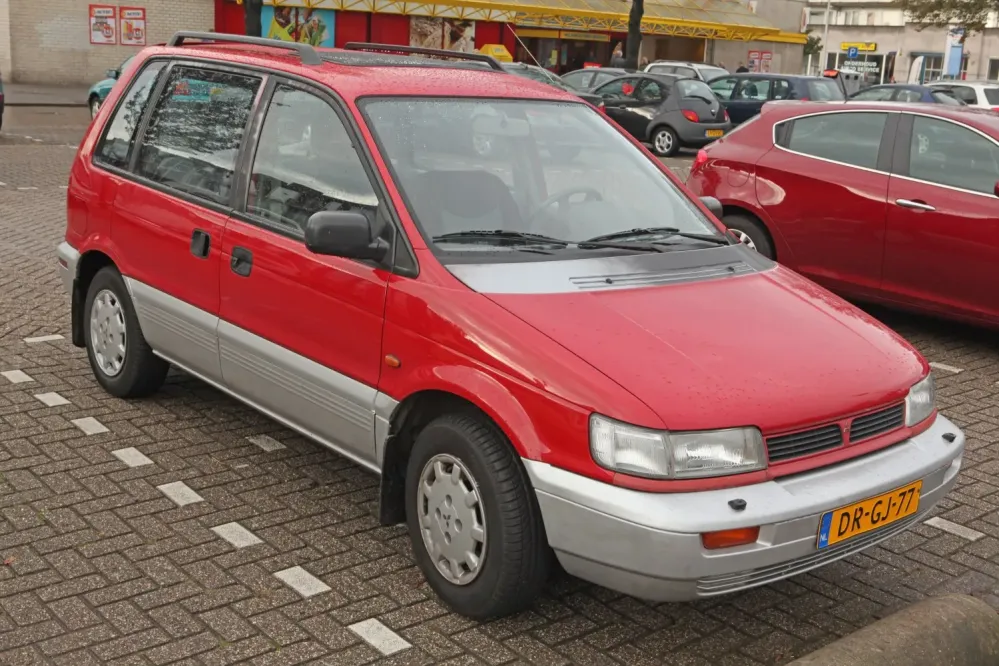
Click on image to view the full photo gallery
Mitsubishi Space Runner N1_W,N2_W 2.0 TD GLX (82 Hp)
Overall Rating
Mitsubishi Space Runner:
The Mitsubishi RVR is a range of cars produced by Japanese manufacturer Mitsubishi Motors from 1991 to 2002 and then from 2010 to present. The first two generations were classified as compact multi-purpose vehicles , and the model introduced in 2010 is a subcompact crossover SUV.
The RVR was Mitsubishi's Recreational Vehicle debut during the Japanese economic boom. The cars were sold at the Mitsubishi Japan dealership chain called Car Plaza. RVR is an acronym for "Recreation Vehicle Runner". In addition, the original logo had a Cyrillic Я on the first letter, so that it reads ЯVR. It had a convenient size passenger cabin and spacious 4–5 person capacity with a youth-oriented approach, making it appealing to young people. Television commercials in Japan used Bugs Bunny and Daffy Duck as spokespeople. It was also developed and released during Japan's "bubble economy", and gained popularity due to the convenience of a passenger side sliding door....(Read more on Wikipedia)
N1_W,N2_W Overview:
Mitsubishi Space Runner (N1_W,N2_W). With 172 Nm of torque, it offers ample pulling power. It has moderate fuel consumption (~8 l/100km). Weighing only 1260 kg, it’s quite light. Front‑wheel drive delivers efficiency and easy handling. Acceleration is relatively slow (0–100 km/h in 17.8 s). The top speed reaches 155 km/h. A spacious vehicle designed to transport passengers comfortably, often with sliding doors. Seating for 5 makes it ideal for daily use.
2.0 TD GLX (82 Hp) Verdict:

Performance Verdict
Performance is modest, with noticeably slower acceleration, making it less suitable for spirited driving or quick overtakes. Torque delivery is adequate for load-carrying.
Fuel Economy
Outstanding fuel economy for its class and era, making it an excellent choice for long-distance travel where running costs are a priority.
Pros and Cons:
Pros:
- • Versatile and spacious interior for its compact footprint.
- • Optional 4x4 system enhances all-weather capability.
- • Good range of engines, including an economical diesel.
- • Practical and reliable for family use.
- • Compact dimensions make it easy to maneuver in urban environments.
Cons:
- • Outdated safety features by modern standards.
- • Some petrol engines can be thirsty.
- • Basic interior design and materials.
- • Limited availability of parts for older models.
- • Performance can be sluggish with lower-powered engines.
Specifications:
Specifications are compared to those of the previous generation(N1_W,N2_W: 1991 - 1999).
| General: | |
|---|---|
| Brand: | Mitsubishi |
| Model: | Space Runner |
| Generation: | N1_W,N2_W |
| Modification (Engine): | 2.0 TD GLX (82 Hp) |
| Start of production: | 1992 |
| End of production: | 1999 |
| Powertrain Architecture: | Internal Combustion engine |
| Body type: | Minivan |
| Seats: | 5 |
| Doors: | 5 |
| Engine: | |
|---|---|
| Power: | 82 Hp @ 4500 rpm. |
| Power per litre: | 41 Hp/l |
| Torque: | 172 Nm @ 2500 rpm. |
| Engine displacement: | 1998 |
| Number of cylinders: | 4 |
| Engine configuration: | Inline |
| Number of valves per cylinder: | 2 |
| Fuel injection system: | Diesel Commonrail |
| Engine aspiration: | Turbocharger |
| Valvetrain: | OHC |
| Engine layout: | Front, Transverse |
| Cylinder Bore: | 82.7 mm mm |
| Piston Stroke: | 93 mm mm |
| Compression ratio: | 22.4:1 |
| Performance: | |
|---|---|
| Fuel Type: | Diesel |
| Fuel consumption (economy) - urban: | 8 l/100 km |
| Fuel consumption (economy) - extra urban: | 6.5 l/100 km |
| Fuel consumption (economy) - combined: | 7 l/100 km |
| Acceleration 0 - 100 km/h: | 17.8 sec |
| Acceleration 0 - 62 mph: | 17.8 sec |
| Maximum speed: | 155 km/h |
| Weight-to-power ratio: | 15.4 kg/Hp, 65.1 Hp/tonne |
| Weight-to-torque ratio: | 7.3 kg/Nm, 136.5 Nm/tonne |
| Acceleration 0 - 60 mph: | 16.9 sec |
| Space: | |
|---|---|
| Kerb Weight: | 1260 |
| Max. weight: | 1760 |
| Max load: | 500 |
| Trunk (boot) space - maximum: | 1498 l |
| Trunk (boot) space - minimum: | 676 l |
| Fuel tank capacity: | 55 l |
| Size: | |
|---|---|
| Length: | 4270 mm mm [20mm less] |
| Width: | 1695 mm mm [Same width.] |
| Height: | 1665 mm mm [25mm more] |
| Wheelbase: | 2520 mm mm [Same wheelbase.] |
| Front track: | 1460 mm |
| Rear (Back) track: | 1460 mm |
| Powertrain: | |
|---|---|
| Drivetrain Architecture | The Internal combustion engine (ICE) drives the front wheels of the vehicle. |
| Drive wheel | Front wheel drive |
| Number of gears | 5 |
| Transmission type | Manual |
| Front brakes | Ventilated discs [Best for performance and cooling.] |
| Rear brakes | Disc |
| Assisting systems | ABS (Anti-lock braking system) |
| Steering type | Steering rack and pinion |
| Power steering | Hydraulic Steering |
| Tires size | 185/70 R14 |
| Front suspension | Wishbone |
| Rear suspension | Coil spring |
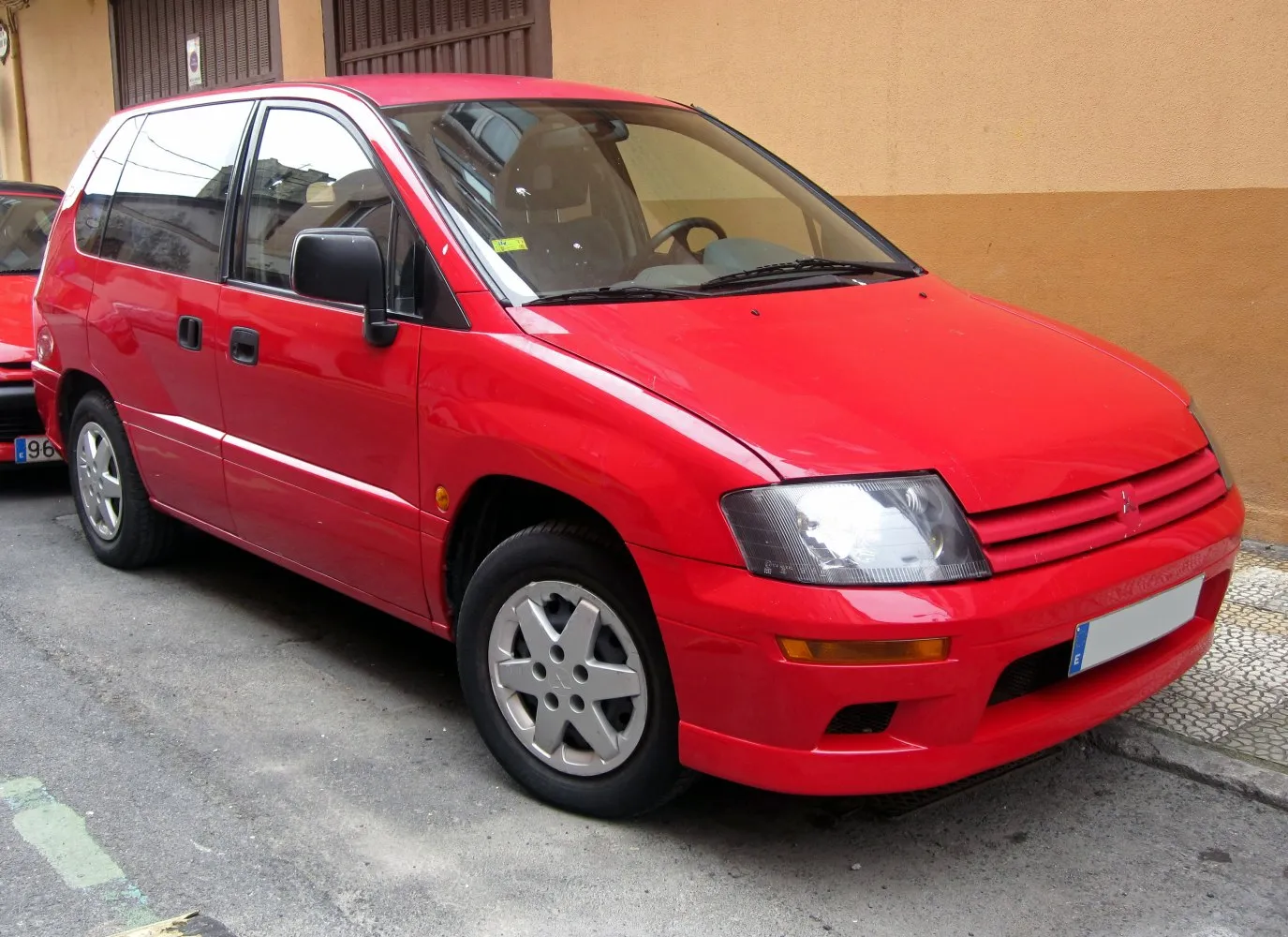


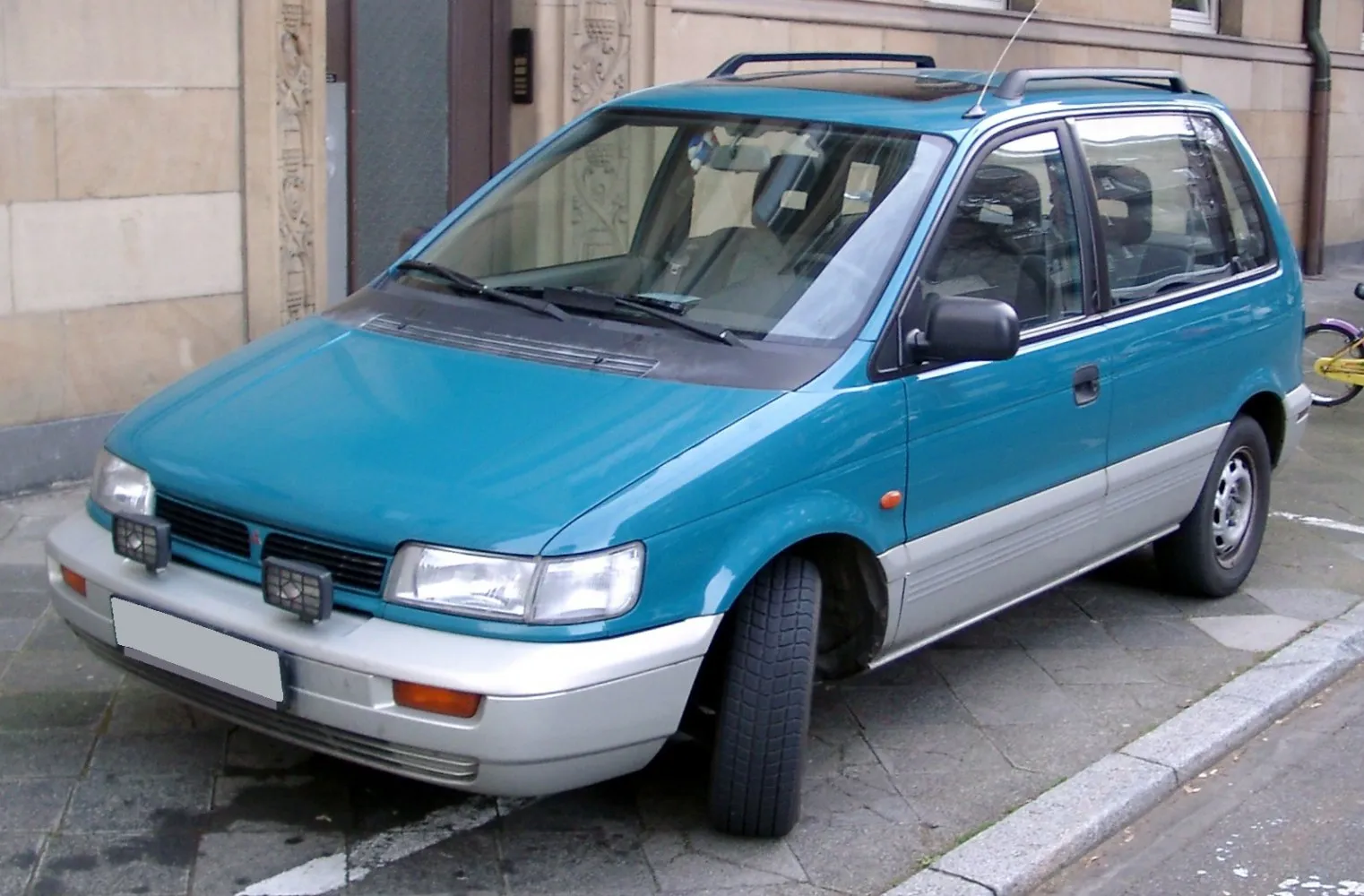
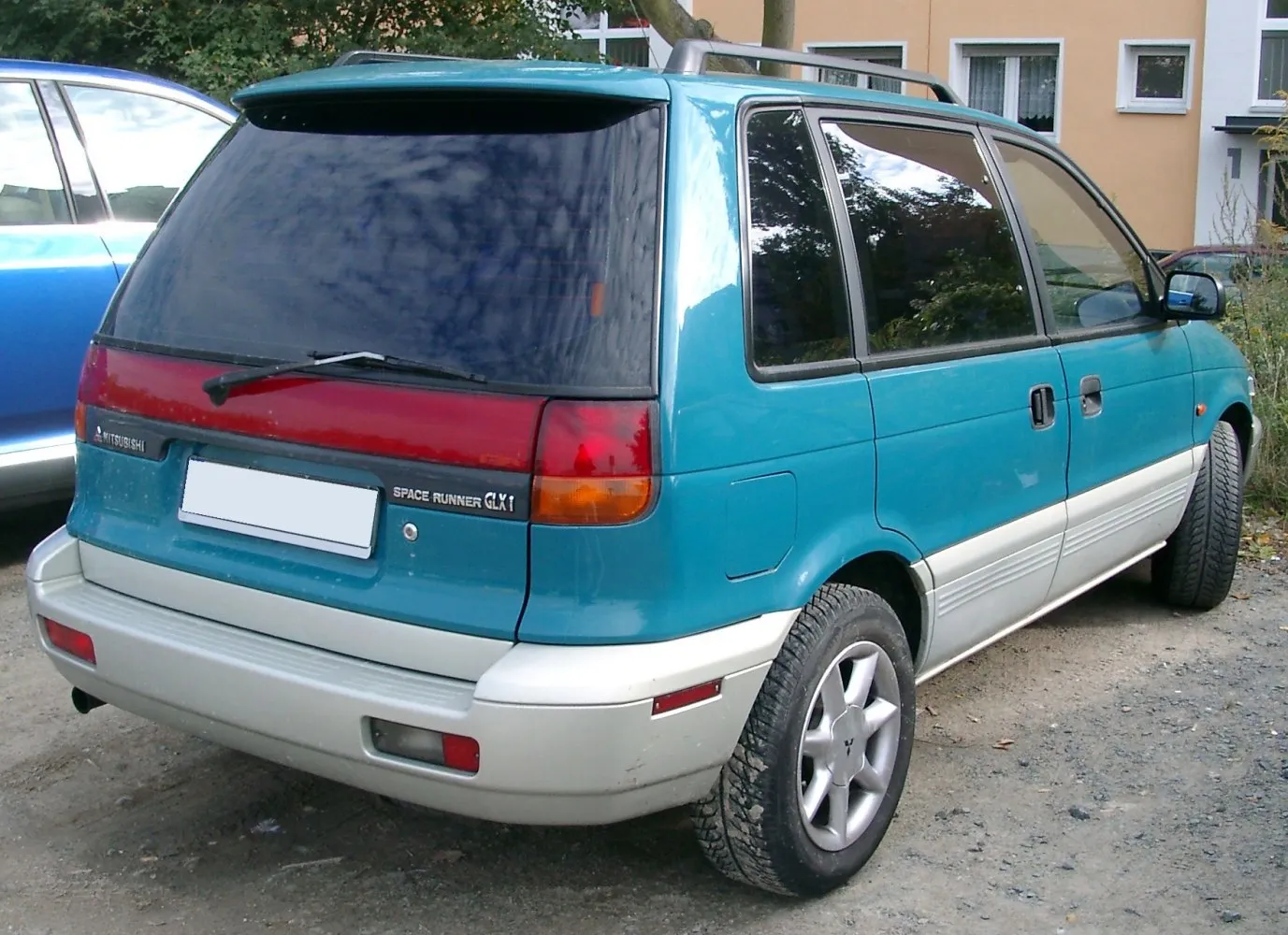
Show off your Mitsubishi Space Runner knowledge – drop a review below!