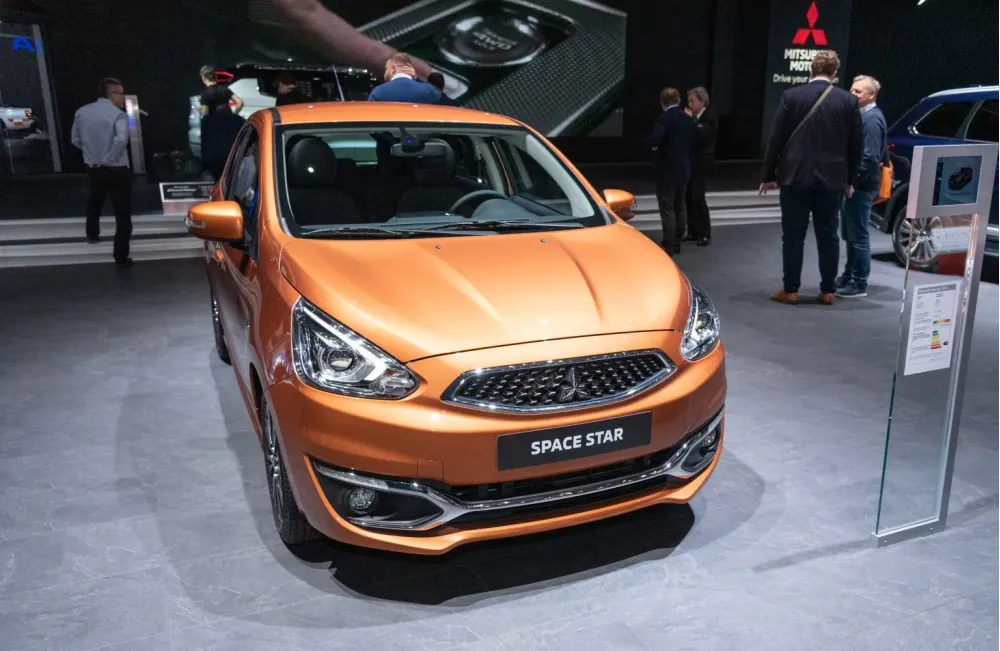
Click on image to view the full photo gallery
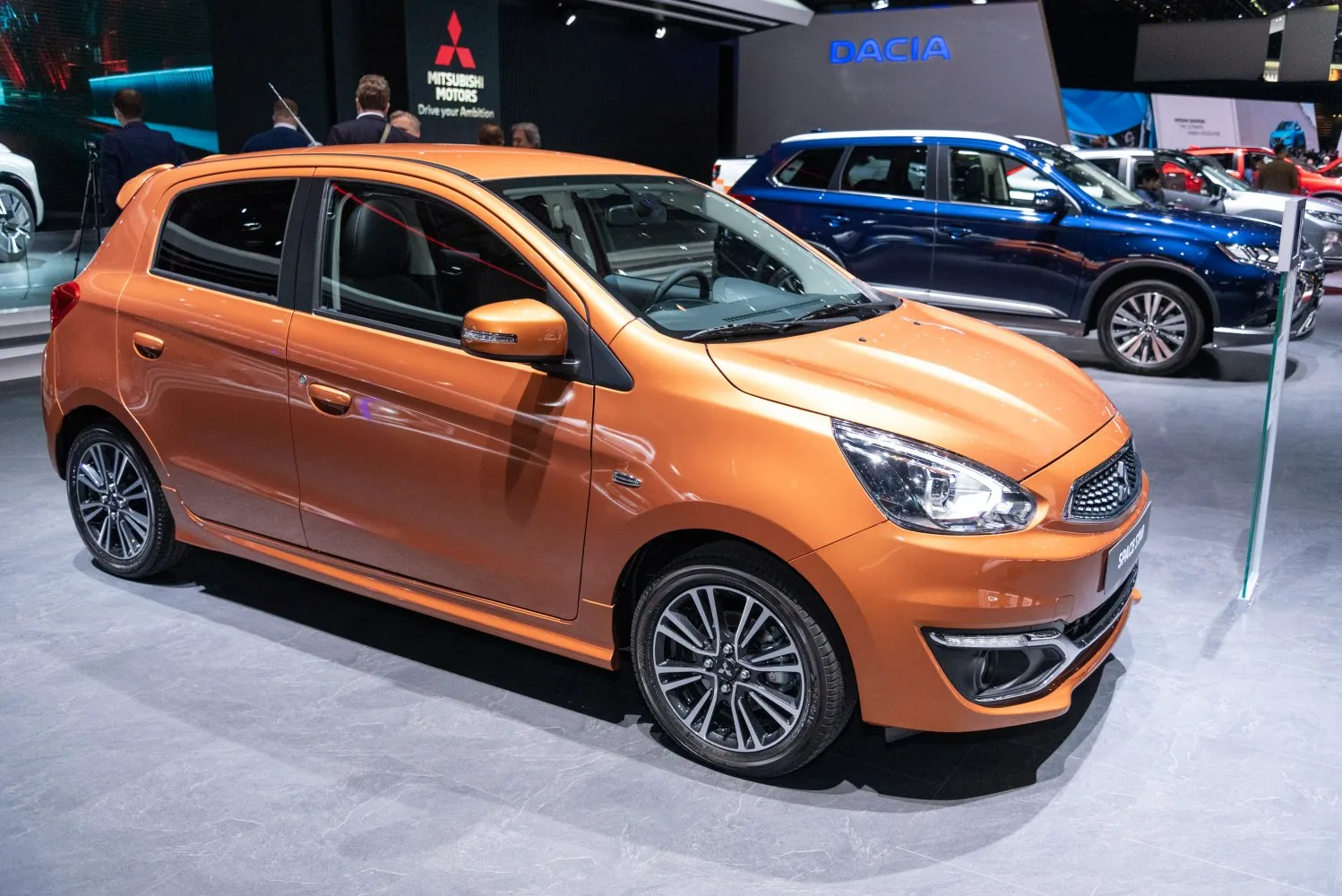
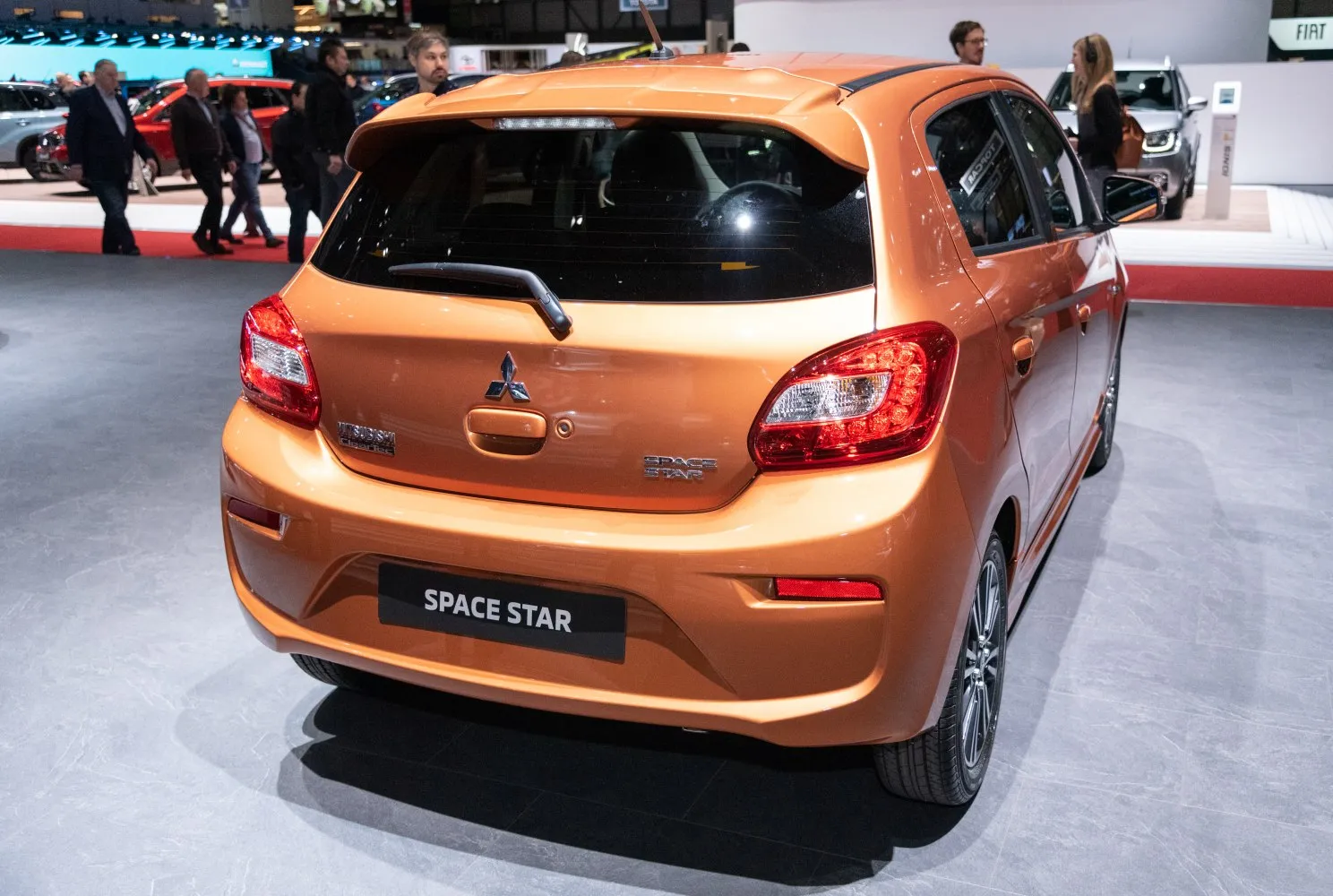
Mitsubishi Space Star facelift 2015 1.0 MIVEC (71 Hp)
Overall Rating
Mitsubishi Space Star:
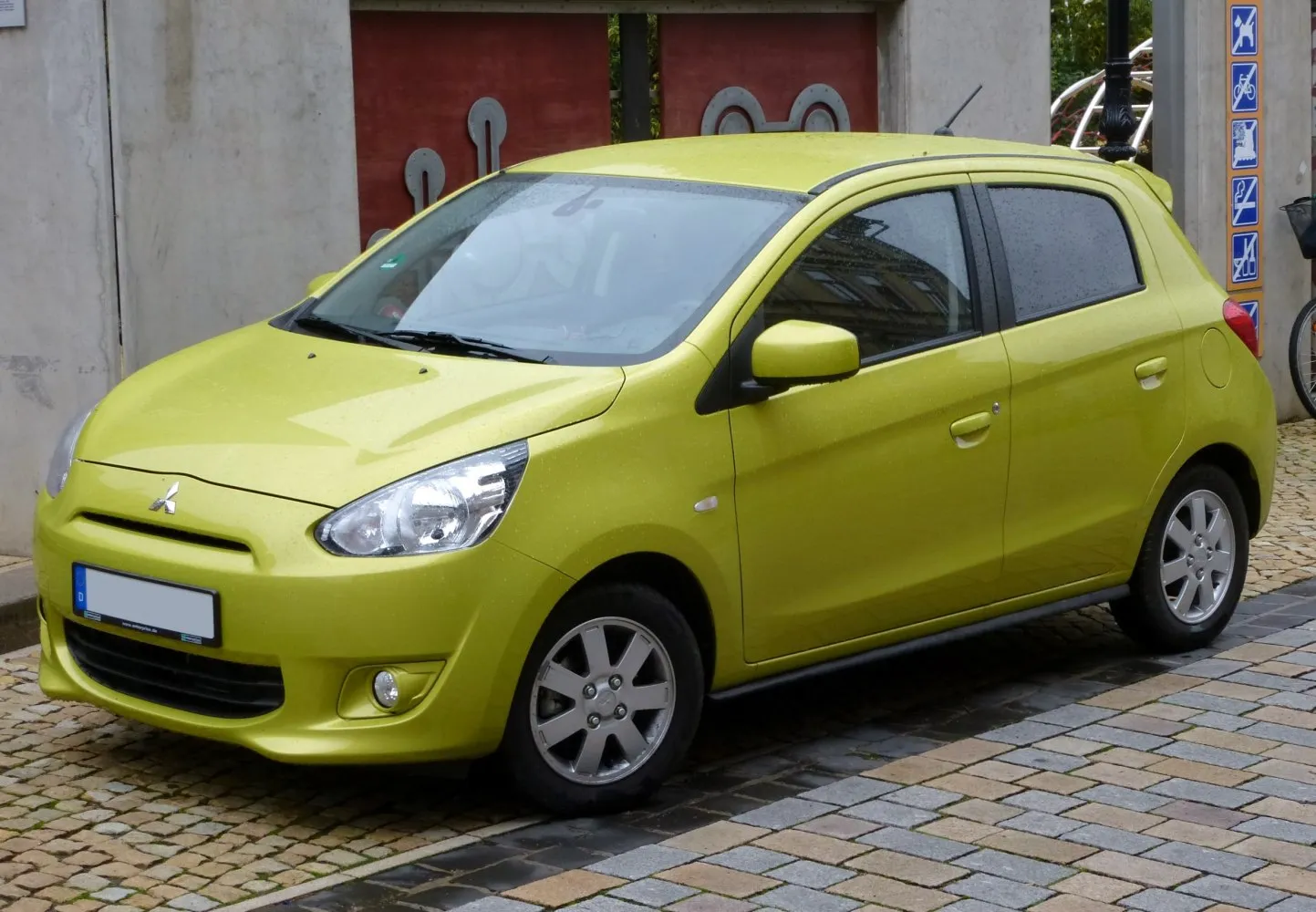
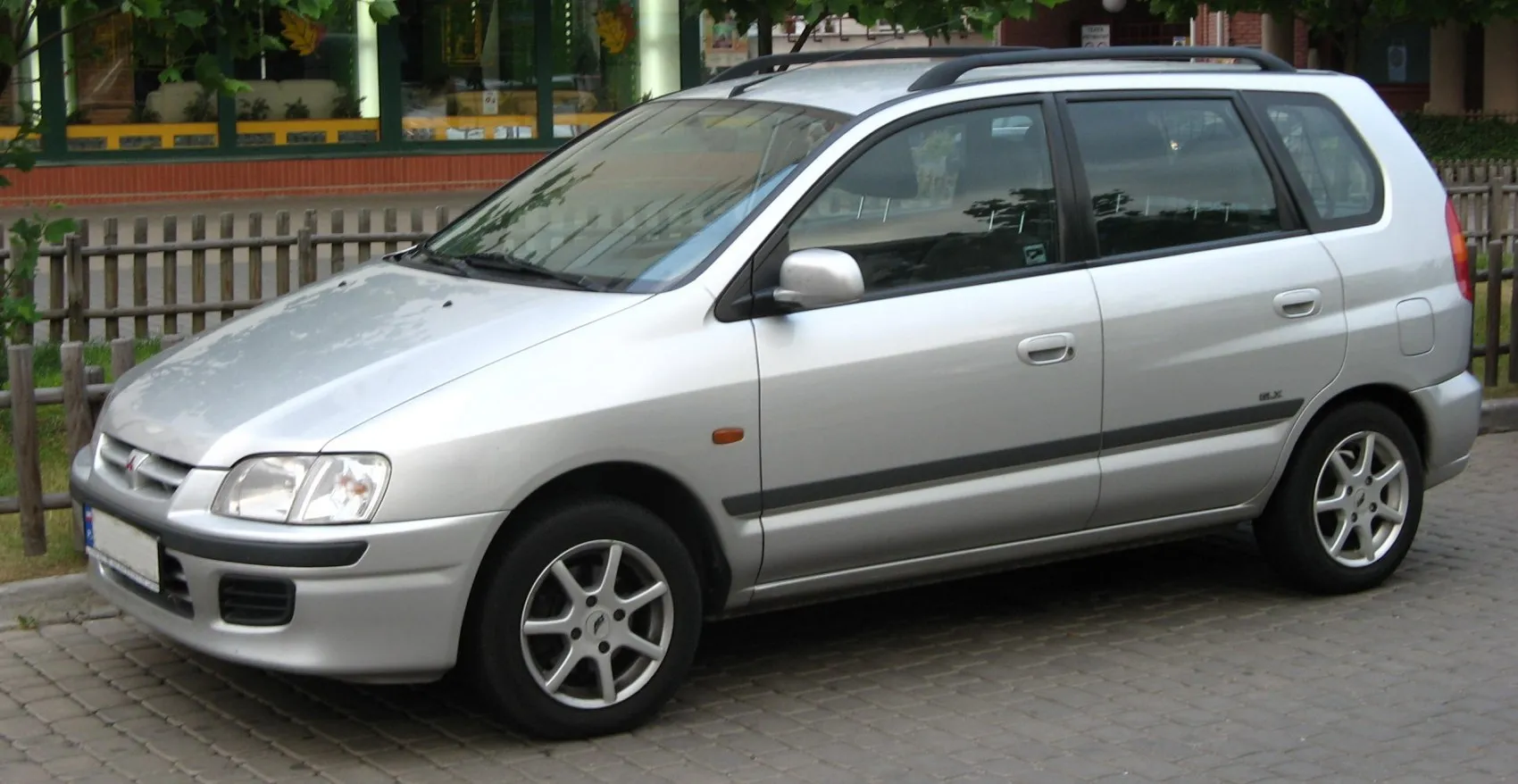
The Mitsubishi Space Star is a car produced by the Japanese manufacturer Mitsubishi Motors from mid-1998 until the end of 2005. Described as a hatchback, a compact people carrier, or a micro MPV, it was built at the NedCar factory in the Netherlands and was primarily sold in the European markets. In 2013, Mitsubishi began selling the sixth generation Mirage supermini under the Space Star name in parts of Europe, owing to legal rights relating to the use of the Mirage nameplate.
The Space Star shared its platform with the Mitsubishi Carisma and Volvo S40/V40. It was first introduced to the market in the autumn of 1998, replacing the Mitsubishi Space Runner. Production of the Space Star stopped in 2005. Since the car's introduction to the market its visual appearance stayed almost identical and it only received a minor facelift in 2002. In 2001, the Space Star was crash tested by Euro NCAP and received a three-star rating for the safety of its adult passengers, and a two-star rating for the safety of pedestrians....(Read more on Wikipedia)
facelift 2015 Overview:
Mitsubishi Space Star (facelift 2015). With 88 Nm of torque, it offers ample pulling power. It boasts low fuel consumption (~5 l/100km). Weighing only 845 kg, it’s quite light. Front‑wheel drive delivers efficiency and easy handling. Acceleration is relatively slow (0–100 km/h in 13.6 s). The top speed reaches 172 km/h. A compact car with a rear door that swings upward to provide access to the cargo area. Seating for 5 makes it ideal for daily use.
1.0 MIVEC (71 Hp) Verdict:

Performance Verdict
Entry-level engine with modest power, best suited for pure city driving where higher speeds are not frequently encountered.
Fuel Economy
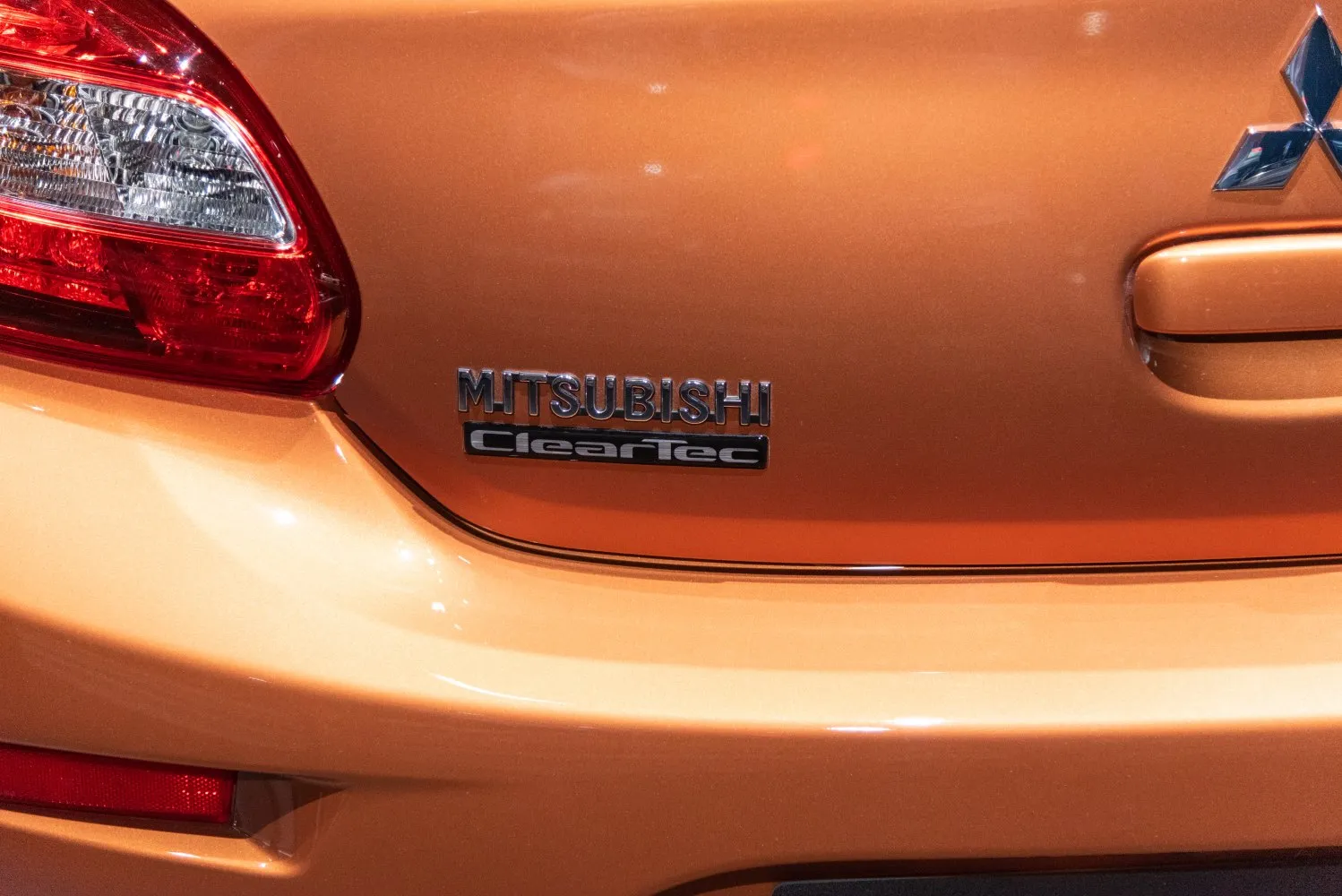
Very good fuel efficiency, though slightly less optimized than the CLEARTEC variant, still a strong point for this trim.
Pros and Cons:
Pros:
- • Excellent fuel economy across the range, especially with CLEARTEC models.
- • Compact dimensions and tight turning circle make it ideal for city driving and parking.
- • Practical hatchback design with decent boot space for its class.
- • Known for Mitsubishi's reputation for reliability and low running costs.
- • Affordable purchase price and low insurance groups.
Cons:
- • Modest performance, particularly the 1.0 MIVEC, which can feel underpowered on highways.
- • Interior materials are basic, reflecting its budget-friendly positioning.
- • Limited refinement at higher speeds, with noticeable engine and road noise.
- • Not an engaging car to drive, focusing purely on practicality over driving dynamics.
- • Rear drum brakes are a cost-saving measure, though adequate for its performance.
Specifications:
Specifications are compared to those of the previous generation(DG0: 2001 - 2004).
| General: | |
|---|---|
| Brand: | Mitsubishi |
| Model: | Space Star |
| Generation: | facelift 2015 |
| Modification (Engine): | 1.0 MIVEC (71 Hp) |
| Start of production: | 2015 |
| End of production: | 2019 |
| Powertrain Architecture: | Internal Combustion engine |
| Body type: | Hatchback |
| Seats: | 5 |
| Doors: | 5 |
| Engine: | |
|---|---|
| Power: | 71 Hp @ 6000 rpm. Same horsepower |
| Power per litre: | 71.1 Hp/l [255mm less] |
| Torque: | 88 Nm @ 5000 rpm. |
| Engine displacement: | 999 |
| Number of cylinders: | 3 |
| Engine configuration: | Inline |
| Number of valves per cylinder: | 4 |
| Fuel injection system: | Multi-port manifold injection |
| Engine aspiration: | Naturally aspirated engine |
| Valvetrain: | DOHC |
| Engine layout: | Front, Transverse |
| Cylinder Bore: | 75 mm mm |
| Piston Stroke: | 75.4 mm mm |
| Compression ratio: | 11.5:1 |
| Performance: | |
|---|---|
| Fuel Type: | Petrol (Gasoline) |
| Fuel consumption (economy) - urban: | 5 l/100 km |
| Fuel consumption (economy) - extra urban: | 3.6 l/100 km |
| Fuel consumption (economy) - combined: | 4.2 l/100 km |
| Emission standard: | Euro 6 |
| Acceleration 0 - 100 km/h: | 13.6 sec |
| Acceleration 0 - 62 mph: | 13.6 sec |
| Maximum speed: | 172 km/h |
| Weight-to-power ratio: | 11.9 kg/Hp, 84 Hp/tonne |
| Weight-to-torque ratio: | 9.6 kg/Nm, 104.1 Nm/tonne |
| Acceleration 0 - 60 mph: | 12.9 sec |
| Space: | |
|---|---|
| Kerb Weight: | 845 |
| Max. weight: | 1290 |
| Max. roof load: | 50 kg |
| Max load: | 445 |
| Trunk (boot) space - maximum: | 912 l |
| Trunk (boot) space - minimum: | 235 l |
| Fuel tank capacity: | 35 l |
| Size: | |
|---|---|
| Length: | 3795 mm mm [255mm less] |
| Width: | 1665 mm mm [50mm less] |
| Height: | 1505 mm mm [10mm less] |
| Wheelbase: | 2450 mm mm [50mm less] |
| Width including mirrors: | 1950 mm |
| Front track: | 1430 mm |
| Rear (Back) track: | 1415 mm |
| Front overhang: | 745 mm |
| Rear overhang: | 600 mm |
| Ride height (ground clearance): | 150 mm |
| Minimum turning circle (turning diameter): | 9.2 m [above average] |
| Powertrain: | |
|---|---|
| Drivetrain Architecture | The Internal combustion engine (ICE) drives the front wheels of the vehicle. |
| Drive wheel | Front wheel drive |
| Number of gears | 5 |
| Transmission type | Manual |
| Front brakes | Ventilated discs [Best for performance and cooling.] |
| Rear brakes | Drum [bad for performance and cooling.] |
| Assisting systems | ABS (Anti-lock braking system) |
| Steering type | Steering rack and pinion |
| Power steering | Electric Steering |
| Tires size | 165/65 R14 |
| Wheel rims size | 4.5J x 14 |
| Front suspension | Independent, type McPherson with coil spring and anti-roll bar |
| Rear suspension | Semi-independent, coil spring |





Help others decide – share your experience!