
Click on image to view the full photo gallery
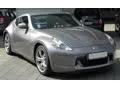
Nissan 370Z Coupe (facelift 2017) 3.7 V6 (332 Hp) Automatic (USA)
Overall Rating
Nissan 370Z:
The Nissan 370Z is a two-seater sports car which was made by Nissan from 2008 until 2021. Based on the Nissan FM platform, it has a front mid-engine, rear-wheel-drive layout and either a two-door coupé or two-door roadster bodystyle. The 370Z is the sixth generation of the Nissan Z-car line, succeeding the 350Z and preceding the RZ34, which uses a modified version of the same platform. It was sold in North America for the 2009–2020 model years....(Read more on Wikipedia)
Coupe (facelift 2017) Overview:
Nissan 370Z (Coupe (facelift 2017)). With 366 Nm of torque, it offers ample pulling power. With a weight of 1526 kg, it falls in the mid‑range. Rear‑wheel drive offers dynamic handling and sporty feedback. A two-door car with a fixed roof, known for its sporty design and dynamic performance. Seating for 2 makes it ideal for daily use.
3.7 V6 (332 Hp) Automatic (USA) Verdict:

Performance Verdict
Offers strong, linear acceleration with the VQ37VHR V6, delivering 332 hp. The 7-speed automatic provides smooth shifts, making it a capable and enjoyable daily driver or weekend cruiser.
Fuel Economy
Combined fuel economy of 10.7 l/100 km is respectable for a naturally aspirated V6 sports car, though it can be thirsty in urban driving.
Pros and Cons:
Pros:
- • Potent and characterful VQ37VHR V6 engine
- • Engaging rear-wheel-drive dynamics
- • Distinctive and aggressive styling
- • Available Nismo variant for enhanced performance
- • Relatively good value for a performance coupe
Cons:
- • Aging platform and interior design
- • Firm ride quality may not suit all drivers
- • Fuel economy can be high, especially in spirited driving
- • Limited practicality with only two seats and small trunk
- • Road noise can be intrusive at highway speeds
Specifications:
Specifications are compared to those of the previous generation(Coupe (facelift 2012): 2013 - 2017).
| General: | |
|---|---|
| Brand: | Nissan |
| Model: | 370Z |
| Generation: | Coupe (facelift 2017) |
| Modification (Engine): | 3.7 V6 (332 Hp) Automatic (USA) |
| Start of production: | 2017 |
| End of production: | 2020 |
| Powertrain Architecture: | Internal Combustion engine |
| Body type: | Coupe |
| Seats: | 2 |
| Doors: | 3 |
| Engine: | |
|---|---|
| Power: | 332 Hp @ 7000 rpm. |
| Power per litre: | 89.8 Hp/l |
| Torque: | 366 Nm @ 5200 rpm. |
| Engine Model/Code: | VQ37VHR [Same engine] More details about the engine VQ37VHR |
| Engine displacement: | 3696 |
| Number of cylinders: | 6 |
| Engine configuration: | V-engine |
| Number of valves per cylinder: | 4 |
| Fuel injection system: | Multi-port manifold injection |
| Engine aspiration: | Naturally aspirated engine |
| Valvetrain: | DOHC, VVEL |
| Engine oil capacity: | 4.9 l |
| Coolant: | 9.1 l |
| Engine layout: | Front, Longitudinal |
| Cylinder Bore: | 95.5 mm mm |
| Piston Stroke: | 86 mm mm |
| Compression ratio: | 11.1:1 |
| Maximum engine speed: | 7500 rpm. |
| Performance: | |
|---|---|
| Fuel Type: | Petrol (Gasoline) |
| Fuel consumption (economy) - urban: | 12.4 l/100 km |
| Fuel consumption (economy) - extra urban: | 9 l/100 km |
| Fuel consumption (economy) - urban (EPA): | 12.4 l/100 km |
| Fuel consumption (economy) - extra urban (EPA): | 9 l/100 km |
| Fuel consumption (economy) - combined (EPA): | 10.7 l/100 km |
| Fuel consumption (economy) - combined: | 10.7 l/100 km |
| Emission standard: | LEV2 ULEV |
| Weight-to-power ratio: | 4.6 kg/Hp, 217.6 Hp/tonne |
| Weight-to-torque ratio: | 4.2 kg/Nm, 239.8 Nm/tonne |
| Space: | |
|---|---|
| Kerb Weight: | 1526 |
| Max. weight: | 1800 |
| Max load: | 274 |
| Trunk (boot) space - minimum: | 195 l |
| Fuel tank capacity: | 72 l |
| Size: | |
|---|---|
| Length: | 4255 mm mm [155mm less] |
| Width: | 1845 mm mm [25mm less] |
| Height: | 1316 mm mm [6mm more] |
| Wheelbase: | 2550 mm mm [Same wheelbase.] |
| Front track: | 1550 mm |
| Rear (Back) track: | 1565 mm |
| Minimum turning circle (turning diameter): | 10 m [above average] |
| Powertrain: | |
|---|---|
| Drivetrain Architecture | The Internal combustion engine (ICE) drives the rear wheels of the vehicle. |
| Drive wheel | Rear wheel drive |
| Number of gears | 7 |
| Transmission type | Automatic |
| Front brakes | Ventilated discs, 320x28 mm [Best for performance and cooling.] |
| Rear brakes | Ventilated discs, 320x16 mm [Best for performance and cooling.] |
| Assisting systems | ABS (Anti-lock braking system) |
| Steering type | Steering rack and pinion |
| Power steering | Hydraulic Steering |
| Tires size | Front wheel tires: 225/50 R18; 245/40 R19 |
| Wheel rims size | Front wheel rims: 8J x 18; 9J x 19 |
| Front suspension | Double wishbone, Transverse stabilizer |
| Rear suspension | Independent multi-link suspension, Transverse stabilizer |




Is the Nissan 370Z your dream ride or just a daily drive? Let's talk!