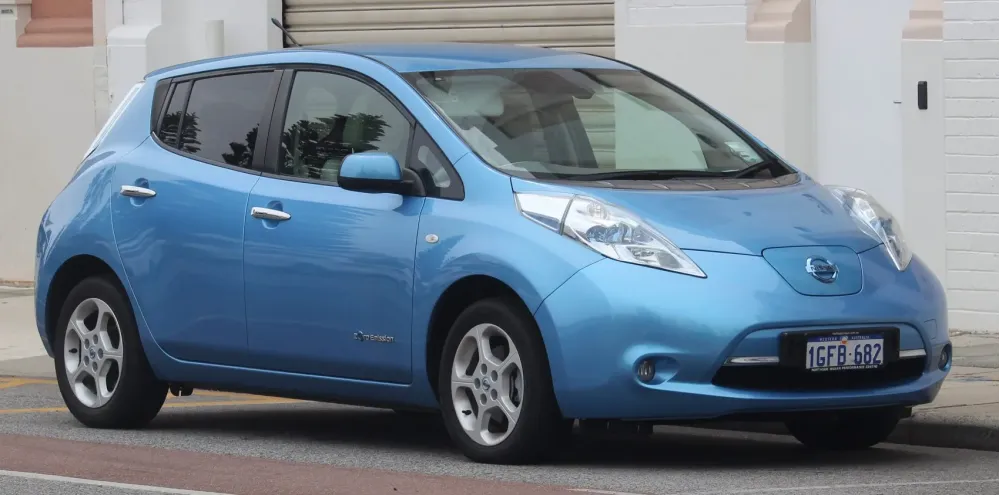
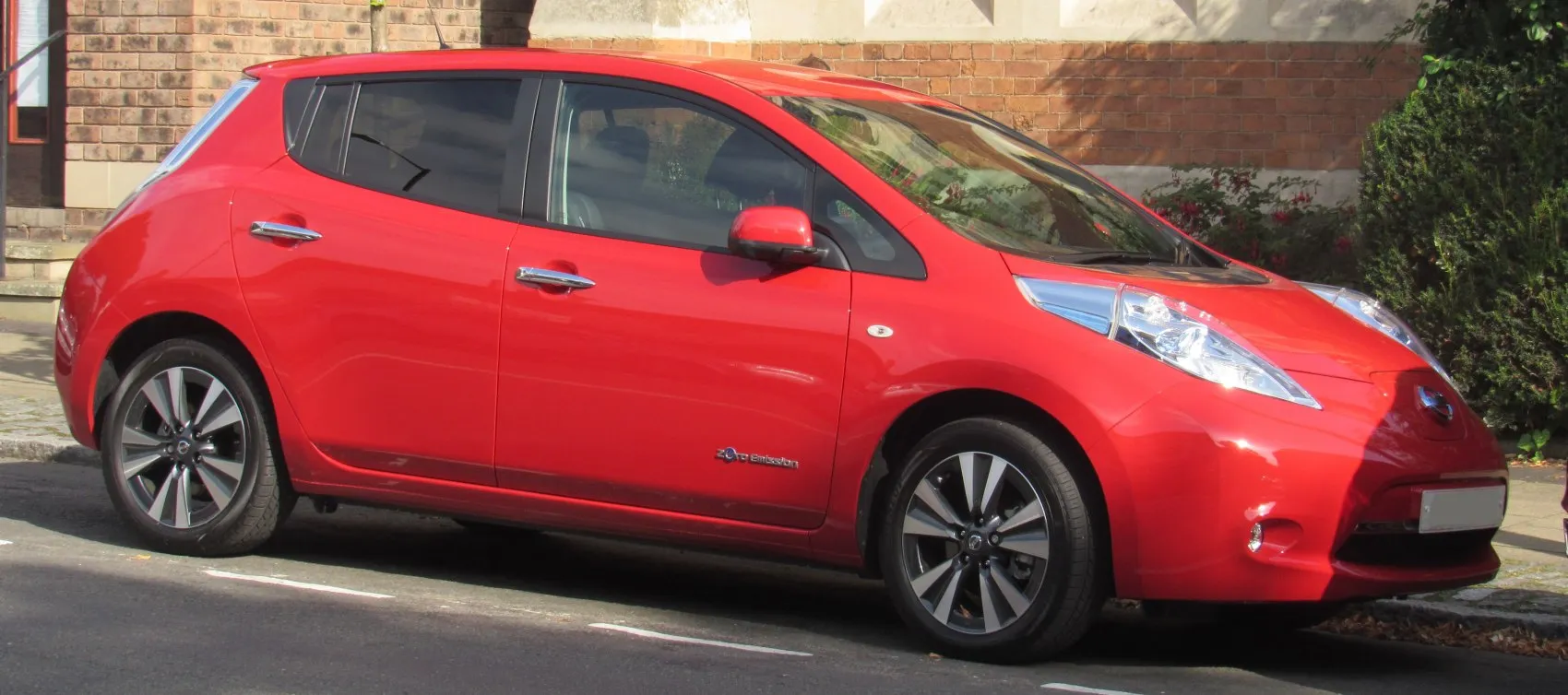
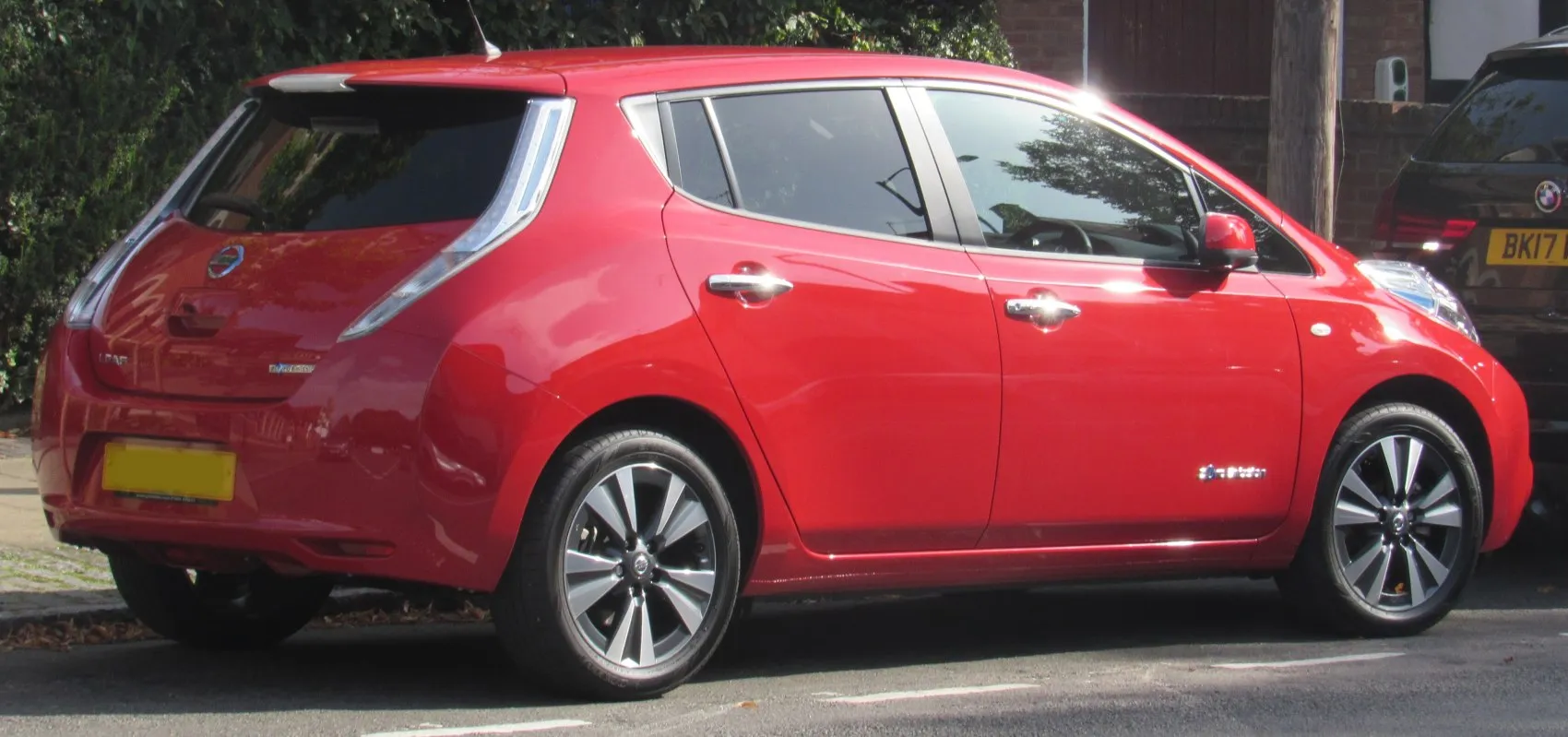
Click on image to view the full photo gallery
Nissan Leaf I (ZE0) 30 kWh (109 Hp)
Overall Rating
Nissan Leaf:
The Nissan Leaf is a battery electric car produced by Nissan since 2010. It was offered exclusively as a 5-door hatchback which since then has become a crossover SUV model. The term "LEAF" serves as a backronym to leading environmentally-friendly affordable family car.
The Leaf was unveiled on 1 August 2009 as the world's first mass market electric and zero-emission vehicle. Among other awards and recognition, it received the 2010 Green Car Vision Award, the 2011 European Car of the Year, the 2011 World Car of the Year, and the 2011–2012 Car of the Year Japan. The Leaf's range on a full charge has been steadily increased from 117 km to 364 km by the use of larger battery packs and several minor improvements....(Read more on Wikipedia)
I (ZE0) Overview:
Nissan Leaf (I (ZE0)). With a weight of 1525 kg, it falls in the mid‑range. Front‑wheel drive delivers efficiency and easy handling. Acceleration is relatively slow (0–100 km/h in 11.5 s). The top speed reaches 144 km/h. A compact car with a rear door that swings upward to provide access to the cargo area. Seating for 5 makes it ideal for daily use.
30 kWh (109 Hp) Verdict:

Performance Verdict
Shares the same 109 Hp motor, so performance characteristics are identical to the 24 kWh model – good for city, acceptable on highways.
Fuel Economy
The larger 30 kWh battery significantly improves range, offering approximately 250 km (NEDC), making it more versatile for varied driving needs without range anxiety.
Pros and Cons:
Pros:
- • Smooth, quiet, and comfortable ride quality.
- • Instant torque provides responsive city driving.
- • Practical hatchback body with decent cargo space.
- • Zero tailpipe emissions, making it environmentally friendly.
- • Generally affordable on the used market.
Cons:
- • Limited range on 24 kWh models, especially in cold weather.
- • Battery degradation concerns, particularly in hotter climates.
- • Lack of active thermal management for the battery.
- • Slower DC fast charging speeds compared to newer EVs.
- • Interior design can feel dated compared to modern cars.
Specifications:
Specifications are compared to those of the previous generation(I (ZE0): November, 2012 - December, 2017).
| General: | |
|---|---|
| Brand: | Nissan |
| Model: | Leaf |
| Generation: | I (ZE0) |
| Modification (Engine): | 30 kWh (109 Hp) |
| Start of production: | October, 2015 |
| End of production: | December, 2017 |
| Powertrain Architecture: | BEV (Electric Vehicle) |
| Body type: | Hatchback |
| Seats: | 5 |
| Doors: | 5 |
| Performance: | |
|---|---|
| Fuel Type: | Electricity |
| Emission standard: | ZEV |
| Acceleration 0 - 100 km/h: | 11.5 sec |
| Acceleration 0 - 62 mph: | 11.5 sec |
| Maximum speed: | 144 km/h |
| Weight-to-power ratio: | 14 kg/Hp, 71.5 Hp/tonne |
| Weight-to-torque ratio: | 6 kg/Nm, 166.6 Nm/tonne |
| Acceleration 0 - 60 mph: | 10.9 sec |
| Space: | |
|---|---|
| Kerb Weight: | 1525 |
| Max. weight: | 1970 |
| Max load: | 445 |
| Trunk (boot) space - maximum: | 720 l |
| Trunk (boot) space - minimum: | 370 l |
| Size: | |
|---|---|
| Length: | 4445 mm mm [Same length.] |
| Width: | 1770 mm mm [Same width.] |
| Height: | 1550 mm mm [Same height.] |
| Wheelbase: | 2700 mm mm [Same wheelbase.] |
| Width including mirrors: | 1967 mm |
| Front track: | 1540 mm |
| Rear (Back) track: | 1535 mm |
| Front overhang: | 960 mm |
| Rear overhang: | 785 mm |
| Ride height (ground clearance): | 160 mm |
| Minimum turning circle (turning diameter): | 10.4 m [above average] |
| Powertrain: | |
|---|---|
| Drivetrain Architecture | One electric motor drives the front wheels. |
| Drive wheel | Front wheel drive |
| Number of gears | 1 |
| Transmission type | Automatic |
| Front brakes | Ventilated discs [Best for performance and cooling.] |
| Rear brakes | Ventilated discs [Best for performance and cooling.] |
| Assisting systems | ABS (Anti-lock braking system) |
| Steering type | Steering rack and pinion |
| Power steering | Electric Steering |
| Tires size | 205/55 R16; 215/50 R17 |
| Wheel rims size | 6.5J x 16; 6.5J x 17 |
| Front suspension | Coil spring, Independent type McPherson, Transverse stabilizer |
| Rear suspension | Transverse stabilizer, Coil spring, Torsion |
| Electric: | |
|---|---|
| Net (usable) battery capacity: | 28 kWh |
| Gross battery capacity: | 30 kWh |
| Battery technology: | Lithium-ion (Li-Ion) |
| Battery location: | Below the floor |
| System power: | 109 Hp @ 3008-10000 rpm. |
| System torque: | 254 Nm @ 0-3008 rpm. |
| All-electric range: | 250 km |
| Electric motor power: | 109 Hp @ 3008-10000 rpm. |
| Electric motor Torque: | 254 Nm @ 0-3008 rpm. |
| Average Energy consumption: | 15 kWh/100 km |
| Electric motor location: | Front axle, Transverse |
| Battery weight: | 314 kg |
| Electric motor model/code: | EM57 |
| Battery voltage: | 360 V |
| Average Energy consumption (NEDC): | 15 kWh/100 km |
| All-electric range (NEDC): | 250 km |
| Maximum revolutions of the electric motor: | 10500 rpm. |
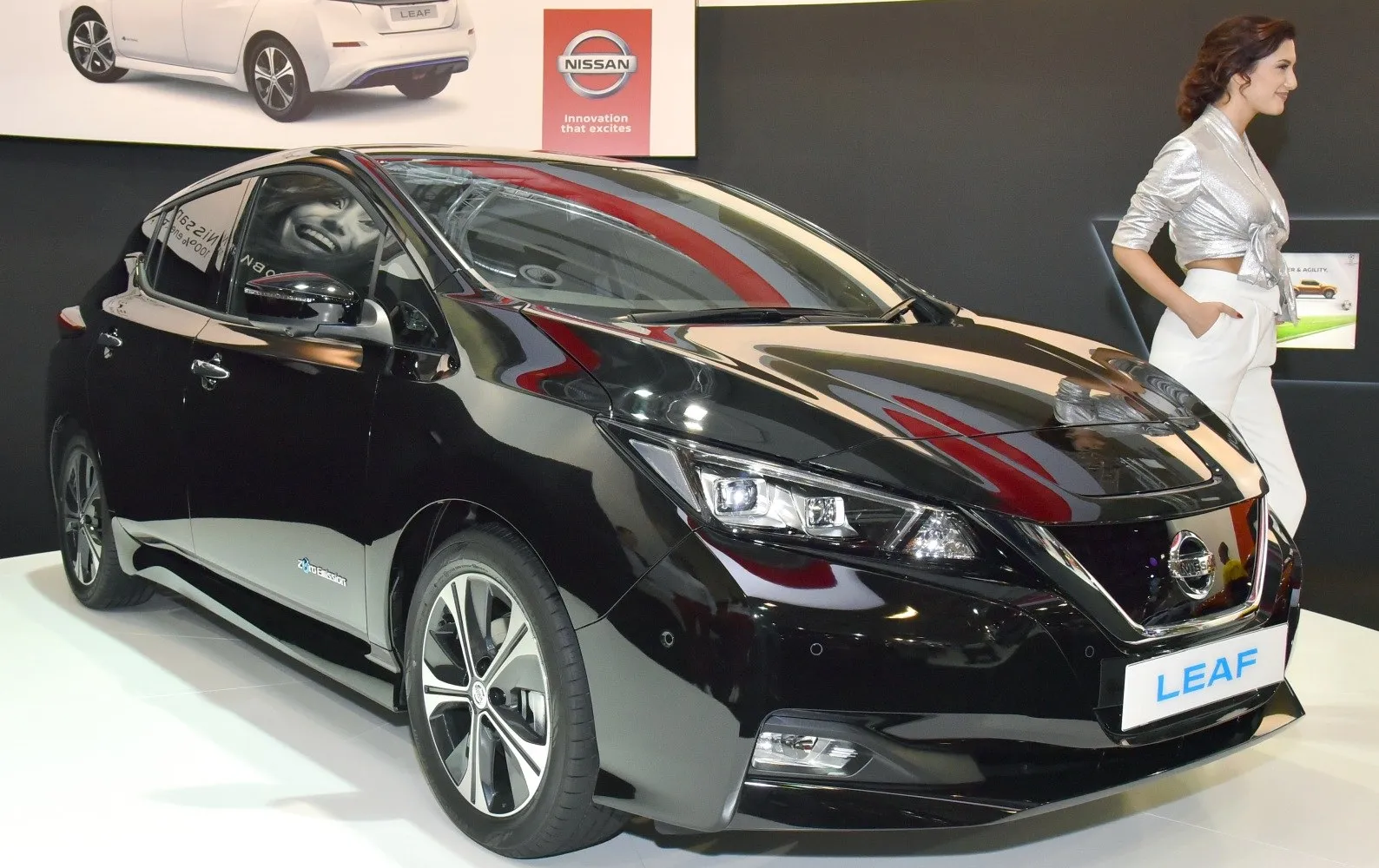







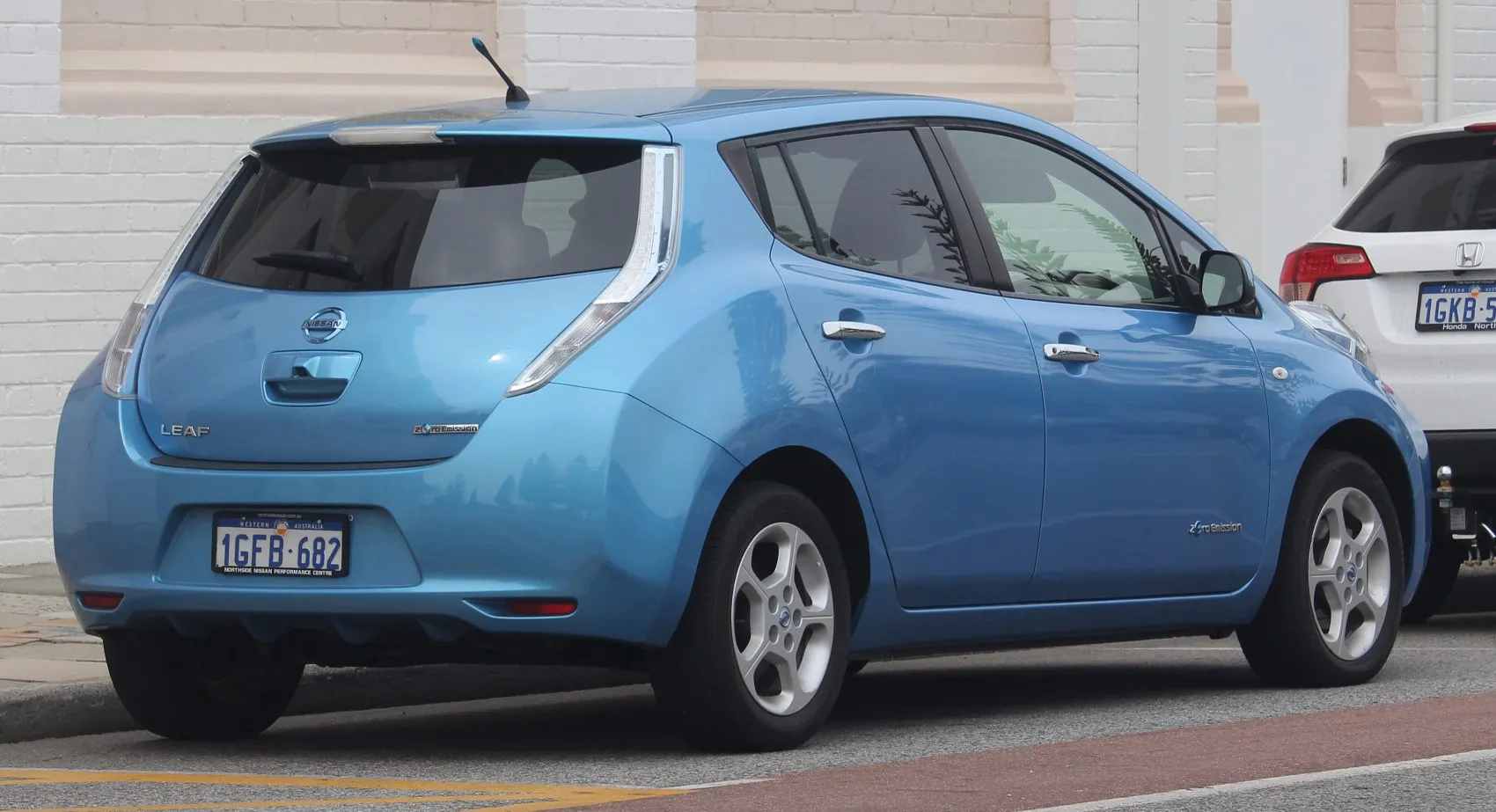
Behind the wheel of the Nissan Leaf. How does it handle on the road?