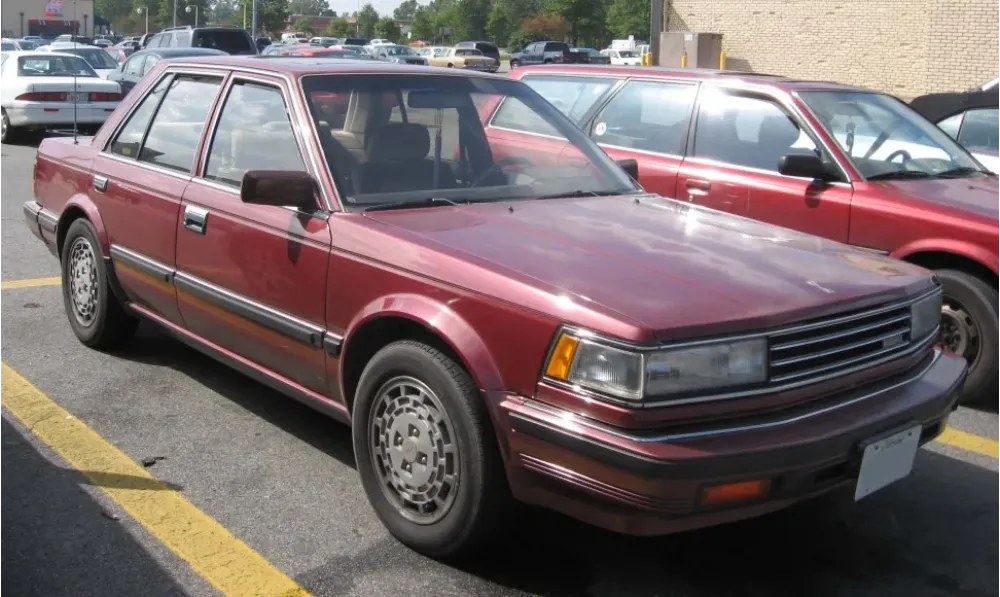
Click on image to view the full photo gallery
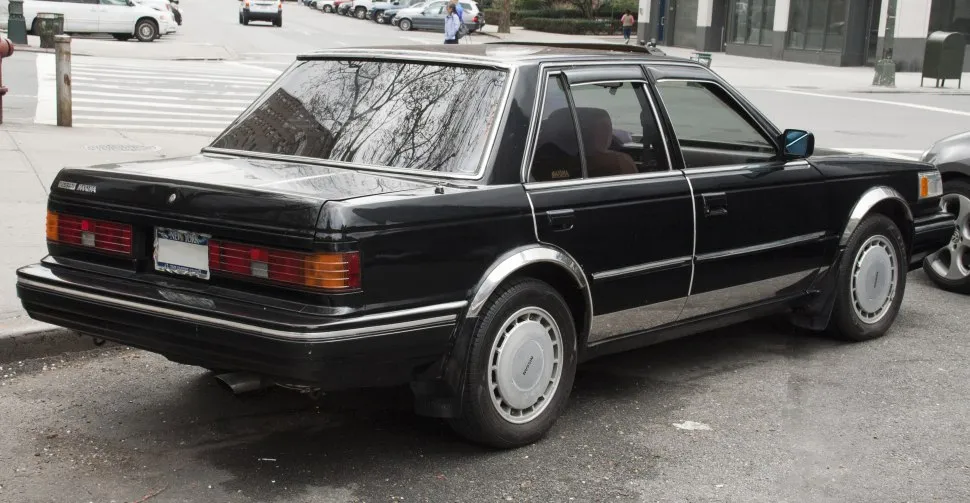
Nissan Maxima II (PU11) 3.0 V6 (157 Hp) Automatic
Overall Rating
Nissan Maxima:
The Nissan Maxima is a five-passenger, front-engine, full-size car that was manufactured and marketed by Nissan as Nissan's flagship sedan primarily in North America, the Middle East, South Korea, and China — across eight generations. The Maxima debuted for model year 1982 as the Datsun Maxima, replacing the Datsun 810.
The Maxima was marketed as an upscale alternative to the Altima and prior to 1993, the Stanza, distinguished by features such as a premium interior and V6 engine. Most Maximas were built in Oppama, Japan, until North American assembly began in Smyrna, Tennessee, for the 2004 model year....(Read more on Wikipedia)
II (PU11) Overview:
Nissan Maxima (II (PU11)). With 248 Nm of torque, it offers ample pulling power. With a weight of 1415 kg, it falls in the mid‑range. Front‑wheel drive delivers efficiency and easy handling. A four-door car with a separate trunk, ideal for families and daily commuting. Seating for 5 makes it ideal for daily use.
3.0 V6 (157 Hp) Automatic Verdict:

Performance Verdict
Paired with the automatic transmission, the V6 provides a very comfortable and relaxed driving experience, ideal for daily commutes and long journeys. Power delivery remains smooth, prioritizing comfort over sportiness.
Fuel Economy
Slightly less efficient than the manual version, the automatic's fuel economy is acceptable for a large 80s sedan, but expect higher consumption in city driving.
Pros and Cons:
Pros:
- • Smooth and reliable V6 engine (VG30E)
- • Comfortable and compliant ride quality
- • Spacious interior for its class
- • Good highway cruising capabilities
- • Solid build quality for its era
Cons:
- • Outdated safety features by modern standards
- • Modest fuel economy compared to contemporary vehicles
- • Handling is comfort-oriented, not sporty
- • Finding specific parts can be challenging now due to age
- • Dated interior design and technology
Specifications:
Specifications are compared to those of the previous generation(I (G910): 1983 - 1984).
| General: | |
|---|---|
| Brand: | Nissan |
| Model: | Maxima |
| Generation: | II (PU11) |
| Modification (Engine): | 3.0 V6 (157 Hp) Automatic |
| Start of production: | 1984 |
| End of production: | 1988 |
| Powertrain Architecture: | Internal Combustion engine |
| Body type: | Sedan |
| Seats: | 5 |
| Doors: | 4 |
| Engine: | |
|---|---|
| Power: | 157 Hp @ 5200 rpm. |
| Power per litre: | 53 Hp/l |
| Torque: | 248 Nm @ 3200 rpm. |
| Engine displacement: | 2960 |
| Number of cylinders: | 6 |
| Engine configuration: | V-engine |
| Number of valves per cylinder: | 2 |
| Fuel injection system: | Multi-port manifold injection |
| Engine aspiration: | Naturally aspirated engine |
| Valvetrain: | SOHC |
| Engine layout: | Front, Longitudinal |
| Cylinder Bore: | 87 mm mm |
| Piston Stroke: | 83 mm mm |
| Compression ratio: | 9:1 |
| Performance: | |
|---|---|
| Fuel Type: | Petrol (Gasoline) |
| Weight-to-power ratio: | 9 kg/Hp, 111 Hp/tonne |
| Weight-to-torque ratio: | 5.7 kg/Nm, 175.3 Nm/tonne |
| Space: | |
|---|---|
| Kerb Weight: | 1415 |
| Fuel tank capacity: | 60 l |
| Size: | |
|---|---|
| Length: | 4610 mm mm [60mm less] |
| Width: | 1689 mm mm [44mm more] |
| Height: | 1389 mm mm [6mm less] |
| Wheelbase: | 2550 mm mm [75mm less] |
| Front track: | 1461 mm |
| Rear (Back) track: | 1461 mm |
| Ride height (ground clearance): | 155 mm |
| Powertrain: | |
|---|---|
| Drivetrain Architecture | The Internal combustion engine (ICE) drives the front wheels of the vehicle. |
| Drive wheel | Front wheel drive |
| Number of gears | 4 |
| Transmission type | Automatic |
| Front brakes | Ventilated discs [Best for performance and cooling.] |
| Rear brakes | Disc |
| Tires size | 195/60 R15 |
| Wheel rims size | 15 |


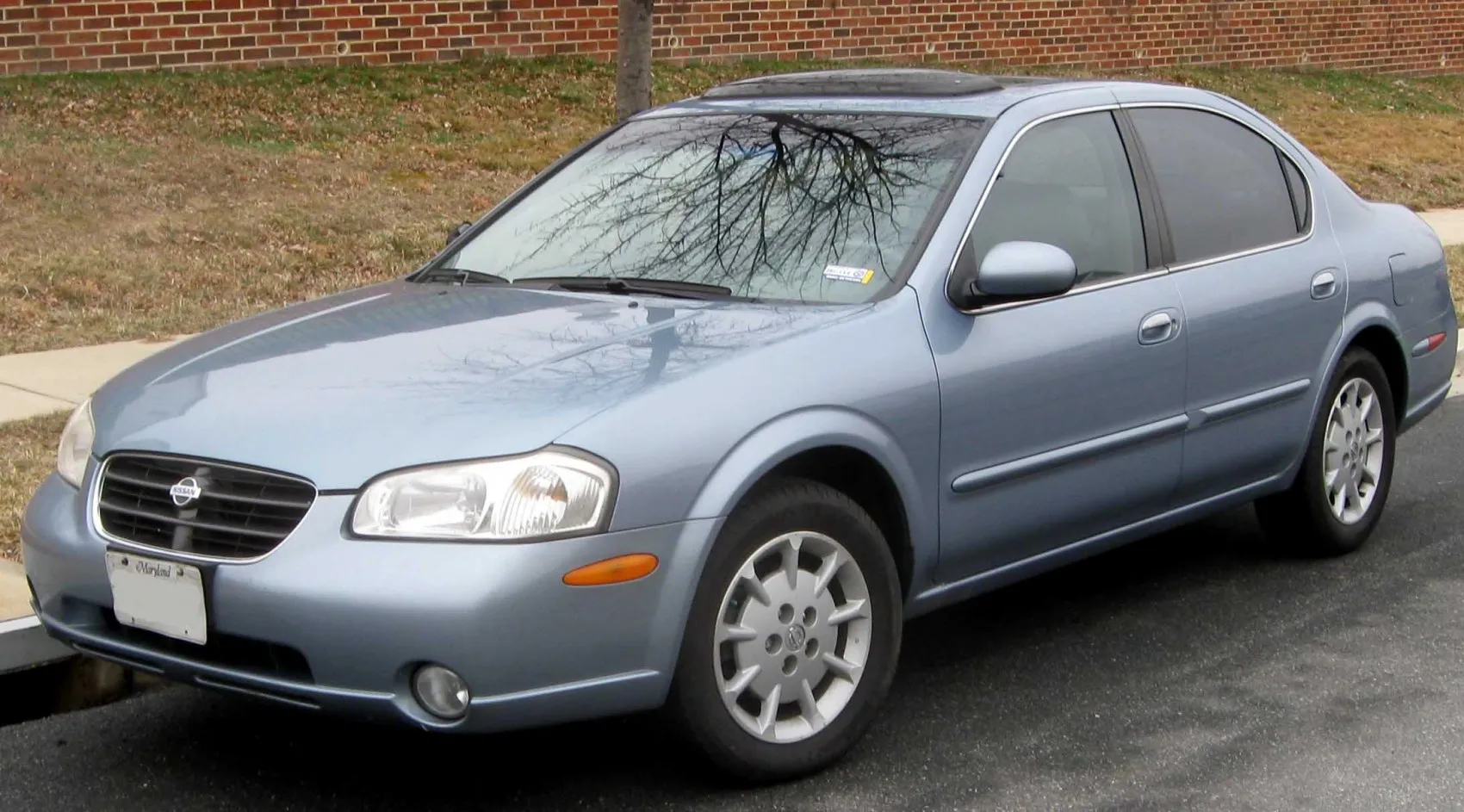


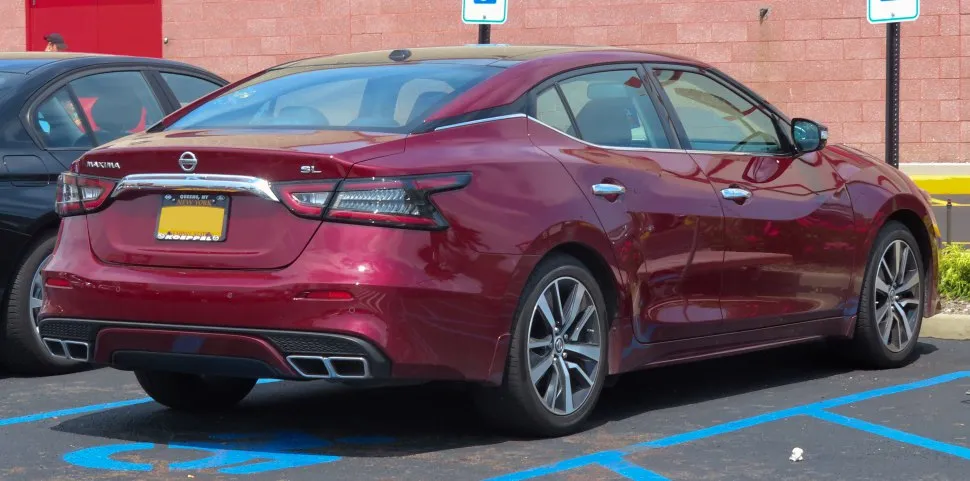



Show off your Nissan Maxima knowledge – drop a review below!