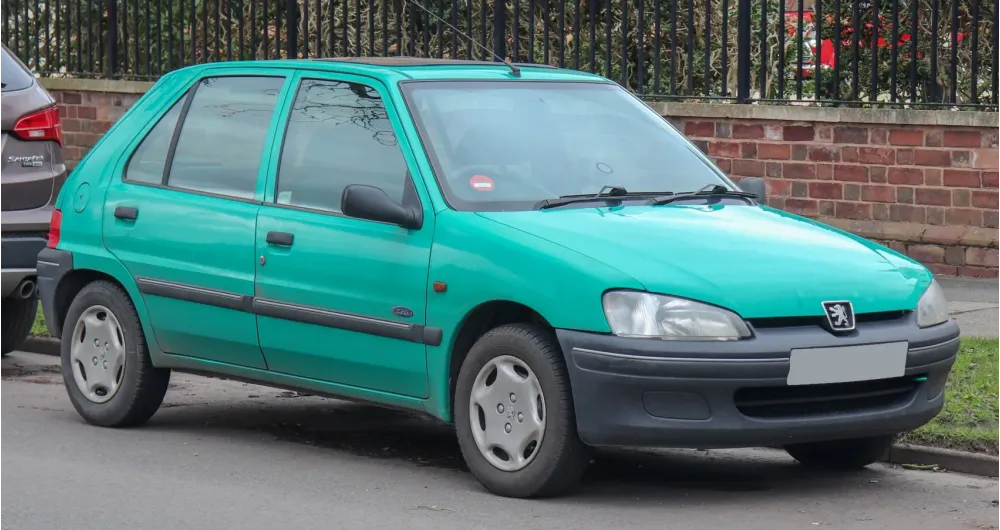
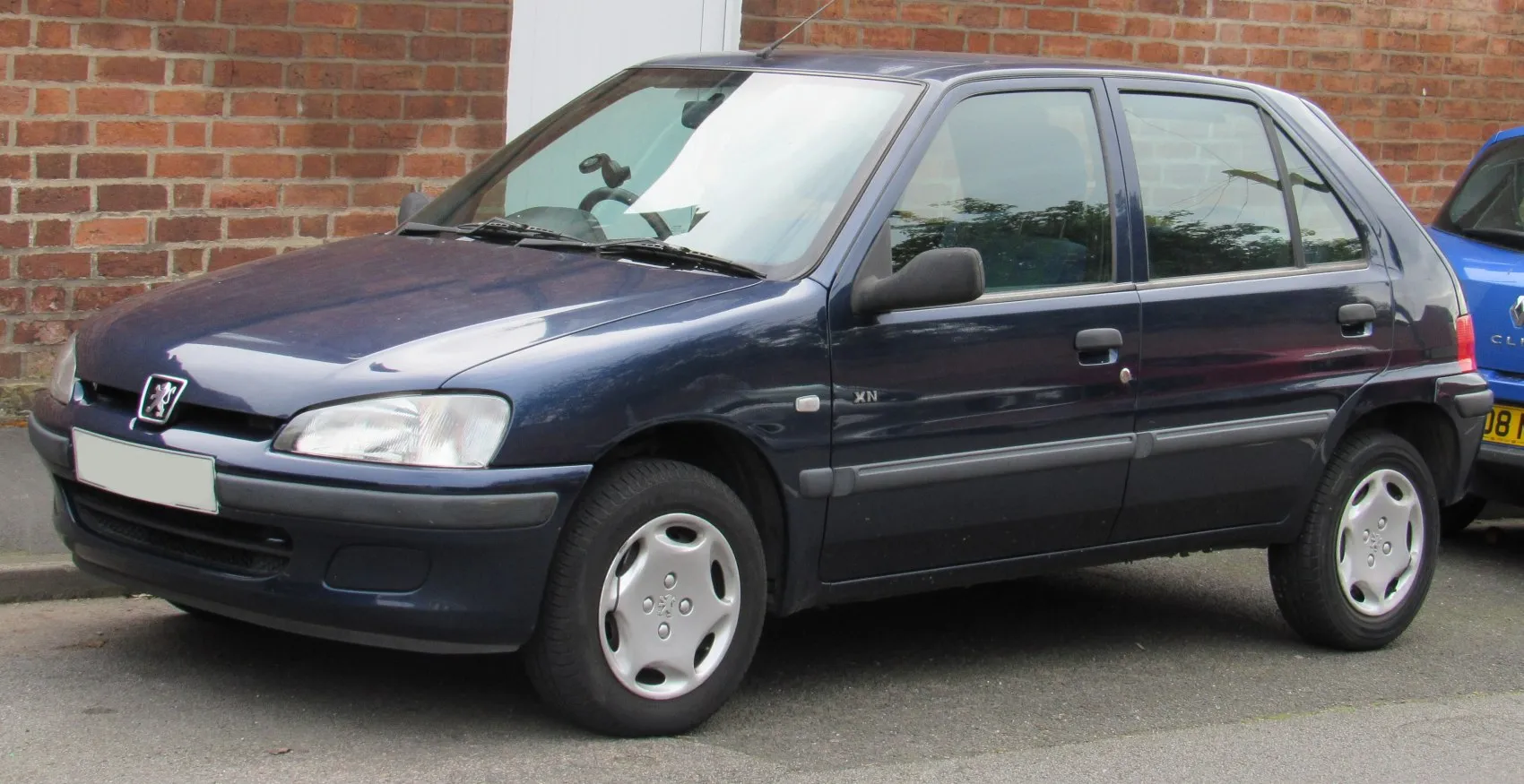
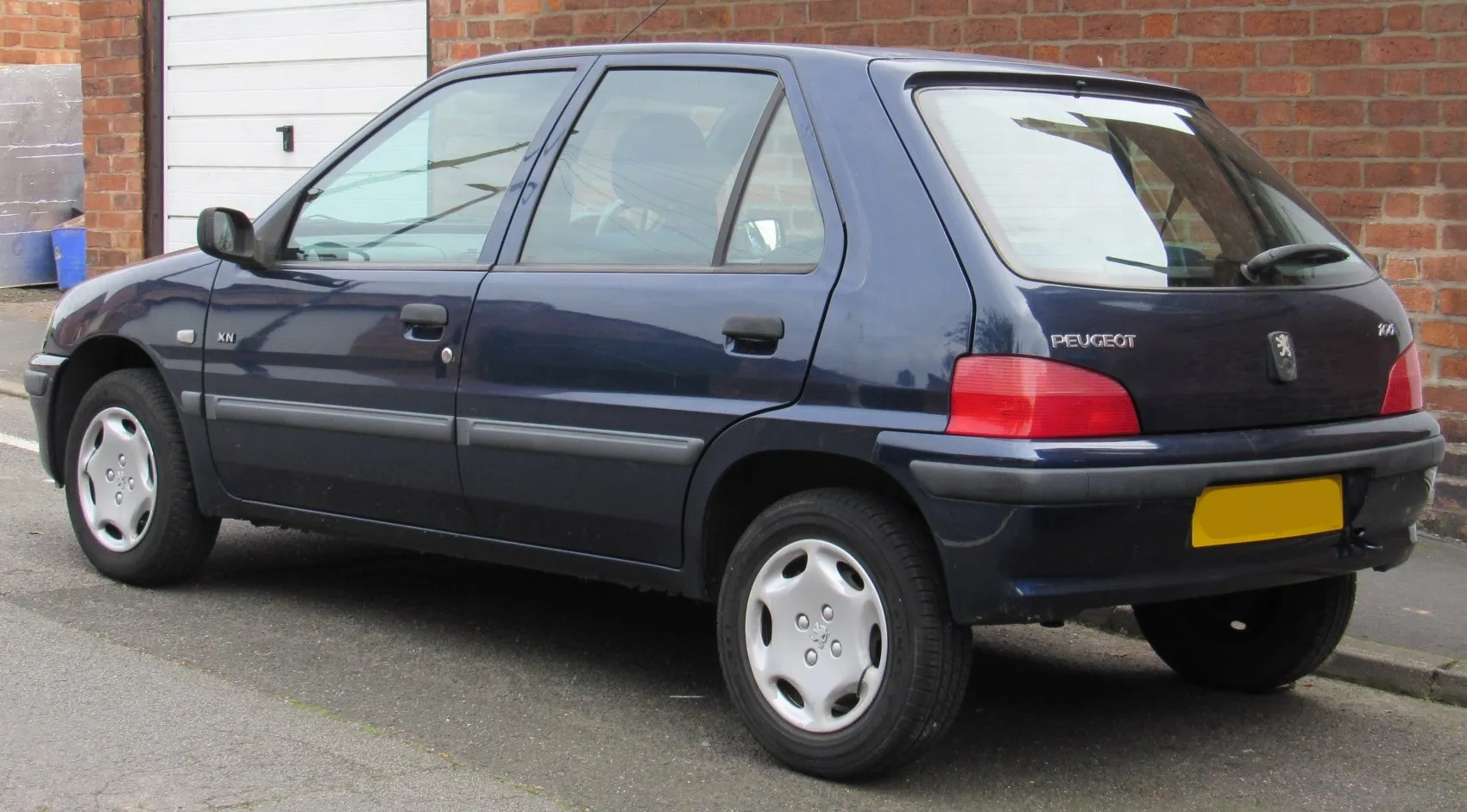
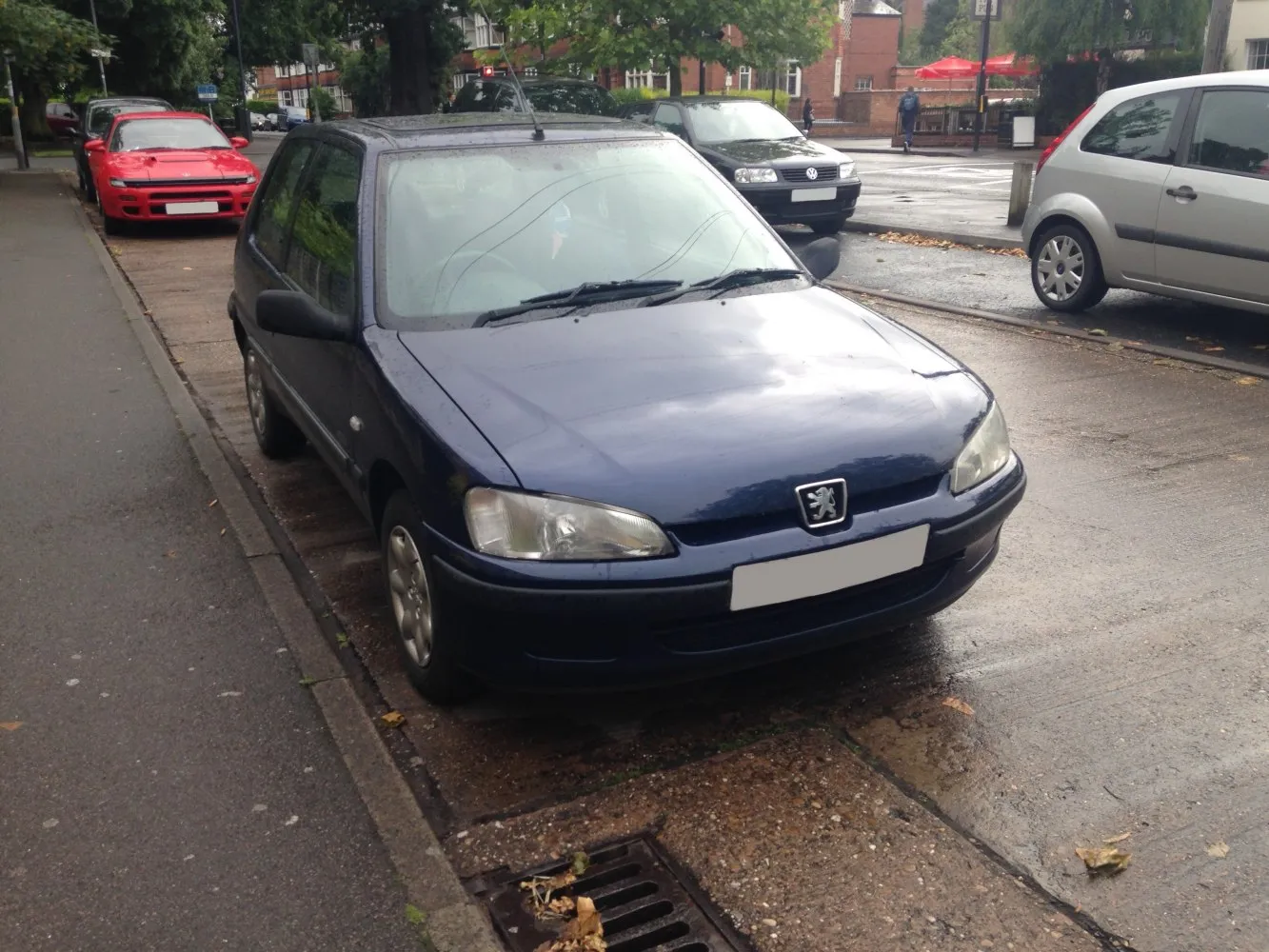
Click on image to view the full photo gallery
Peugeot 106 II (1) 1.6 i (88 Hp)
Overall Rating
Peugeot 106:
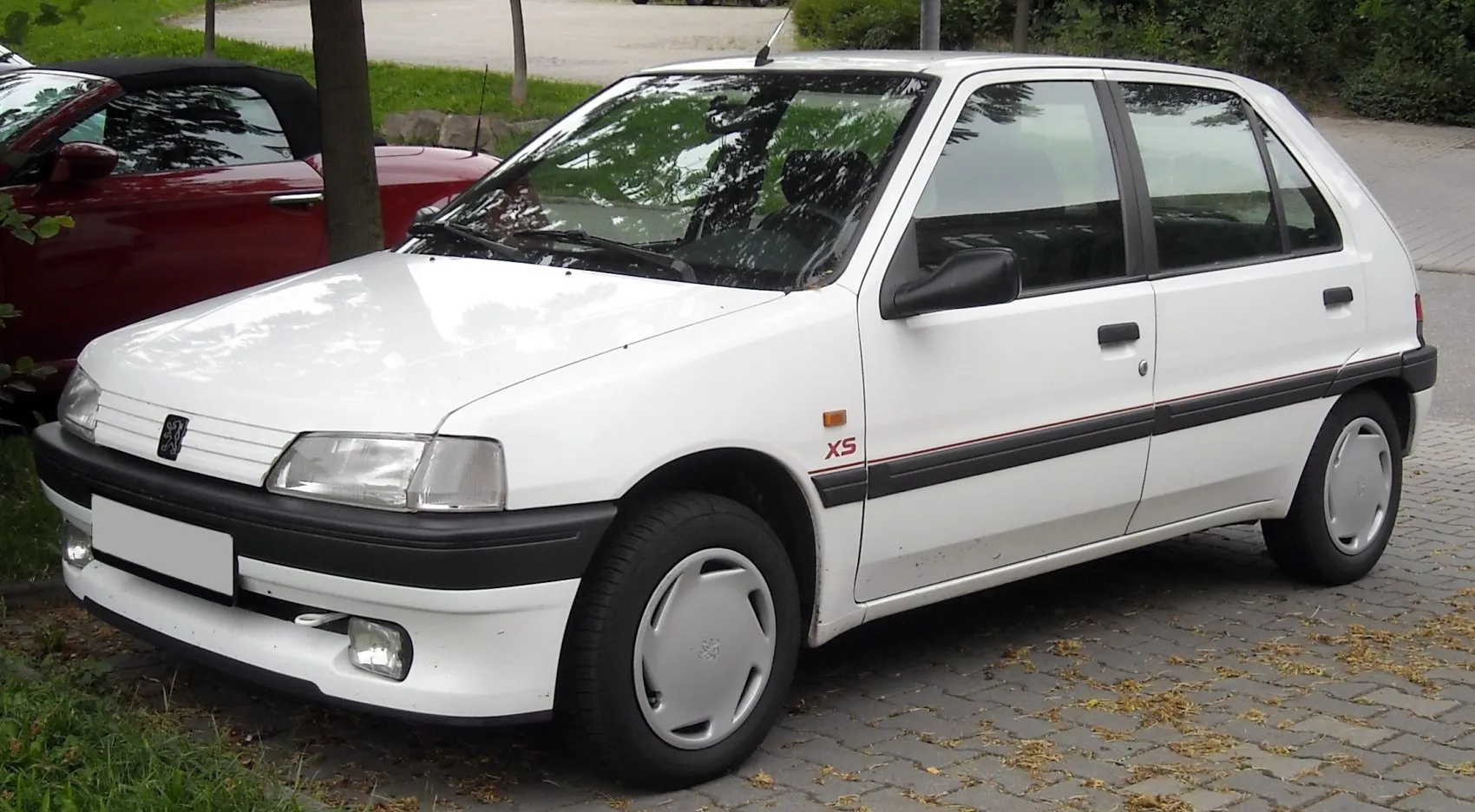
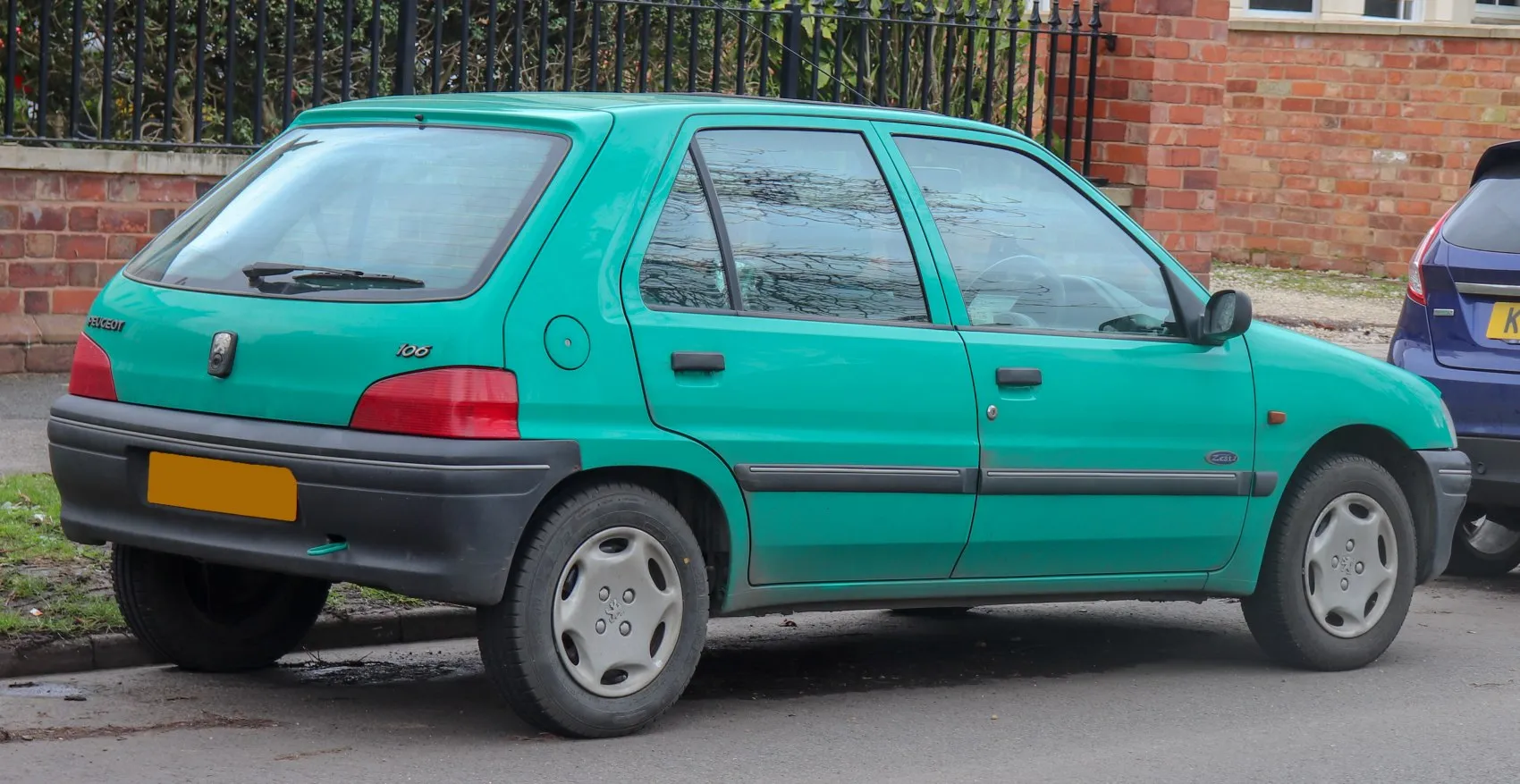
The Peugeot 106 is a supermini car produced by French automaker Peugeot between 1991 and 2003. Launched in September 1991, it was Peugeot's entry level offering throughout its production life, and was initially sold only as a three-door hatchback, with a five-door hatchback joining the range in August 1992. Production ended in July 2003.
For the first year of production, the 1. 0 and 1. 1 petrol engines came with a carburettor, but were replaced by fuel injected engines from the end of 1992, as a result of EEC emissions regulations....(Read more on Wikipedia)
II (1) Overview:
Peugeot 106 (II (1)). With 135 Nm of torque, it offers ample pulling power. It has moderate fuel consumption (~9.9 l/100km). Weighing only 895 kg, it’s quite light. Front‑wheel drive delivers efficiency and easy handling. Acceleration is relatively slow (0–100 km/h in 12.2 s). The top speed reaches 185 km/h. A compact car with a rear door that swings upward to provide access to the cargo area. Seating for 5 makes it ideal for daily use.
1.6 i (88 Hp) Verdict:

Performance Verdict
A well-balanced engine, providing ample power for daily driving and comfortable cruising on varied roads.
Fuel Economy
Offers a good compromise between performance and fuel efficiency for its size and power output.
Pros and Cons:
Pros:
- • Agile and fun to drive (especially sportier models)
- • Compact size ideal for city driving and parking
- • Good fuel economy on most engines
- • Affordable to buy and maintain
- • Spacious for its class (trunk/boot space)
Cons:
- • Dated safety features and low Euro NCAP rating
- • Basic interior quality and limited modern amenities
- • Noisy at higher speeds (smaller engines)
- • Limited rear passenger space on 3-door models
- • Prone to rust and age-related issues on older examples
Specifications:
Specifications are compared to those of the previous generation(II (1): 1997 - 2000).
| General: | |
|---|---|
| Brand: | Peugeot |
| Model: | 106 |
| Generation: | II (1) |
| Modification (Engine): | 1.6 i (88 Hp) |
| Start of production: | May, 1996 |
| End of production: | March, 1997 |
| Powertrain Architecture: | Internal Combustion engine |
| Body type: | Hatchback |
| Seats: | 5 |
| Doors: | 3-5 |
| Engine: | |
|---|---|
| Power: | 88 Hp @ 5600 rpm. Same horsepower |
| Power per litre: | 55.5 Hp/l [2mm more] |
| Torque: | 135 Nm @ 3000 rpm. |
| Engine Model/Code: | NFZ TU5JP More details about the engine NFZ TU5JP |
| Engine displacement: | 1587 |
| Number of cylinders: | 4 |
| Engine configuration: | Inline |
| Number of valves per cylinder: | 2 |
| Fuel injection system: | Multi-port manifold injection |
| Engine aspiration: | Naturally aspirated engine |
| Valvetrain: | DOHC |
| Engine oil capacity: | 3.2 l |
| Coolant: | 6 l |
| Engine layout: | Front, Transverse |
| Cylinder Bore: | 78.5 mm mm |
| Piston Stroke: | 82 mm mm |
| Compression ratio: | 10.2:1 |
| Performance: | |
|---|---|
| Fuel Type: | Petrol (Gasoline) |
| Fuel consumption (economy) - urban: | 9.9 l/100 km |
| Fuel consumption (economy) - extra urban: | 5.7 l/100 km |
| Acceleration 0 - 100 km/h: | 12.2 sec |
| Acceleration 0 - 62 mph: | 12.2 sec |
| Maximum speed: | 185 km/h |
| Weight-to-power ratio: | 10.2 kg/Hp, 98.3 Hp/tonne |
| Weight-to-torque ratio: | 6.6 kg/Nm, 150.8 Nm/tonne |
| Acceleration 0 - 60 mph: | 11.6 sec |
| Space: | |
|---|---|
| Kerb Weight: | 895 |
| Max. weight: | 1405 |
| Max load: | 510 |
| Trunk (boot) space - maximum: | 530 l |
| Trunk (boot) space - minimum: | 215 l |
| Fuel tank capacity: | 45 l |
| Size: | |
|---|---|
| Length: | 3680 mm mm [2mm more] |
| Width: | 1590 mm mm [4mm less] |
| Height: | 1380 mm mm [4mm more] |
| Wheelbase: | 2385 mm mm [Same wheelbase.] |
| Front track: | 1380 mm |
| Rear (Back) track: | 1310 mm |
| Powertrain: | |
|---|---|
| Drivetrain Architecture | The Internal combustion engine (ICE) drives the front wheels of the vehicle. |
| Drive wheel | Front wheel drive |
| Number of gears | 5 |
| Transmission type | Manual |
| Front brakes | Ventilated discs [Best for performance and cooling.] |
| Rear brakes | Drum [bad for performance and cooling.] |
| Assisting systems | ABS (Anti-lock braking system) |
| Steering type | Steering rack and pinion |
| Power steering | Hydraulic Steering |
| Tires size | 165/70 R13 |
| Front suspension | Wishbone |
| Rear suspension | Trailing arm |




Better than its competitors? Tell us why the Peugeot 106 stands out.