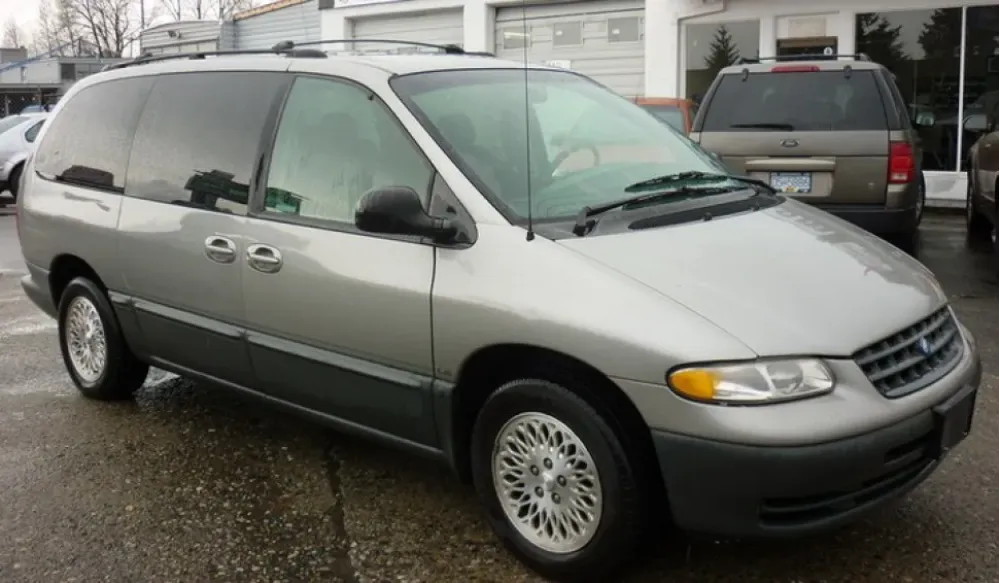
Click on image to view the full photo gallery
Plymouth Grand Voyager II 3.0 V6 (152 Hp)
Overall Rating
Plymouth Grand Voyager:
Plymouth Voyager is a nameplate for a range of vans that were marketed by Plymouth from 1974 to 2000. One of the few light trucks marketed by the division, the Voyager was initially a full-size van, later becoming one of the first minivans successfully marketed in North America.
For its first generation, the Voyager was a full-size van, serving as the Plymouth counterpart of the Dodge Sportsman. For 1984, the Voyager was reintroduced as a minivan, becoming a divisional counterpart of the Dodge Caravan. For 1987, the model line was expanded with the extended-wheelbase Plymouth Grand Voyager and the luxury-trim Chrysler Town & Country for 1990. Three generations of the model line were sold until the closure of the Plymouth brand during the 2000 model year....(Read more on Wikipedia)
II Overview:
Plymouth Grand Voyager (II). With 239 Nm of torque, it offers ample pulling power. With a weight of 1669 kg, it falls in the mid‑range. Front‑wheel drive delivers efficiency and easy handling. The top speed reaches 175 km/h. A spacious vehicle designed to transport passengers comfortably, often with sliding doors. With seating for 7, it’s perfect for larger families.
3.0 V6 (152 Hp) Verdict:

Performance Verdict
Offers smoother power delivery than the 4-cylinder, suitable for general family duties, but not a powerhouse.
Fuel Economy
Expected to offer a reasonable balance of power and fuel economy for a V6 minivan of its time.
Pros and Cons:
Pros:
- • Spacious and versatile interior
- • Comfortable ride quality
- • Available all-wheel-drive (AWD) for added traction
- • Strong V6 engine options for hauling
- • Good value on the used market
Cons:
- • High fuel consumption, especially with V6 and AWD
- • Dated safety performance by modern standards (low Euro NCAP score)
- • Interior plastics can feel cheap
- • Potential for transmission issues on older models
- • Outdated infotainment and features compared to newer vehicles
Specifications:
Specifications are compared to those of the previous generation(Grand Voyager: 1990 - 1995).
| General: | |
|---|---|
| Brand: | Plymouth |
| Model: | Grand Voyager |
| Generation: | II |
| Modification (Engine): | 3.0 V6 (152 Hp) |
| Start of production: | 1996 |
| End of production: | 2000 |
| Powertrain Architecture: | Internal Combustion engine |
| Body type: | Minivan |
| Seats: | 7 |
| Doors: | 4 |
| Engine: | |
|---|---|
| Power: | 152 Hp @ 5200 rpm. Same horsepower |
| Power per litre: | 51.1 Hp/l [172mm more] |
| Torque: | 239 Nm @ 4000 rpm. |
| Engine displacement: | 2972 |
| Number of cylinders: | 6 |
| Engine configuration: | V-engine |
| Number of valves per cylinder: | 2 |
| Fuel injection system: | Multi-port manifold injection |
| Engine aspiration: | Naturally aspirated engine |
| Valvetrain: | OHC |
| Engine oil capacity: | 4.3 l |
| Coolant: | 9.5 l |
| Engine layout: | Front, Transverse |
| Cylinder Bore: | 91.1 mm mm |
| Piston Stroke: | 76 mm mm |
| Compression ratio: | 8.9:1 |
| Performance: | |
|---|---|
| Fuel Type: | Petrol (Gasoline) |
| Fuel consumption (economy) - urban: | 12.4 l/100 km |
| Fuel consumption (economy) - extra urban: | 9.8 l/100 km |
| Maximum speed: | 175 km/h |
| Weight-to-power ratio: | 11 kg/Hp, 91.1 Hp/tonne |
| Weight-to-torque ratio: | 7 kg/Nm, 143.2 Nm/tonne |
| Space: | |
|---|---|
| Kerb Weight: | 1669 |
| Trunk (boot) space - maximum: | 4140 l |
| Trunk (boot) space - minimum: | 450 l |
| Fuel tank capacity: | 75 l |
| Size: | |
|---|---|
| Length: | 5070 mm mm [172mm more] |
| Width: | 1920 mm mm [90mm more] |
| Height: | 1740 mm mm [94mm more] |
| Wheelbase: | 3030 mm mm [Same wheelbase.] |
| Front track: | 1600 mm |
| Rear (Back) track: | 1626 mm |
| Powertrain: | |
|---|---|
| Drivetrain Architecture | The Internal combustion engine (ICE) drives the front wheels of the vehicle. |
| Drive wheel | Front wheel drive |
| Number of gears | 3 |
| Transmission type | Automatic |
| Front brakes | Ventilated discs [Best for performance and cooling.] |
| Rear brakes | Drum [bad for performance and cooling.] |
| Assisting systems | ABS (Anti-lock braking system) |
| Steering type | Steering rack and pinion |
| Power steering | Hydraulic Steering |
| Tires size | 205/75 R14 S |
| Front suspension | Coil spring |
| Rear suspension | Coil spring |




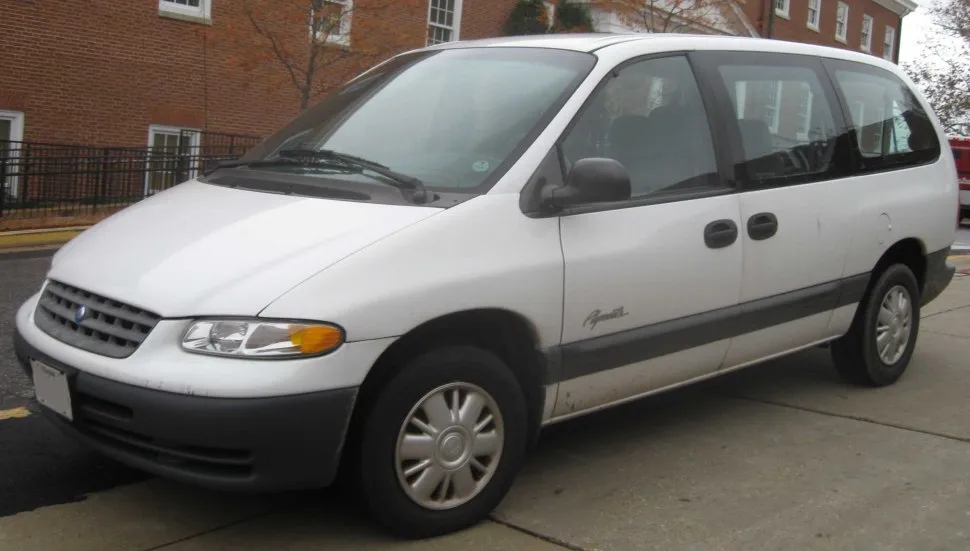
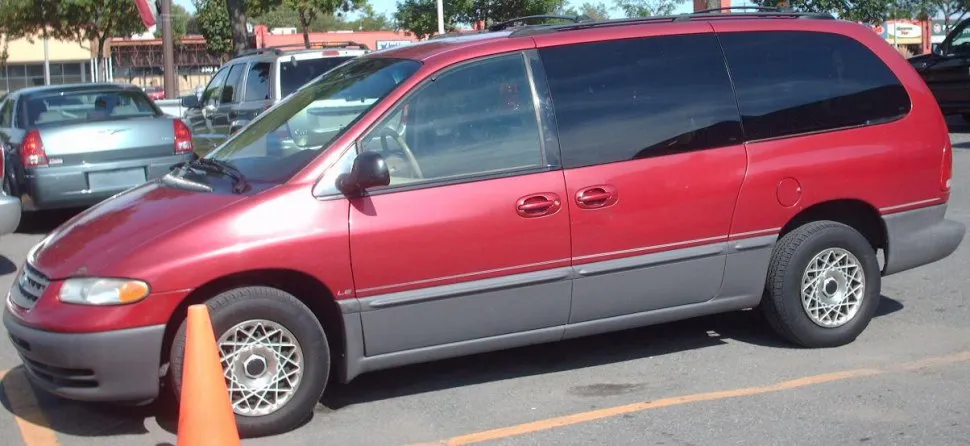
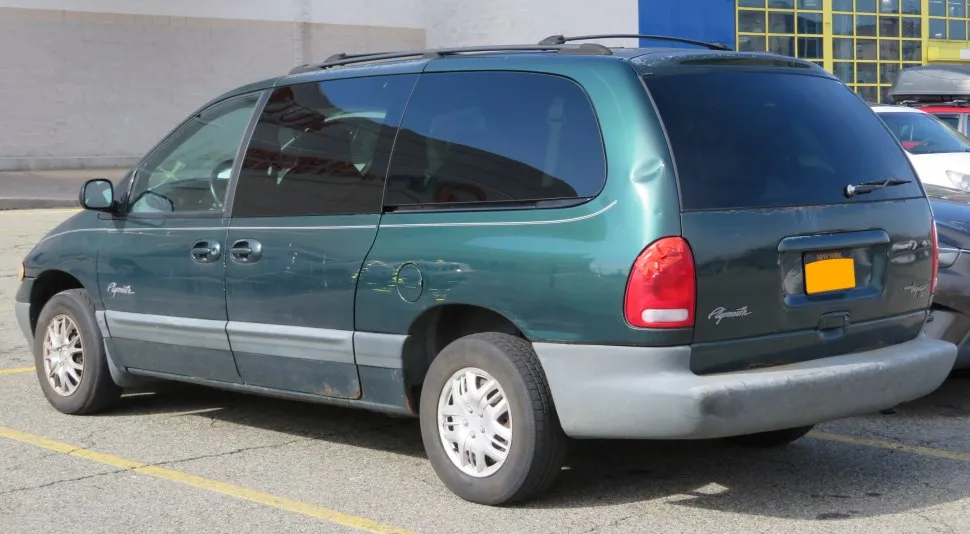
Fuel, speed, and comfort: How does the Plymouth Grand Voyager rank in your book?