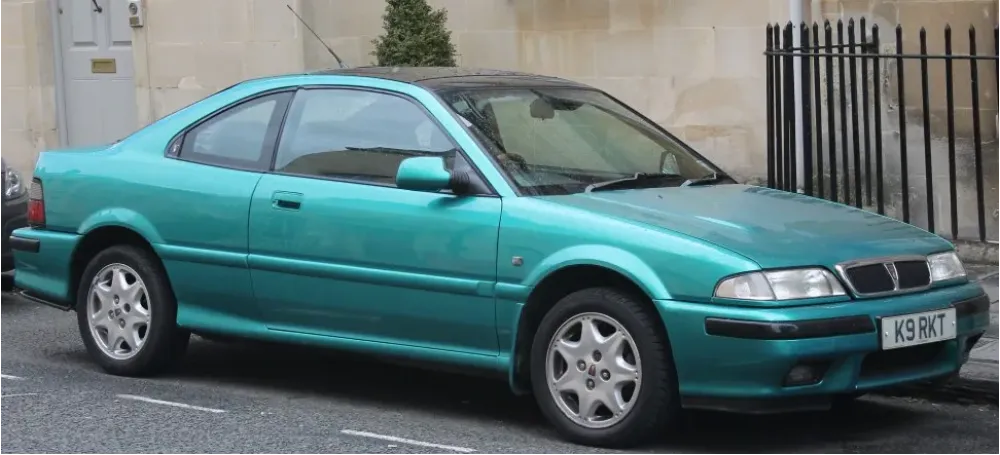
Click on image to view the full photo gallery
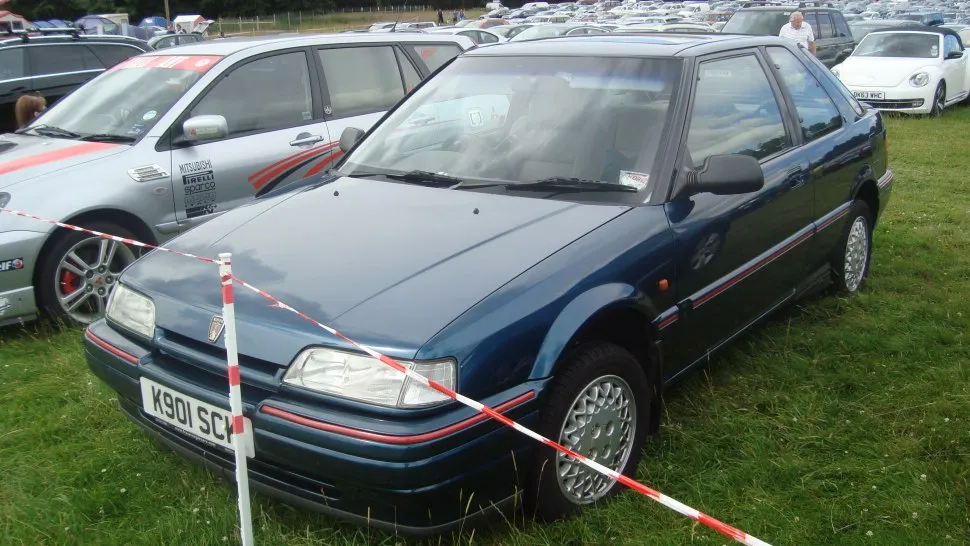
Rover 200 Coupe (XW) 216i (111 Hp)
Overall Rating
Rover 200:
The Rover 200 Series, and later the Rover 25, are a series of small family cars that were produced by former British manufacturer Rover from 1984 until 2005.
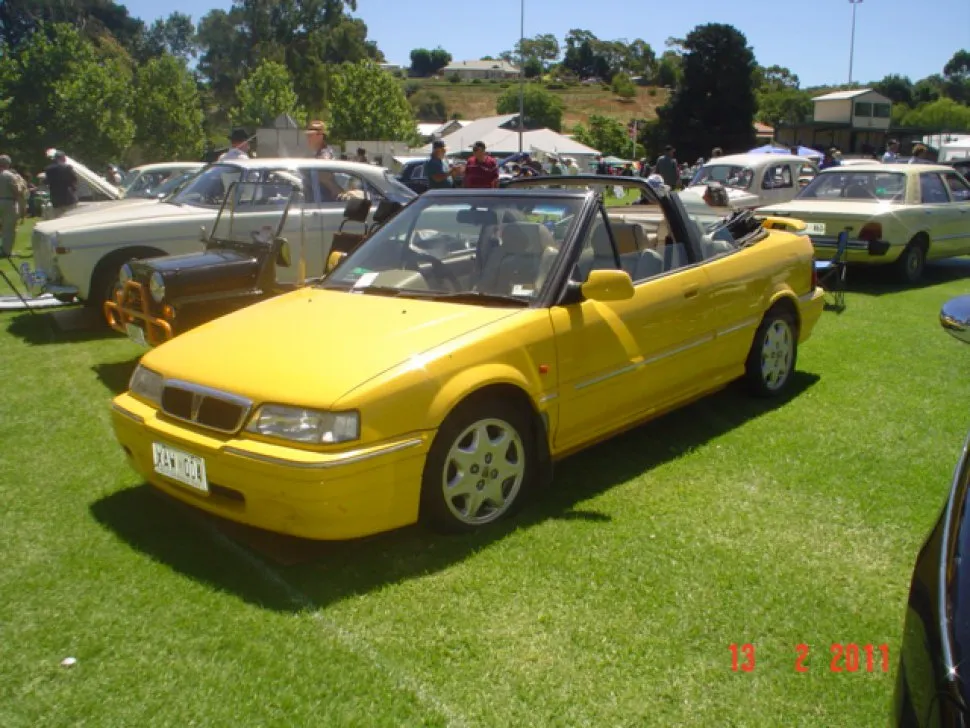
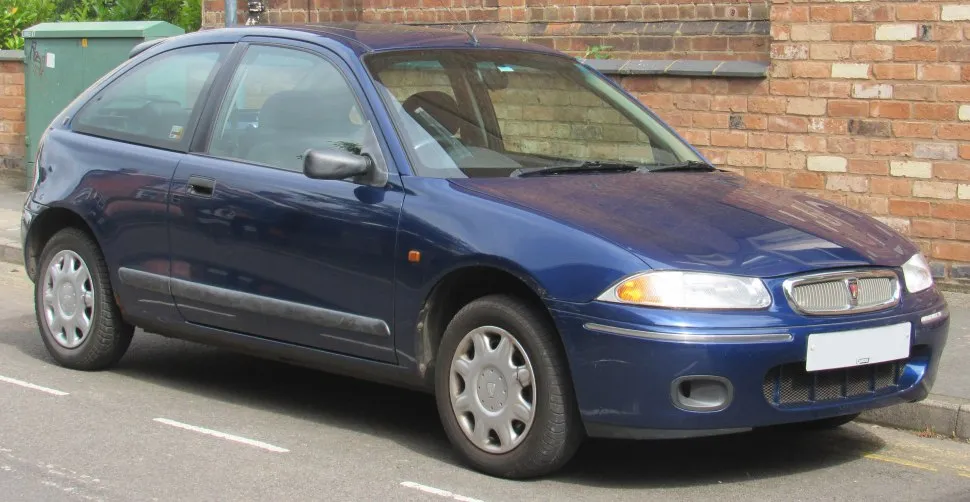
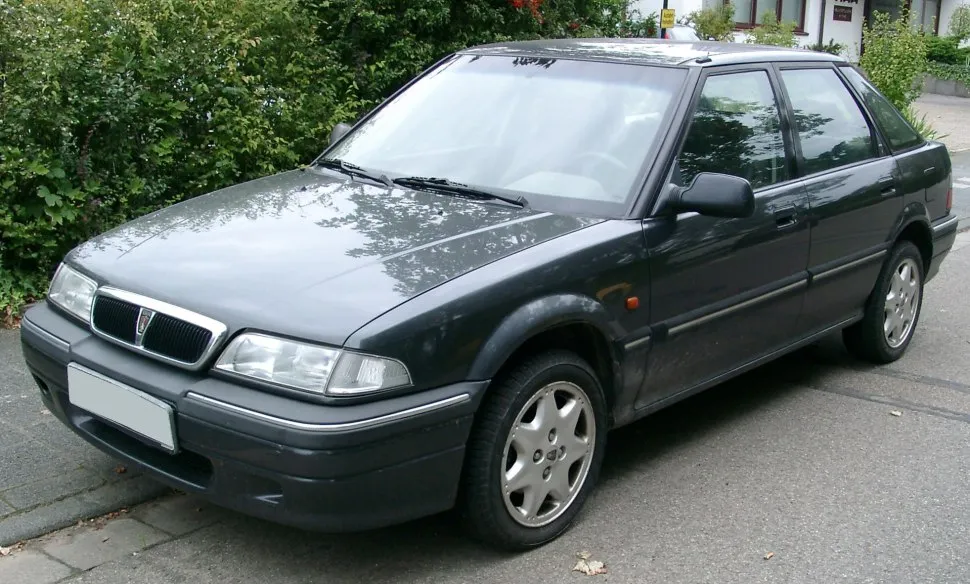
There have been three distinct generations of the Rover 200. The first generation was a four-door saloon car based on the Honda Ballade. The second generation was available in three or five-door hatchback forms, as well a coupé and cabriolet. Its sister model, the Honda Concerto was built on the same production line in Rover's Longbridge factory. The final generation was developed independently by Rover on the platform of its predecessor, and was available as a three or five-door hatchback. Just before BMW's sale of Rover in 2000, and following a facelift, the model was renamed and sold as the Rover 25, and the MG ZR was based on the Rover 25 with mechanical changes to the suspension. Production ceased in 2005 when MG Rover went into administration. Production rights and tooling for the model, but not the Rover name, now belong to Chinese car manufacturer Nanjing....(Read more on Wikipedia)
Coupe (XW) Overview:
Rover 200 (Coupe (XW)). With 145 Nm of torque, it offers ample pulling power. It has moderate fuel consumption (~10 l/100km). Weighing only 1080 kg, it’s quite light. Front‑wheel drive delivers efficiency and easy handling. Acceleration is relatively slow (0–100 km/h in 9.5 s). The top speed reaches 195 km/h. A two-door car with a fixed roof, known for its sporty design and dynamic performance. Seating for 4 makes it ideal for daily use.
216i (111 Hp) Verdict:

Performance Verdict
Entry-level performance, suitable for relaxed driving and those prioritizing economy over outright speed.
Fuel Economy
Offers the best fuel economy among the petrol options, making it the most cost-effective choice for running costs.
Pros and Cons:
Pros:
- • Distinctive and attractive coupe styling with T-bar roof option
- • Excellent performance from the 220 Turbo and 218i VVC engines
- • Engaging handling for a front-wheel-drive car of its era
- • Comfortable interior for its class, especially on longer journeys
- • Becoming a sought-after modern classic, particularly the Turbo models
Cons:
- • Known for K-Series head gasket issues (on 1.6L and 1.8L engines)
- • Interior plastics can feel dated and somewhat cheap compared to rivals
- • Dated safety features by modern standards (no Euro NCAP rating)
- • Rust can be a concern on older, unmaintained examples
- • Parts availability can be challenging for some specific components
Specifications:
Specifications are compared to those of the previous generation(XW: 1993 - 1995).
| General: | |
|---|---|
| Brand: | Rover |
| Model: | 200 |
| Generation: | Coupe (XW) |
| Modification (Engine): | 216i (111 Hp) |
| Start of production: | 1994 |
| End of production: | 2000 |
| Powertrain Architecture: | Internal Combustion engine |
| Body type: | Coupe |
| Seats: | 4 |
| Doors: | 2 |
| Engine: | |
|---|---|
| Power: | 111 Hp @ 6000 rpm. Same horsepower |
| Power per litre: | 69.9 Hp/l [50mm more] |
| Torque: | 145 Nm @ 3000 rpm. |
| Engine Model/Code: | 16K4F More details about the engine 16K4F |
| Engine displacement: | 1588 |
| Number of cylinders: | 4 |
| Engine configuration: | Inline |
| Number of valves per cylinder: | 4 |
| Fuel injection system: | Multi-port manifold injection |
| Engine aspiration: | Naturally aspirated engine |
| Valvetrain: | DOHC |
| Engine oil capacity: | 4.5 l |
| Coolant: | 5.5 l |
| Engine layout: | Front, Transverse |
| Cylinder Bore: | 80 mm |
| Piston Stroke: | 79 mm |
| Compression ratio: | 10.5:1 |
| Performance: | |
|---|---|
| Fuel Type: | Petrol (Gasoline) |
| Fuel consumption (economy) - urban: | 10 l/100 km |
| Fuel consumption (economy) - extra urban: | 5.8 l/100 km |
| Fuel consumption (economy) - combined: | 7.9 l/100 km |
| Acceleration 0 - 100 km/h: | 9.5 sec |
| Acceleration 0 - 62 mph: | 9.5 sec |
| Maximum speed: | 195 km/h |
| Weight-to-power ratio: | 9.7 kg/Hp, 102.8 Hp/tonne |
| Weight-to-torque ratio: | 7.4 kg/Nm, 134.3 Nm/tonne |
| Acceleration 0 - 60 mph: | 9 sec |
| Space: | |
|---|---|
| Kerb Weight: | 1080 |
| Trunk (boot) space - maximum: | 610 l |
| Trunk (boot) space - minimum: | 300 l |
| Fuel tank capacity: | 55 l |
| Size: | |
|---|---|
| Length: | 4270 mm [50mm more] |
| Width: | 1680 mm [Same width.] |
| Height: | 1370 mm [20mm less] |
| Wheelbase: | 2550 mm [Same wheelbase.] |
| Front track: | 1475 mm |
| Rear (Back) track: | 1470 mm |
| Powertrain: | |
|---|---|
| Drivetrain Architecture | The Internal combustion engine (ICE) drives the front wheels of the vehicle. |
| Drive wheel | Front wheel drive |
| Number of gears | 5 |
| Transmission type | Manual |
| Front brakes | Disc [bad for performance and cooling.] |
| Rear brakes | Drum [bad for performance and cooling.] |
| Assisting systems | ABS (Anti-lock braking system) |
| Steering type | Steering rack and pinion |
| Power steering | Hydraulic Steering |
| Tires size | 185/55 R15 |
| Front suspension | Wishbone |
| Rear suspension | Coil spring |






Have you ever driven an Rover 200?
How was your experience with it? Share with us: