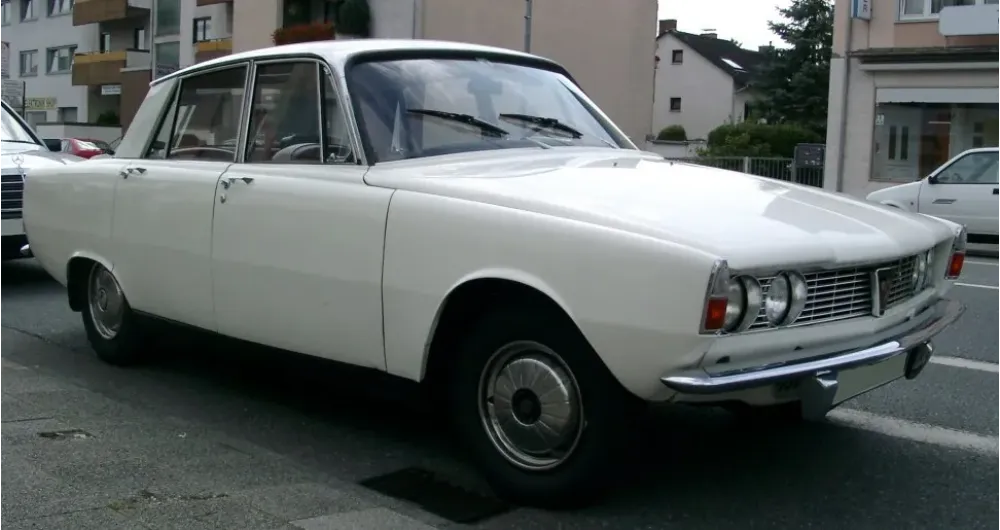
Click on image to view the full photo gallery
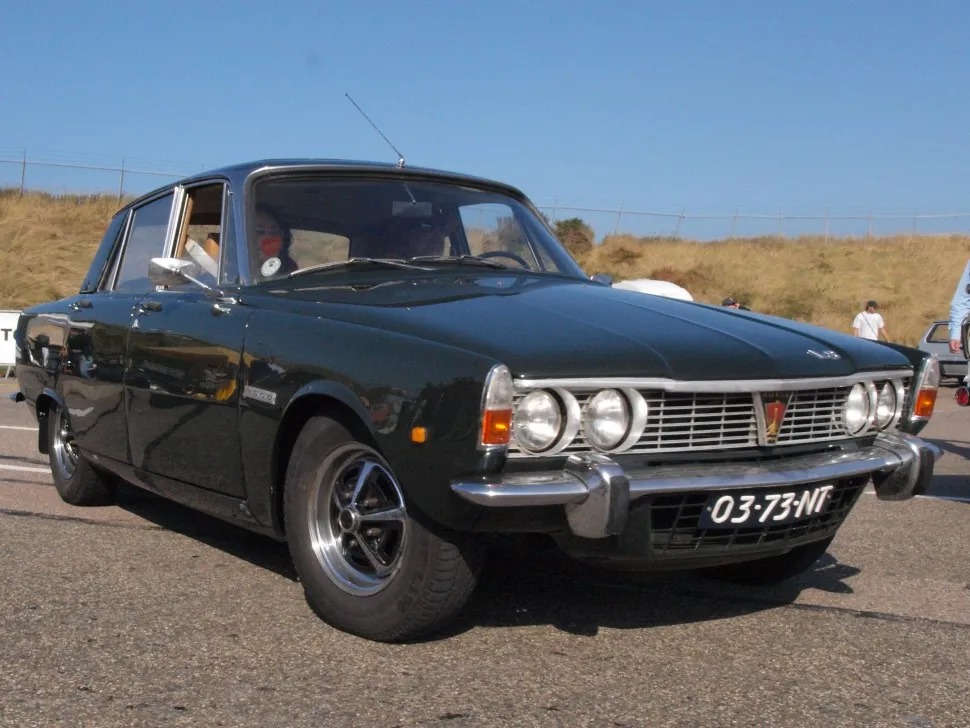
Rover 2200-3500 P6 2200 (TC) (113 Hp)
Overall Rating
Rover 2200-3500:
The Rover P6 series is a saloon car produced by Rover and subsequently British Leyland from 1963 to 1977 in Solihull, West Midlands, England, UK.
The P6 was the first winner of the European Car of the Year award.
The P6 was announced on 9 October 1963, just before the Earls Court Motor Show. The vehicle was marketed first as the Rover 2000 and was a complete "clean sheet" design intended to appeal to a larger number of buyers than earlier models such as the P4 it replaced. Rover had identified a developing market between the standard '1. 5-litre' saloon car class and the accepted 'three-litre' large saloon cars. Younger and increasingly affluent professional workers and executives were seeking out cars that were superior to the normal 1. 5-litre models in style, design and luxury but offered more modern driving dynamics than the big three-litre class and lower purchase and running costs than sports saloons such as the Jaguar Mark 2. Automotive technology had improved significantly in the mid-to-late 1950s, typified by the introduction of cars such as the Citroën DS and Lancia Flavia in Europe and the Chevrolet Corvair in America. The replacement for the traditionally designed P4 would therefore be a smaller car with a two-litre engine using the latest design, engineering and styling. The P6 was thus one of the earliest examples of what would now be classified as an executive car. The P6 would be lower-priced than the P4 and sales volumes were anticipated to be significantly higher. The more upmarket and conservative P5 was sold alongside the P6 until 1973....(Read more on Wikipedia)
P6 Overview:
Rover 2200-3500 (P6). A four-door car with a separate trunk, ideal for families and daily commuting. Seating for 5 makes it ideal for daily use.
The Rover P6 was designed before Euro NCAP testing began (1997). For its era, it featured advanced safety elements like a strong passenger cell and all-round disc brakes, making it relatively safe for the period, but it lacks modern safety features.
2200 (TC) (113 Hp) Verdict:

Performance Verdict
The Twin Carburettor (TC) version provides a lively and engaging driving experience for a four-cylinder. It's responsive and feels more sprightly than its power figure suggests.
Fuel Economy
Better fuel economy than the V8 models, making it a more practical choice for daily use. Still a period engine, so don't expect modern efficiency levels.
Pros and Cons:
Pros:
- • Innovative and distinctive design for its era
- • Excellent ride comfort and sophisticated handling due to de Dion suspension
- • Potent and smooth V8 engine options offering strong performance
- • Advanced safety features for a car of its time
- • Spacious and well-appointed interior
Cons:
- • Prone to rust, particularly in earlier models
- • Complex de Dion rear suspension can be costly to maintain
- • Four-cylinder engines can feel underpowered compared to the V8
- • Electrical system quirks common in British cars of the period
- • Fuel economy is not a strong point, especially for V8 models
Specifications:
| General: | |
|---|---|
| Brand: | Rover |
| Model: | 2200-3500 |
| Generation: | P6 |
| Modification (Engine): | 2200 (TC) (113 Hp) |
| Start of production: | 1963 |
| End of production: | 1976 |
| Powertrain Architecture: | Internal Combustion engine |
| Body type: | Sedan |
| Seats: | 5 |
| Doors: | 4 |
| Engine: | |
|---|---|
| Power: | 113 Hp |
| Engine aspiration: | Naturally aspirated engine |
| Engine oil capacity: | 5 l |
| Coolant: | 8 l |
| Performance: | |
|---|---|
| Fuel Type: | Petrol (Gasoline) |




If you could change one thing about the Rover 2200-3500, what would it be?