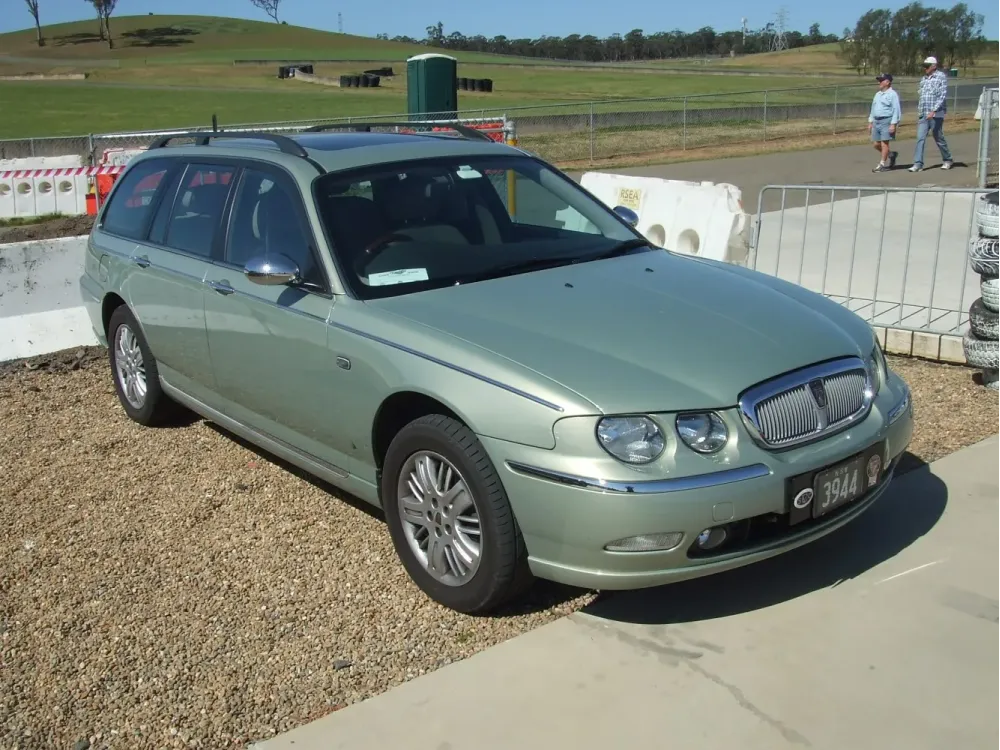
Click on image to view the full photo gallery
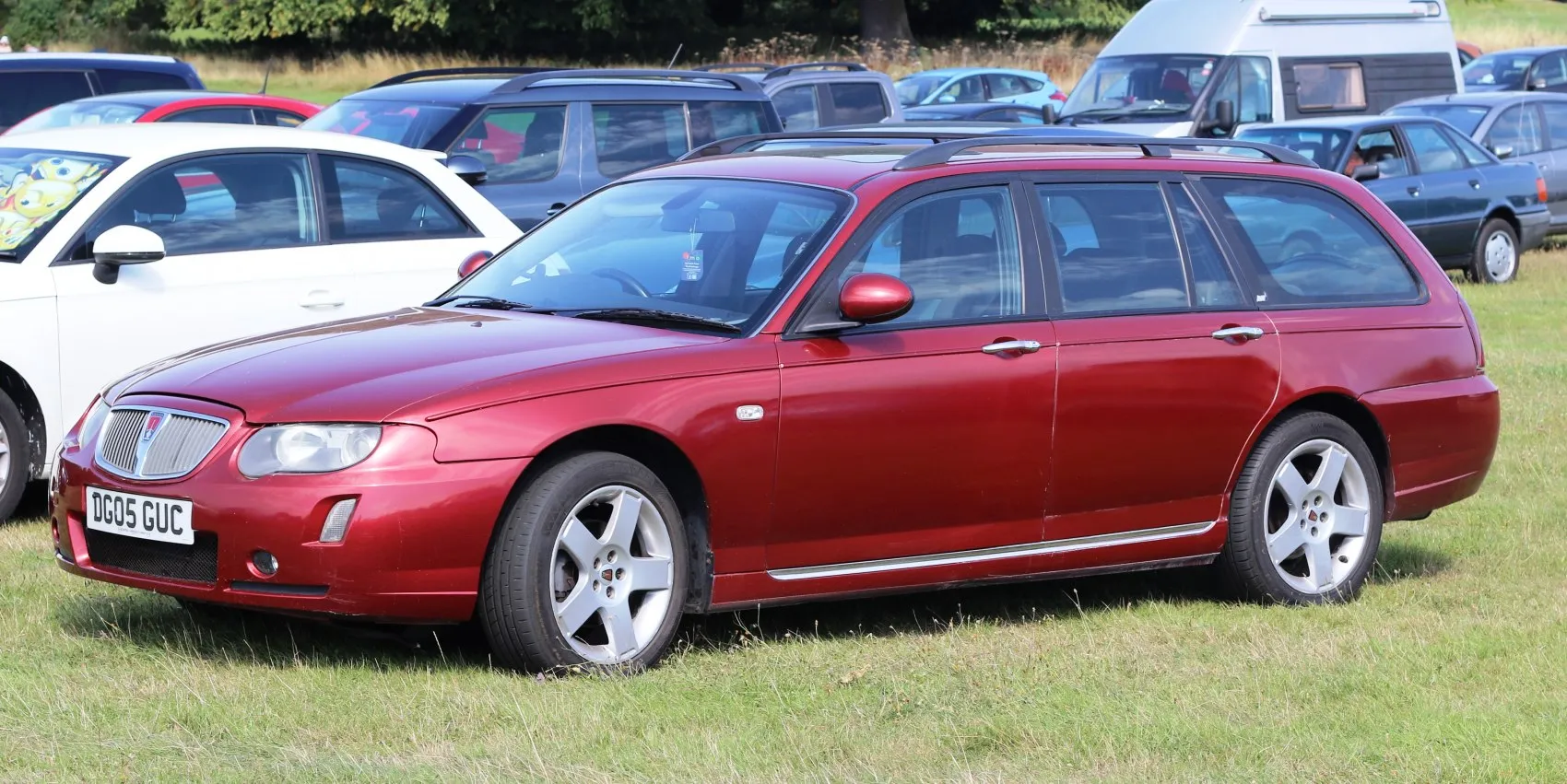
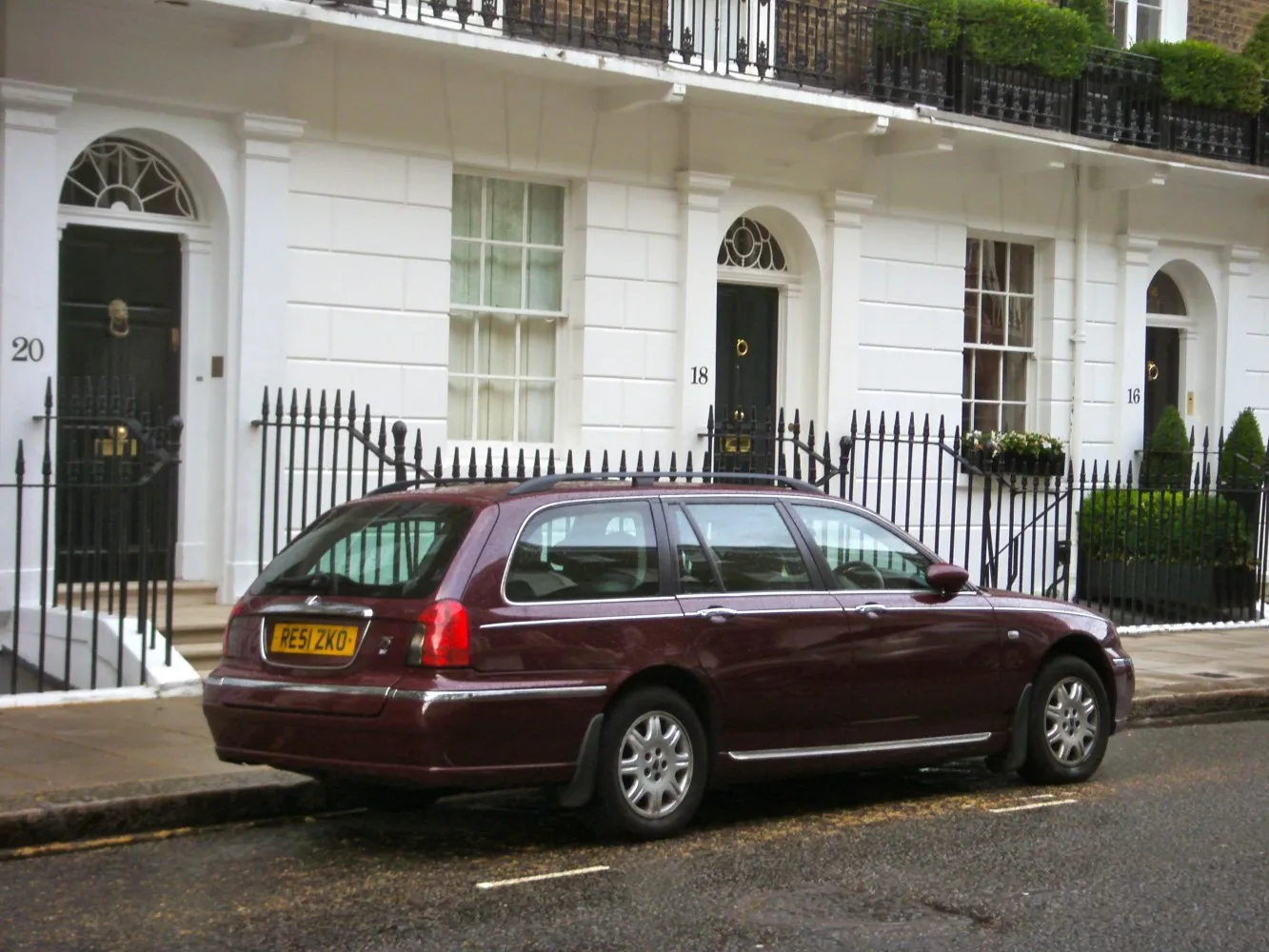
Rover 75 Tourer 2.0 CDT (115 Hp)
Overall Rating
Rover 75:
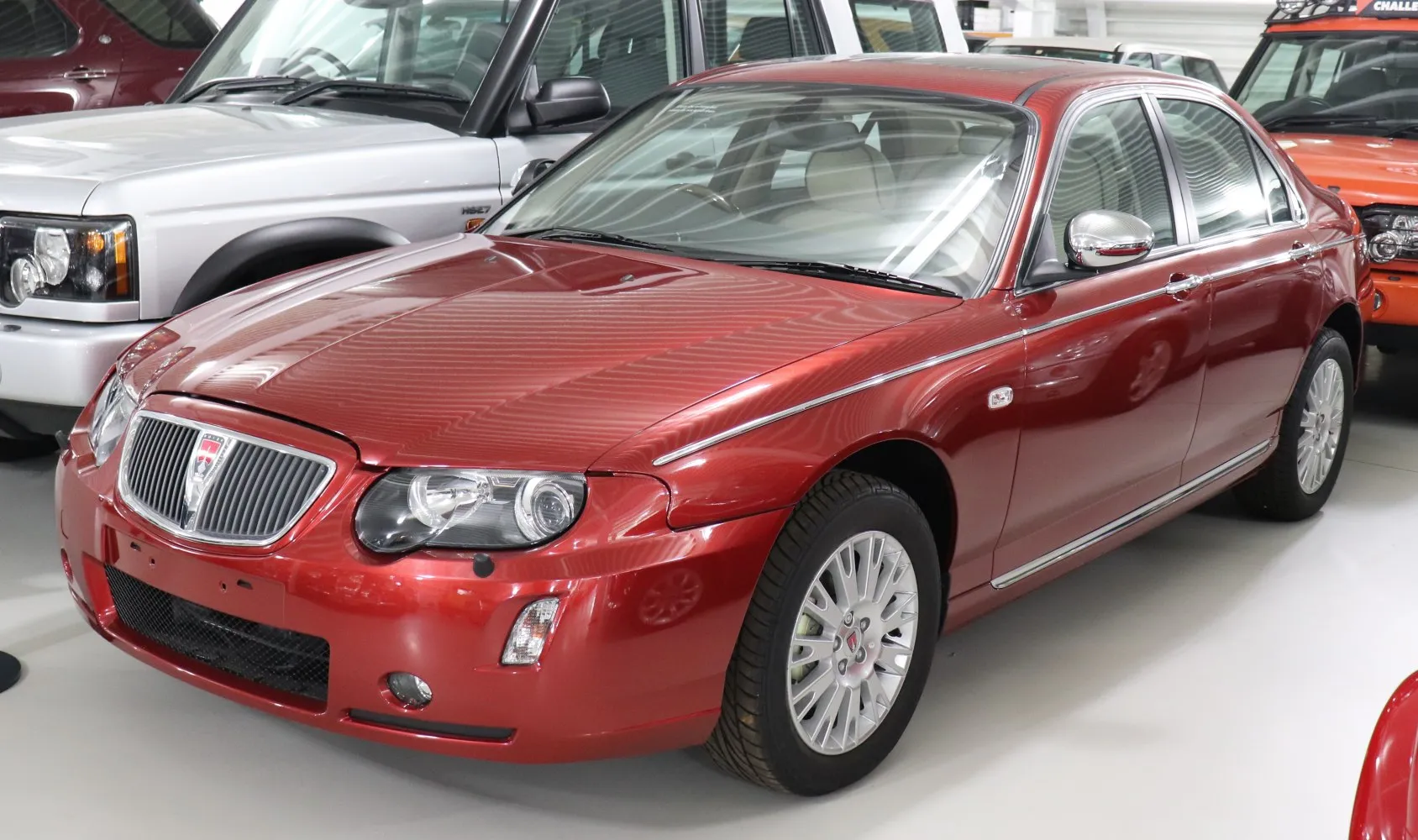
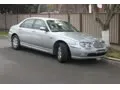
The Rover 75 is a large family car which was manufactured from 1998 to 2005 by the British Rover marque. There are two body styles—a four-door saloon car and a five-door estate car. Initially built only with front-wheel drive, a rear-wheel-drive variant with a V8 engine was later sold. There was also an extended-wheelbase model. In 2001, MG Rover launched a badge engineered variant, the MG ZT. A coupé concept was built, but did not receive further development.
Rover 75s were manufactured by the Rover Group at Cowley, Oxfordshire, for one year. After owner BMW sold Rover, the 75 was manufactured by the new MG Rover Group at their Longbridge site in Birmingham. The Rover 75 debuted at the Birmingham Motor Show, with deliveries commencing in February 1999. As the last large Rover saloon, production of all models ended in 2005 when MG Rover Group entered receivership....(Read more on Wikipedia)
Tourer Overview:
Rover 75 (Tourer). With 260 Nm of torque, it offers ample pulling power. It has moderate fuel consumption (~7.7 l/100km). With a weight of 1545 kg, it falls in the mid‑range. Front‑wheel drive delivers efficiency and easy handling. Acceleration is relatively slow (0–100 km/h in 12.3 s). The top speed reaches 190 km/h. A car with an extended rear cargo area, combining passenger comfort with increased storage. Seating for 5 makes it ideal for daily use.
The Rover 75 (saloon variant, typically indicative of the generation) achieved a respectable 4-star Euro NCAP rating for adult occupant protection in 2001, performing well for its time.
2.0 CDT (115 Hp) Verdict:

Performance Verdict
Adequate performance for a family estate, focusing more on relaxed cruising and effortless torque delivery than outright speed.
Fuel Economy
Excellent fuel efficiency for its class, making it a highly cost-effective choice for longer journeys and high mileage.
Pros and Cons:
Pros:
- • Exceptional ride comfort and refined interior ambiance
- • Distinctive, classic British styling that stands out
- • Strong and economical BMW-sourced diesel engines
- • Often represents excellent value on the used market
- • Spacious and practical estate body style
Cons:
- • K-Series petrol engines prone to head gasket failure if not maintained
- • Some electrical gremlins can be present
- • Parts availability can be challenging post-Rover collapse
- • V6 petrol engines are relatively thirsty
- • Perceived build quality can vary compared to German rivals
Specifications:
Specifications are compared to those of the previous generation(75: 1999 - 2004).
| General: | |
|---|---|
| Brand: | Rover |
| Model: | 75 |
| Generation: | Tourer |
| Modification (Engine): | 2.0 CDT (115 Hp) |
| Start of production: | 2001 |
| End of production: | 2004 |
| Powertrain Architecture: | Internal Combustion engine |
| Body type: | Station wagon (estate) |
| Seats: | 5 |
| Doors: | 5 |
| Engine: | |
|---|---|
| Power: | 115 Hp @ 4000 rpm. |
| Power per litre: | 58.9 Hp/l |
| Torque: | 260 Nm @ 2000 rpm. |
| Engine Model/Code: | M47R / 204D2 [Same engine] More details about the engine M47R / 204D2 |
| Engine displacement: | 1951 |
| Number of cylinders: | 4 |
| Engine configuration: | Inline |
| Number of valves per cylinder: | 4 |
| Fuel injection system: | Diesel Commonrail |
| Engine aspiration: | Turbocharger, Intercooler |
| Valvetrain: | DOHC |
| Engine oil capacity: | 6.8 l |
| Coolant: | 8.2 l |
| Engine layout: | Front, Transverse |
| Cylinder Bore: | 84 mm |
| Piston Stroke: | 88 mm |
| Compression ratio: | 18:1 |
| Performance: | |
|---|---|
| Fuel Type: | Diesel |
| Fuel consumption (economy) - urban: | 7.7 l/100 km |
| Fuel consumption (economy) - extra urban: | 4.7 l/100 km |
| Fuel consumption (economy) - combined: | 5.8 l/100 km |
| Acceleration 0 - 100 km/h: | 12.3 sec |
| Acceleration 0 - 62 mph: | 12.3 sec |
| Maximum speed: | 190 km/h |
| Weight-to-power ratio: | 13.4 kg/Hp, 74.4 Hp/tonne |
| Weight-to-torque ratio: | 5.9 kg/Nm, 168.3 Nm/tonne |
| Acceleration 0 - 60 mph: | 11.7 sec |
| Space: | |
|---|---|
| Kerb Weight: | 1545 |
| Max. weight: | 2090 |
| Max load: | 545 |
| Trunk (boot) space - maximum: | 1222 l |
| Trunk (boot) space - minimum: | 400 l |
| Fuel tank capacity: | 65 l |
| Size: | |
|---|---|
| Length: | 4795 mm [48mm more] |
| Width: | 1778 mm [Same width.] |
| Height: | 1424 mm [Same height.] |
| Wheelbase: | 2746 mm [Same wheelbase.] |
| Front track: | 1505 mm |
| Rear (Back) track: | 1505 mm |
| Powertrain: | |
|---|---|
| Drivetrain Architecture | The Internal combustion engine (ICE) drives the front wheels of the vehicle. |
| Drive wheel | Front wheel drive |
| Number of gears | 5 |
| Transmission type | Manual |
| Front brakes | Ventilated discs [Best for performance and cooling.] |
| Rear brakes | Disc |
| Assisting systems | ABS (Anti-lock braking system) |
| Steering type | Steering rack and pinion |
| Power steering | Hydraulic Steering |
| Tires size | 195/65 R15 H |
| Front suspension | Wishbone |
| Rear suspension | Coil spring |






Does the Rover 75 live up to the hype? Give us your verdict!