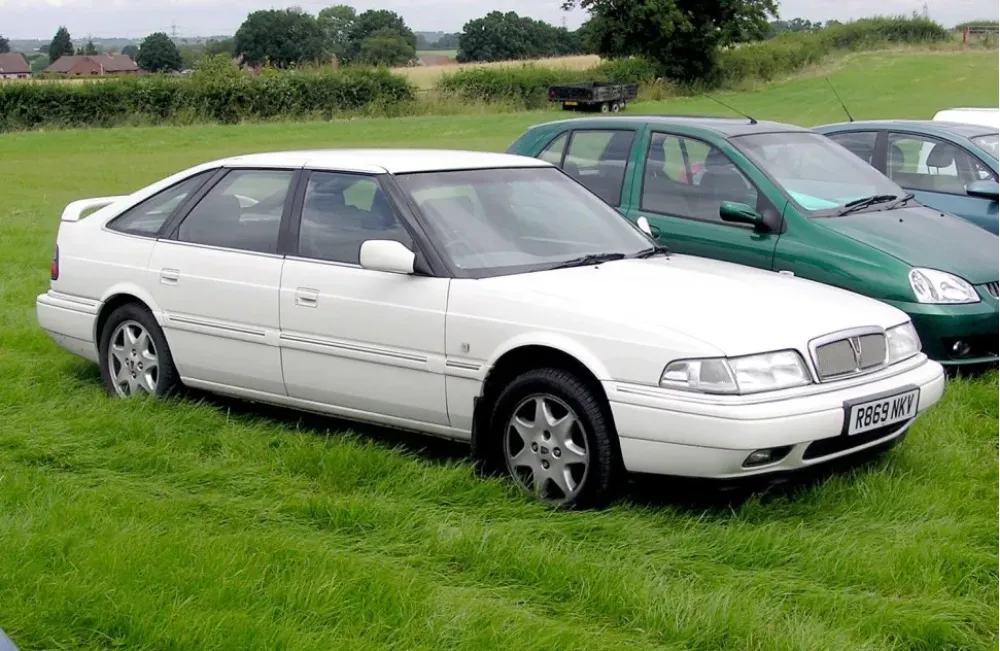
Click on image to view the full photo gallery
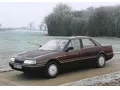
Rover 800 Hatchback 820 SI (XS) (133 Hp)
Overall Rating
Rover 800:
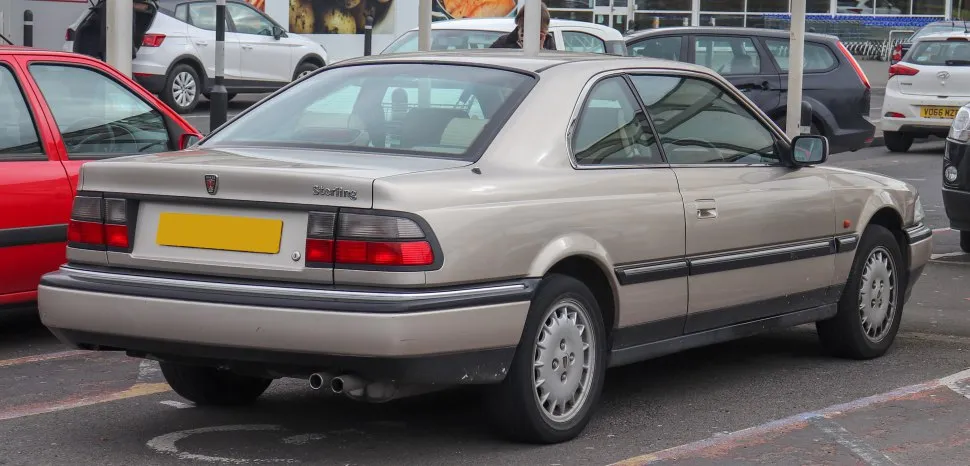
The Rover 800 series is an executive car range manufactured by the Austin Rover Group subsidiary of British Leyland, and its successor the Rover Group from 1986 to 1999. It was also marketed as the Sterling in the United States. Co-developed with Honda, the 800 was a close relative to the Honda/Acura Legend and the successor to the decade-old Rover SD1.
The first product of the BL-Honda alliance was the Triumph Acclaim – and shortly after its launch the two companies mapped out an advisable strategy for future collaborative projects. Plans for a midsize car were investigated, but were dropped because BL already had the Austin Maestro and Austin Montego in the final stages of development. However both BL and Honda had a pressing need for a full-size executive car in their lineups. BL had to start planning for a successor to the Rover SD1, whilst Honda was keen to expand its presence in the lucrative North American market – something which it couldn't fully do unless it had a full-size luxury saloon which would compete with similar large Japanese imports from Toyota and Datsun. Joint development of the car began in 1981 under the "XX" codename; the corresponding Honda version was known as the Honda Legend, and was codenamed as "HX". The development work was carried out at Rover's Cowley plant and Honda's Tochigi development centre. Both cars shared the same core structure and floorpan, but they each had their own unique exterior bodywork and interior. Under the agreement, Honda would supply the V6 petrol engine, both automatic and manual transmissions and the chassis design, whilst BL would provide the 4-cylinder petrol engine and much of the electrical systems....(Read more on Wikipedia)
Hatchback Overview:
Rover 800 (Hatchback). A compact car with a rear door that swings upward to provide access to the cargo area. Seating for 5 makes it ideal for daily use.
The Rover 800 Hatchback generation predates the establishment of Euro NCAP testing (1997). Safety standards of the late 1980s focused on basic structural integrity and seatbelts, lacking modern active and passive safety features.
820 SI (XS) (133 Hp) Verdict:

Performance Verdict
Offering a balanced 133 Hp, this 2.0L 16V engine provided adequate and smooth performance for daily commuting and comfortable cruising, without being overtly sporty.
Fuel Economy
This engine was a practical choice, delivering reasonable fuel economy for its size and power output, making it a cost-effective option for the range.
Pros and Cons:
Pros:
- • Refined and powerful engine options, especially the V6 and turbo variants.
- • Comfortable and spacious interior, typical of an executive car.
- • Good ride quality, well-suited for long journeys.
- • Distinctive British styling with a touch of luxury.
- • Practical hatchback body style offering good versatility.
Cons:
- • Some interior trim quality issues and rattles over time.
- • Can suffer from electrical gremlins typical of its era.
- • Fuel economy can be high, particularly with the larger engines.
- • Resale value depreciated significantly compared to German rivals.
- • Handling, while competent, wasn't as sharp as some competitors.
Specifications:
| General: | |
|---|---|
| Brand: | Rover |
| Model: | 800 |
| Generation: | Hatchback |
| Modification (Engine): | 820 SI (XS) (133 Hp) |
| Start of production: | 1988 |
| End of production: | 1991 |
| Powertrain Architecture: | Internal Combustion engine |
| Body type: | Hatchback |
| Seats: | 5 |
| Doors: | 5 |
| Engine: | |
|---|---|
| Power: | 133 Hp |
| Engine Model/Code: | M16i |
| Engine aspiration: | Naturally aspirated engine |
| Engine oil capacity: | 4.5 l |
| Coolant: | 10 l |
| Performance: | |
|---|---|
| Fuel Type: | Petrol (Gasoline) |






Your first impression of the Rover 800 in one word? Go!