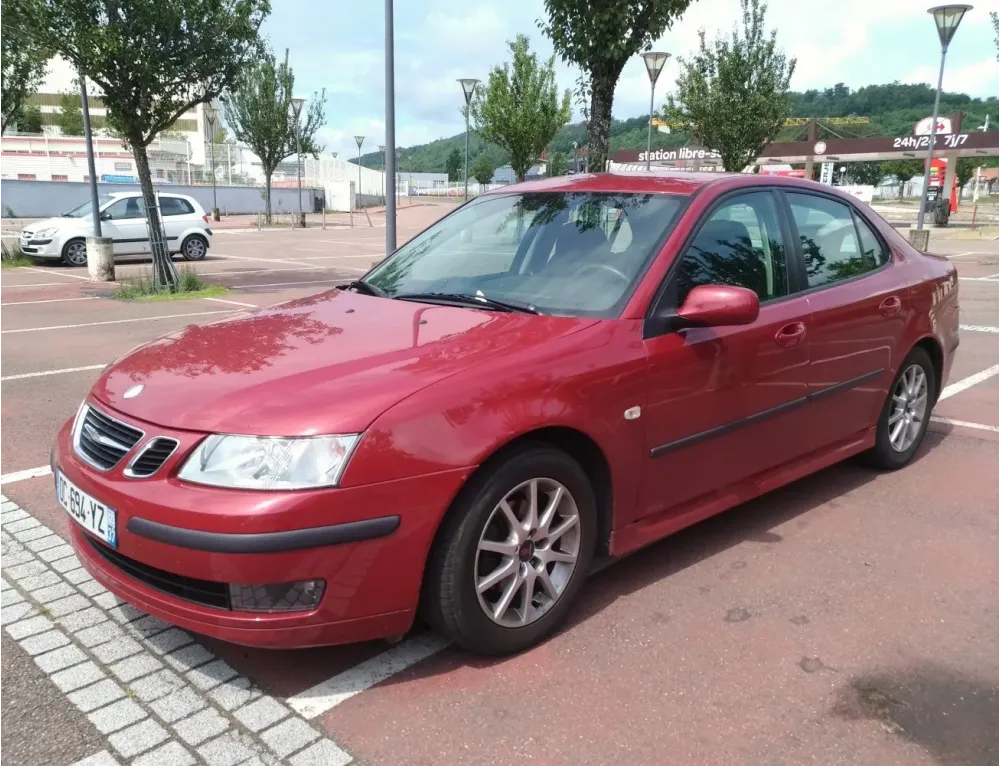
Click on image to view the full photo gallery
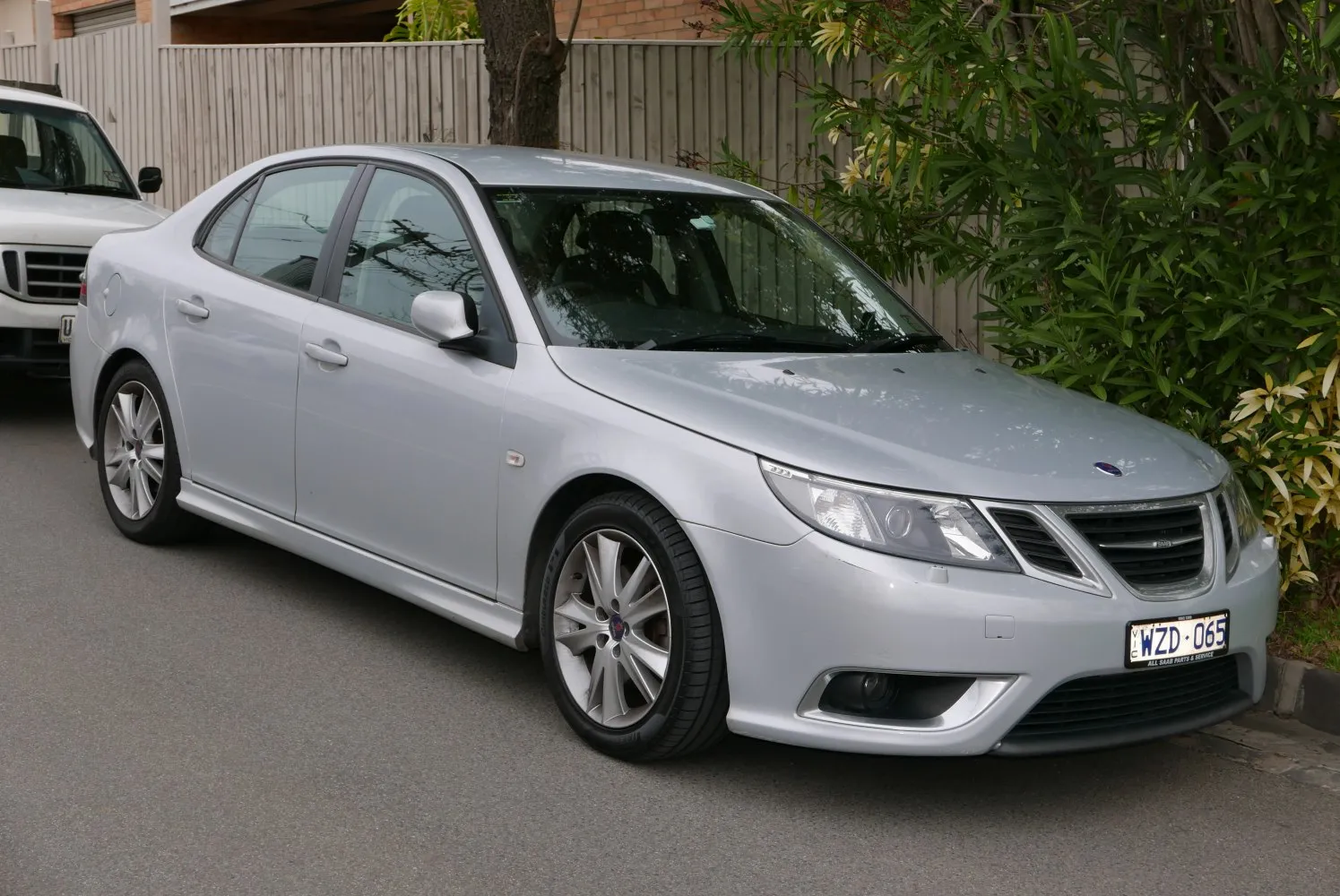
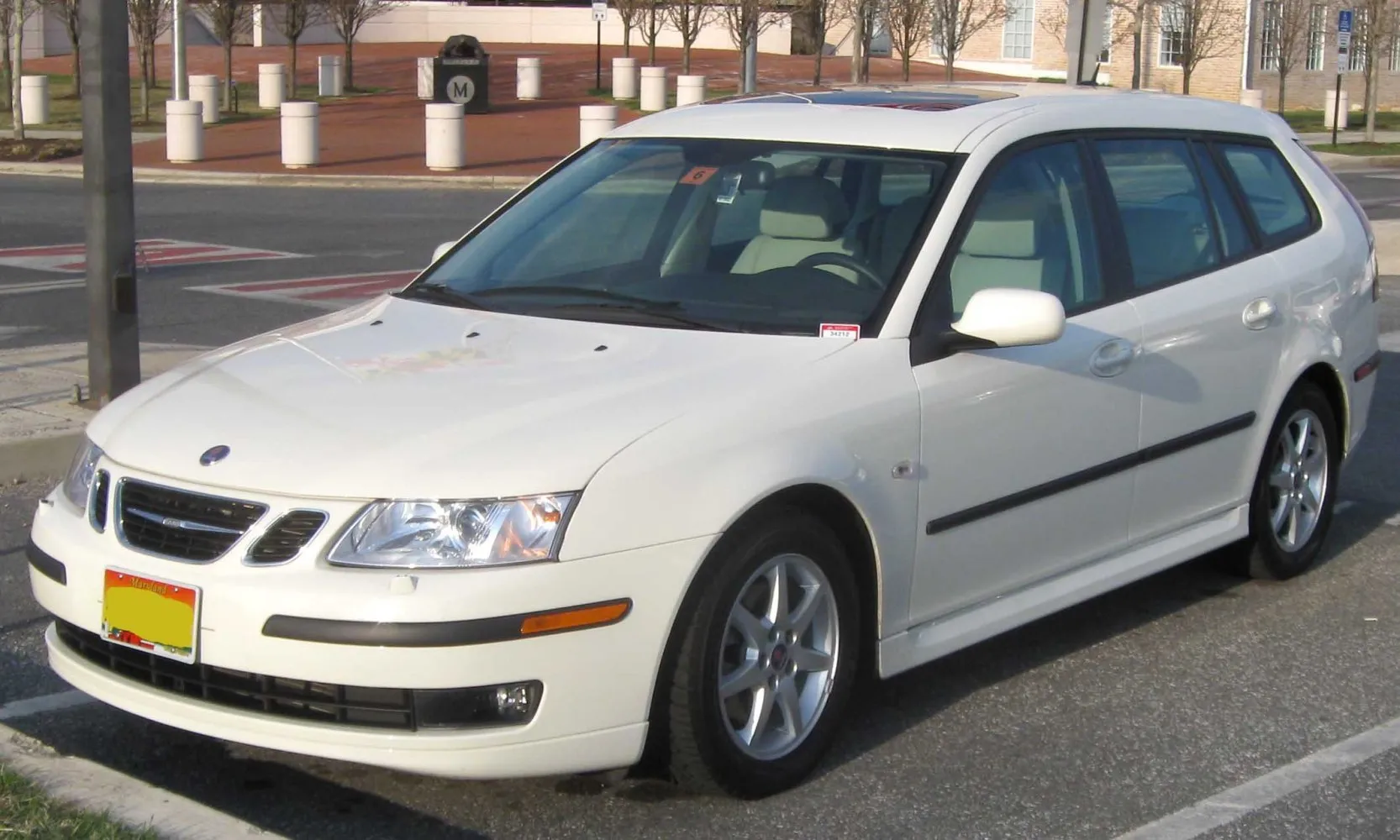
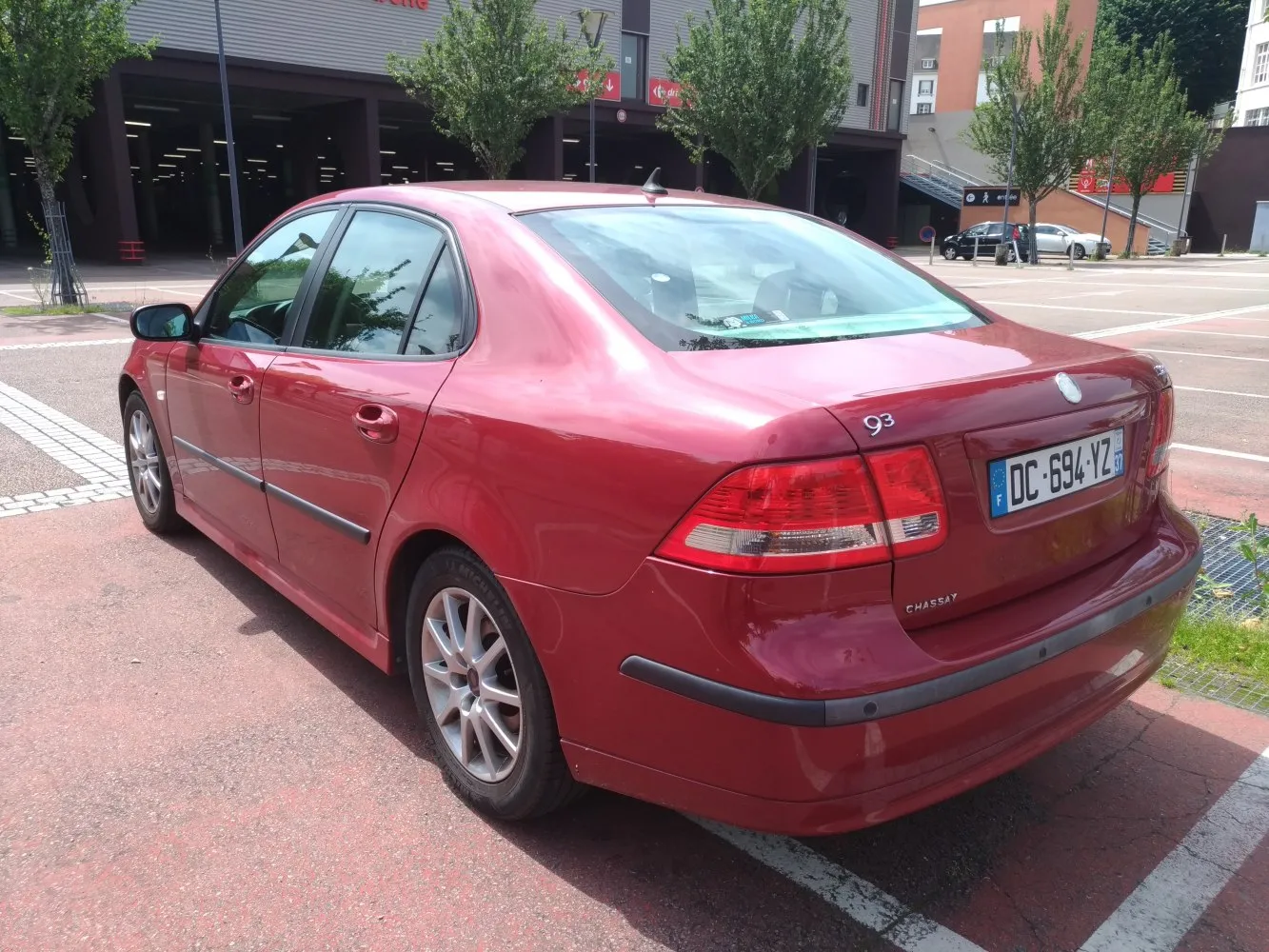
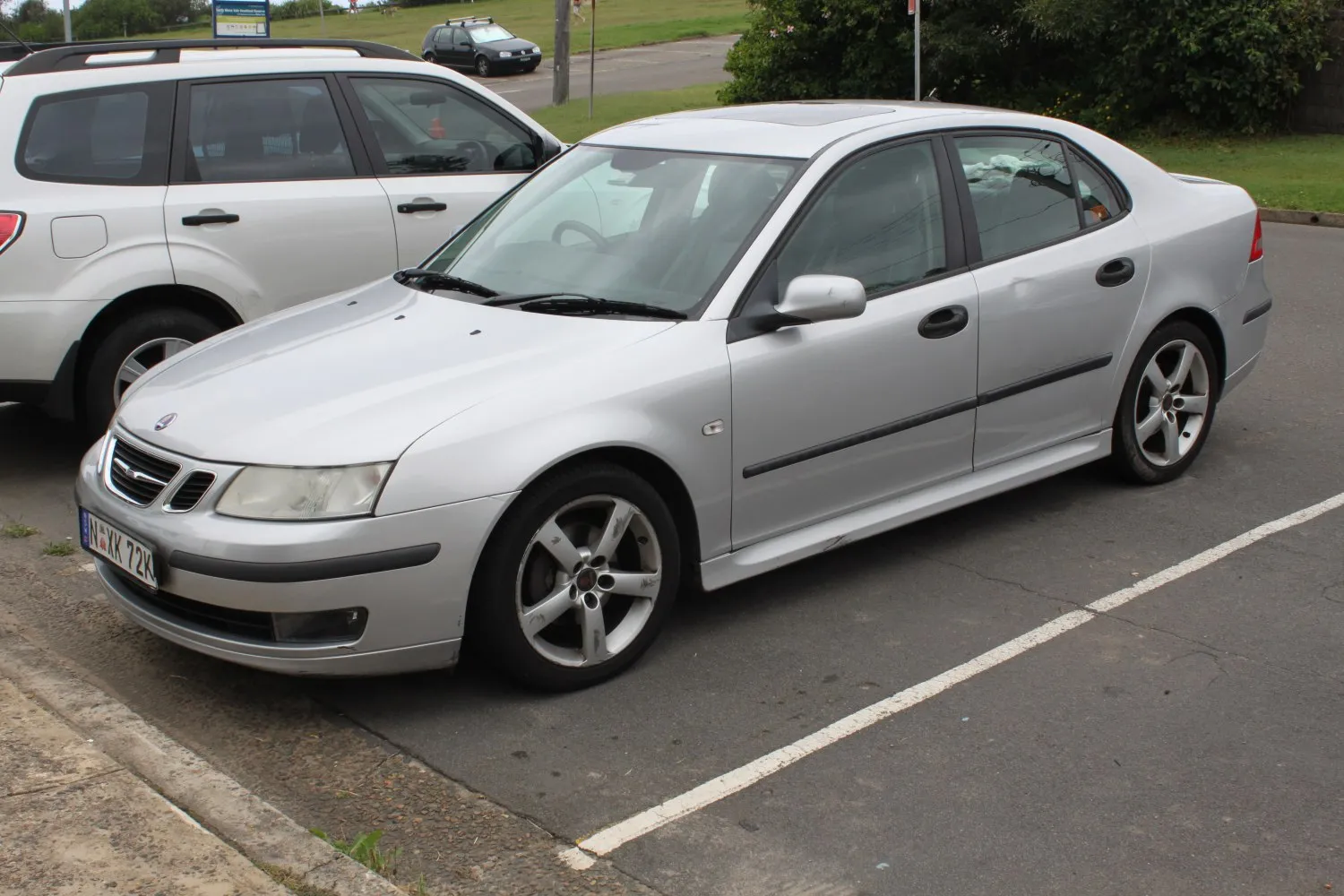
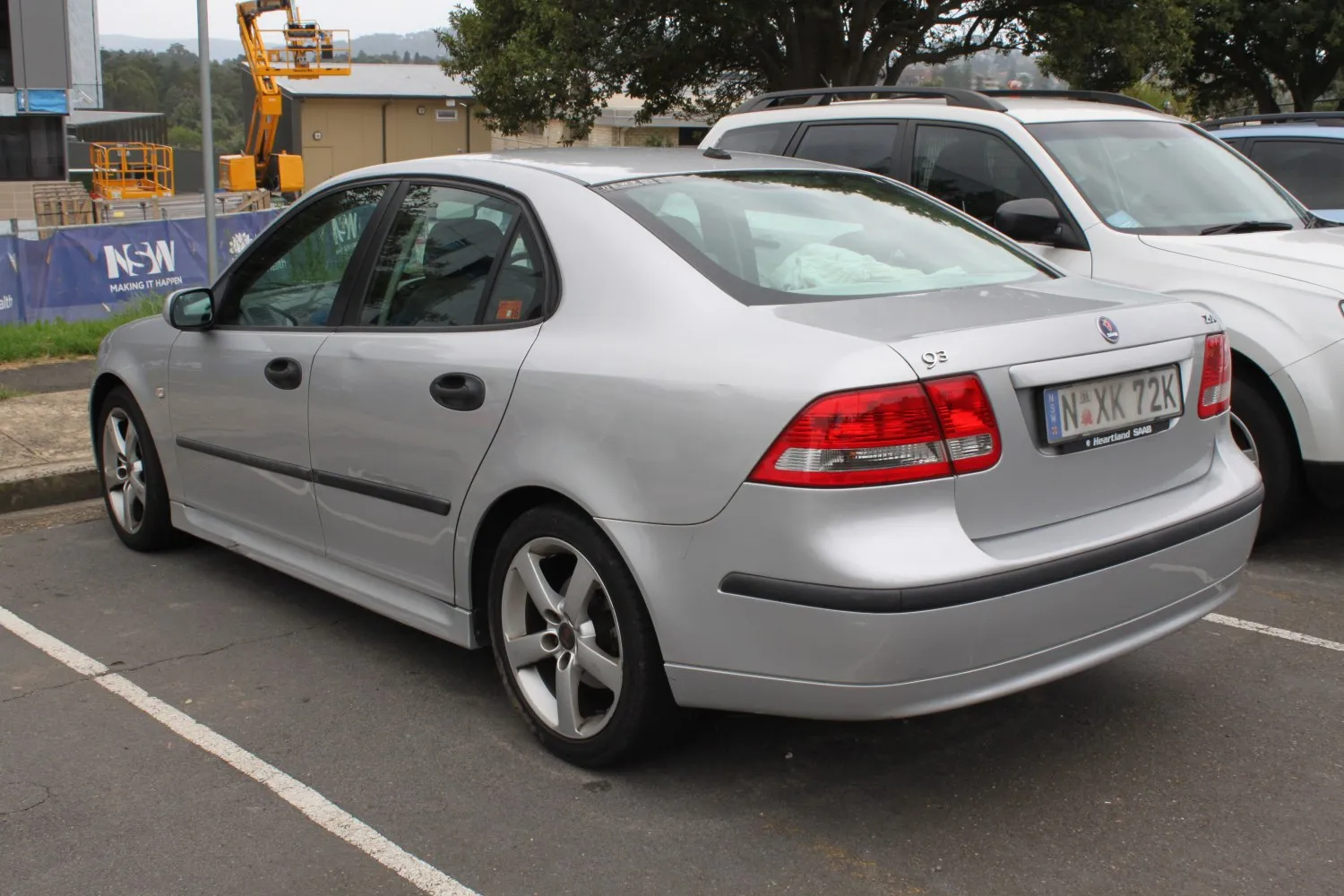
Saab 9-3 Sedan II 2.0 t (150 Hp) Automatic
Overall Rating
Saab 9-3:
The Saab 9-3 is a compact executive car initially developed and manufactured by the Swedish automaker Saab.
The first generation 9-3 is based on the GM2900 platform, changing to the GM Epsilon platform with the introduction of the second-generation car. Other vehicles using this platform include the Opel Vectra, Chevrolet Malibu, and Cadillac BLS.
National Electric Vehicle Sweden , Saab's then parent company briefly assembled a few 9-3 sedans during 2013 and 2014....(Read more on Wikipedia)
Sedan II Overview:
Saab 9-3 (Sedan II). With 240 Nm of torque, it offers ample pulling power. It has moderate fuel consumption (~11.8 l/100km). With a weight of 1440 kg, it falls in the mid‑range. Front‑wheel drive delivers efficiency and easy handling. Acceleration is relatively slow (0–100 km/h in 10.7 s). The top speed reaches 205 km/h. A four-door car with a separate trunk, ideal for families and daily commuting. Seating for 5 makes it ideal for daily use.
2.0 t (150 Hp) Automatic Verdict:

Performance Verdict
This automatic version provides relaxed driving with a 10.7-second 0-100 km/h time, suitable for urban and relaxed highway cruising.
Fuel Economy
Fuel consumption of 8.2 l/100 km is reasonable for an automatic petrol, offering a balance between convenience and running costs.
Pros and Cons:
Pros:
- • Distinctive and timeless Scandinavian design
- • Excellent safety record with a 5-star Euro NCAP rating
- • Comfortable and supportive seats, ideal for long journeys
- • Strong and engaging turbocharged engine options, especially the V6
- • Good value on the used car market for a premium executive sedan
Cons:
- • Interior quality, while good, doesn't always match German rivals
- • Some powerful front-wheel-drive models can exhibit torque steer
- • Saab's post-GM era can lead to concerns about parts availability and specialist servicing
- • Automatic transmissions can dull performance and increase fuel consumption
- • Rear legroom is adequate but not class-leading
Specifications:
Specifications are compared to those of the previous generation(I: 2001 - 2002).
| General: | |
|---|---|
| Brand: | Saab |
| Model: | 9-3 |
| Generation: | Sedan II |
| Modification (Engine): | 2.0 t (150 Hp) Automatic |
| Start of production: | 2002 |
| End of production: | 2007 |
| Powertrain Architecture: | Internal Combustion engine |
| Body type: | Sedan |
| Seats: | 5 |
| Doors: | 4 |
| Engine: | |
|---|---|
| Power: | 150 Hp @ 5500 rpm. Same horsepower |
| Power per litre: | 75.1 Hp/l [6mm more] |
| Torque: | 240 Nm @ 2500 rpm. |
| Engine Model/Code: | B207E More details about the engine B207E |
| Engine displacement: | 1998 |
| Number of cylinders: | 4 |
| Engine configuration: | Inline |
| Number of valves per cylinder: | 4 |
| Fuel injection system: | Multi-port manifold injection |
| Engine aspiration: | Turbocharger, Intercooler |
| Valvetrain: | DOHC |
| Engine oil capacity: | 6 l |
| Coolant: | 7.5 l |
| Engine layout: | Front, Transverse |
| Cylinder Bore: | 86 mm mm |
| Piston Stroke: | 86 mm mm |
| Compression ratio: | 9.5:1 |
| Performance: | |
|---|---|
| Fuel Type: | Petrol (Gasoline) |
| Fuel consumption (economy) - urban: | 11.8 l/100 km |
| Fuel consumption (economy) - extra urban: | 6.2 l/100 km |
| Fuel consumption (economy) - combined: | 8.2 l/100 km |
| Emission standard: | Euro 4 |
| Acceleration 0 - 100 km/h: | 10.7 sec |
| Acceleration 0 - 62 mph: | 10.7 sec |
| Maximum speed: | 205 km/h |
| Weight-to-power ratio: | 9.6 kg/Hp, 104.2 Hp/tonne |
| Weight-to-torque ratio: | 6 kg/Nm, 166.7 Nm/tonne |
| Acceleration 0 - 60 mph: | 10.2 sec |
| Space: | |
|---|---|
| Kerb Weight: | 1440 |
| Max. weight: | 1970 |
| Max load: | 530 |
| Trunk (boot) space - minimum: | 425 l |
| Fuel tank capacity: | 62 l |
| Size: | |
|---|---|
| Length: | 4635 mm mm [6mm more] |
| Width: | 1762 mm mm [51mm more] |
| Height: | 1466 mm mm [38mm more] |
| Wheelbase: | 2675 mm mm [70mm more] |
| Front track: | 1524 mm |
| Rear (Back) track: | 1506 mm |
| Powertrain: | |
|---|---|
| Drivetrain Architecture | The Internal combustion engine (ICE) drives the front wheels of the vehicle. |
| Drive wheel | Front wheel drive |
| Number of gears | 5 |
| Transmission type | Automatic |
| Front brakes | Ventilated discs [Best for performance and cooling.] |
| Rear brakes | Disc |
| Assisting systems | ABS (Anti-lock braking system) |
| Steering type | Steering rack and pinion |
| Power steering | Hydraulic Steering |
| Tires size | 215/60 R15 |
| Wheel rims size | 15 |
| Front suspension | Spring Strut |
| Rear suspension | Coil spring |






Fuel, speed, and comfort: How does the Saab 9-3 rank in your book?