Click on image to view the full photo gallery
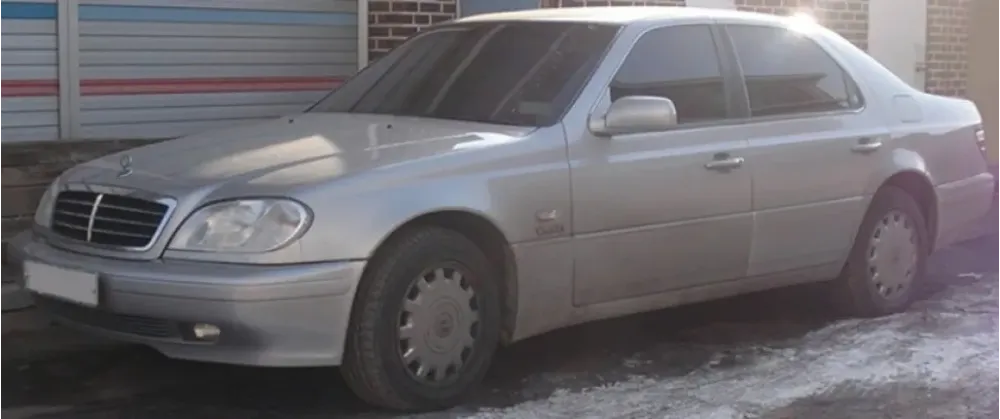
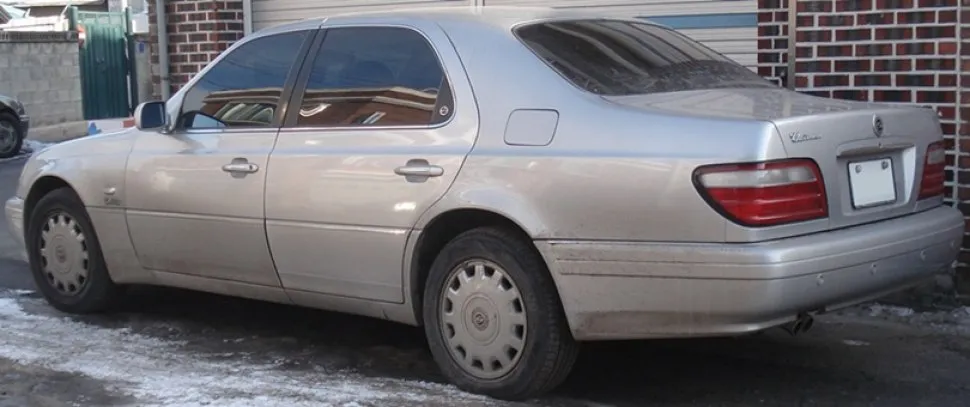
SsangYong Chairman H CM400 2.3 i 16V (150 Hp)
Overall Rating
SsangYong Chairman:
The SsangYong Chairman is a full-size luxury car that was manufactured by South Korean automaker SsangYong from 1997 to 2017. The original model was renamed Chairman H in 2008, with a new model introduced in the same year and designated Chairman W.
On release to the South Korean market in 1997, the chairman was a high-end executive sedan. Its manufacturer, SsangYong, was best known for SUVs and RVs, and the chairman has been its only sedan. The first generation chairman was built on the Mercedes-Benz E-Class platform, but styled more like a modernized W140 S-Class. Coincidentally, the design also foretold that of the upcoming W220 S-Class, which led to some consternation at the German company. Mercedes-Benz requested that Ssangyong redesign the car to make it look less like a Mercedes-Benz and to refrain from selling it in developed export markets such as Europe and the United States....(Read more on Wikipedia)
H Overview:
SsangYong Chairman (H). With 220 Nm of torque, it offers ample pulling power. With a weight of 1700 kg, it falls in the mid‑range. Rear‑wheel drive offers dynamic handling and sporty feedback. Acceleration is relatively slow (0–100 km/h in 11.6 s). The top speed reaches 197 km/h. A four-door car with a separate trunk, ideal for families and daily commuting. Seating for 5 makes it ideal for daily use.
The SsangYong Chairman H was not officially tested by Euro NCAP. Its safety performance is largely based on its Mercedes-Benz W124 platform origins, which offered decent passive safety for its era, but lacks modern active safety features.
CM400 2.3 i 16V (150 Hp) Verdict:

Performance Verdict
Offers adequate performance for daily commuting, but feels somewhat underpowered for a luxury sedan of its size, especially at higher speeds or with a full load.
Fuel Economy
Fuel economy is moderate for a naturally aspirated 2.3L engine in a heavy car, with urban consumption being notably high at 15.3 l/100 km.
Pros and Cons:
Pros:
- • Spacious and comfortable interior, especially in LWB versions.
- • Reliable Mercedes-Benz derived engines and platform.
- • Smooth ride quality suitable for long journeys.
- • Relatively affordable luxury car experience, especially on the used market.
- • Distinctive, if somewhat conservative, styling.
Cons:
- • Outdated interior design and technology compared to contemporary rivals.
- • Limited brand prestige outside of Korea.
- • Parts availability can be challenging in some regions.
- • Fuel economy is not a strong point, especially for larger engines.
- • Handling is geared towards comfort, not sportiness or agility.
Specifications:
| General: | |
|---|---|
| Brand: | SsangYong |
| Model: | Chairman |
| Generation: | H |
| Modification (Engine): | CM400 2.3 i 16V (150 Hp) |
| Start of production: | 1997 |
| End of production: | 2014 |
| Powertrain Architecture: | Internal Combustion engine |
| Body type: | Sedan |
| Seats: | 5 |
| Doors: | 4 |
| Engine: | |
|---|---|
| Power: | 150 Hp @ 5500 rpm. |
| Power per litre: | 65.4 Hp/l |
| Torque: | 220 Nm @ 4000 rpm. |
| Engine displacement: | 2295 |
| Number of cylinders: | 4 |
| Engine configuration: | Inline |
| Number of valves per cylinder: | 4 |
| Fuel injection system: | Multi-port manifold injection |
| Engine aspiration: | Naturally aspirated engine |
| Valvetrain: | DOHC |
| Engine oil capacity: | 5.8 l |
| Coolant: | 9.8 l |
| Engine layout: | Front, Longitudinal |
| Cylinder Bore: | 90.9 mm mm |
| Piston Stroke: | 88.4 mm mm |
| Compression ratio: | 9.6:1 |
| Performance: | |
|---|---|
| Fuel Type: | Petrol (Gasoline) |
| Fuel consumption (economy) - urban: | 15.3 l/100 km |
| Fuel consumption (economy) - extra urban: | 9.1 l/100 km |
| Acceleration 0 - 100 km/h: | 11.6 sec |
| Acceleration 0 - 62 mph: | 11.6 sec |
| Maximum speed: | 197 km/h |
| Weight-to-power ratio: | 11.3 kg/Hp, 88.2 Hp/tonne |
| Weight-to-torque ratio: | 7.7 kg/Nm, 129.4 Nm/tonne |
| Acceleration 0 - 60 mph: | 11 sec |
| Space: | |
|---|---|
| Kerb Weight: | 1700 |
| Max. weight: | 2160 |
| Max load: | 460 |
| Trunk (boot) space - minimum: | 470 l |
| Fuel tank capacity: | 80 l |
| Size: | |
|---|---|
| Length: | 5055 mm mm |
| Width: | 1825 mm mm |
| Height: | 1465 mm mm |
| Wheelbase: | 2900 mm mm |
| Front track: | 1550 mm |
| Rear (Back) track: | 1540 mm |
| Powertrain: | |
|---|---|
| Drivetrain Architecture | The Internal combustion engine (ICE) drives the rear wheels of the vehicle. |
| Drive wheel | Rear wheel drive |
| Number of gears | 5 |
| Transmission type | Automatic |
| Front brakes | Ventilated discs |
| Rear brakes | Disc |
| Assisting systems | ABS (Anti-lock braking system) |
| Power steering | Hydraulic Steering |
| Tires size | 215/60 R16 |
| Front suspension | Wishbone |
| Rear suspension | Coil spring |





Driven it? Loved it? Hated it? Share your honest review!