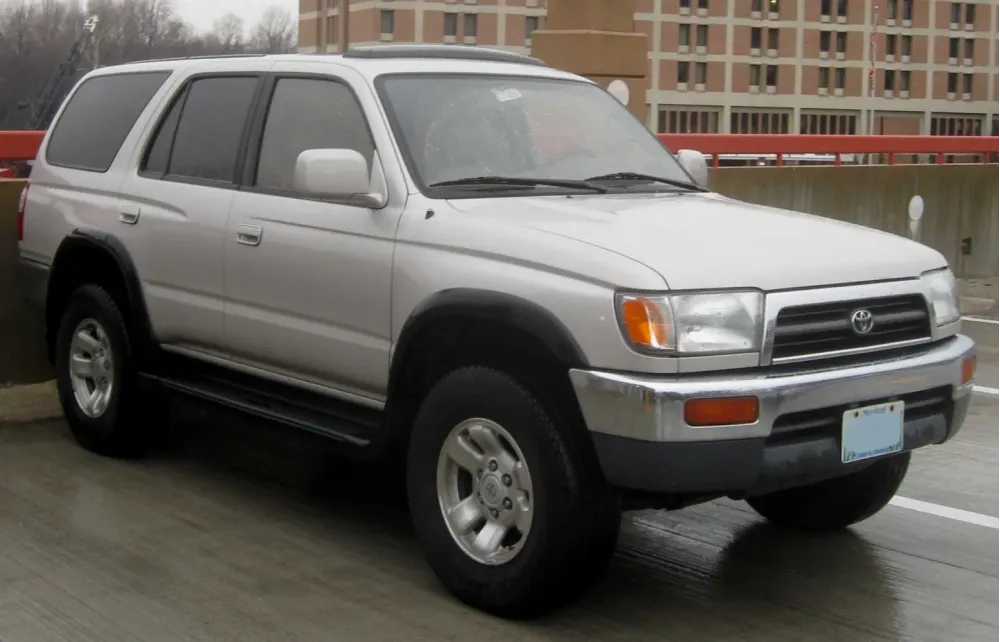
Click on image to view the full photo gallery
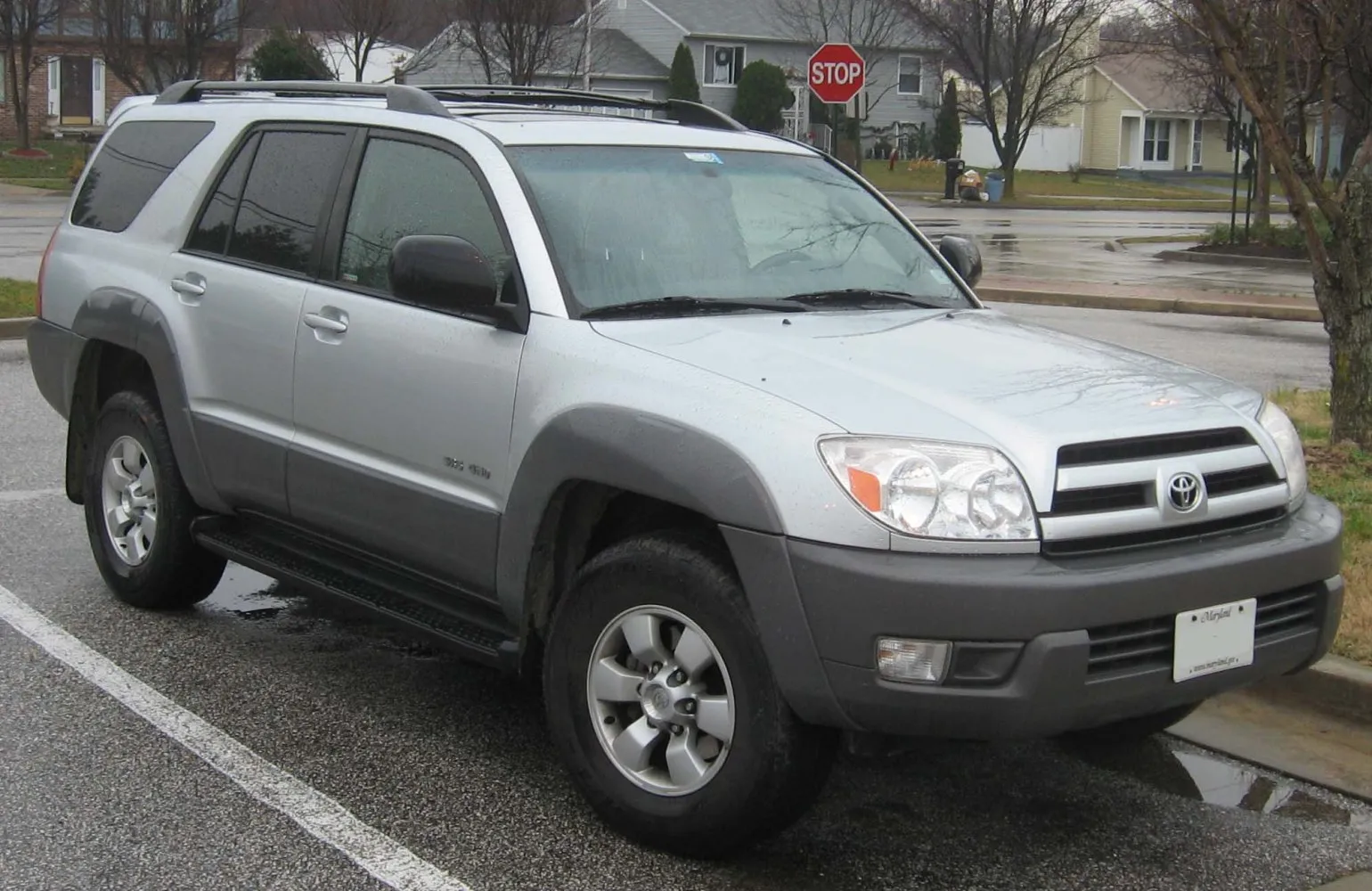
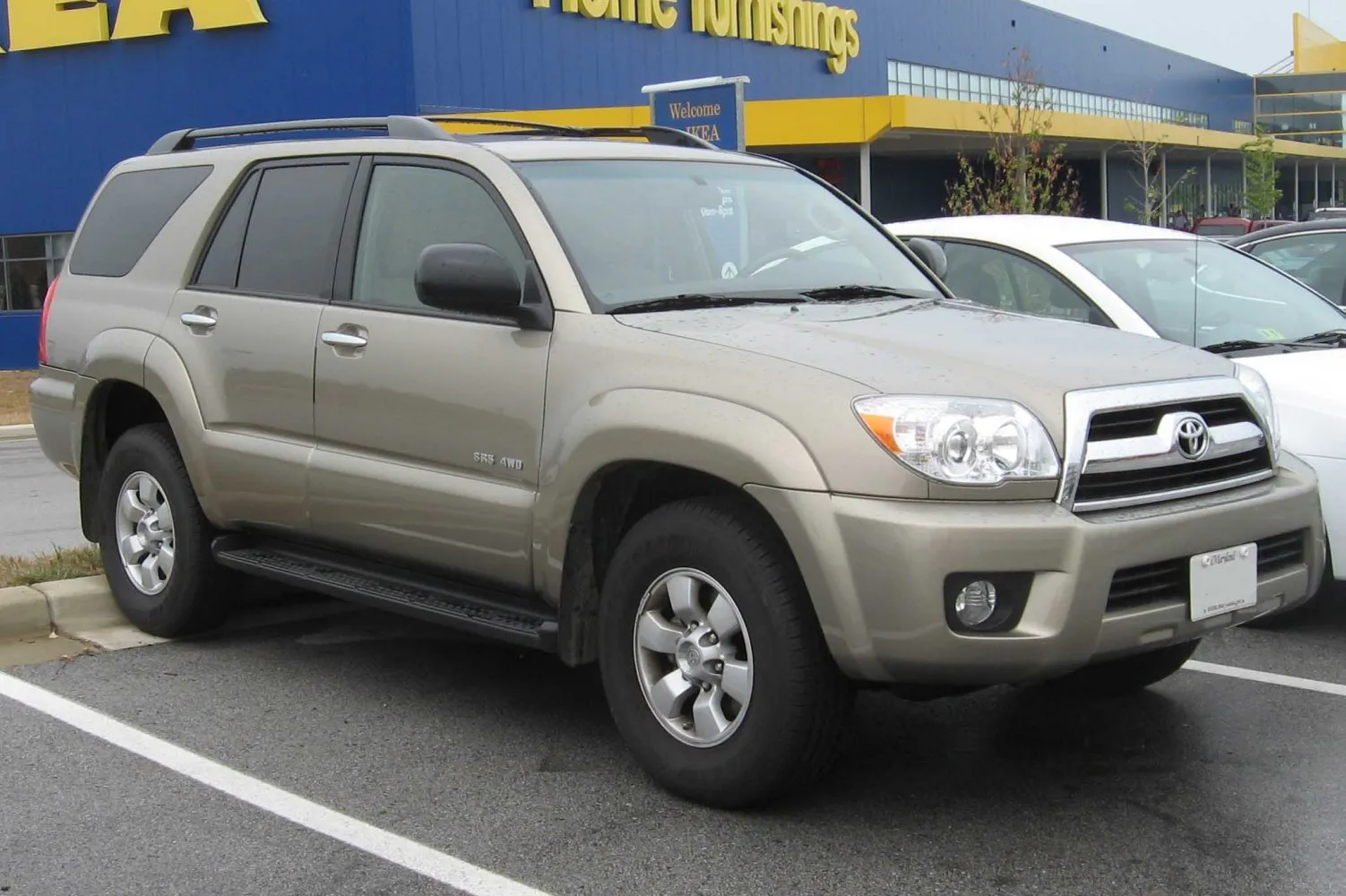
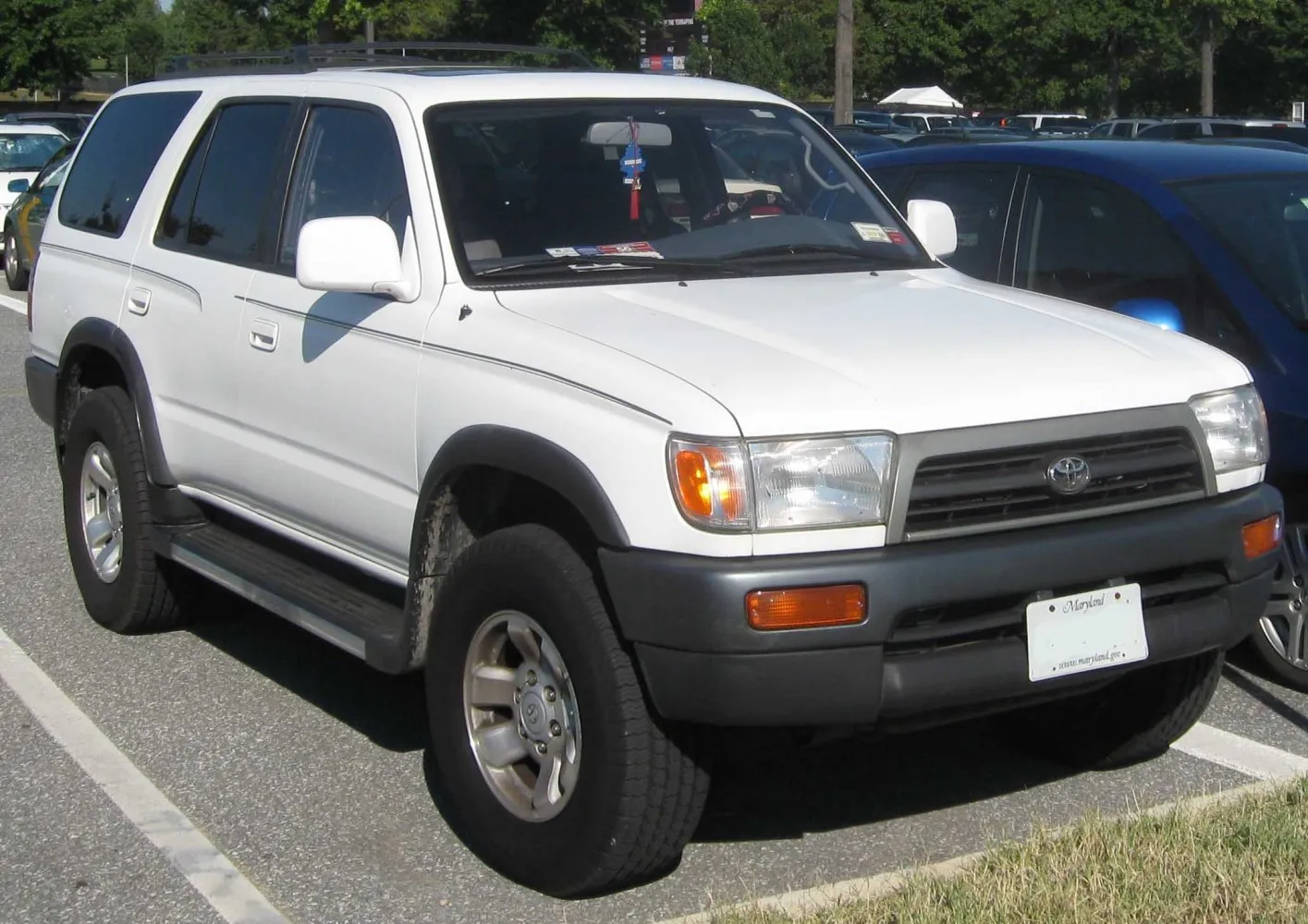
Toyota 4Runner III 3.4 V6 24V (183 Hp) Automatic
Overall Rating
Toyota 4Runner:
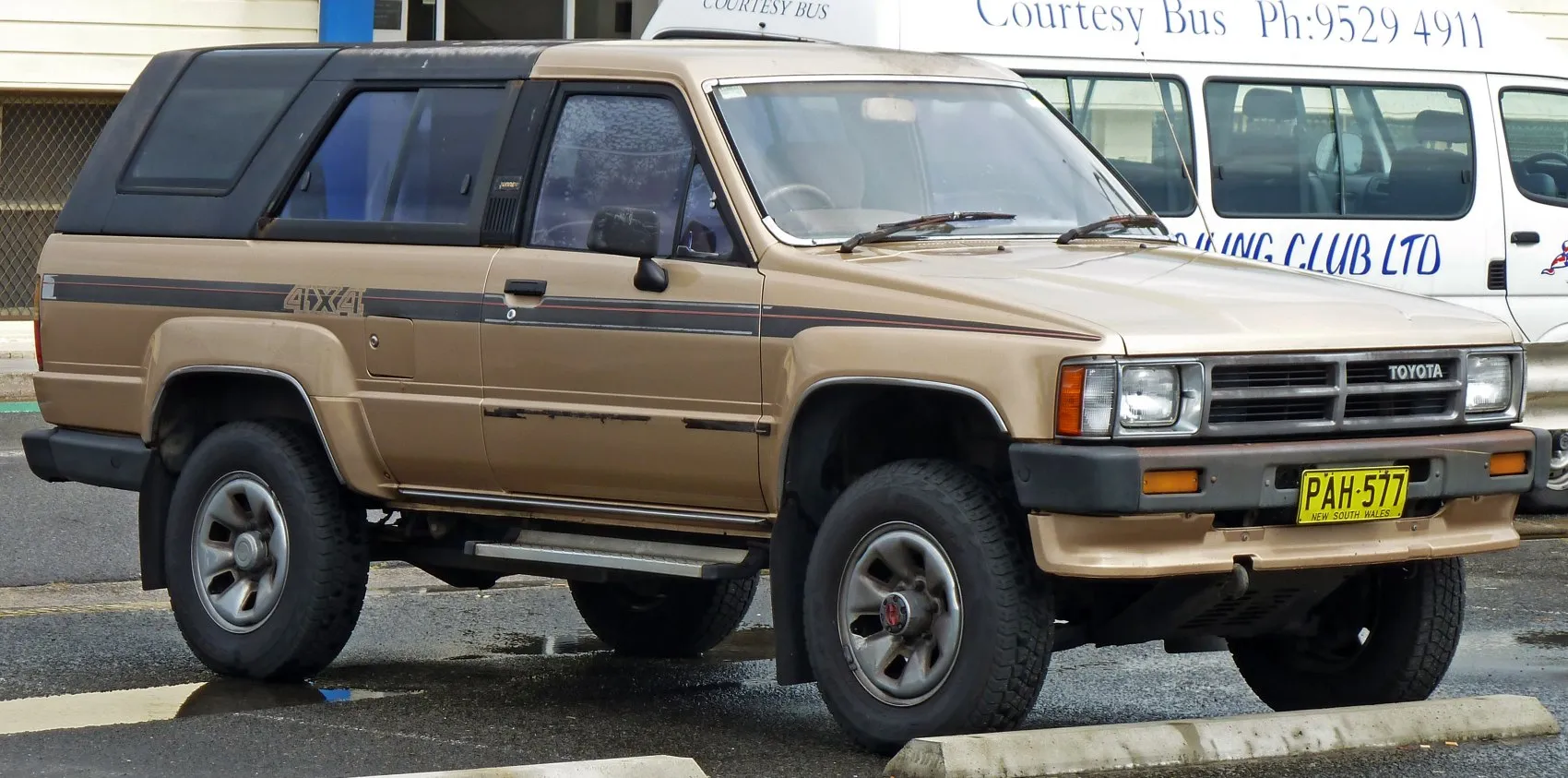
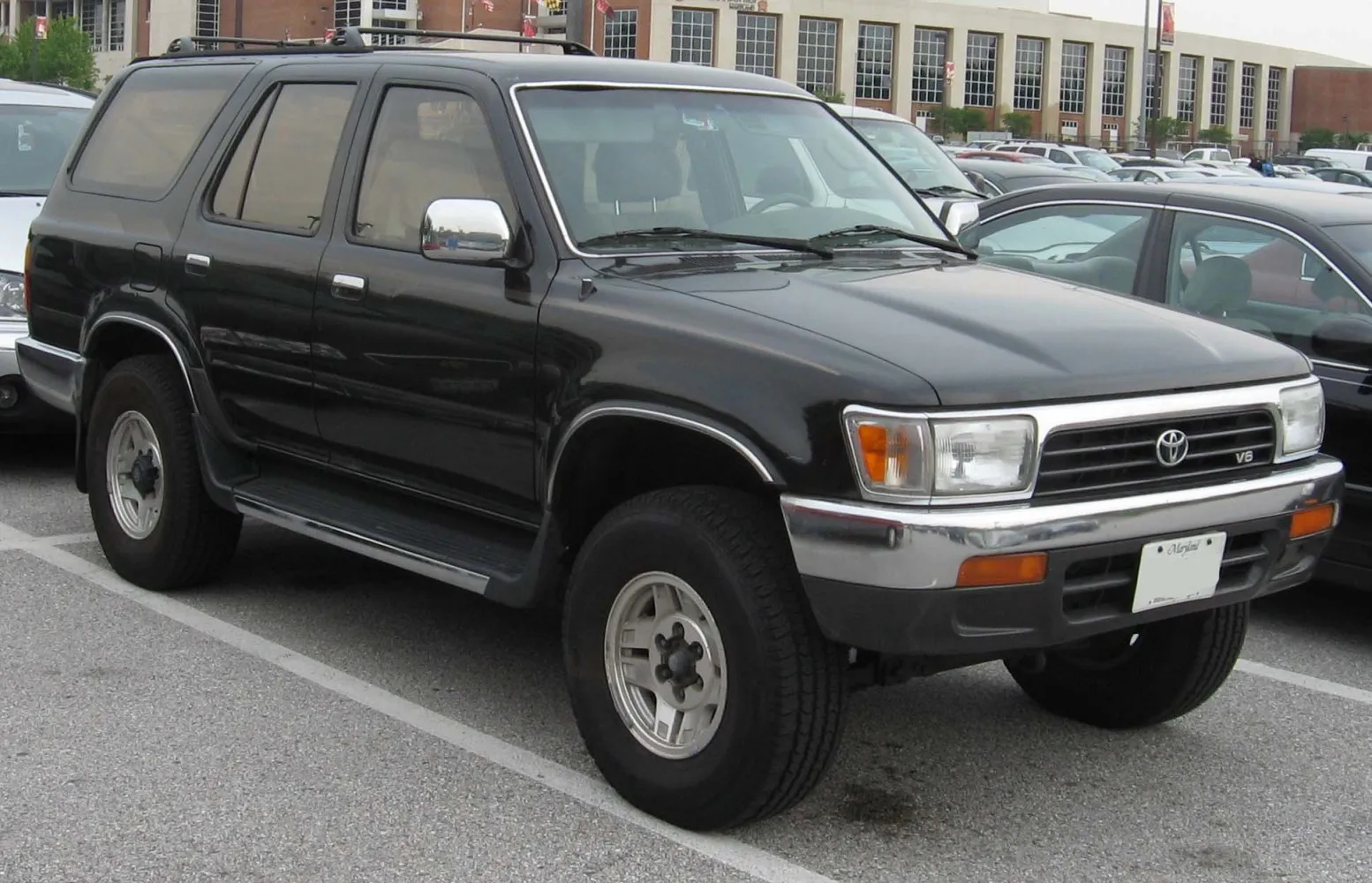
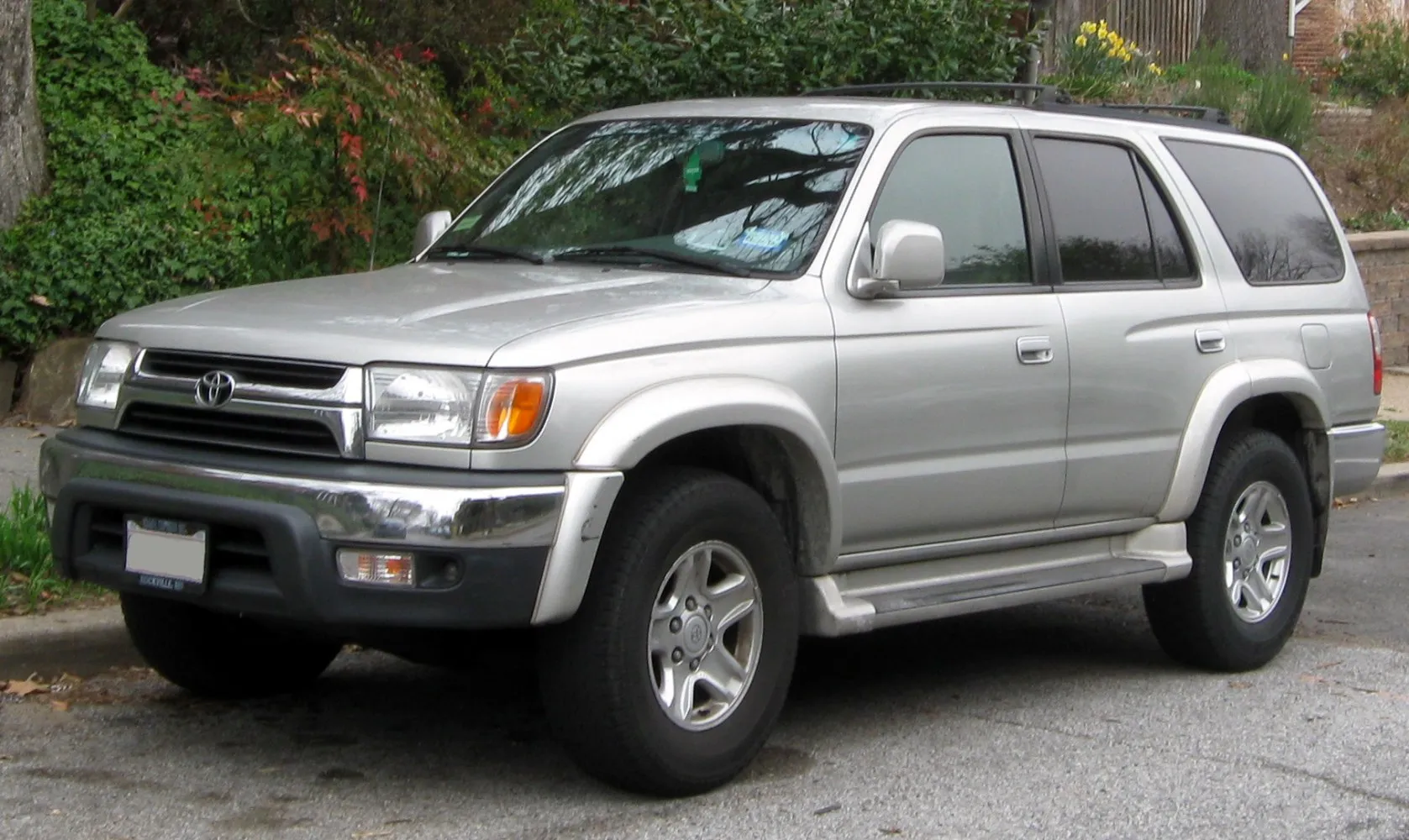
The Toyota 4Runner is an SUV manufactured by the Japanese automaker Toyota and marketed globally since 1984, across six generations. In Japan, it was marketed as the Toyota Hilux Surf and was withdrawn from the market in 2009. The original 4Runner was a compact SUV and little more than a Toyota Hilux pickup truck with a fiberglass shell over the bed, but the model has since undergone significant independent development into a cross between a compact and a mid-size SUV. All 4Runners have been built in Japan at Toyota's plant in Tahara, Aichi, or at the Hino Motors plant in Hamura....(Read more on Wikipedia)
III Overview:
Toyota 4Runner (III). With 294 Nm of torque, it offers ample pulling power. With a weight of 1597 kg, it falls in the mid‑range. Rear‑wheel drive offers dynamic handling and sporty feedback. Acceleration is relatively slow (0–100 km/h in 10.1 s). The top speed reaches 170 km/h. A sport utility vehicle offering higher ground clearance and versatile cargo space. Seating for 5 makes it ideal for daily use.
The Toyota 4Runner III was not tested by Euro NCAP. As a vehicle from the late 1990s, it lacks many modern safety features, but its robust construction offers a degree of passive safety for its era.
3.4 V6 24V (183 Hp) Automatic Verdict:

Performance Verdict
Offers excellent performance for daily driving and highway cruising, with smooth power delivery from the V6 and automatic transmission. The 10.1 sec acceleration is very competitive.
Fuel Economy
While powerful, this engine and transmission combination will be thirsty. Fuel economy is a trade-off for the increased performance and refinement.
Pros and Cons:
Pros:
- • Legendary Toyota reliability and durability
- • Exceptional off-road capability, especially with 4x4 trims
- • Spacious interior and generous cargo capacity (1263-2257 liters)
- • Strong resale value due to reputation
- • Robust body-on-frame construction
Cons:
- • Fuel economy is generally poor across the petrol lineup
- • Ride quality can be firm and truck-like, especially on rough roads
- • Interior design and features are dated by modern standards
- • Lack of modern safety features (e.g., side airbags, stability control)
- • Some engines can feel underpowered for highway passing (2.7L and 3.0 TD)
Specifications:
Specifications are compared to those of the previous generation(II: 1992 - 1995).
| General: | |
|---|---|
| Brand: | Toyota |
| Model: | 4Runner |
| Generation: | III |
| Modification (Engine): | 3.4 V6 24V (183 Hp) Automatic |
| Start of production: | 1995 |
| End of production: | 1999 |
| Powertrain Architecture: | Internal Combustion engine |
| Body type: | SUV |
| Seats: | 5 |
| Doors: | 5 |
| Engine: | |
|---|---|
| Power: | 183 Hp @ 4800 rpm. Same horsepower |
| Power per litre: | 54.2 Hp/l [49mm more] |
| Torque: | 294 Nm @ 3600 rpm. |
| Engine Model/Code: | 5VZ-FE More details about the engine 5VZ-FE |
| Engine displacement: | 3378 |
| Number of cylinders: | 6 |
| Engine configuration: | V-engine |
| Number of valves per cylinder: | 4 |
| Fuel injection system: | Multi-port manifold injection |
| Engine aspiration: | Naturally aspirated engine |
| Valvetrain: | DOHC |
| Engine oil capacity: | 5.2 l |
| Coolant: | 8 l |
| Engine layout: | Front, Longitudinal |
| Cylinder Bore: | 93.5 mm mm |
| Piston Stroke: | 82 mm mm |
| Compression ratio: | 9.6:1 |
| Performance: | |
|---|---|
| Fuel Type: | Petrol (Gasoline) |
| Fuel consumption (economy) - urban: | 13 l/100 km |
| Fuel consumption (economy) - extra urban: | 11.2 l/100 km |
| Acceleration 0 - 100 km/h: | 10.1 sec |
| Acceleration 0 - 62 mph: | 10.1 sec |
| Maximum speed: | 170 km/h |
| Weight-to-power ratio: | 8.7 kg/Hp, 114.6 Hp/tonne |
| Weight-to-torque ratio: | 5.4 kg/Nm, 184.1 Nm/tonne |
| Acceleration 0 - 60 mph: | 9.6 sec |
| Space: | |
|---|---|
| Kerb Weight: | 1597 |
| Max. weight: | 2381 |
| Max load: | 784 |
| Trunk (boot) space - maximum: | 2257 l |
| Trunk (boot) space - minimum: | 1263 l |
| Permitted trailer load with brakes (12%): | 2268 kg |
| Fuel tank capacity: | 70 l |
| Size: | |
|---|---|
| Length: | 4539 mm mm [49mm more] |
| Width: | 1689 mm mm [1mm less] |
| Height: | 1689-1745 mm mm [56mm less] |
| Wheelbase: | 2675 mm mm [50mm more] |
| Front track: | 1506 mm |
| Rear (Back) track: | 1496-1509 mm |
| Ride height (ground clearance): | 216-241 mm |
| Minimum turning circle (turning diameter): | 11.4 m [above average] |
| Approach angle: | 32-36° |
| Departure angle: | 26-29° |
| Powertrain: | |
|---|---|
| Drivetrain Architecture | The Internal combustion engine (ICE) drives the rear wheels of the vehicle. |
| Drive wheel | Rear wheel drive |
| Number of gears | 4 |
| Transmission type | Automatic |
| Front brakes | Ventilated discs [Best for performance and cooling.] |
| Rear brakes | Drum [bad for performance and cooling.] |
| Assisting systems | ABS (Anti-lock braking system) |
| Steering type | Steering rack and pinion |
| Power steering | Hydraulic Steering |
| Tires size | 225/75 R15; 265/70 R16 |
| Wheel rims size | 7J x 15; 7J x 16 |
| Front suspension | Double wishbone |
| Rear suspension | Independent multi-link suspension |








How many miles have you covered in your Toyota 4Runner? Share your journey!