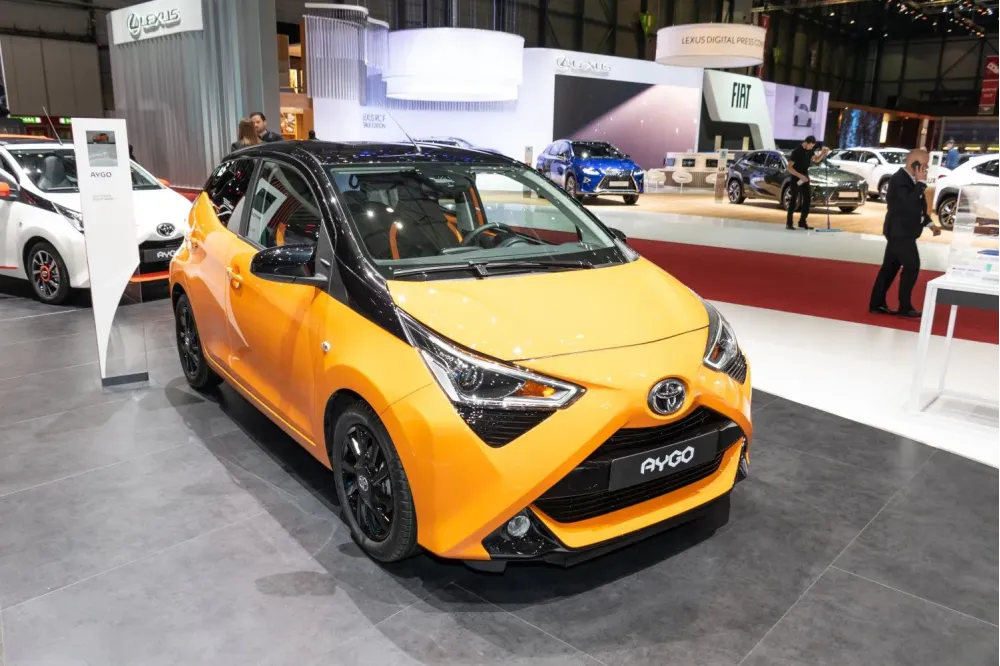
Click on image to view the full photo gallery
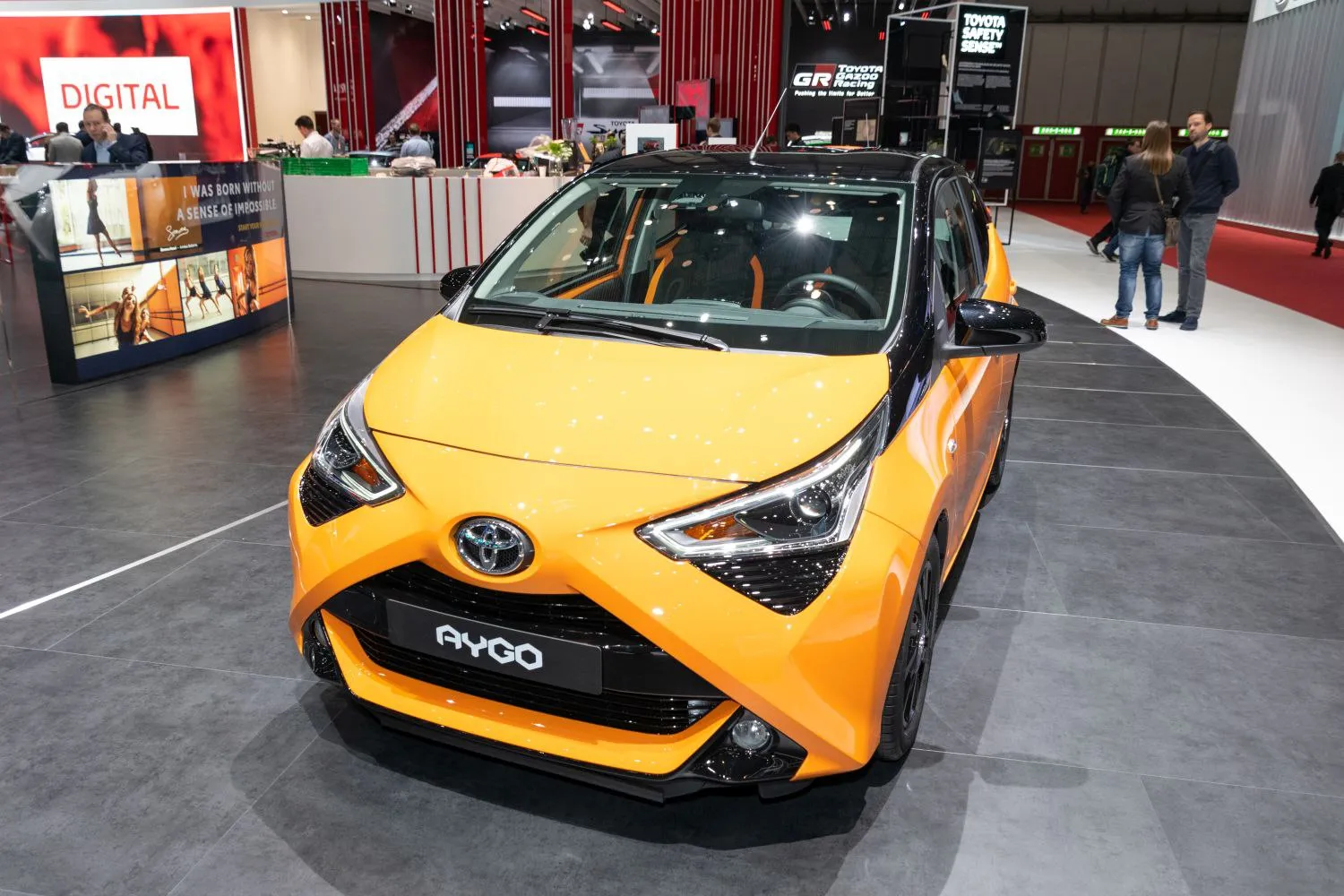
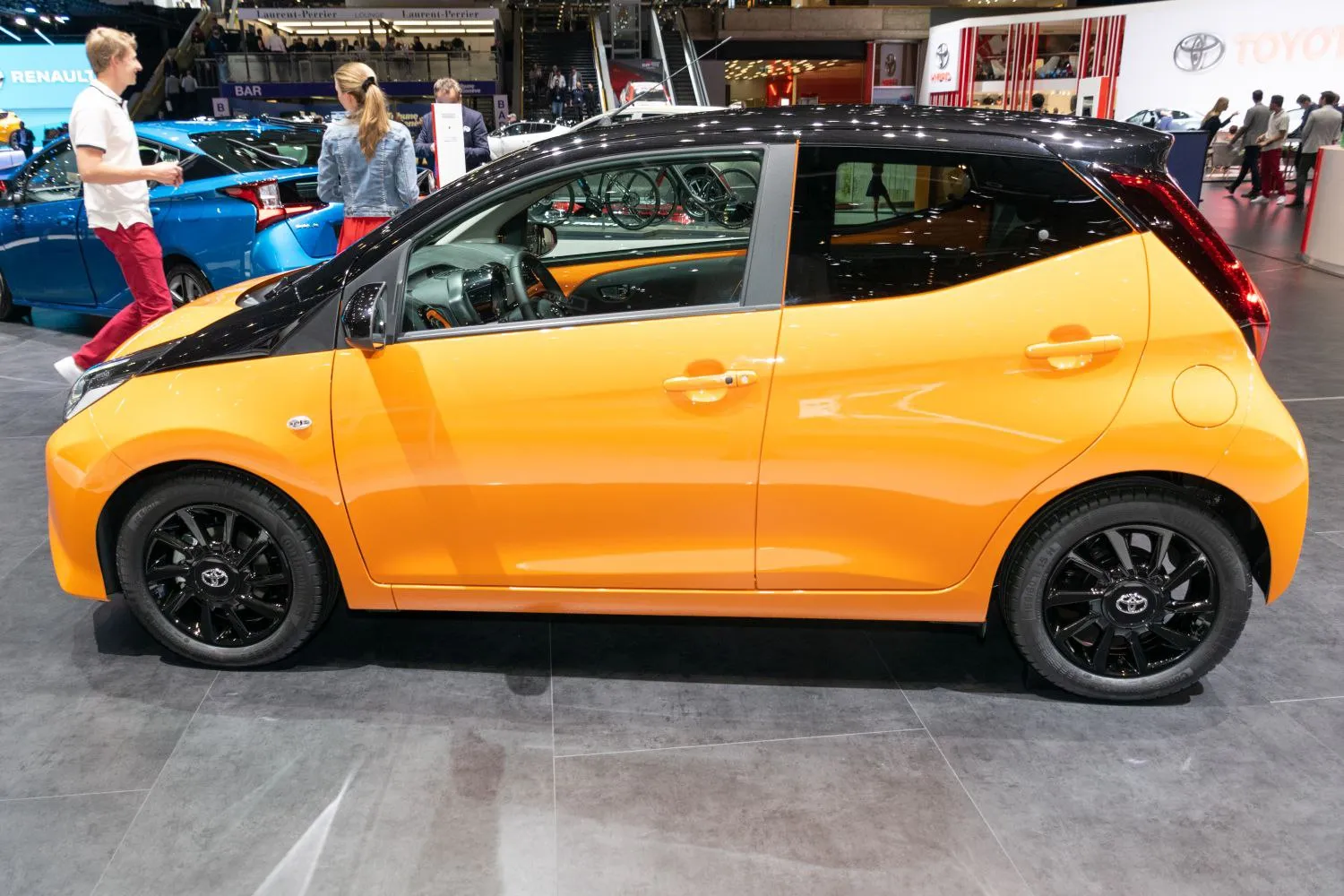
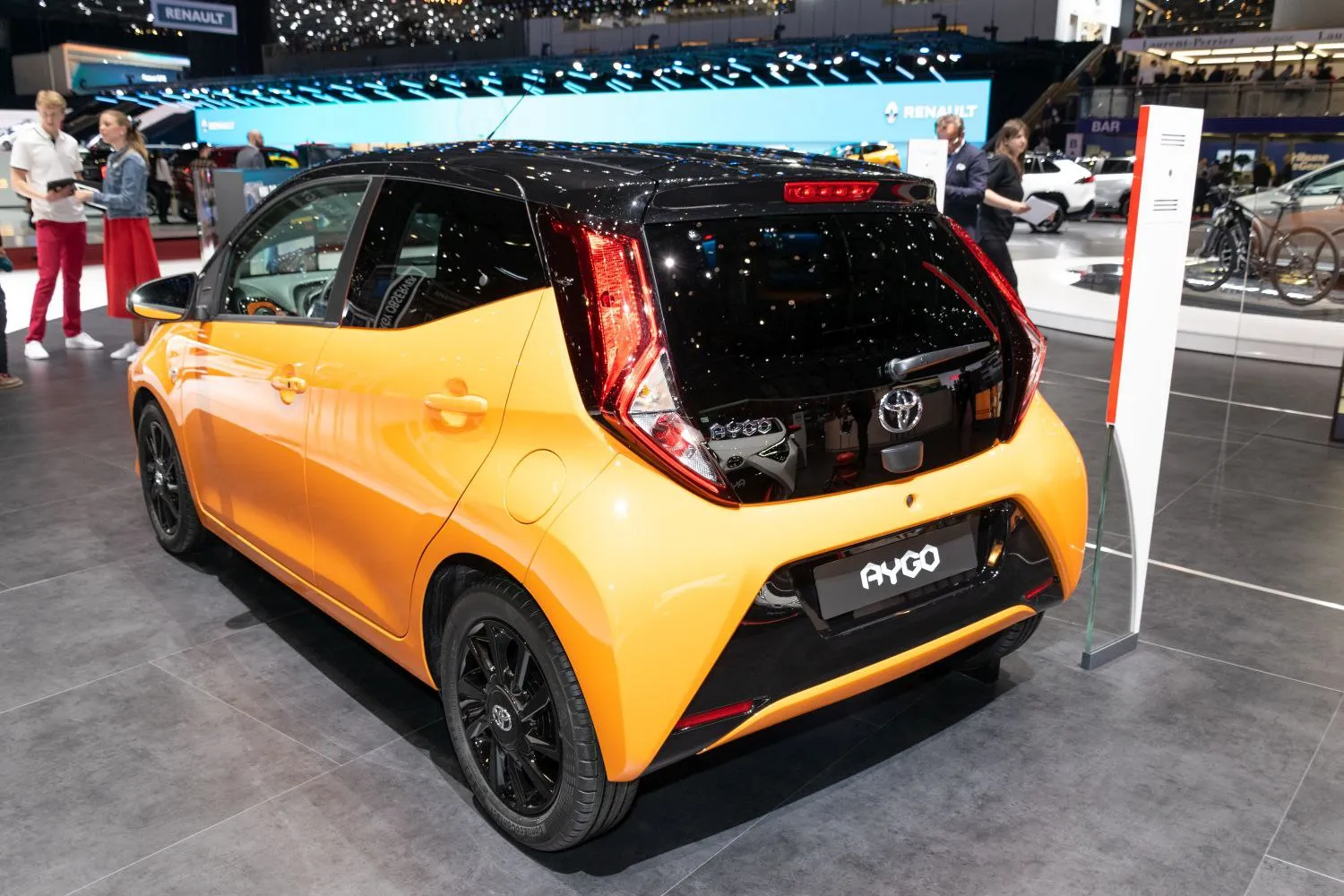
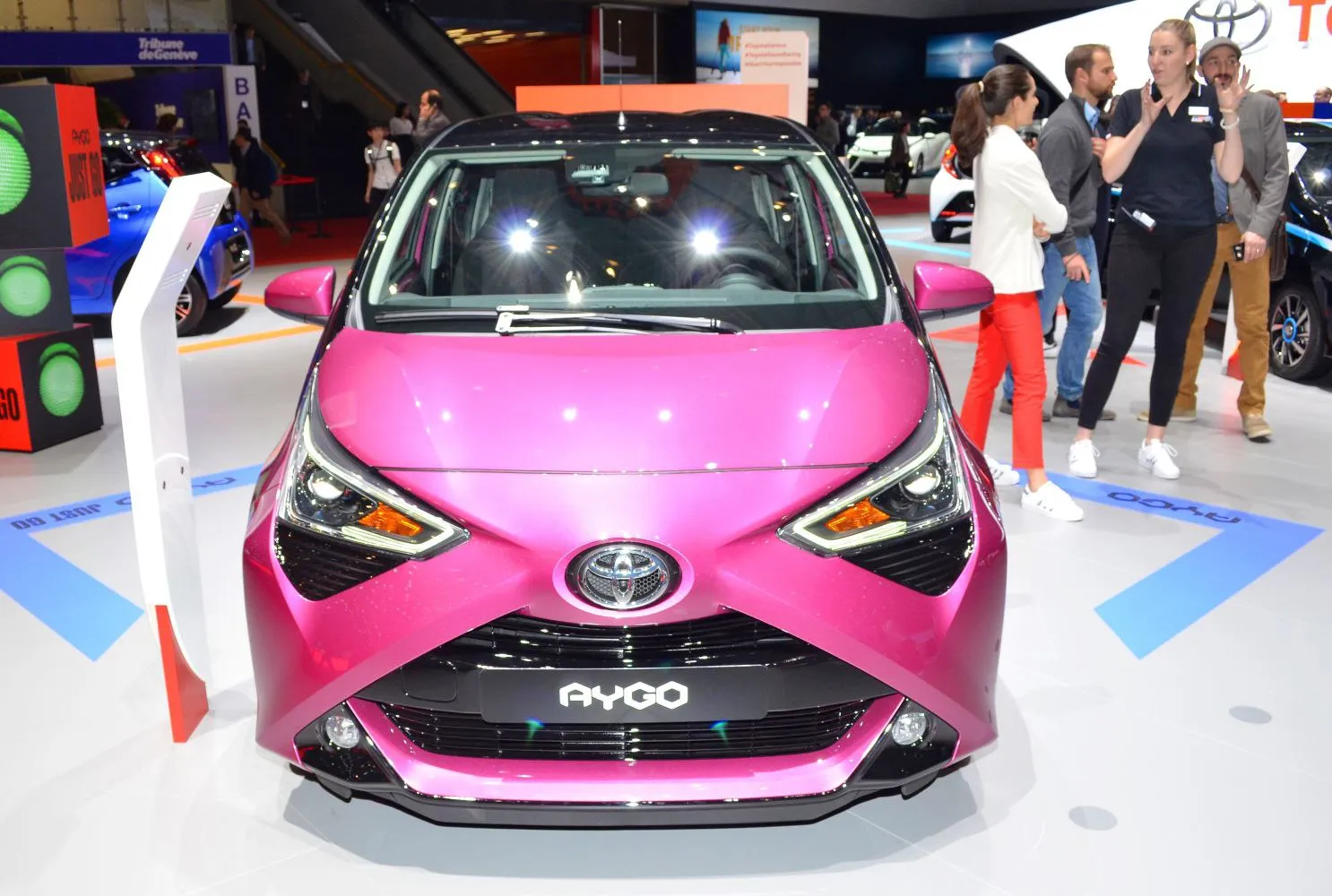
Toyota Aygo II (facelift 2018) 1.0 VVT-i (72 Hp) Automatic
Overall Rating
Toyota Aygo:
The Toyota Aygo is a city car marketed by Toyota mainly in the European market between 2005 and 2022 across two generations. The Aygo was first displayed at the 2005 Geneva International Motor Show. It was built alongside the related Citroën C1 and Peugeot 107/108 at the Toyota Peugeot Citroën Automobile Czech joint venture in Kolín, Czech Republic. The Aygo's production ended in 2021 and the model was replaced by the crossover-styled Aygo X.
The name "Aygo" comes from "i-go", symbolising freedom and mobility....(Read more on Wikipedia)
II (facelift 2018) Overview:
Toyota Aygo (II (facelift 2018)). With 93 Nm of torque, it offers ample pulling power. It boasts low fuel consumption (~4.9 l/100km). Weighing only 860 kg, it’s quite light. Front‑wheel drive delivers efficiency and easy handling. Acceleration is relatively slow (0–100 km/h in 15.2 s). The top speed reaches 160 km/h. A compact car with a rear door that swings upward to provide access to the cargo area. Seating for 4 makes it ideal for daily use.
1.0 VVT-i (72 Hp) Automatic Verdict:

Performance Verdict
Smooth for stop-and-go traffic, though the X-shift automatic can feel hesitant and unrefined during acceleration, impacting overall responsiveness.
Fuel Economy
Very good fuel efficiency for an automatic city car, ideal for those prioritizing convenience over outright economy, though slightly less efficient than the manual.
Pros and Cons:
Pros:
- • Excellent fuel economy and low running costs
- • Compact dimensions make it highly maneuverable in urban settings
- • Renowned Toyota reliability and build quality
- • Distinctive and youthful exterior styling
- • Easy to park due to small turning circle
Cons:
- • Limited power for highway cruising and overtaking
- • Small boot space (168 liters)
- • Basic interior materials and limited sound insulation
- • X-shift automatic transmission can be unrefined and slow
- • Rear drum brakes are less effective than discs
Specifications:
Specifications are compared to those of the previous generation(II: 2014 - 2018).
| General: | |
|---|---|
| Brand: | Toyota |
| Model: | Aygo |
| Generation: | II (facelift 2018) |
| Modification (Engine): | 1.0 VVT-i (72 Hp) Automatic |
| Start of production: | June, 2018 |
| End of production: | November, 2021 |
| Powertrain Architecture: | Internal Combustion engine |
| Body type: | Hatchback |
| Seats: | 4 |
| Doors: | 3 |
| Engine: | |
|---|---|
| Engine systems: | Particulate filter |
| Power: | 72 Hp |
| Power per litre: | 72.1 Hp/l |
| Torque: | 93 Nm |
| Engine Model/Code: | 1KR-FE [Same engine] More details about the engine 1KR-FE |
| Engine displacement: | 998 |
| Number of cylinders: | 3 |
| Engine configuration: | Inline |
| Number of valves per cylinder: | 4 |
| Fuel injection system: | Direct injection |
| Engine aspiration: | Naturally aspirated engine |
| Valvetrain: | VVT-i |
| Engine oil capacity: | 2.8 l |
| Coolant: | 3.6 l |
| Engine layout: | Front, Transverse |
| Compression ratio: | 11.8:1 |
| Performance: | |
|---|---|
| Fuel Type: | Petrol (Gasoline) |
| Fuel consumption (economy) - urban: | 4.9 l/100 km |
| Fuel consumption (economy) - extra urban: | 3.8 l/100 km |
| Fuel consumption (economy) - combined: | 4.2 l/100 km |
| Emission standard: | Euro 6 ad |
| Acceleration 0 - 100 km/h: | 15.2 sec |
| Acceleration 0 - 62 mph: | 15.2 sec |
| Maximum speed: | 160 km/h |
| Weight-to-power ratio: | 11.9 kg/Hp, 83.7 Hp/tonne |
| Weight-to-torque ratio: | 9.2 kg/Nm, 108.1 Nm/tonne |
| Acceleration 0 - 60 mph: | 14.4 sec |
| Space: | |
|---|---|
| Kerb Weight: | 860 |
| Trunk (boot) space - minimum: | 168 l |
| Fuel tank capacity: | 35 l |
| Size: | |
|---|---|
| Length: | 3465 mm [10mm more] |
| Width: | 1615 mm [Same width.] |
| Height: | 1460 mm [Same height.] |
| Wheelbase: | 2340 mm [Same wheelbase.] |
| Front track: | 1430 mm |
| Rear (Back) track: | 1420 mm |
| Front overhang: | 685 mm |
| Rear overhang: | 440 mm |
| Minimum turning circle (turning diameter): | 10.2 m [above average] |
| Powertrain: | |
|---|---|
| Drivetrain Architecture | The Internal combustion engine (ICE) drives the front wheels of the vehicle. |
| Drive wheel | Front wheel drive |
| Front brakes | Ventilated discs [Best for performance and cooling.] |
| Rear brakes | Drum [bad for performance and cooling.] |
| Assisting systems | ABS (Anti-lock braking system) |
| Steering type | Steering rack and pinion |
| Power steering | Electric Steering |
| Front suspension | Independent type McPherson |
| Rear suspension | Torsion |














Does the Toyota Aygo live up to the hype? Give us your verdict!