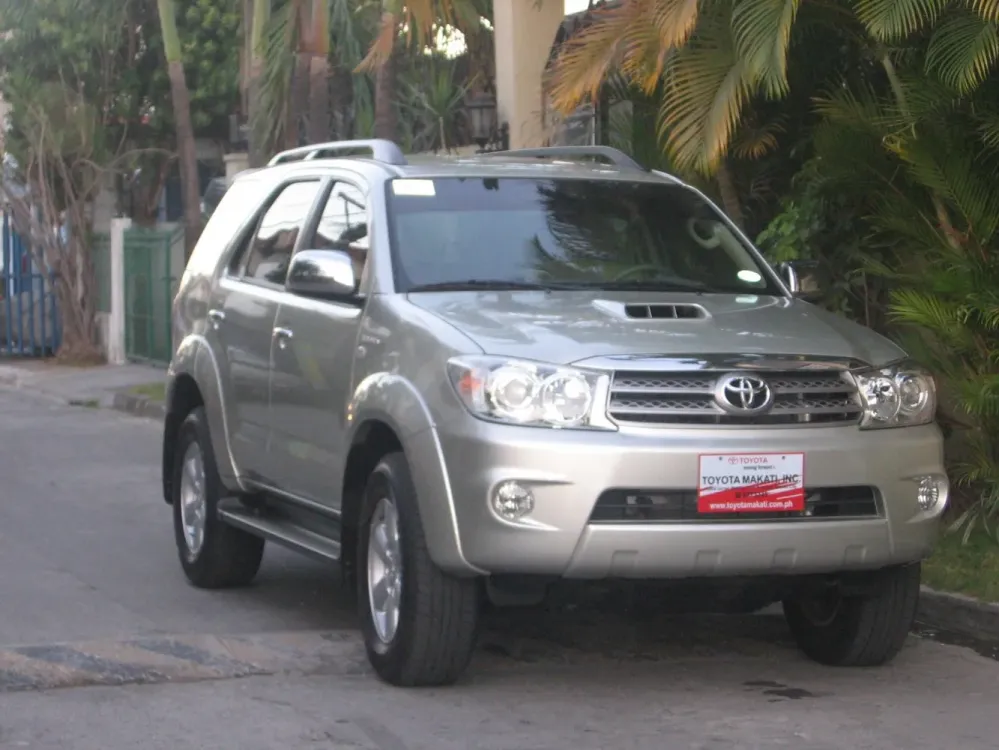
Click on image to view the full photo gallery
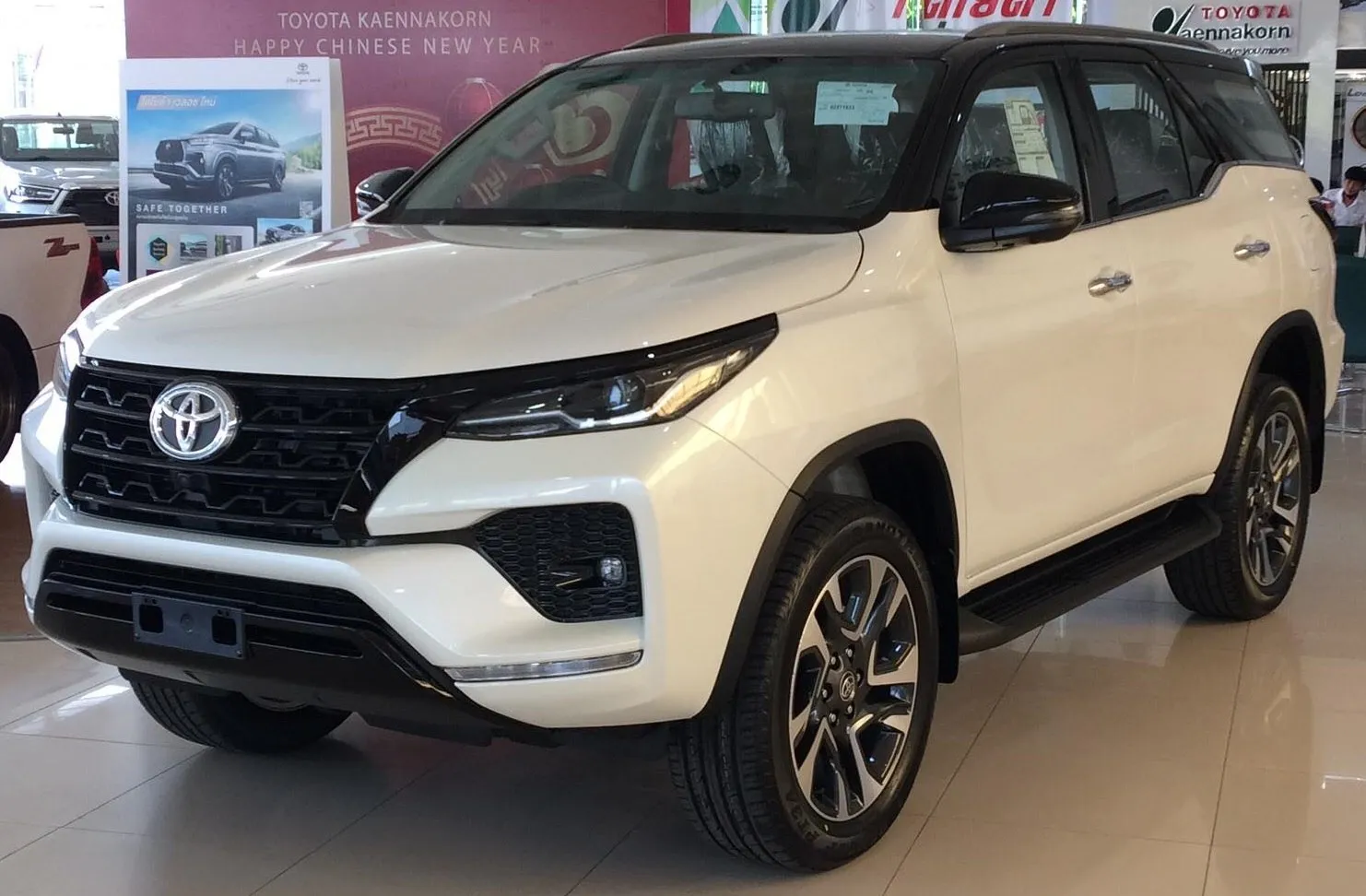
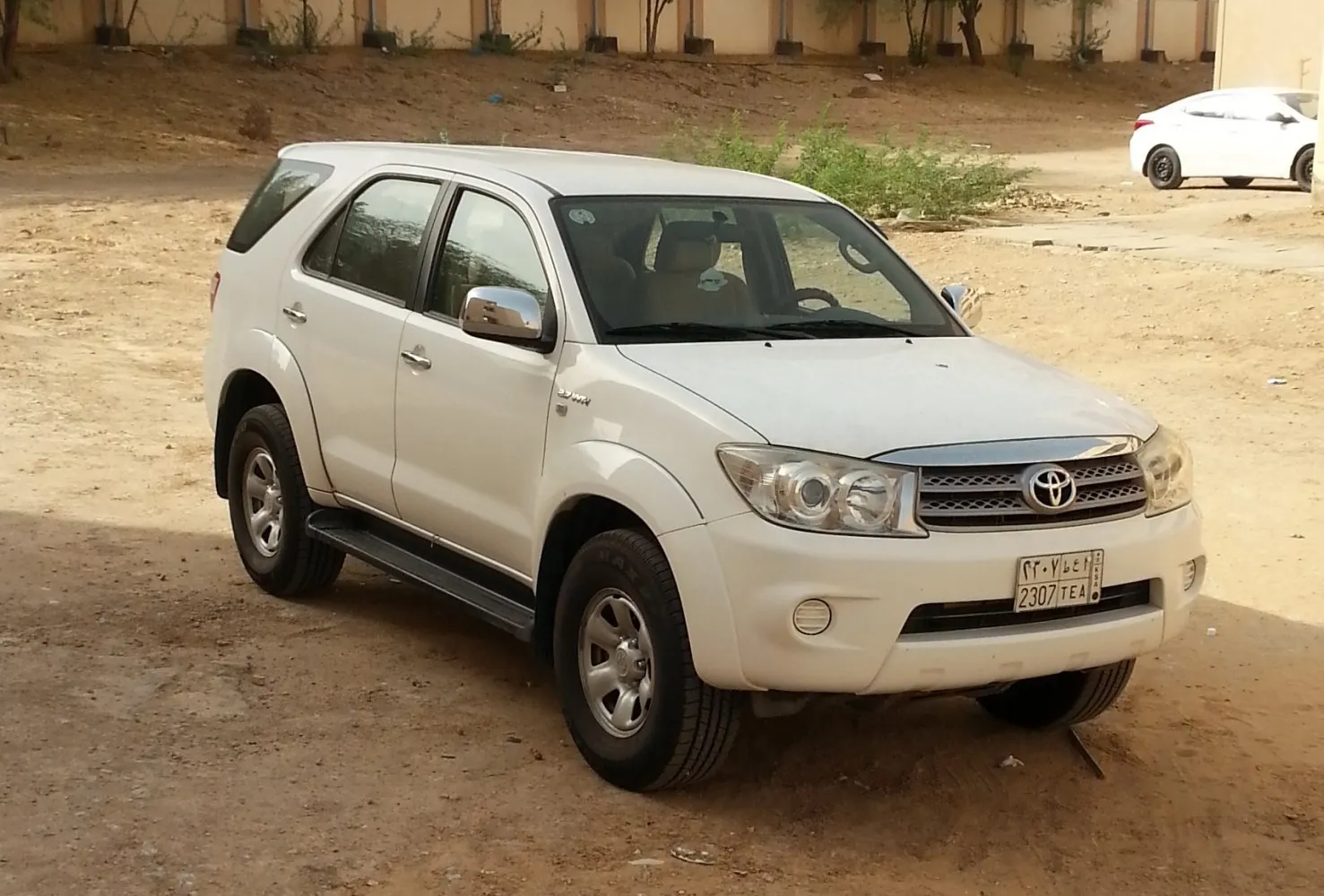
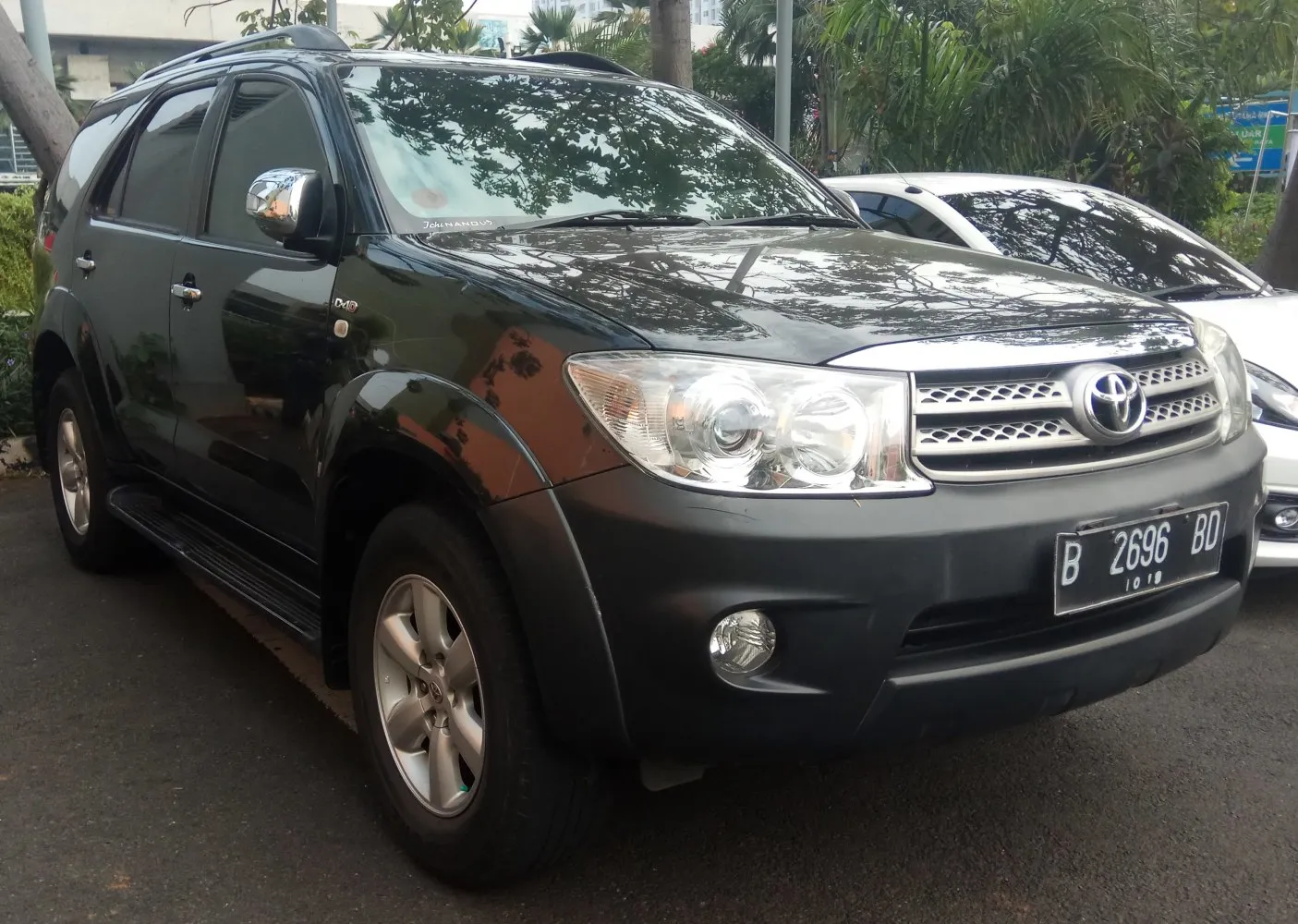
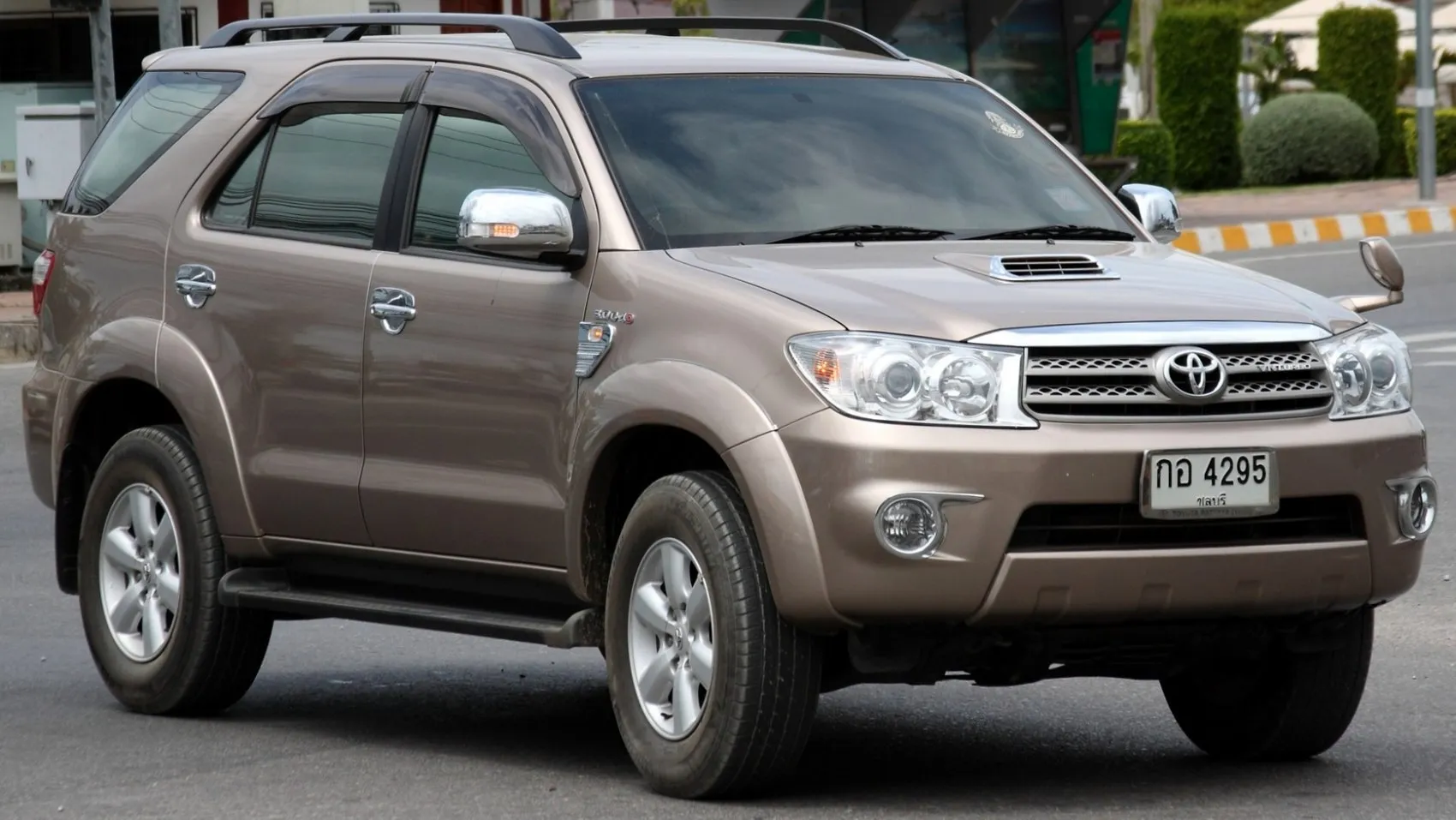
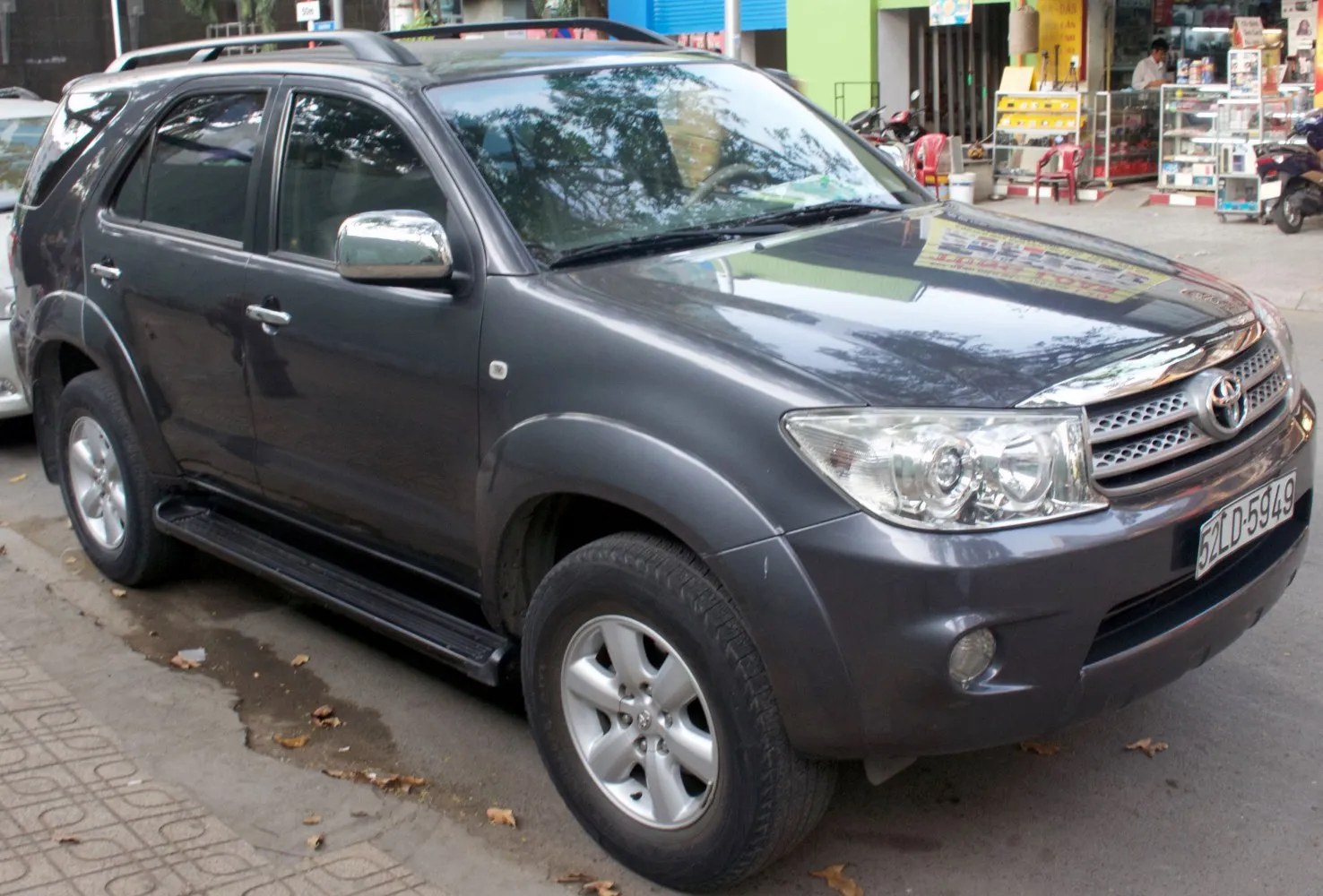
Toyota Fortuner I (facelift 2008) 2.5 D-4D (102 Hp)
Overall Rating
Toyota Fortuner:
The Toyota Fortuner, also known as the Toyota SW4, is a mid-size SUV manufactured by the Japanese automaker Toyota since 2004.
Built on the Hilux pickup truck platform, it features two/three rows of seats and is available in either rear-wheel drive or four-wheel drive configuration. It is a part of Toyota's IMV project for emerging markets, which also includes the Hilux and the Innova.
The name Fortuner is derived from the English word fortune.
While the first-generation Fortuner was developed in Thailand by Thai and Japanese engineers, its facelifted version, as well as the Hilux and Innova, was designed in Australia by Toyota Australia, which is also responsible for developing the second-generation model....(Read more on Wikipedia)
I (facelift 2008) Overview:
Toyota Fortuner (I (facelift 2008)). With 260 Nm of torque, it offers ample pulling power. With a weight of 1790 kg, it falls in the mid‑range. Rear‑wheel drive offers dynamic handling and sporty feedback. A sport utility vehicle offering higher ground clearance and versatile cargo space. With seating for 7, it’s perfect for larger families.
2.5 D-4D (102 Hp) Verdict:

Performance Verdict
Significantly underpowered for the Fortuner's size and weight, leading to sluggish acceleration and limited overtaking capability, particularly on highways.
Fuel Economy
While a diesel, its low power output means the engine often works harder, resulting in only modest fuel economy improvements over the petrol, and not class-leading efficiency.
Pros and Cons:
Pros:
- • Exceptional Toyota reliability and durability
- • Strong off-road capability with 4WD options
- • Practical 7-seater configuration
- • Robust body-on-frame construction
- • Good resale value in target markets
Cons:
- • Ride quality can be firm due to ladder-frame chassis
- • Some engine options are underpowered for the vehicle's size
- • Interior design and materials may feel dated compared to car-based SUVs
- • Fuel economy for petrol variants is not competitive
- • Limited advanced safety features for its time
Specifications:
Specifications are compared to those of the previous generation(I: 2004 - 2008).
| General: | |
|---|---|
| Brand: | Toyota |
| Model: | Fortuner |
| Generation: | I (facelift 2008) |
| Modification (Engine): | 2.5 D-4D (102 Hp) |
| Start of production: | 2008 |
| End of production: | 2011 |
| Powertrain Architecture: | Internal Combustion engine |
| Body type: | SUV |
| Seats: | 7 |
| Doors: | 5 |
| Engine: | |
|---|---|
| Power: | 102 Hp @ 3600 rpm. Same horsepower |
| Power per litre: | 40.9 Hp/l [worst than previous generation] |
| Torque: | 260 Nm @ 1600-2400 rpm. |
| Engine Model/Code: | 2KD-FTV More details about the engine 2KD-FTV |
| Engine displacement: | 2494 |
| Number of cylinders: | 4 |
| Engine configuration: | Inline |
| Number of valves per cylinder: | 4 |
| Fuel injection system: | Diesel Commonrail |
| Engine aspiration: | Turbocharger |
| Valvetrain: | DOHC |
| Engine oil capacity: | 6.9 l |
| Coolant: | 9.8 l |
| Engine layout: | Front, Longitudinal |
| Cylinder Bore: | 92 mm mm |
| Piston Stroke: | 93.8 mm mm |
| Performance: | |
|---|---|
| Fuel Type: | Diesel |
| Weight-to-power ratio: | 17.5 kg/Hp, 57 Hp/tonne |
| Weight-to-torque ratio: | 6.9 kg/Nm, 145.3 Nm/tonne |
| Space: | |
|---|---|
| Kerb Weight: | 1790 |
| Max. weight: | 2380 |
| Max load: | 590 |
| Fuel tank capacity: | 80 l |
| Size: | |
|---|---|
| Ramp-over (brakeover) angle: | 23° |
| Length: | 4695 mm mm [Same length.] |
| Width: | 1840 mm mm [Same width.] |
| Height: | 1850 mm mm [55mm more] |
| Wheelbase: | 2750 mm mm [Same wheelbase.] |
| Front track: | 1540 mm |
| Rear (Back) track: | 1540 mm |
| Ride height (ground clearance): | 221 mm |
| Minimum turning circle (turning diameter): | 11.8 m [above average] |
| Approach angle: | 30° |
| Departure angle: | 25° |
| Powertrain: | |
|---|---|
| Drivetrain Architecture | The Internal combustion engine (ICE) drives the rear wheels of the vehicle. |
| Drive wheel | Rear wheel drive |
| Number of gears | 5 |
| Transmission type | Manual |
| Front brakes | Ventilated discs [Best for performance and cooling.] |
| Rear brakes | Drum [bad for performance and cooling.] |
| Assisting systems | ABS (Anti-lock braking system) |
| Steering type | Steering rack and pinion |
| Power steering | Hydraulic Steering |
| Tires size | 265/65 R17 |
| Wheel rims size | 7.5J x 17 |
| Front suspension | Coil spring, Double wishbone, Transverse stabilizer |
| Rear suspension | Rigid axle suspension, Coil spring |
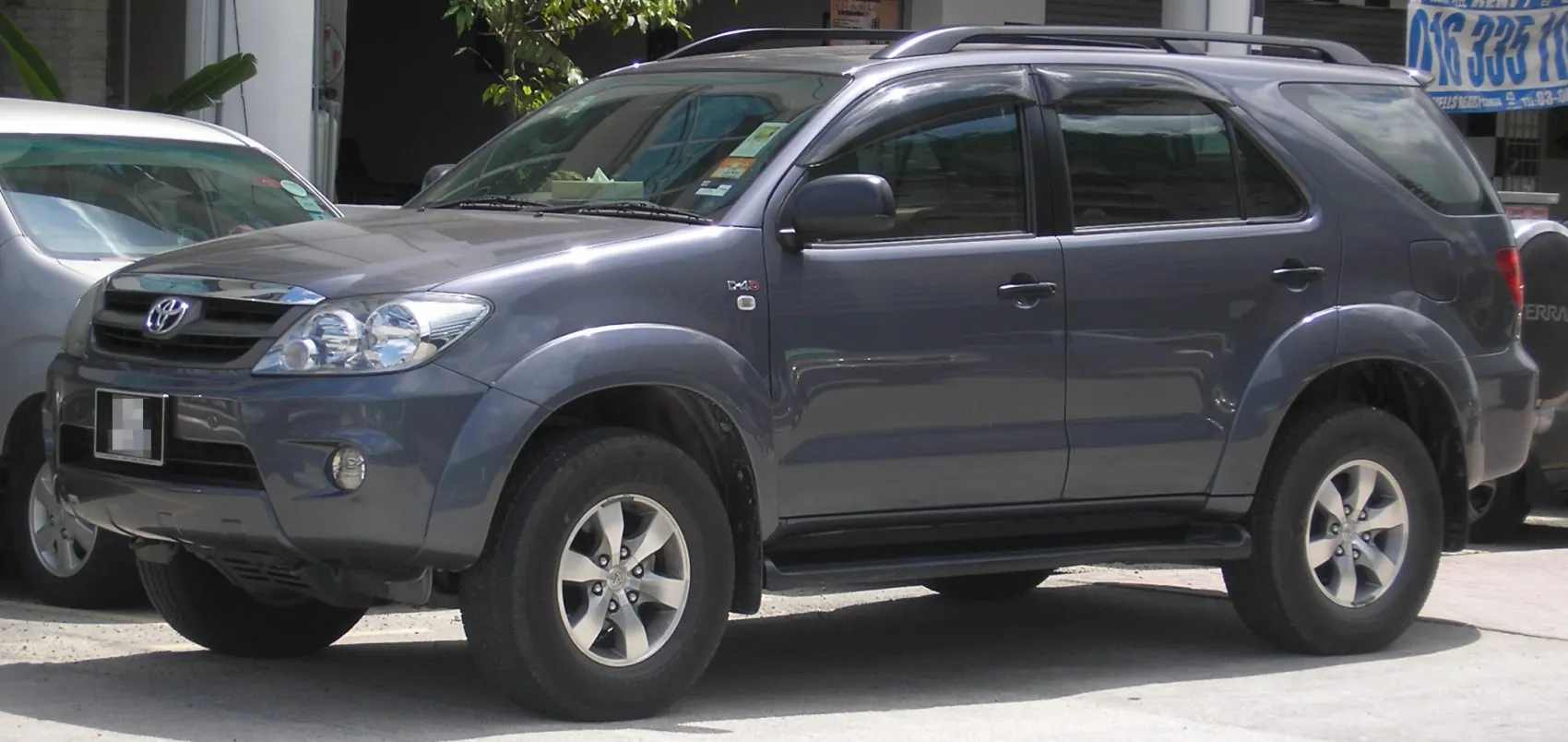
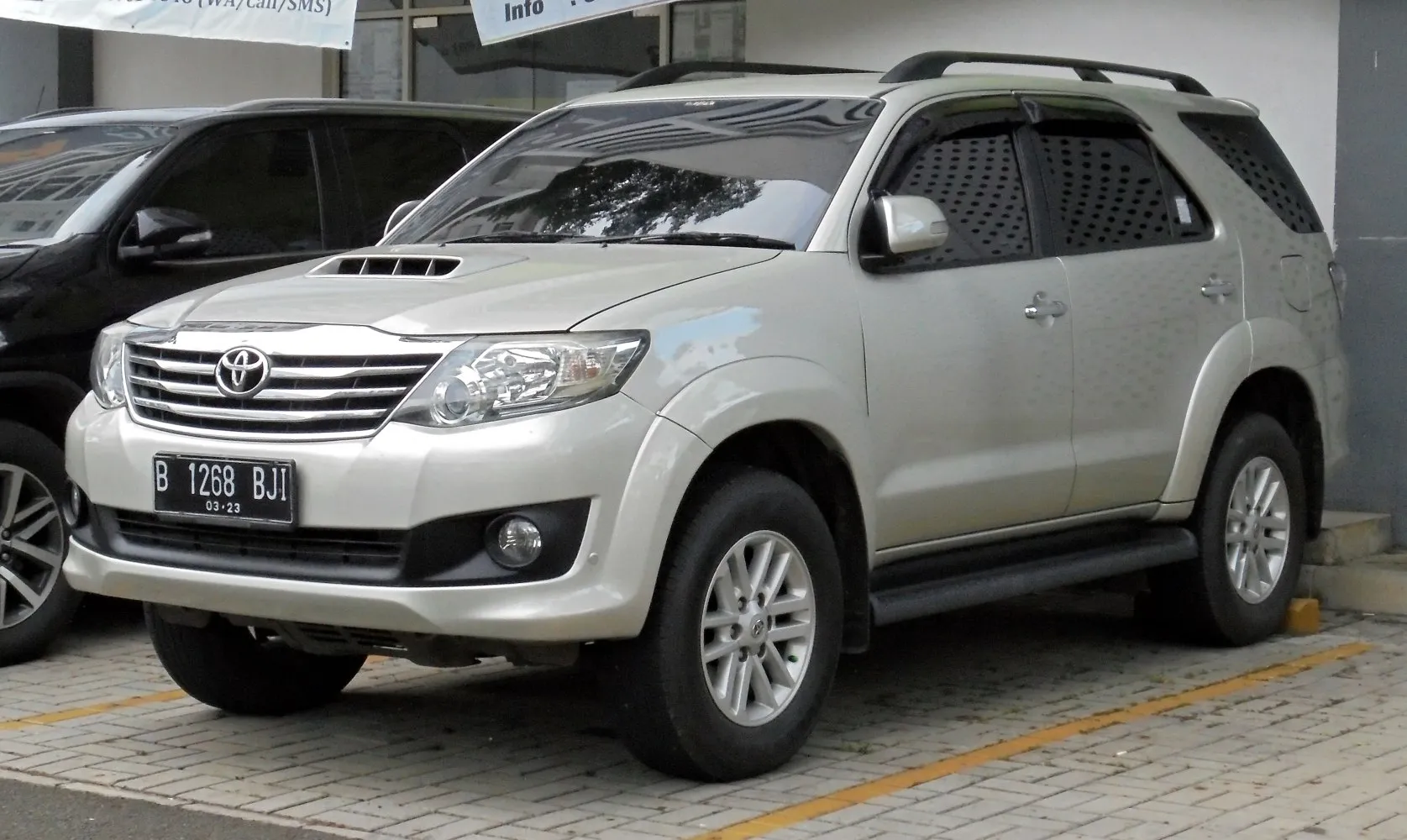
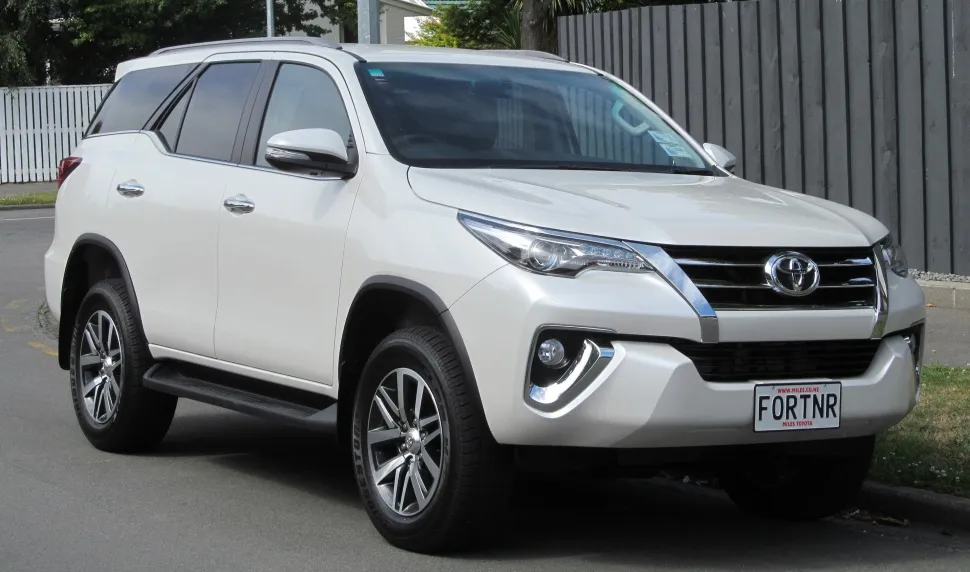




The hidden gems or the annoying flaws? Expose the truth about the Toyota Fortuner!