Click on image to view the full photo gallery
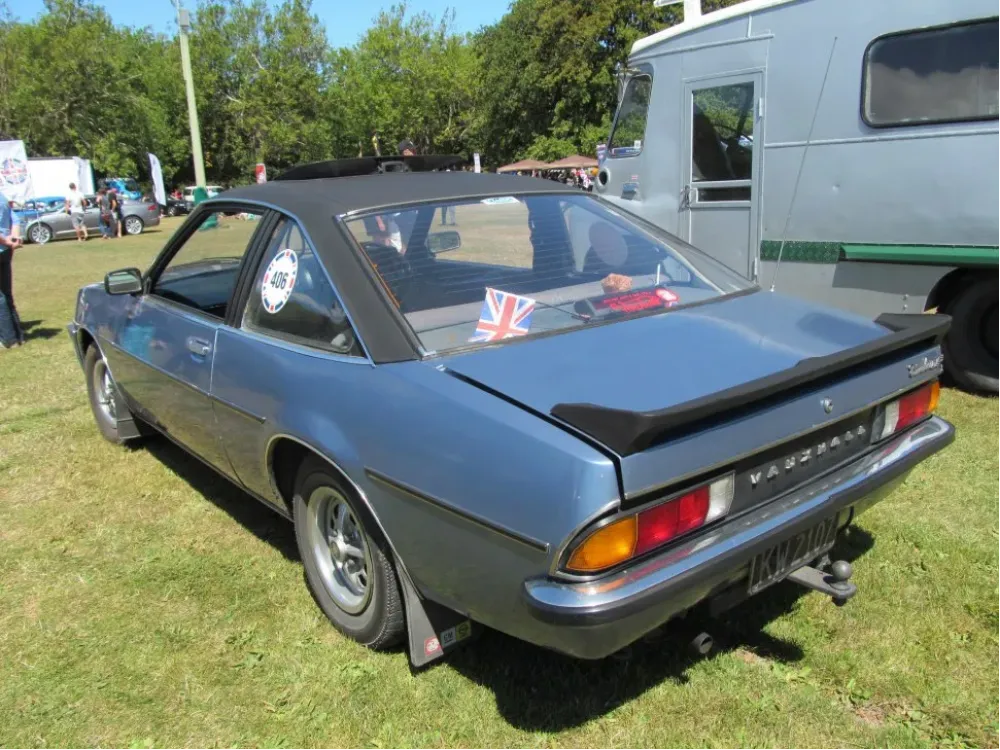
Vauxhall Cavalier Coupe 2.0 S (100 Hp)
Overall Rating
Vauxhall Cavalier:
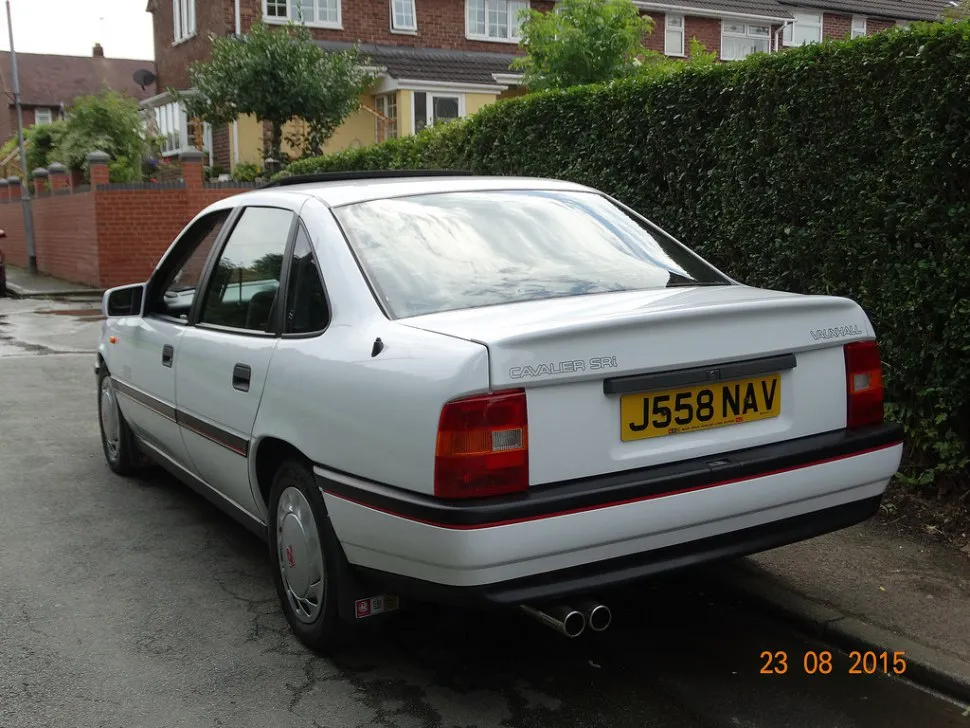
The Vauxhall Cavalier is a large family car that was sold primarily in the United Kingdom by Vauxhall from 1975 to 1995. It was based on a succession of Opel designs throughout its production life, during which it was built in three incarnations. The first generation of Cavalier, launched in 1975 and produced until 1981, was Vauxhall's version of the General Motors 'U-Car' — essentially an Opel Ascona B/ Opel Manta with a few minor visual differences.
The second generation of Cavalier, launched in 1981 and produced until 1988, was launched simultaneously with the identical new generation of Opel Ascona, which was sold across the world in various guises on the GM "J-Body platform". The third and final generation of Cavalier, launched in 1988 and produced until 1995, was a rebadged Opel Vectra A with the same production span. Cavaliers for the UK market were predominantly built at Vauxhall's Luton plant, but were also built alongside their Ascona/Vectra sister models at Opel plants in Continental Europe....(Read more on Wikipedia)
Coupe Overview:
Vauxhall Cavalier (Coupe). With 153 Nm of torque, it offers ample pulling power. Weighing only 1010 kg, it’s quite light. Rear‑wheel drive offers dynamic handling and sporty feedback. Acceleration is relatively slow (0–100 km/h in 11 s). The top speed reaches 180 km/h. A two-door car with a fixed roof, known for its sporty design and dynamic performance. Seating for 5 makes it ideal for daily use.
The 1977 Vauxhall Cavalier Coupe predates modern crash testing standards like Euro NCAP. Safety features are rudimentary by today's measures, typical for vehicles of its era, focusing on basic structural integrity and seatbelts.
2.0 S (100 Hp) Verdict:

Performance Verdict
Offering a respectable 100 Hp, this 2.0 S engine provided brisk acceleration for its era, making the Cavalier Coupe a lively performer on both city streets and open roads. Its 11-second 0-100 km/h time was competitive.
Fuel Economy
With a combined fuel consumption of 8.6 l/100 km, the carburetted 2.0 S was reasonably economical for a 1970s two-litre engine, though modern standards would find it thirsty. Regular maintenance is key for optimal efficiency.
Pros and Cons:
Pros:
- • Stylish and distinctive coupe design
- • Engaging rear-wheel-drive handling
- • Robust and simple mechanicals (Opel Manta B platform)
- • Good parts availability due to Opel Manta commonality
- • Increasing classic car appeal and value
Cons:
- • Lacks modern safety features and amenities
- • Fuel economy is poor by modern standards
- • Rust can be a significant issue on older models
- • Interior plastics and trim can show age
- • Carburettor tuning can be finicky
Specifications:
Specifications are compared to those of the previous generation(Coupe: 1975 - 1979).
| General: | |
|---|---|
| Brand: | Vauxhall |
| Model: | Cavalier |
| Generation: | Coupe |
| Modification (Engine): | 2.0 S (100 Hp) |
| Start of production: | 1977 |
| End of production: | 1979 |
| Powertrain Architecture: | Internal Combustion engine |
| Body type: | Coupe |
| Seats: | 5 |
| Doors: | 2 |
| Engine: | |
|---|---|
| Power: | 100 Hp @ 5400 rpm. Same horsepower |
| Power per litre: | 50.5 Hp/l [worst than previous generation] |
| Torque: | 153 Nm @ 3800 rpm. |
| Engine Model/Code: | 20S More details about the engine 20S |
| Engine displacement: | 1979 |
| Number of cylinders: | 4 |
| Engine configuration: | Inline |
| Number of valves per cylinder: | 2 |
| Fuel injection system: | Carburettor |
| Engine aspiration: | Naturally aspirated engine |
| Valvetrain: | CIH |
| Engine oil capacity: | 3.8 l |
| Coolant: | 6.2 l |
| Engine layout: | Front, Longitudinal |
| Cylinder Bore: | 95 mm mm |
| Piston Stroke: | 69.8 mm mm |
| Compression ratio: | 9:1 |
| Performance: | |
|---|---|
| Fuel Type: | Petrol (Gasoline) |
| Fuel consumption (economy) - combined: | 8.6 l/100 km |
| Acceleration 0 - 100 km/h: | 11 sec |
| Acceleration 0 - 62 mph: | 11 sec |
| Maximum speed: | 180 km/h |
| Weight-to-power ratio: | 10.1 kg/Hp, 99 Hp/tonne |
| Weight-to-torque ratio: | 6.6 kg/Nm, 151.5 Nm/tonne |
| Acceleration 0 - 60 mph: | 10.5 sec |
| Space: | |
|---|---|
| Kerb Weight: | 1010 |
| Max. weight: | 1410 |
| Max load: | 400 |
| Trunk (boot) space - minimum: | 308 l |
| Fuel tank capacity: | 50 l |
| Size: | |
|---|---|
| Length: | 4445 mm mm |
| Width: | 1670 mm mm |
| Height: | 1277 mm mm |
| Wheelbase: | 2518 mm mm |
| Front track: | 1380 mm |
| Rear (Back) track: | 1375 mm |
| Ride height (ground clearance): | 106 mm |
| Minimum turning circle (turning diameter): | 9.3 m [above average] |
| Powertrain: | |
|---|---|
| Drivetrain Architecture | The Internal combustion engine (ICE) drives the rear wheels of the vehicle. |
| Drive wheel | Rear wheel drive |
| Number of gears | 4 |
| Transmission type | Manual |
| Front brakes | Disc [bad for performance and cooling.] |
| Rear brakes | Drum [bad for performance and cooling.] |
| Steering type | Steering rack and pinion |
| Tires size | 185/70 R13 |
| Wheel rims size | 5.5J x 13 |
| Front suspension | Coil spring |
| Rear suspension | Coil spring |










Fuel, speed, and comfort: How does the Vauxhall Cavalier rank in your book?