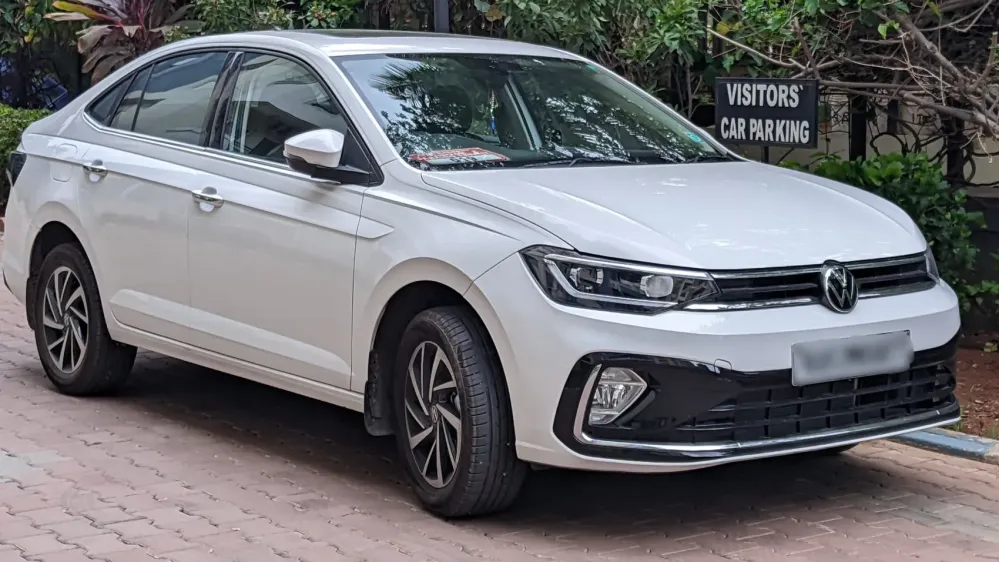
Click on image to view the full photo gallery
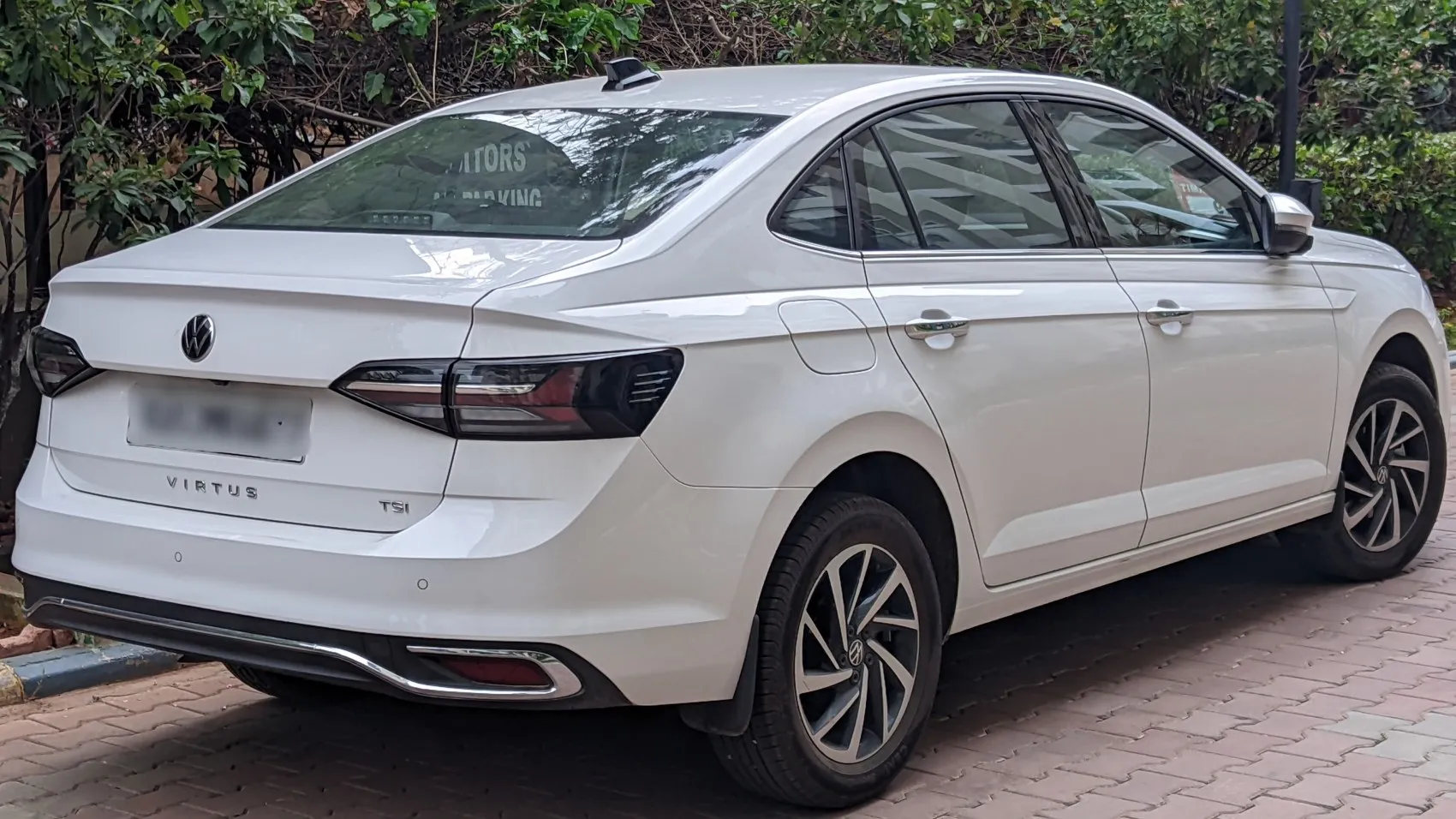
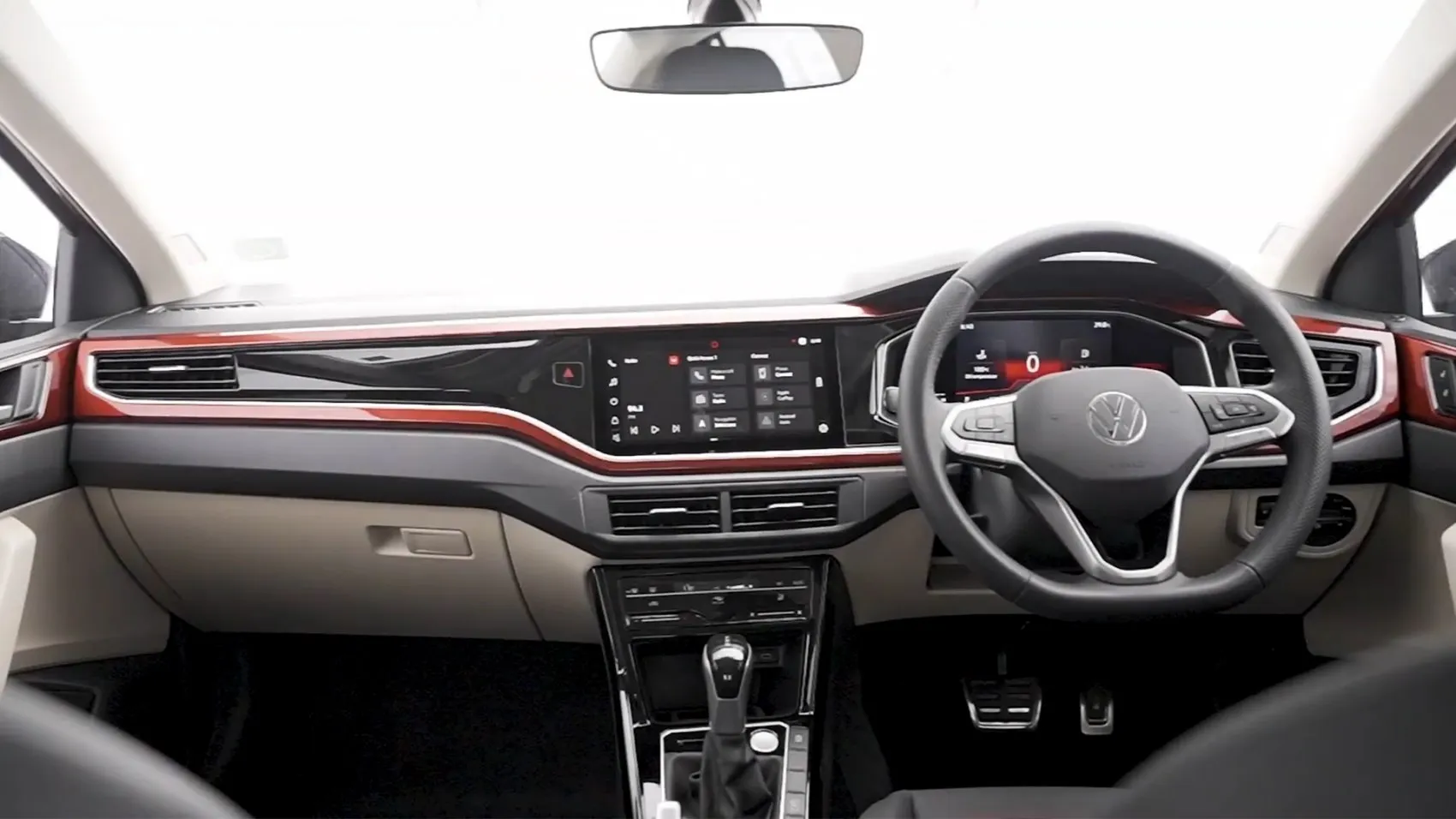
Volkswagen Virtus facelift 2023 1.0 TSI (116 Hp)
Overall Rating
7.9 / 10
facelift 2023 Overview:
Volkswagen Virtus (facelift 2023). With 178 Nm of torque, it offers ample pulling power. Weighing only 1190 kg, it’s quite light. Front‑wheel drive delivers efficiency and easy handling. A four-door car with a separate trunk, ideal for families and daily commuting. Seating for 5 makes it ideal for daily use.
1.0 TSI (116 Hp) Verdict:

Performance Verdict
Offers adequate power for daily commuting and city driving, with surprising responsiveness for a 1.0-liter unit. Highway overtakes require planning.
Fuel Economy
Excellent fuel efficiency, making it a very economical choice for a petrol sedan, especially in mixed driving conditions.
Best Use Case:
City / Mixed Driving
Pros and Cons:
Pros:
- • Modern and efficient TSI engine lineup
- • Spacious interior and large 521L boot capacity
- • Solid build quality and refined ride comfort
- • Good feature set for its segment
- • Multiple transmission options (manual, automatic, DSG)
Cons:
- • Rear drum brakes on some lower trims
- • Interior design might be considered conservative by some
- • No direct Euro NCAP safety rating available
- • Ride height is typical sedan, not suited for very rough terrain
Specifications:
| General: | |
|---|---|
| Brand: | Volkswagen |
| Model: | Virtus |
| Generation: | facelift 2023 |
| Modification (Engine): | 1.0 TSI (116 Hp) |
| Start of production: | July, 2023 |
| Powertrain Architecture: | Internal Combustion engine |
| Body type: | Sedan |
| Seats: | 5 |
| Doors: | 4 |
| Engine: | |
|---|---|
| Engine systems: | Start & Stop System |
| Power: | 116 Hp @ 5000-5500 rpm. |
| Power per litre: | 116.1 Hp/l |
| Torque: | 178 Nm @ 1750-4500 rpm. |
| Engine Model/Code: | EA211 |
| Engine displacement: | 999 |
| Number of cylinders: | 3 |
| Engine configuration: | Inline |
| Number of valves per cylinder: | 4 |
| Fuel injection system: | Direct injection |
| Engine aspiration: | Turbocharger, Intercooler |
| Engine oil capacity: | 4 l |
| Engine layout: | Front, Transverse |
| Performance: | |
|---|---|
| Fuel Type: | Petrol (Gasoline) |
| Fuel consumption (economy) - combined: | 5 l/100 km |
| Weight-to-power ratio: | 10.1 kg/Hp, 98.9 Hp/tonne |
| Weight-to-torque ratio: | 6.6 kg/Nm, 151.7 Nm/tonne |
| Space: | |
|---|---|
| Kerb Weight: | 1173-1208 |
| Max. weight: | 1630 |
| Max load: | 422-457 |
| Trunk (boot) space - maximum: | 1050 l |
| Trunk (boot) space - minimum: | 521 l |
| Fuel tank capacity: | 45 l |
| Size: | |
|---|---|
| Length: | 4561 mm mm |
| Width: | 1752 mm mm |
| Height: | 1507 mm mm |
| Wheelbase: | 2651 mm mm |
| Front track: | 1511 mm |
| Rear (Back) track: | 1496 mm |
| Ride height (ground clearance): | 145 mm |
| Minimum turning circle (turning diameter): | 10.1 m |
| Powertrain: | |
|---|---|
| Drivetrain Architecture | The Internal combustion engine (ICE) drives the front wheels of the vehicle. |
| Drive wheel | Front wheel drive |
| Number of gears | 6 |
| Transmission type | Manual |
| Front brakes | Disc |
| Rear brakes | Drum |
| Assisting systems | ABS (Anti-lock braking system) |
| Steering type | Steering rack and pinion |
| Power steering | Electric Steering |
| Tires size | 205/55 R16 |
| Wheel rims size | 16 |
| Front suspension | Independent type McPherson, Transverse stabilizer |
| Rear suspension | Torsion |















How many miles have you covered in your Volkswagen Virtus? Share your journey!