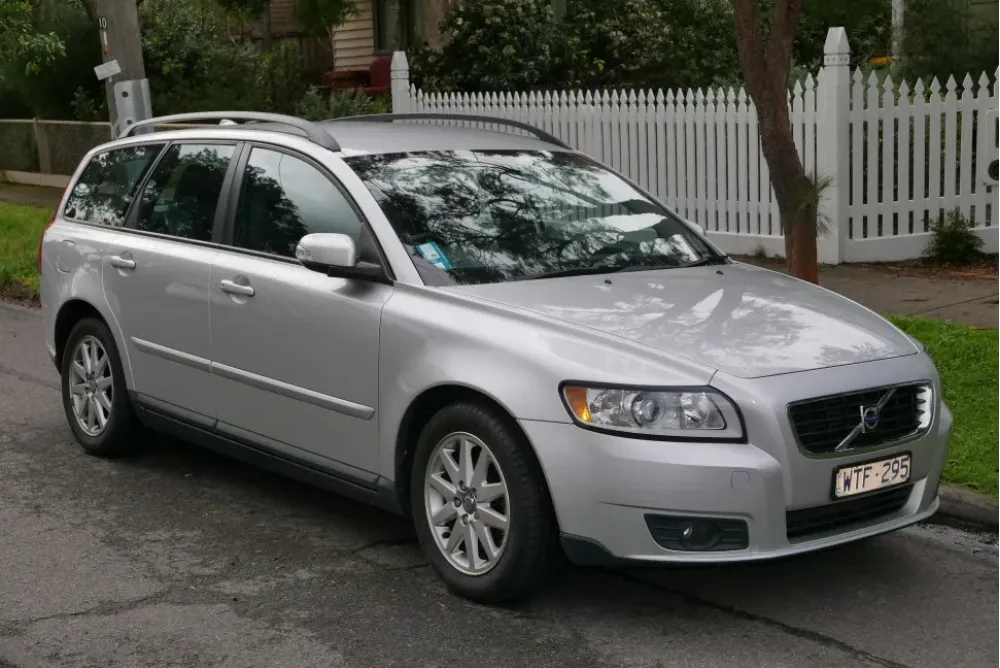
Click on image to view the full photo gallery
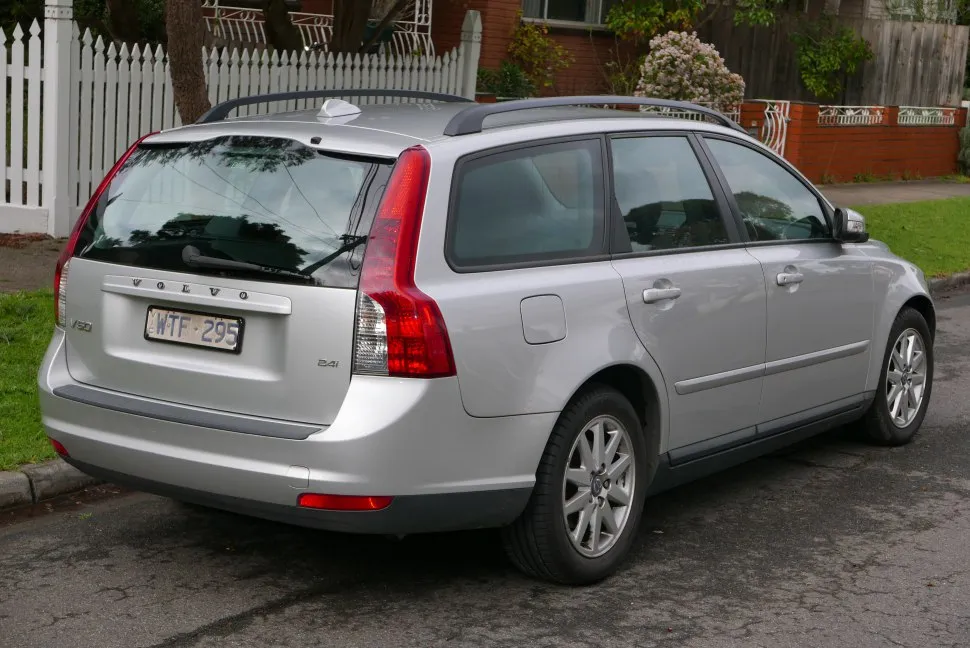
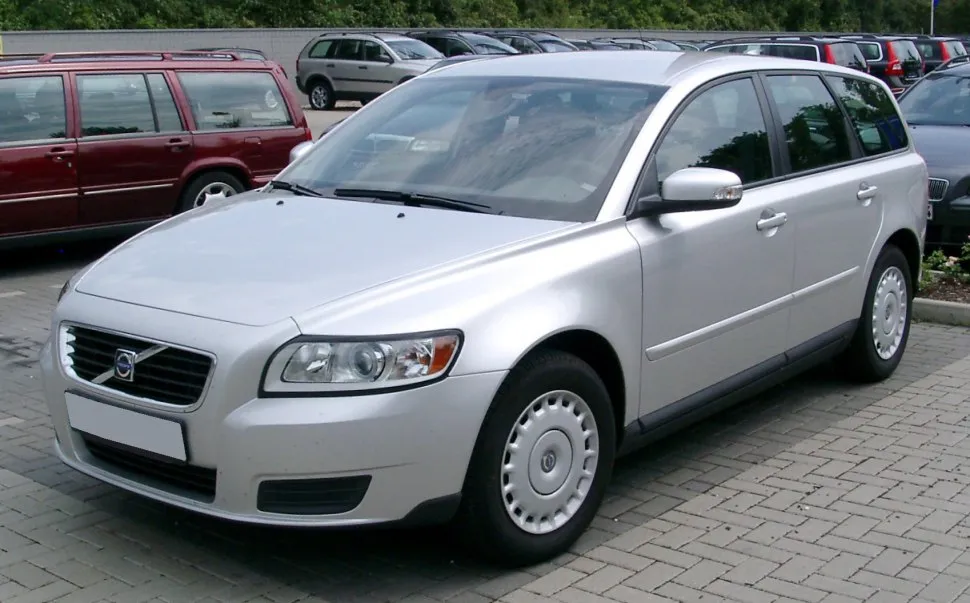
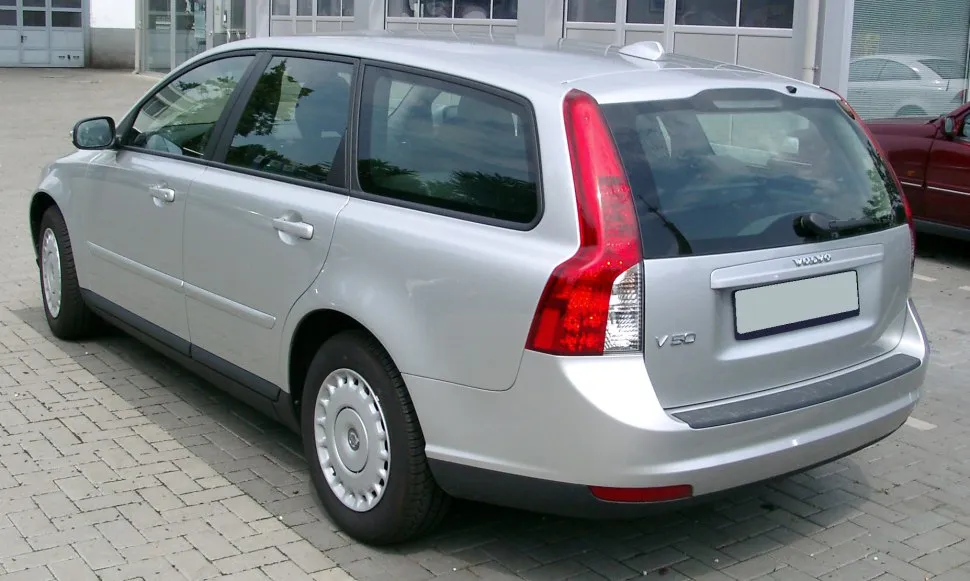
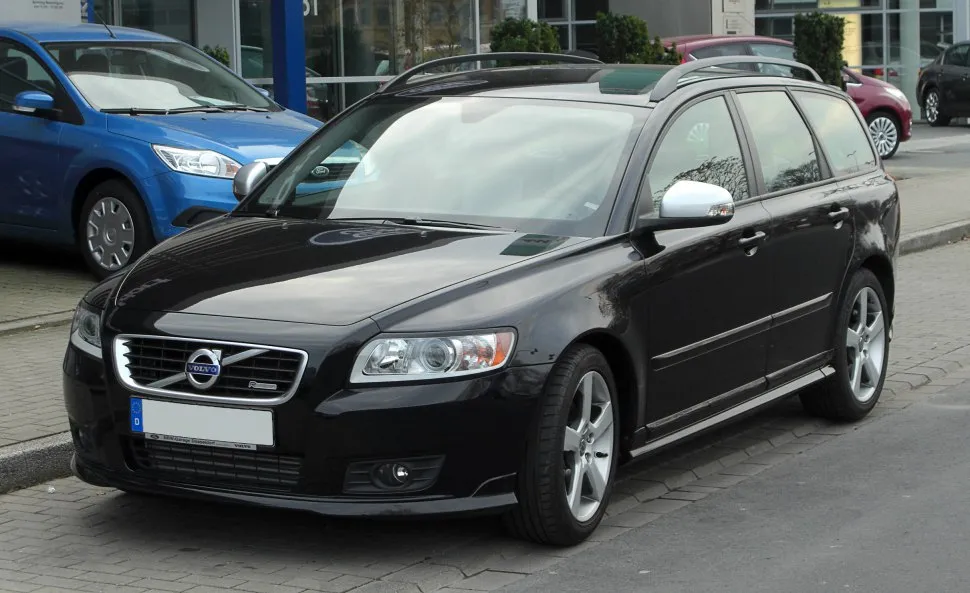
Volvo V50 facelift 2007 2.0 D (136 Hp)
Overall Rating
Volvo V50:
The Volvo V50 is the station wagon version of the Volvo S40 small family car first unveiled at the 2003 Bologna Motor Show, both assembled at Ghent, Belgium. Sharing the Volvo, Ford, and Mazda Global C-car Platform with the European 2nd-gen Ford Focus and the Mazda3, the V50 featured interior "theatre" lighting, a floating center console, and "Volvo Intelligent Vehicle Architecture".
The V50 T5 AWD featured all-wheel drive and a straight-5 2. 5 litre petrol engine, with a light pressure turbocharger, four valves per cylinder and a DOHC design with variable camshaft timing — providing 220 PS and 320 N⋅m of torque. Diesel options were available in Europe, including a 2. 4 Litre turbocharged D5 diesel engine which provided 180 PS and 350 N⋅m of torque....(Read more on Wikipedia)
facelift 2007 Overview:
Volvo V50 (facelift 2007). With 320 Nm of torque, it offers ample pulling power. It has moderate fuel consumption (~7.6 l/100km). With a weight of 1393 kg, it falls in the mid‑range. Front‑wheel drive delivers efficiency and easy handling. Acceleration is relatively slow (0–100 km/h in 9.6 s). The top speed reaches 205 km/h. A car with an extended rear cargo area, combining passenger comfort with increased storage. Seating for 5 makes it ideal for daily use.
2.0 D (136 Hp) Verdict:

Performance Verdict
A well-balanced diesel engine providing good torque and sufficient power for confident overtaking and highway speeds.
Fuel Economy
Excellent fuel efficiency, making it a cost-effective choice for those covering higher mileage.
Pros and Cons:
Pros:
- • Exceptional safety ratings and features
- • Comfortable and supportive seats, ideal for long journeys
- • Practical estate body with good cargo capacity
- • Wide range of engines, from economical diesels to powerful T5 petrols
- • Refined ride quality and stable handling
- • High-quality interior materials and solid build
Cons:
- • Rear legroom can be tight for taller passengers
- • Some entry-level engines feel underpowered
- • Infotainment system can feel dated compared to rivals
- • Not as dynamically engaging as some German competitors
- • Higher fuel consumption on performance-oriented petrol models
Specifications:
Specifications are compared to those of the previous generation(V50: 2005 - 2007).
| General: | |
|---|---|
| Brand: | Volvo |
| Model: | V50 |
| Generation: | facelift 2007 |
| Modification (Engine): | 2.0 D (136 Hp) |
| Start of production: | 2007 |
| End of production: | 2010 |
| Powertrain Architecture: | Internal Combustion engine |
| Body type: | Station wagon (estate) |
| Seats: | 5 |
| Doors: | 5 |
| Engine: | |
|---|---|
| Engine systems: | Particulate filter |
| Power: | 136 Hp @ 4000 rpm. Same horsepower |
| Power per litre: | 68.1 Hp/l [8mm more] |
| Torque: | 320 Nm @ 2000 rpm. |
| Engine Model/Code: | D4204T More details about the engine D4204T |
| Engine displacement: | 1997 |
| Number of cylinders: | 4 |
| Engine configuration: | Inline |
| Number of valves per cylinder: | 4 |
| Fuel injection system: | Diesel Commonrail |
| Engine aspiration: | Turbocharger, Intercooler |
| Valvetrain: | DOHC |
| Engine oil capacity: | 5.5 l |
| Coolant: | 9.5 l |
| Engine layout: | Front, Transverse |
| Cylinder Bore: | 85 mm |
| Piston Stroke: | 88 mm |
| Compression ratio: | 18.5:1 |
| Performance: | |
|---|---|
| Fuel Type: | Diesel |
| Fuel consumption (economy) - urban: | 7.6 l/100 km |
| Fuel consumption (economy) - extra urban: | 4.8 l/100 km |
| Fuel consumption (economy) - combined (NEDC): | 5.7 l/100 km |
| Fuel consumption (economy) - urban (NEDC): | 7.6 l/100 km |
| Fuel consumption (economy) - extra urban (NEDC): | 4.8 l/100 km |
| Fuel consumption (economy) - combined: | 5.7 l/100 km |
| Emission standard: | Euro 4 |
| Acceleration 0 - 100 km/h: | 9.6 sec |
| Acceleration 0 - 62 mph: | 9.6 sec |
| Maximum speed: | 205 km/h |
| Weight-to-power ratio: | 10.2 kg/Hp, 97.6 Hp/tonne |
| Weight-to-torque ratio: | 4.4 kg/Nm, 229.7 Nm/tonne |
| Acceleration 0 - 60 mph: | 9.1 sec |
| Space: | |
|---|---|
| Kerb Weight: | 1393 |
| Max. weight: | 1960 |
| Max. roof load: | 75 kg |
| Max load: | 567 |
| Trunk (boot) space - maximum: | 1307 l |
| Trunk (boot) space - minimum: | 417 l |
| Permitted trailer load with brakes (12%): | 1500 kg |
| Fuel tank capacity: | 52 l |
| Permitted trailer load without brakes: | 700 kg |
| Permitted towbar download: | 75 kg |
| Size: | |
|---|---|
| Length: | 4522 mm [8mm more] |
| Width: | 1770 mm [Same width.] |
| Height: | 1457 mm [5mm more] |
| Wheelbase: | 2640 mm [Same wheelbase.] |
| Width including mirrors: | 2022 mm |
| Front track: | 1535 mm |
| Rear (Back) track: | 1531 mm |
| Minimum turning circle (turning diameter): | 10.6 m [above average] |
| Powertrain: | |
|---|---|
| Drivetrain Architecture | The Internal combustion engine (ICE) drives the front wheels of the vehicle. |
| Drive wheel | Front wheel drive |
| Number of gears | 6 |
| Transmission type | Manual |
| Front brakes | Ventilated discs [Best for performance and cooling.] |
| Rear brakes | Disc [above average] |
| Assisting systems | ABS (Anti-lock braking system) |
| Steering type | Steering rack and pinion |
| Power steering | Electric Steering |
| Tires size | 205/55 R16; 205/50 R17 |
| Wheel rims size | 6.5J x 16; 7J x 17; 7.5J x 17 |
| Front suspension | Independent, type McPherson with coil spring and anti-roll bar |
| Rear suspension | Independent multi-link spring suspension with stabilizer |








If you could change one thing about the Volvo V50, what would it be?