
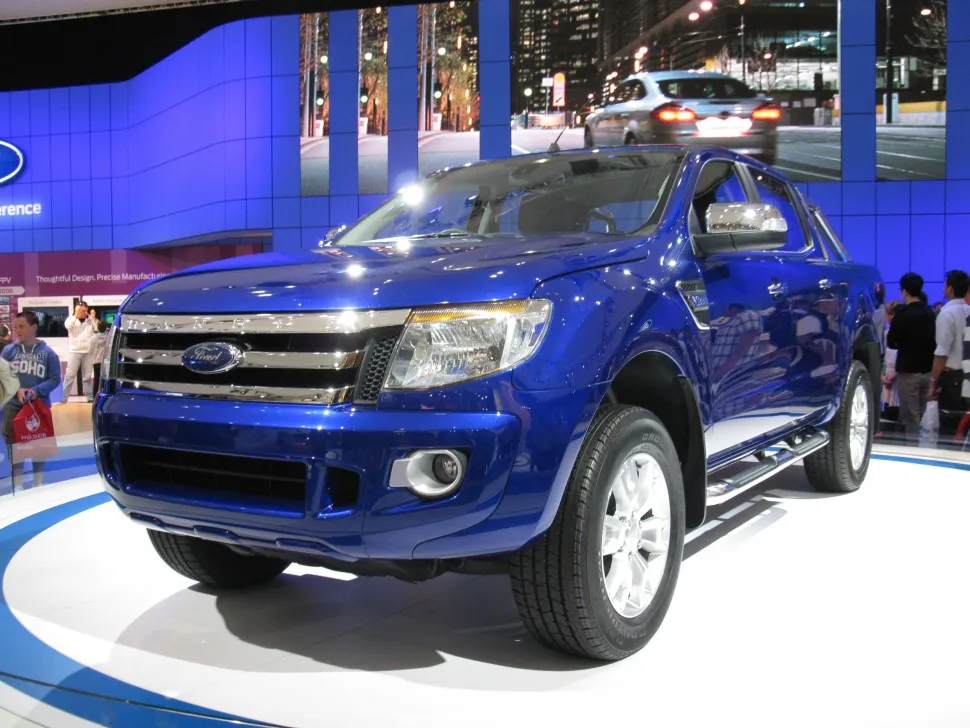
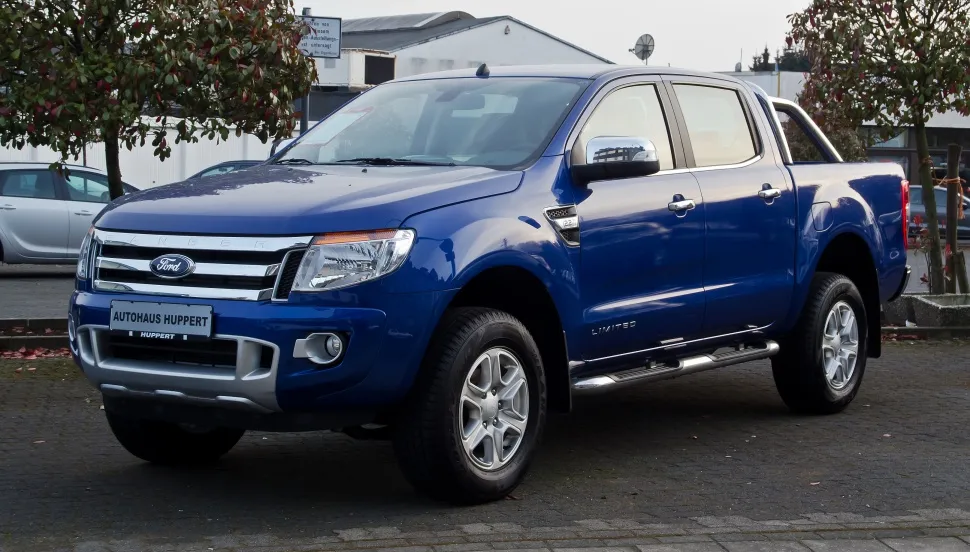
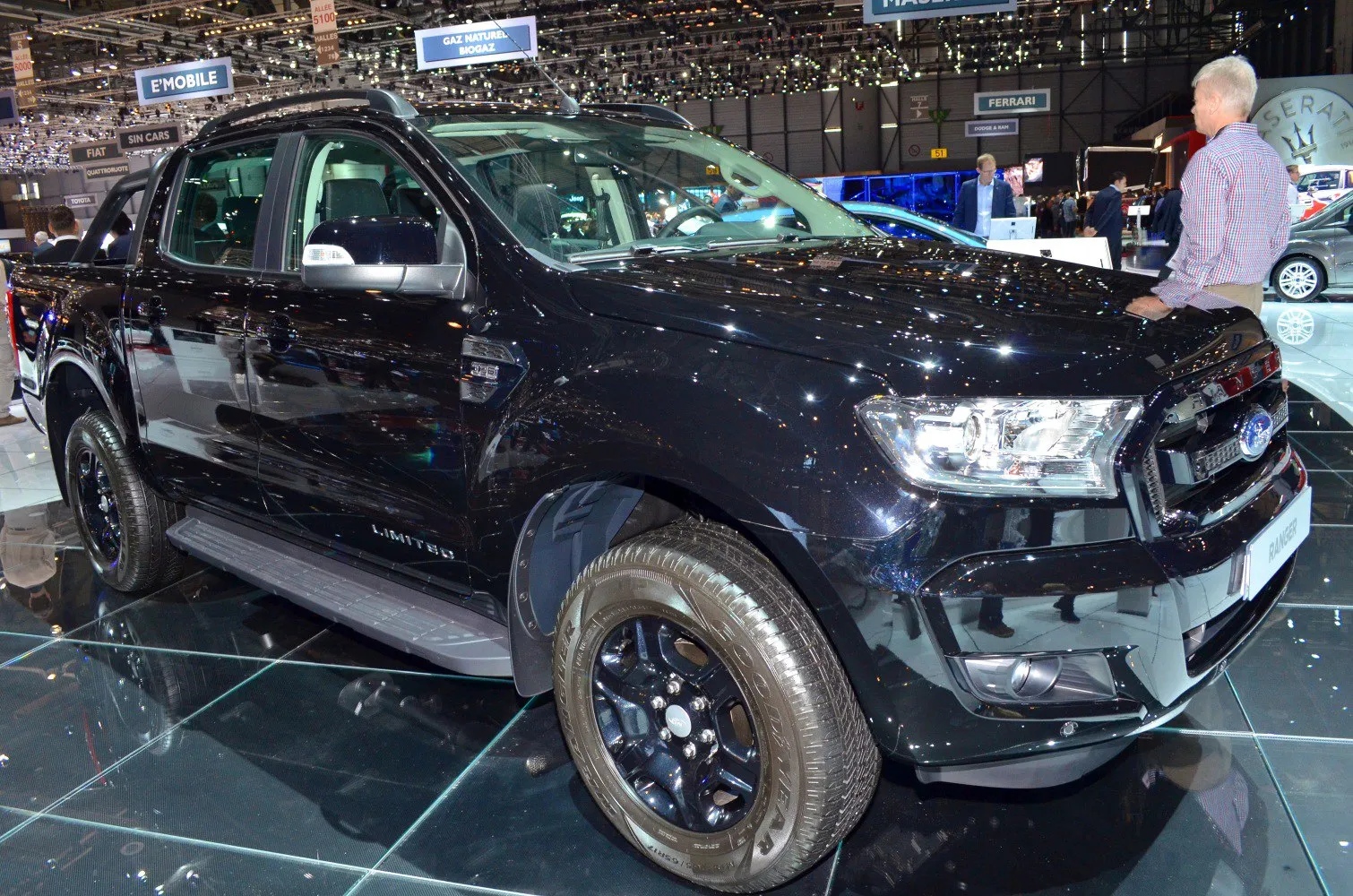
Click on image to view the full photo gallery
Ford Ranger V SuperCrew (Americas) 2.3 EcoBoost (270 Hp) 4x4 Automatic
Overall Rating
Ford Ranger:
The Ford Ranger is a compact or mid-size pickup truck marketed globally by Ford over a series of generations, varying between both in-house or outside development and manufacturing — and with a hiatus in North America from 2011–2018.
Debuting as a compact pickup in North America in 1982 for the 1983 model year, the Ranger was later introduced in some South American countries. From 1998 to 2011, the Ranger nameplate was used for models developed by Mazda for sale outside the North American market. In 2011, Ford introduced the first Ranger based on the T6 platform. Considered a mid-size pickup truck, the model was developed in-house by Ford Australia. In that same year, the North American-market Ranger was discontinued, leaving the T6 platform-based Ranger as the sole Ranger model worldwide....(Read more on Wikipedia)
V SuperCrew (Americas) Overview:
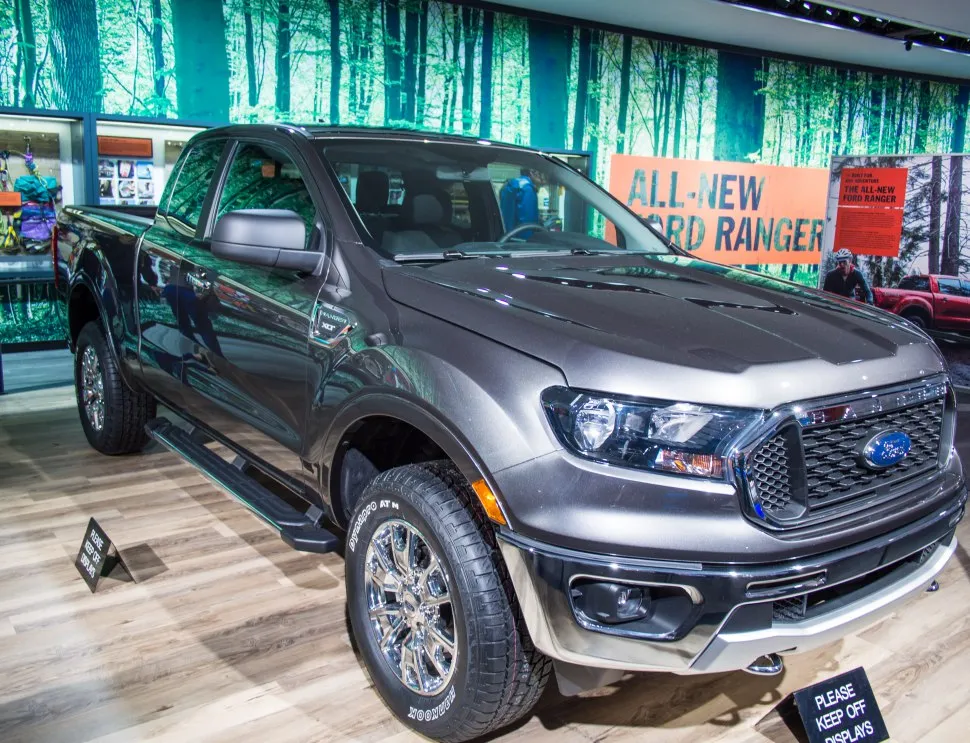
Ford Ranger (V SuperCrew (Americas)). With 420 Nm of torque, it offers ample pulling power. At around 2003 kg, it’s on the heavier side. All‑wheel drive provides excellent grip, ideal for off‑road use. A vehicle with an open cargo bed at the back, suitable for transporting goods. Seating for 5 makes it ideal for daily use.
2.3 EcoBoost (270 Hp) 4x4 Automatic Verdict:

Performance Verdict
Provides robust performance with enhanced traction and capability for varied terrain and challenging weather conditions, maintaining good responsiveness.
Fuel Economy
Slightly lower fuel economy than the RWD version due to added drivetrain weight and friction, but still competitive for a 4x4 mid-size truck.
Pros and Cons:
Pros:
- • Strong and diverse EcoBoost engine lineup, including a high-performance Raptor variant.
- • Excellent towing and payload capacities for a mid-size truck.
- • Modernized interior with improved technology and comfort features.
- • Robust off-road capability, especially with 4x4 and Raptor trims.
- • Advanced driver-assistance systems available.
Cons:
- • Fuel economy can be higher for the V6 engines compared to some rivals.
- • Ride quality, while improved, remains truck-like on rougher roads.
- • Rear seat space might be tighter than some larger competitors.
- • Base model interior materials could feel less premium.
Specifications:
Specifications are compared to those of the previous generation(III Double Cab (facelift 2019): May, 2019 - 2022).
| General: | |
|---|---|
| Brand: | Ford |
| Model: | Ranger |
| Generation: | V SuperCrew (Americas) |
| Modification (Engine): | 2.3 EcoBoost (270 Hp) 4x4 Automatic |
| Start of production: | May, 2023 |
| Powertrain Architecture: | Internal Combustion engine |
| Body type: | Pick-up |
| Seats: | 5 |
| Doors: | 4 |
| Engine: | |
|---|---|
| Engine systems: | Start & Stop System |
| Power: | 270 Hp |
| Power per litre: | 117.7 Hp/l |
| Torque: | 420 Nm |
| Engine displacement: | 2294 |
| Number of cylinders: | 4 |
| Engine configuration: | Inline |
| Number of valves per cylinder: | 4 |
| Fuel injection system: | Direct injection |
| Engine aspiration: | Turbocharger, Intercooler |
| Valvetrain: | DOHC, Ti-VCT |
| Engine layout: | Front, Longitudinal |
| Cylinder Bore: | 87.63 mm mm |
| Piston Stroke: | 94 mm mm |
| Compression ratio: | 10:1 |
| Performance: | |
|---|---|
| Fuel Type: | Petrol (Gasoline) |
| Weight-to-power ratio: | 7.4 kg/Hp, 134.8 Hp/tonne |
| Weight-to-torque ratio: | 4.8 kg/Nm, 209.7 Nm/tonne |
| Space: | |
|---|---|
| Kerb Weight: | 2003 |
| Max. weight: | 2799 |
| Max load: | 796 |
| Trunk (boot) space - maximum: | 1232 l |
| Permitted trailer load with brakes (12%): | 3402 kg |
| Fuel tank capacity: | 71 l |
| Size: | |
|---|---|
| Ramp-over (brakeover) angle: | 23° |
| Length: | 5349 mm mm [14mm less] |
| Width: | 1918 mm mm [110mm less] |
| Height: | 1890 mm mm [17mm more] |
| Wheelbase: | 3269 mm mm [49mm more] |
| Width with mirrors folded: | 2007 mm |
| Width including mirrors: | 2202 mm |
| Front track: | 1621 mm |
| Rear (Back) track: | 1621 mm |
| Front overhang: | 866 mm |
| Rear overhang: | 1214 mm |
| Ride height (ground clearance): | 236 mm |
| Minimum turning circle (turning diameter): | 13 m [above average] |
| Approach angle: | 30.2° |
| Departure angle: | 25.8° |
| Powertrain: | |
|---|---|
| Drivetrain Architecture | The Internal combustion engine (ICE) drives the rear wheels permanently, and the front wheels are driven through an electrically or mechanically operated clutch if necessary. |
| Drive wheel | All wheel drive (4x4) |
| Number of gears | 10 |
| Transmission type | Automatic |
| Front brakes | Disc, 310.9x33.78 mm [above average] |
| Rear brakes | Disc, 307.85x23.88 mm [above average] |
| Assisting systems | ABS (Anti-lock braking system) |
| Steering type | Steering rack and pinion |
| Power steering | Electric Steering |
| Tires size | 255/70 R17; 255/65 R18 |
| Wheel rims size | 17; 18 |
| Front suspension | Double wishbone, Transverse stabilizer |
| Rear suspension | dependent spring suspension, Leaf spring |







Is the Ford Ranger the king of its class? Share your thoughts.