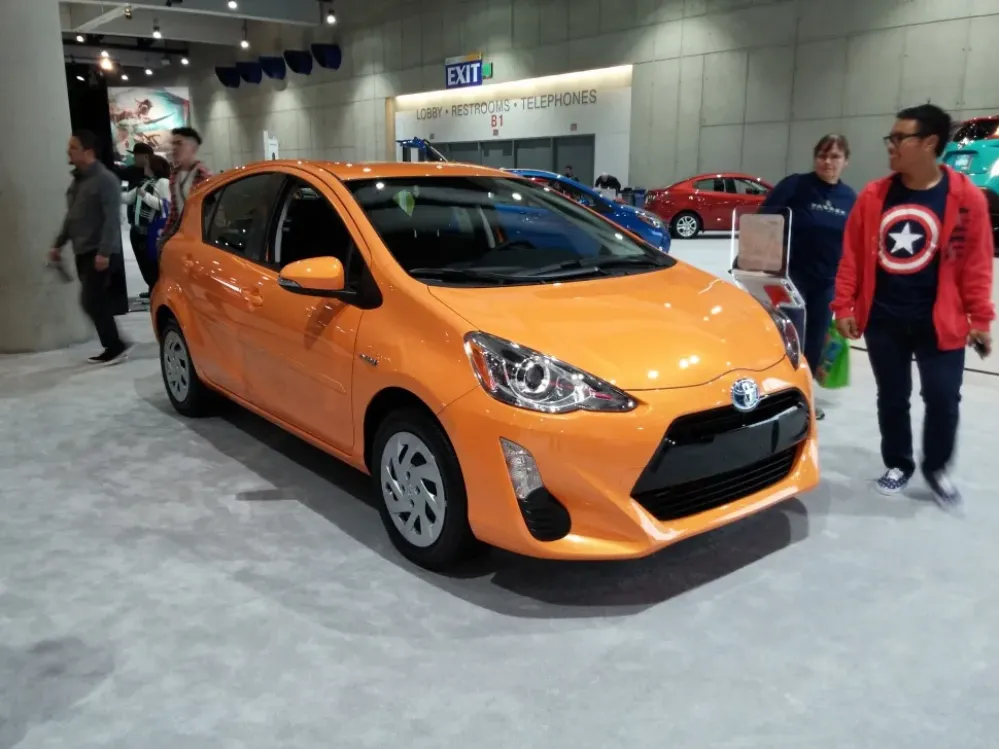
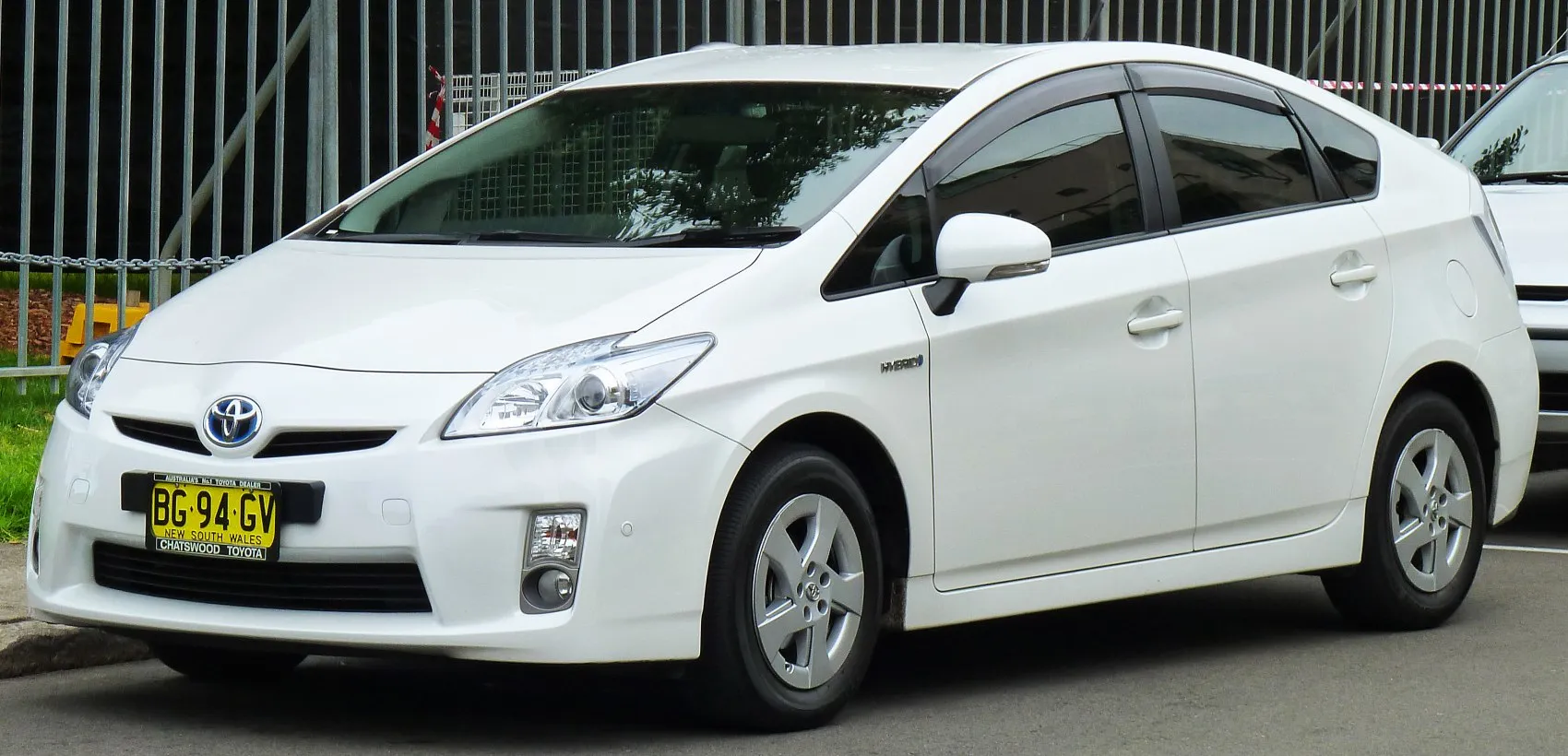
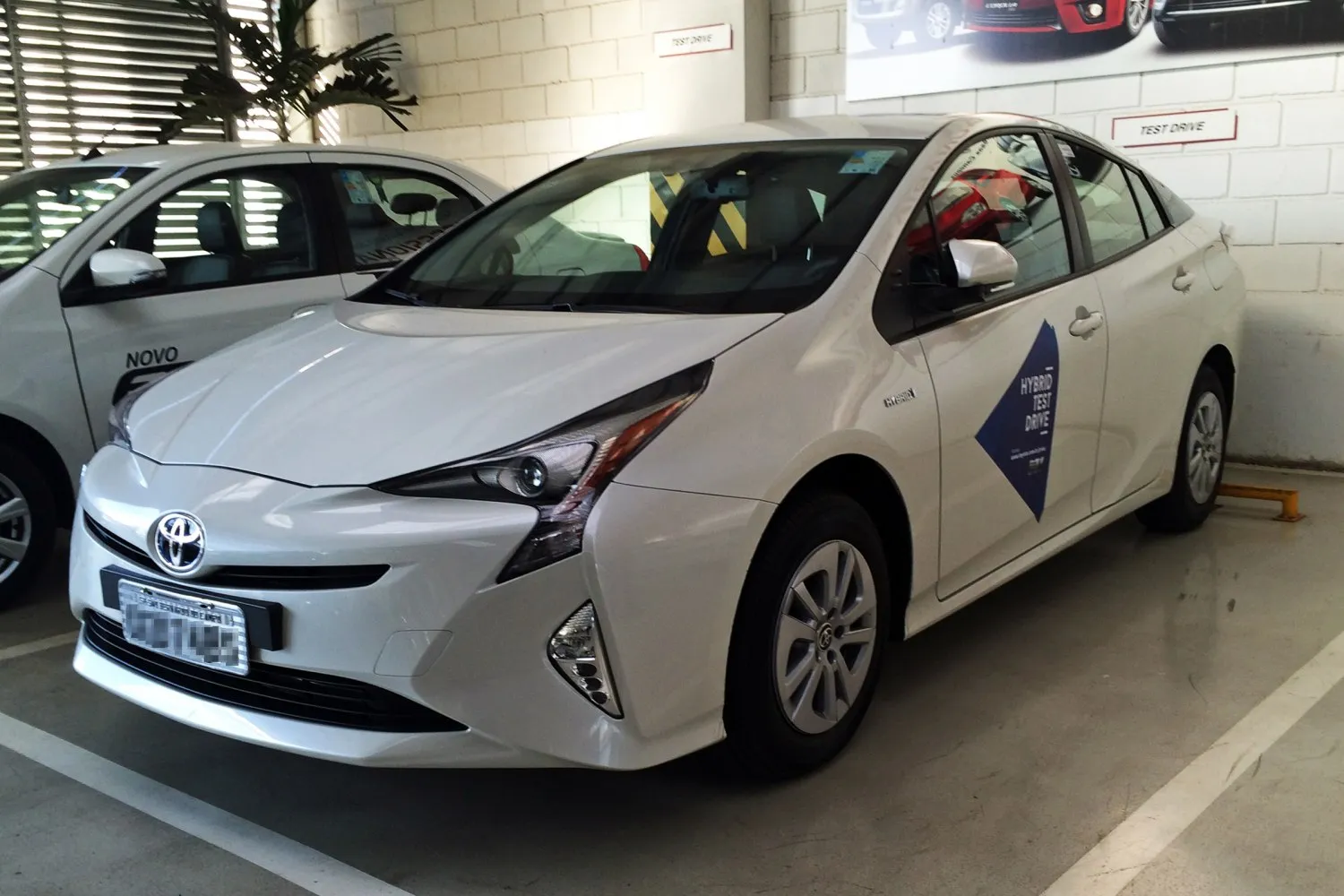
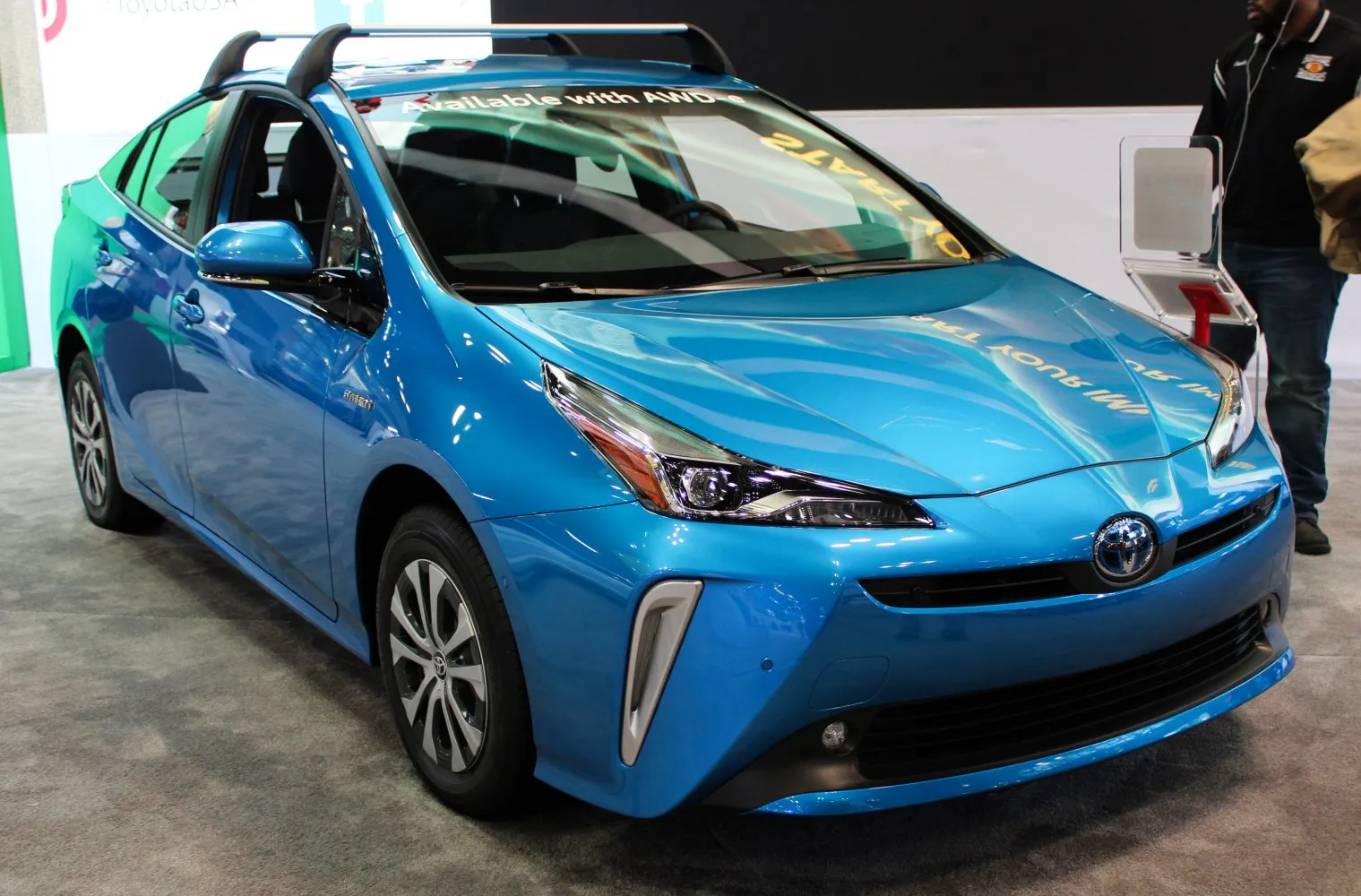
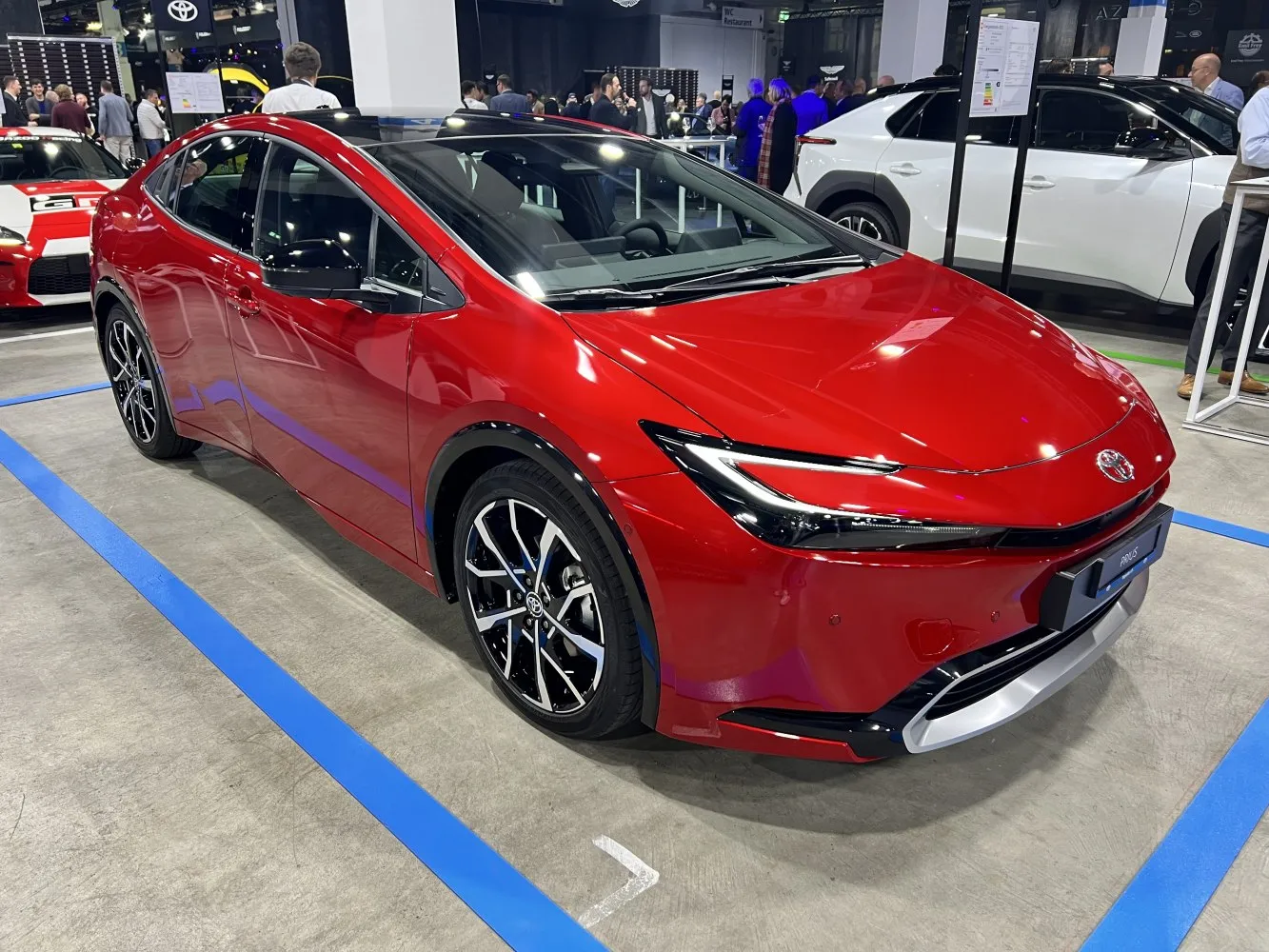
Click on image to view the full photo gallery
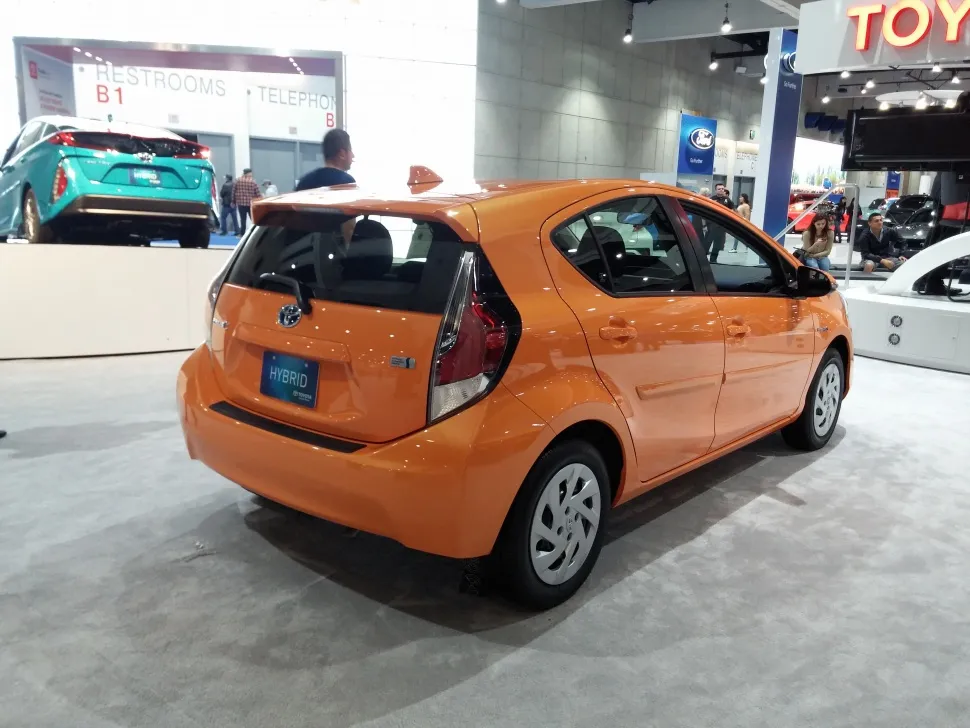
Toyota Prius c 1.5 (101 Hp) Hybrid e-CVT
Overall Rating
Toyota Prius:
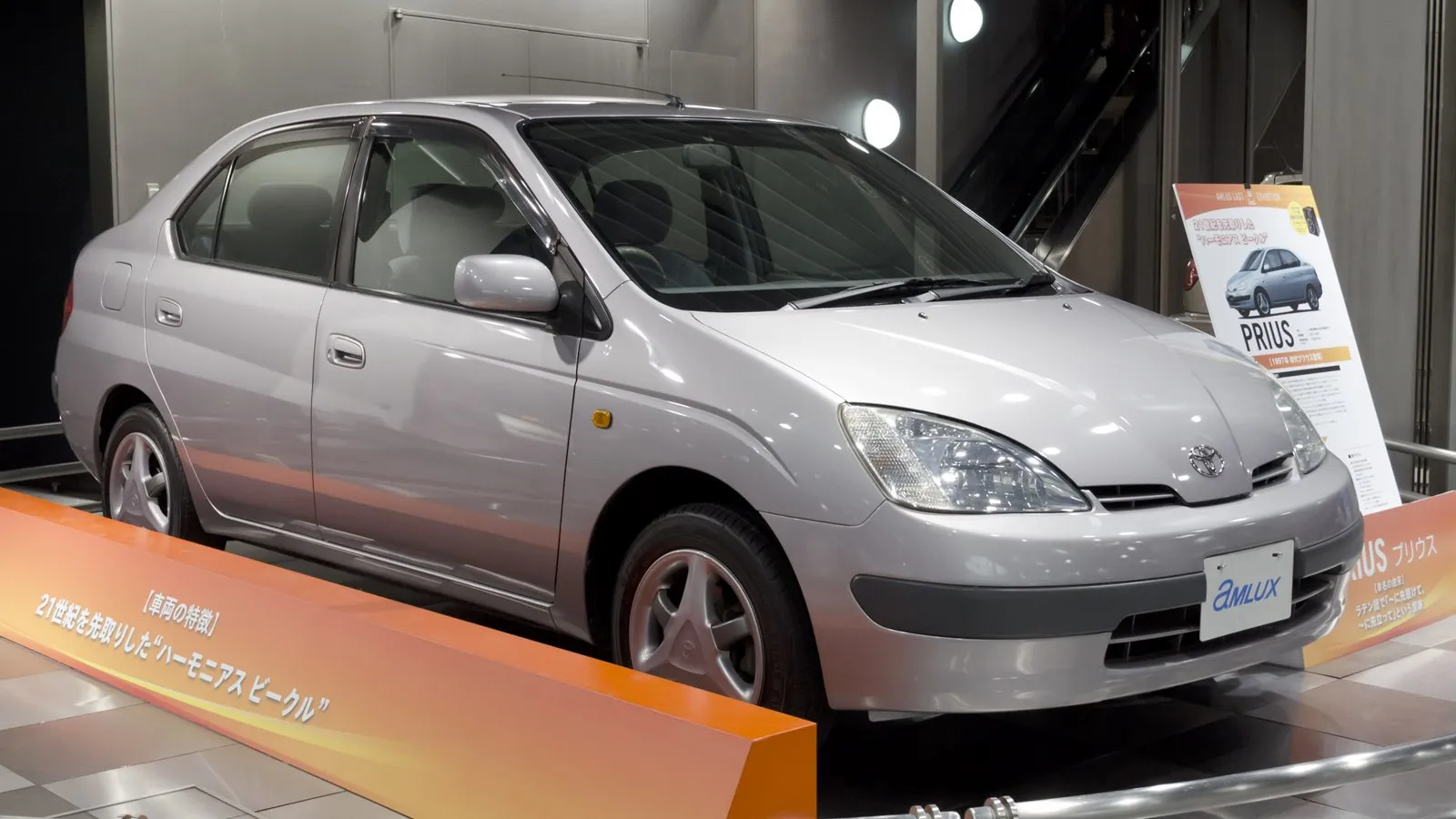
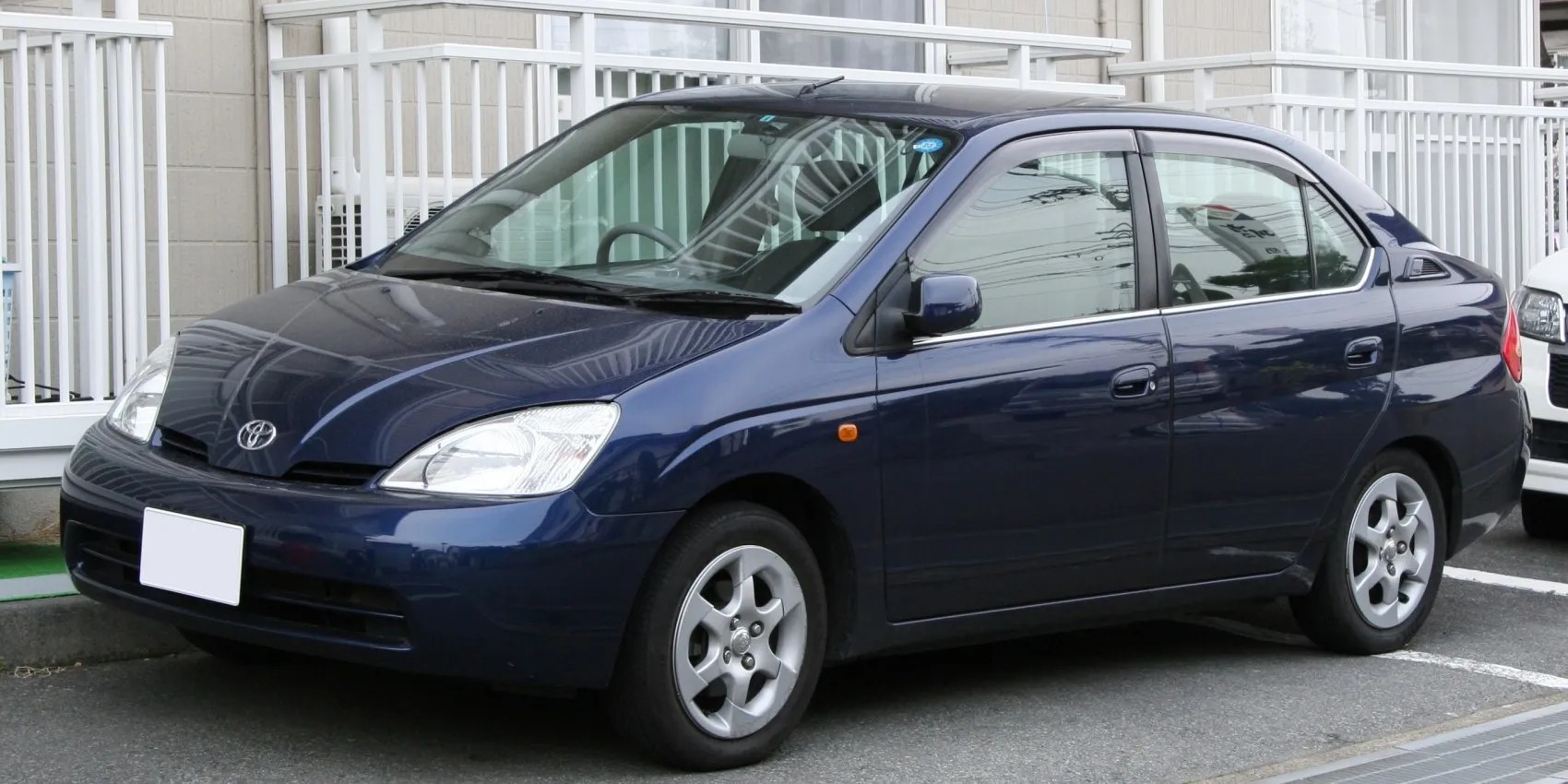
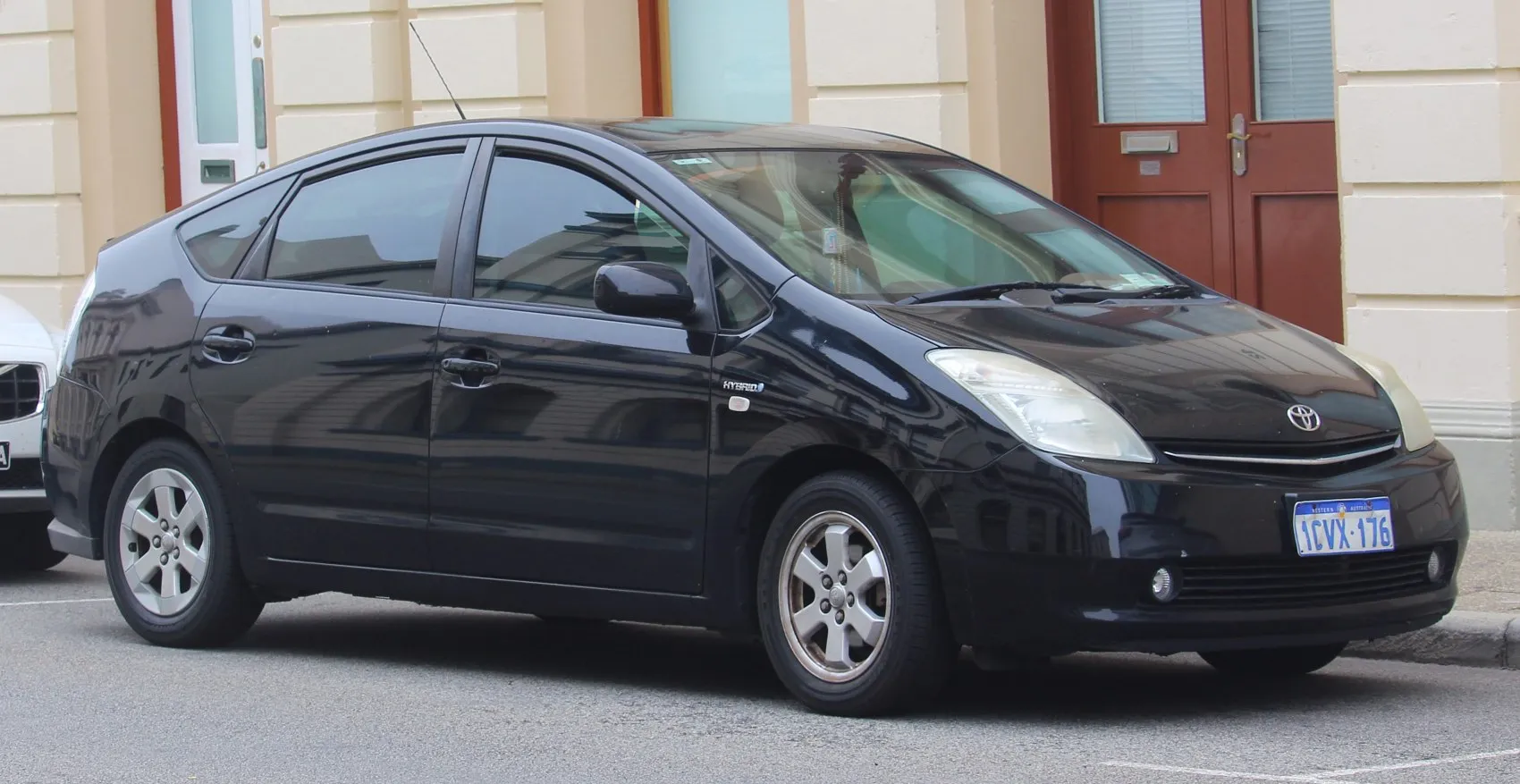
The Toyota Prius is a car produced by Toyota since 1997 over five generations. The Prius has a hybrid drivetrain, which combines an internal combustion engine and an electric motor. Initially offered as a subcompact four-door saloon, it has been produced only as a compact five-door liftback since 2003.
The Prius was developed by Toyota to be the "car for the 21st century"; it was the first mass-produced hybrid vehicle, first going on sale in Japan in 1997 at all four Toyota Japan dealership chains, and subsequently introduced worldwide in 2000....(Read more on Wikipedia)
c Overview:
Toyota Prius (c). With 111 Nm of torque, it offers ample pulling power. It boasts low fuel consumption (~4.9 l/100km). Weighing only 1148 kg, it’s quite light. Front‑wheel drive delivers efficiency and easy handling. Acceleration is relatively slow (0–100 km/h in 11.5 s). The top speed reaches 171 km/h. A compact car with a rear door that swings upward to provide access to the cargo area. Seating for 5 makes it ideal for daily use.
The Toyota Prius c was not directly tested by Euro NCAP under its specific model name. However, its platform sibling, the Toyota Yaris (XP130 generation), achieved a 5-star rating in 2011, suggesting a solid safety foundation for its class.
1.5 (101 Hp) Hybrid e-CVT Verdict:

Performance Verdict
Offers adequate performance for urban driving and daily commutes, though it's not designed for spirited acceleration or high-speed cruising. The e-CVT ensures smooth, seamless power delivery, prioritizing efficiency over raw speed.
Fuel Economy
Exceptional fuel economy is the highlight, making it a highly cost-effective choice for city dwellers and those prioritizing efficiency. The hybrid system seamlessly optimizes fuel consumption, especially in stop-and-go traffic.
Pros and Cons:
Pros:
- • Excellent fuel efficiency, especially in city driving
- • Proven Toyota hybrid reliability and low maintenance costs
- • Compact size and nimble handling make it ideal for urban environments
- • Surprisingly spacious trunk for its class
- • Smooth and quiet operation at low speeds due to hybrid system
Cons:
- • Modest acceleration and overall performance, not for enthusiasts
- • Interior materials can feel basic and less refined than some competitors
- • Noticeable road and wind noise at higher speeds
- • Rear drum brakes on this trim might feel less responsive than discs
- • Limited rear passenger space for adults on longer journeys
Specifications:
Specifications are compared to those of the previous generation(IV (XW50): 2016 - 2018).
| General: | |
|---|---|
| Brand: | Toyota |
| Model: | Prius |
| Generation: | c |
| Modification (Engine): | 1.5 (101 Hp) Hybrid e-CVT |
| Start of production: | 2017 |
| End of production: | 2019 |
| Powertrain Architecture: | FHEV (Full Hybrid Electric Vehicle) |
| Body type: | Hatchback |
| Seats: | 5 |
| Doors: | 5 |
| Engine: | |
|---|---|
| Power: | 73 Hp @ 4800 rpm. Same horsepower |
| Power per litre: | 48.8 Hp/l [520mm less] |
| Torque: | 111 Nm @ 4000 rpm. |
| Engine Model/Code: | 1NZ-FXE More details about the engine 1NZ-FXE |
| Engine displacement: | 1497 |
| Number of cylinders: | 4 |
| Engine configuration: | Inline |
| Number of valves per cylinder: | 4 |
| Fuel injection system: | Multi-port manifold injection |
| Engine aspiration: | Naturally aspirated engine |
| Valvetrain: | DOHC, VVT-i |
| Engine oil capacity: | 3.7 l |
| Coolant: | 5.3 l |
| Engine layout: | Front, Transverse |
| Cylinder Bore: | 74.93 mm mm |
| Piston Stroke: | 84.58 mm mm |
| Compression ratio: | 13.4:1 |
| Performance: | |
|---|---|
| Fuel Type: | Petrol (Gasoline) |
| Fuel consumption (economy) - urban: | 4.9 l/100 km |
| Fuel consumption (economy) - extra urban: | 5.5 l/100 km |
| Fuel consumption (economy) - combined: | 5.1 l/100 km |
| Acceleration 0 - 100 km/h: | 11.5 sec |
| Acceleration 0 - 62 mph: | 11.5 sec |
| Maximum speed: | 171 km/h |
| Weight-to-power ratio: | 11.4 kg/Hp, 88 Hp/tonne |
| Weight-to-torque ratio: | 10.3 kg/Nm, 96.7 Nm/tonne |
| Acceleration 0 - 60 mph: | 10.9 sec |
| Space: | |
|---|---|
| Kerb Weight: | 1148 |
| Trunk (boot) space - minimum: | 484 l |
| Fuel tank capacity: | 36 l |
| Size: | |
|---|---|
| Length: | 4125 mm mm [520mm less] |
| Width: | 1742 mm mm [18mm less] |
| Height: | 1514 mm mm [44mm more] |
| Wheelbase: | 2550 mm mm [150mm less] |
| Front track: | 1481 mm |
| Rear (Back) track: | 1476 mm |
| Ride height (ground clearance): | 140 mm |
| Minimum turning circle (turning diameter): | 9.6 m [above average] |
| Powertrain: | |
|---|---|
| Drivetrain Architecture | The Internal combustion engine (ICE) and electric motor drive the front wheels of the car with the ability to work in full electric or mixed mode. |
| Drive wheel | Front wheel drive |
| Transmission type | Automatic |
| Gearbox type | e-CVT |
| Front brakes | Ventilated discs, 254 mm [Best for performance and cooling.] |
| Rear brakes | Drum, 228.6 mm [bad for performance and cooling.] |
| Assisting systems | ABS (Anti-lock braking system) |
| Steering type | Steering rack and pinion |
| Power steering | Electric Steering |
| Tires size | 175/65 R15; 195/50 R16 |
| Wheel rims size | 5J x 15; 6J x 16 |
| Front suspension | Independent, type McPherson with coil spring and anti-roll bar |
| Rear suspension | Torsion |
| Electric: | |
|---|---|
| Battery technology: | Nickel-metal hydride (NiMH) |
| Battery location: | Under the rear seats |
| System power: | 101 Hp |
| Electric motor power: | 61 Hp |
| Electric motor Torque: | 169 Nm |
| Electric motor location: | Integrated into the transmission |
| Electric motor type: | Synchronous |
| Battery voltage: | 144 V |













How many miles have you covered in your Toyota Prius? Share your journey!