
Click on image to view the full photo gallery
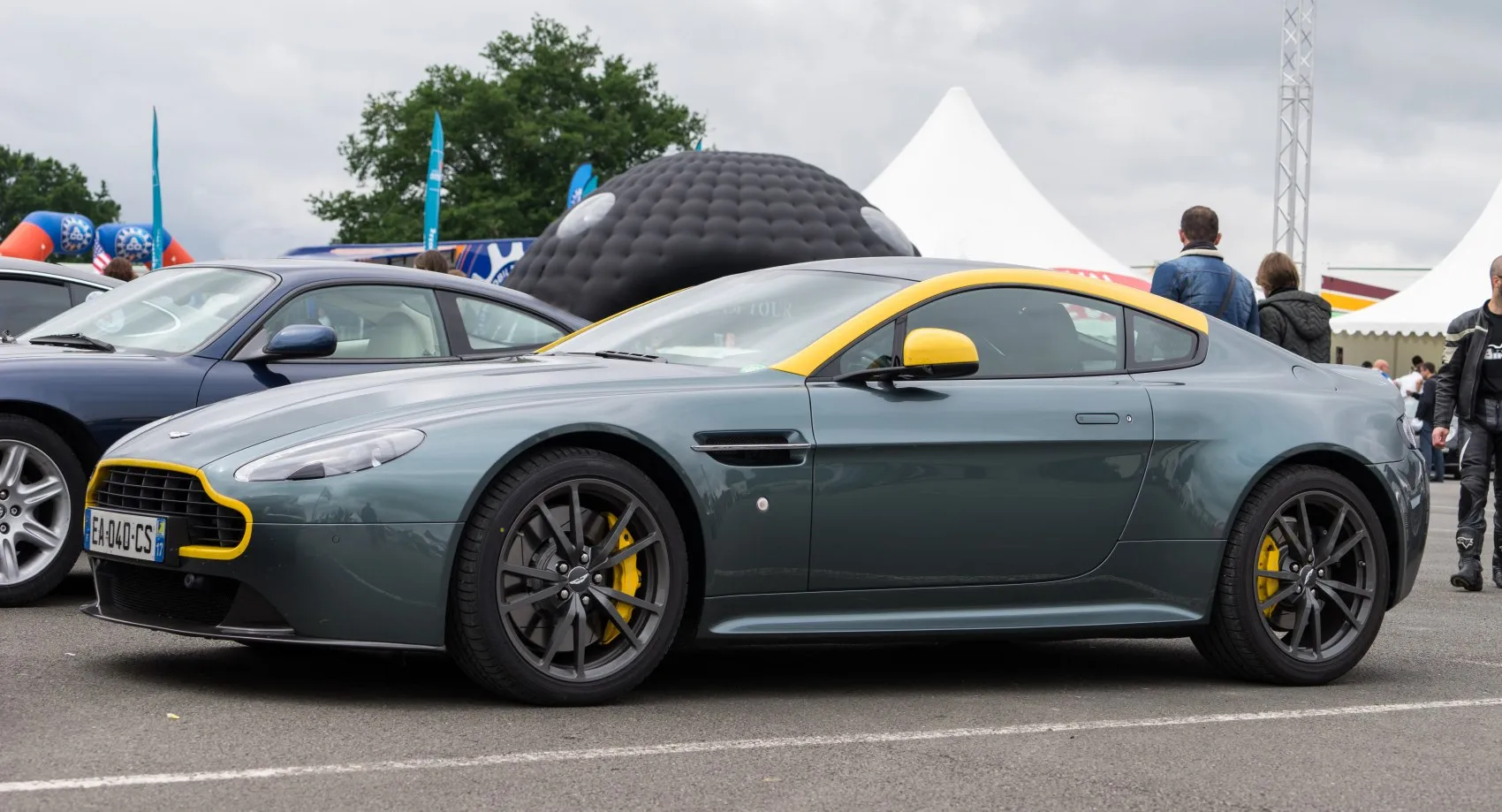
Aston Martin V8 Vantage Roadster (2018), (facelift 2024) 4.0 V8 (665 Hp) Automatic
Overall Rating
Aston Martin V8 Vantage:
The Aston Martin Vantage is a series of hand-built sports cars from the British automotive manufacturer Aston Martin. Aston Martin has previously used the "Vantage" name on high-performance variants of their existing GT models, notably on the Virage-based car of the 1990s. The modern car, in contrast, is the leanest and most agile car in Aston's lineup. As such, it is intended as a more focused model to reach out to potential buyers of cars such as the Porsche 911 as well as the exotic sports and GT cars with which Aston Martins traditionally compete....(Read more on Wikipedia)
Roadster (2018), (facelift 2024) Overview:
Aston Martin V8 Vantage (Roadster (2018), (facelift 2024)). With 800 Nm of torque, it offers ample pulling power. With a weight of 1665 kg, it falls in the mid‑range. Rear‑wheel drive offers dynamic handling and sporty feedback. Acceleration is excellent (0–100 km/h in 3.6 s). The top speed reaches 325 km/h. A two-seater convertible designed for open-top driving pleasure. Seating for 2 makes it ideal for daily use.
4.0 V8 (665 Hp) Automatic Verdict:

Performance Verdict
Exceptional performance, delivering immense power and torque for blistering acceleration and high top speeds, characteristic of a true supercar.
Fuel Economy
As expected for a high-performance twin-turbo V8, fuel consumption is significant, particularly under spirited driving, though WLTP figures provide a baseline.
Pros and Cons:
Pros:
- • Exhilarating performance from the powerful 4.0 V8 twin-turbo engine
- • Stunning and aggressive design, enhanced by the 2024 facelift
- • Luxurious and driver-focused interior with high-quality materials
- • Engaging driving dynamics with precise steering and handling
- • Exclusivity and strong brand prestige
- • Advanced technology and infotainment updates from the facelift
Cons:
- • High purchase price and significant running costs (fuel, insurance, maintenance)
- • Limited practicality with only two seats and a modest trunk capacity
- • Firm ride quality, even for a sports car, which might impact long-distance comfort for some
- • Not officially tested by Euro NCAP
- • Potential for rapid depreciation compared to some rivals
Specifications:
Specifications are compared to those of the previous generation(2018), (facelift 2024: February, 2024 - ).
| General: | |
|---|---|
| Brand: | Aston Martin |
| Model: | V8 Vantage |
| Generation: | Roadster (2018), (facelift 2024) |
| Modification (Engine): | 4.0 V8 (665 Hp) Automatic |
| Start of production: | January, 2025 |
| Powertrain Architecture: | Internal Combustion engine |
| Body type: | Roadster |
| Seats: | 2 |
| Doors: | 2 |
| Engine: | |
|---|---|
| Engine systems: | Start & Stop System |
| Power: | 665 Hp @ 6000 rpm. |
| Power per litre: | 167 Hp/l |
| Torque: | 800 Nm @ 2750-6000 rpm. |
| Engine Model/Code: | M177 [Same engine] More details about the engine M177 |
| Engine displacement: | 3982 |
| Number of cylinders: | 8 |
| Engine configuration: | V-engine |
| Number of valves per cylinder: | 4 |
| Fuel injection system: | Direct injection |
| Engine aspiration: | Twin-Turbo, Intercooler |
| Valvetrain: | Dual VCT |
| Engine oil capacity: | 8.5 l |
| Coolant: | 18.6 l |
| Engine layout: | Front, Longitudinal |
| Compression ratio: | 8.6:1 |
| Performance: | |
|---|---|
| Fuel Type: | Petrol (Gasoline) |
| Combined fuel consumption (WLTP): | 12.3 l/100 km |
| Fuel consumption at Low speed (WLTP): | 22.8 l/100 km |
| Fuel consumption at Medium speed (WLTP): | 11.9 l/100 km |
| Fuel consumption at high speed (WLTP): | 9.9 l/100 km |
| Fuel consumption at very high speed (WLTP): | 10.7 l/100 km |
| Acceleration 0 - 100 km/h: | 3.6 sec |
| Acceleration 0 - 62 mph: | 3.6 sec |
| Maximum speed: | 325 km/h |
| Weight-to-power ratio: | 2.5 kg/Hp, 399.4 Hp/tonne |
| Weight-to-torque ratio: | 2.1 kg/Nm, 480.5 Nm/tonne |
| Acceleration 0 - 60 mph: | 3.5 sec |
| Space: | |
|---|---|
| Kerb Weight: | 1665 |
| Trunk (boot) space - minimum: | 200 l |
| Fuel tank capacity: | 78 l |
| Size: | |
|---|---|
| Length: | 4495 mm mm [Same length.] |
| Width: | 2045 mm mm [Same width.] |
| Height: | 1285 mm mm [10mm more] |
| Wheelbase: | 2705 mm mm [Same wheelbase.] |
| Width with mirrors folded: | 2045 mm |
| Width including mirrors: | 2124 mm |
| Front overhang: | 925 mm |
| Rear overhang: | 865 mm |
| Ride height (ground clearance): | 94 mm |
| Minimum turning circle (turning diameter): | 12 m [above average] |
| Approach angle: | 10.0-10.1° |
| Departure angle: | 14.6° |
| Powertrain: | |
|---|---|
| Drivetrain Architecture | The Internal combustion engine (ICE) drives the rear wheels of the vehicle. |
| Drive wheel | Rear wheel drive |
| Number of gears | 8 |
| Transmission type | Automatic |
| Front brakes | Ventilated discs, 400-410x36-38 mm [Best for performance and cooling.] |
| Rear brakes | Ventilated discs, 360x36-38 mm [Best for performance and cooling.] |
| Assisting systems | ABS (Anti-lock braking system) |
| Steering type | Steering rack and pinion |
| Power steering | Electric Steering |
| Tires size | Front wheel tires: 275/35 ZR21 |
| Wheel rims size | Front wheel rims: 21 |
| Front suspension | Coil spring, Double wishbone, Transverse stabilizer |
| Rear suspension | Independent multi-link spring suspension with stabilizer |








Driven it? Loved it? Hated it? Share your honest review!