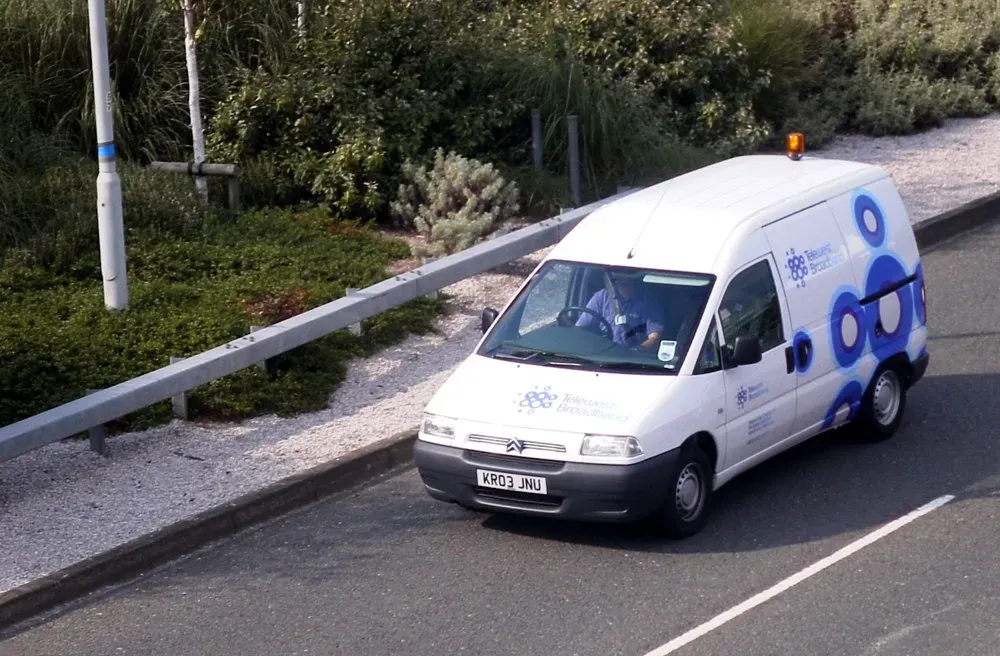
Click on image to view the full photo gallery
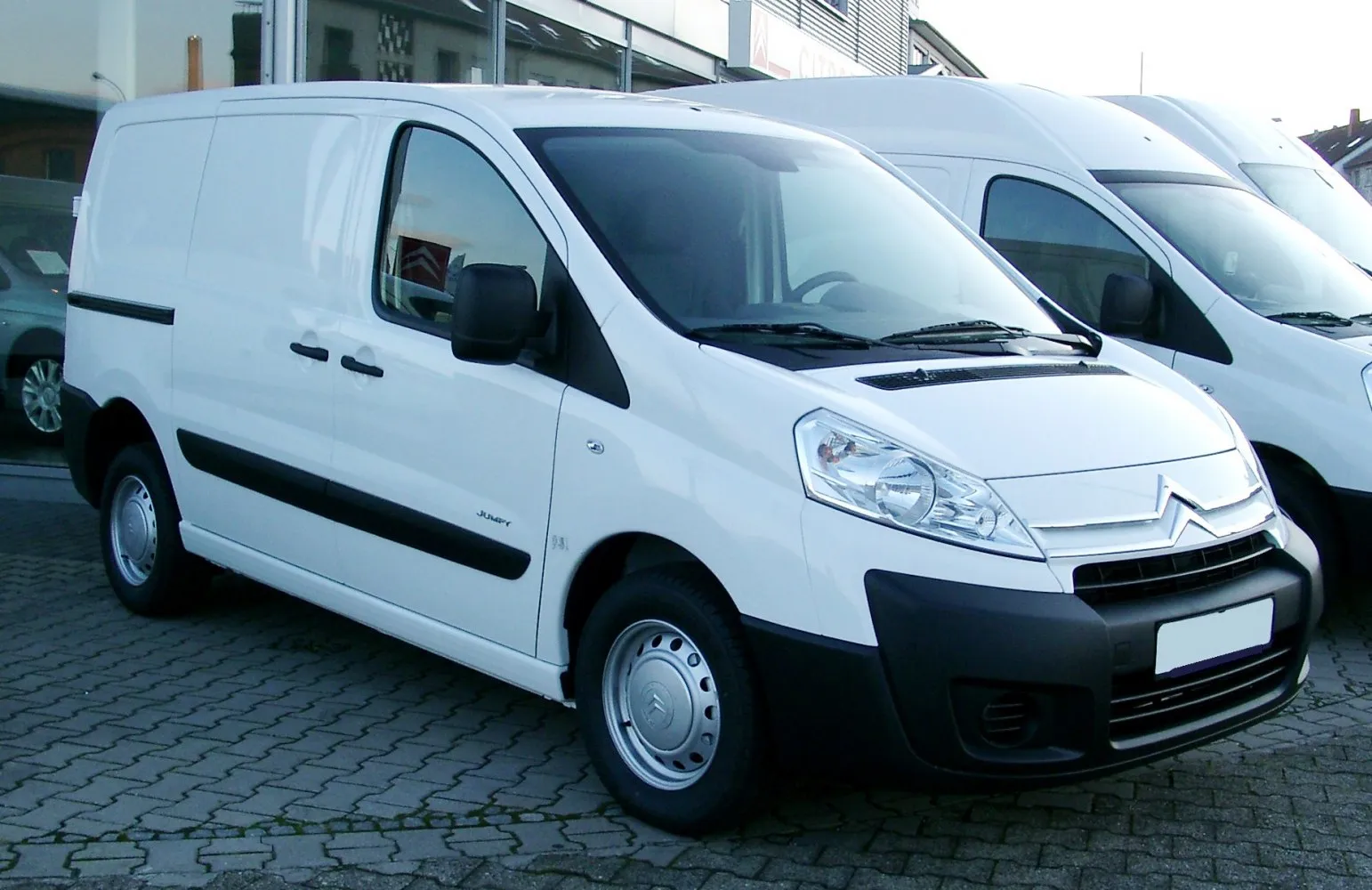
Citroen Jumpy I 1.9D (70 Hp)
Overall Rating
Citroen Jumpy:
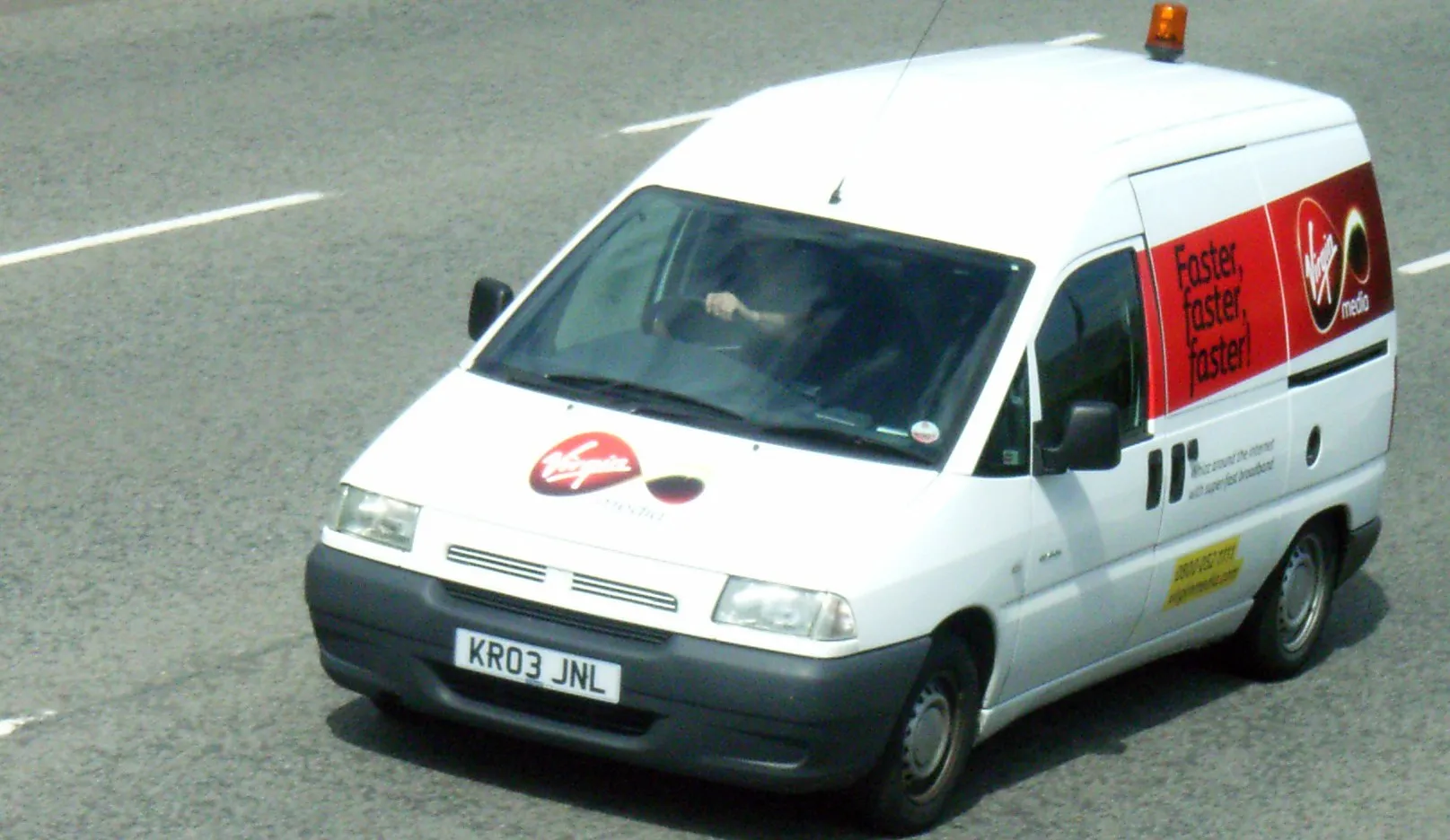
The Citroën Jumpy is a light commercial van jointly developed by FCA Italy and PSA Group , and previously manufactured by Sevel, a joint venture between the two companies formed in 1994. The Jumpy is also sold as the Peugeot Expert, Fiat Scudo, Opel Vivaro, and Toyota ProAce.
All three models were facelifted in March 2004 before being replaced by new, second-generation models in 2007. The redesigned models again shared the same design and engineering, with subtle trim changes between each brand. The second generation received a small facelift in February 2012 and from July 2013, Toyota began sales of a rebadged version called the Toyota Proace....(Read more on Wikipedia)
I Overview:
Citroen Jumpy (I). With 125 Nm of torque, it offers ample pulling power. It has moderate fuel consumption (~10.1 l/100km). With a weight of 1380 kg, it falls in the mid‑range. Front‑wheel drive delivers efficiency and easy handling. Acceleration is relatively slow (0–100 km/h in 22.3 s). The top speed reaches 138 km/h. A spacious vehicle designed to transport passengers comfortably, often with sliding doors. Seating for 2 makes it ideal for daily use.
The Citroen Jumpy I generation was not tested by Euro NCAP. As a commercial vehicle from the late 1990s, safety standards and testing protocols were less stringent than modern vehicles, focusing more on basic structural integrity.
1.9D (70 Hp) Verdict:

Performance Verdict
Very sluggish acceleration, making it suitable only for low-speed, light-duty work. Struggles significantly on inclines or with loads.
Fuel Economy
Acceptable fuel economy for a naturally aspirated diesel of its era, but not outstanding. A basic workhorse for efficiency.
Pros and Cons:
Pros:
- • Versatile cargo space and practical body design
- • Good range of efficient diesel engine options (especially HDi/TD)
- • Robust and generally reliable for commercial use
- • Relatively compact dimensions for urban maneuverability
- • Strong value proposition as a workhorse van
Cons:
- • Basic interior comfort and limited refinement
- • Petrol engines are underpowered and very thirsty
- • Limited safety features and no Euro NCAP rating
- • Older naturally aspirated diesels are very slow
- • Dated design and technology compared to later generations
Specifications:
Specifications are compared to those of the previous generation(I: 1999 - 2001).
| General: | |
|---|---|
| Brand: | Citroen |
| Model: | Jumpy |
| Generation: | I |
| Modification (Engine): | 1.9D (70 Hp) |
| Start of production: | 2000 |
| End of production: | 2003 |
| Powertrain Architecture: | Internal Combustion engine |
| Body type: | Minivan |
| Seats: | 2 |
| Doors: | 4 |
| Engine: | |
|---|---|
| Power: | 70 Hp @ 4600 rpm. Same horsepower |
| Power per litre: | 37.5 Hp/l [Same length.] |
| Torque: | 125 Nm @ 2500 rpm. |
| Engine Model/Code: | WJZ DW8 More details about the engine WJZ DW8 |
| Engine displacement: | 1868 |
| Number of cylinders: | 4 |
| Engine configuration: | Inline |
| Number of valves per cylinder: | 2 |
| Fuel injection system: | Precombustion chamber injection |
| Engine aspiration: | Naturally aspirated engine |
| Valvetrain: | SOHC |
| Engine oil capacity: | 4.2 l |
| Coolant: | 9 l |
| Engine layout: | Front, Transverse |
| Cylinder Bore: | 82.2 mm mm |
| Piston Stroke: | 88 mm mm |
| Performance: | |
|---|---|
| Fuel Type: | Diesel |
| Fuel consumption (economy) - urban: | 10.1 l/100 km |
| Fuel consumption (economy) - extra urban: | 6.6 l/100 km |
| Fuel consumption (economy) - combined: | 7.9 l/100 km |
| Emission standard: | Euro 2 |
| Acceleration 0 - 100 km/h: | 22.3 sec |
| Acceleration 0 - 62 mph: | 22.3 sec |
| Maximum speed: | 138 km/h |
| Weight-to-power ratio: | 19.7 kg/Hp, 50.7 Hp/tonne |
| Weight-to-torque ratio: | 11 kg/Nm, 90.6 Nm/tonne |
| Acceleration 0 - 60 mph: | 21.2 sec |
| Space: | |
|---|---|
| Kerb Weight: | 1380 |
| Max. weight: | 2190 |
| Max. roof load: | 100 kg |
| Max load: | 810 |
| Trunk (boot) space - maximum: | 4000 l |
| Permitted trailer load with brakes (12%): | 1100 kg |
| Fuel tank capacity: | 80 l |
| Permitted trailer load without brakes: | 690 kg |
| Permitted towbar download: | 60 kg |
| Permitted trailer load with brakes (8%): | 1600 kg |
| Size: | |
|---|---|
| Length: | 4440 mm mm [Same length.] |
| Width: | 1810 mm mm [Same width.] |
| Height: | 1927 mm mm [Same height.] |
| Wheelbase: | 2824 mm mm [Same wheelbase.] |
| Width including mirrors: | 2134 mm |
| Front track: | 1540 mm |
| Rear (Back) track: | 1540 mm |
| Front overhang: | 846 mm |
| Rear overhang: | 770 mm |
| Minimum turning circle (turning diameter): | 12.35 m [above average] |
| Powertrain: | |
|---|---|
| Drivetrain Architecture | The Internal combustion engine (ICE) drives the front wheels of the vehicle. |
| Drive wheel | Front wheel drive |
| Number of gears | 5 |
| Transmission type | Manual |
| Front brakes | Ventilated discs [Best for performance and cooling.] |
| Rear brakes | Drum [bad for performance and cooling.] |
| Assisting systems | ABS (Anti-lock braking system) |
| Steering type | Steering rack and pinion |
| Power steering | Hydraulic Steering |
| Tires size | 195/70 R14 |
| Front suspension | Independent, type McPherson with coil spring and anti-roll bar |
| Rear suspension | Semi-dependent beam with stabilizer lateral stability |








Fuel, speed, and comfort: How does the Citroen Jumpy rank in your book?