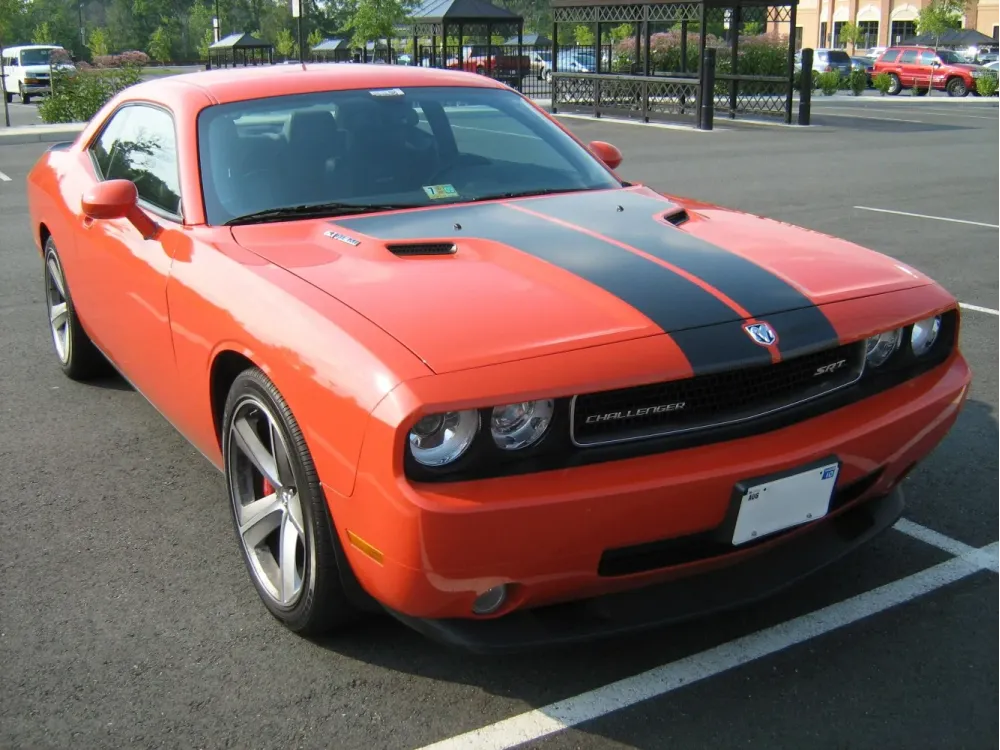
Click on image to view the full photo gallery
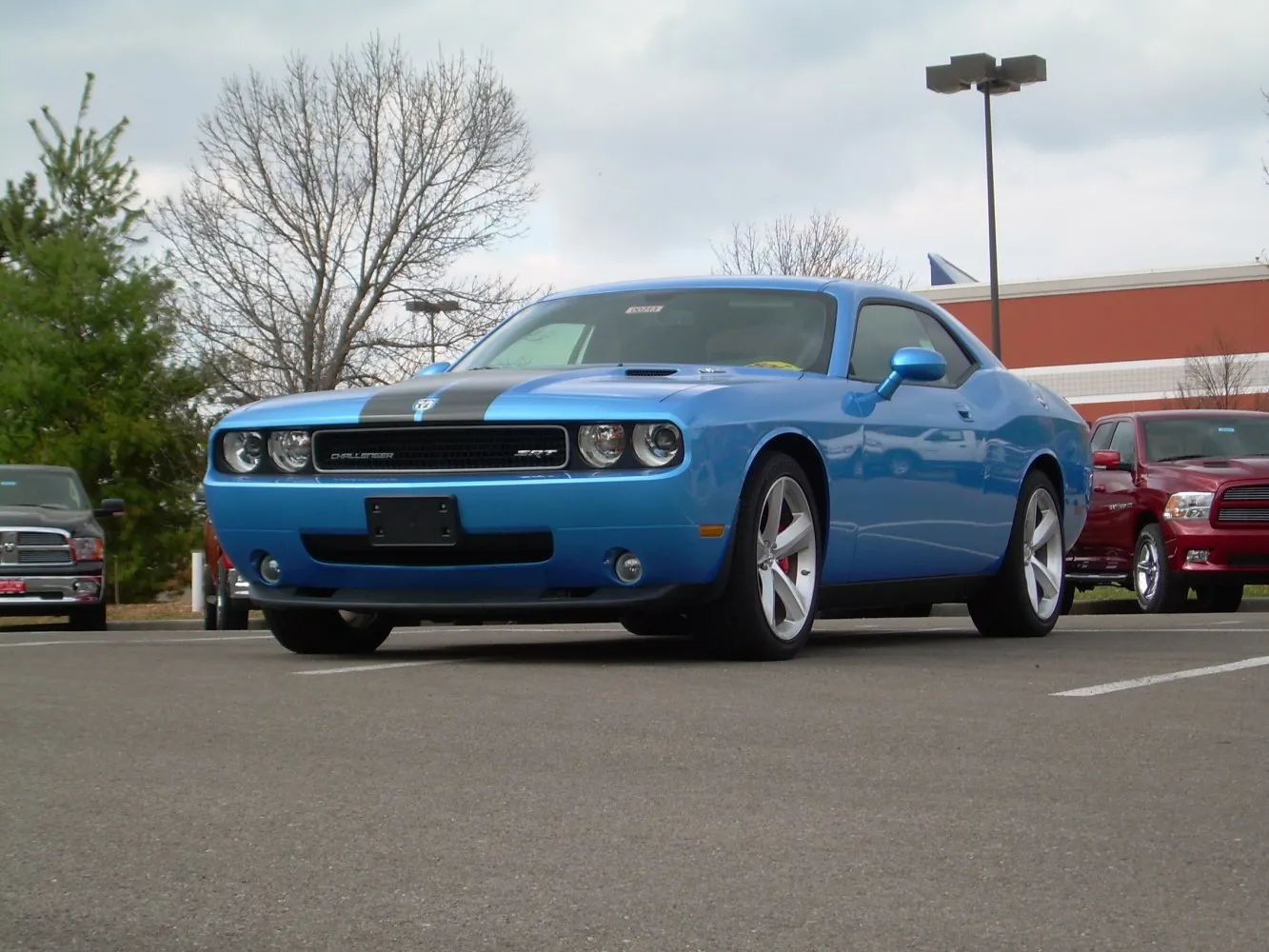
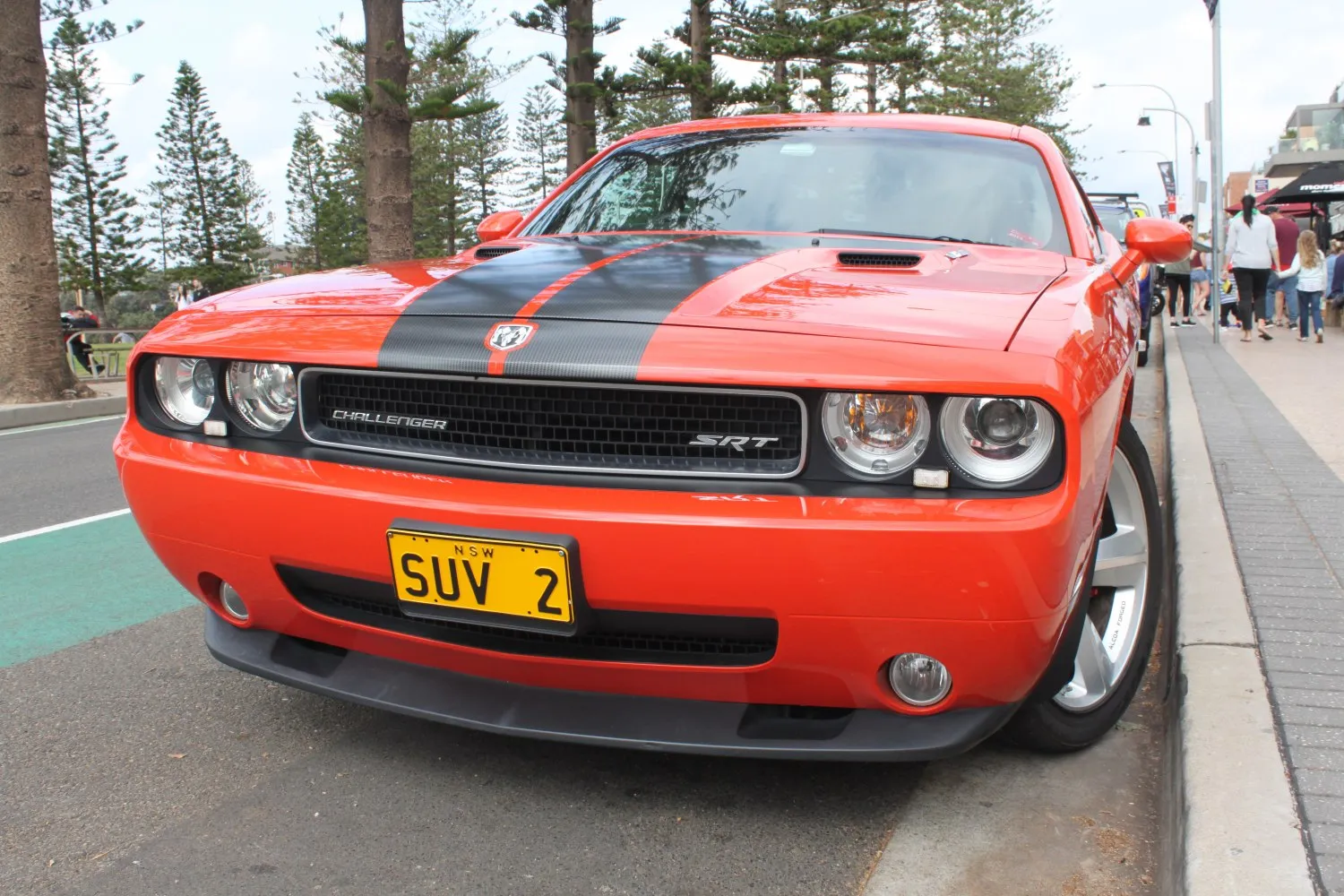
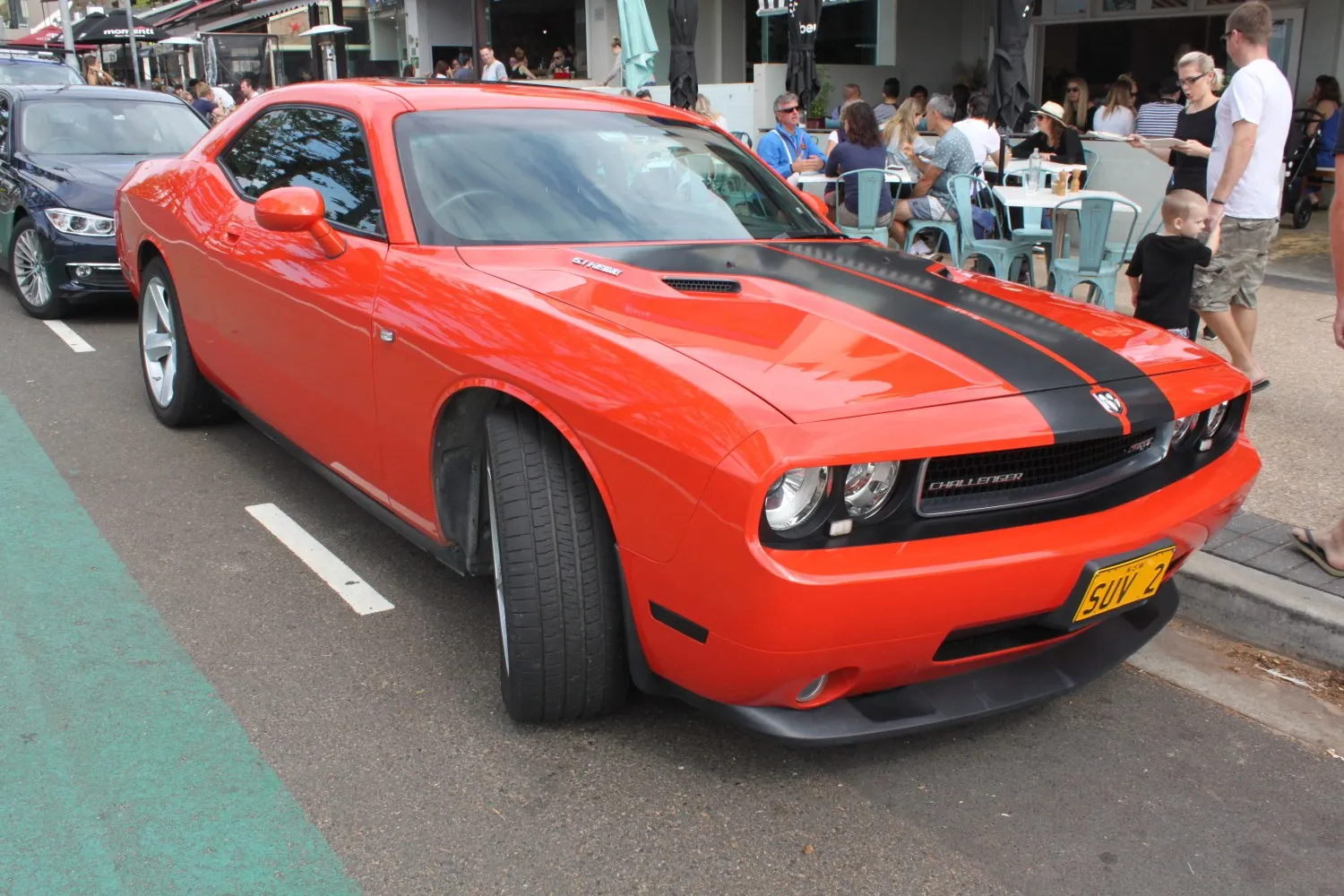
Dodge Challenger III 3.5 V6 (250 Hp) Automatic
Overall Rating
Dodge Challenger:
The Dodge Challenger is the name of three generations of automobiles produced by the American automobile manufacturer Dodge. However, the first use of the Challenger name by Dodge dates back to 1959 for marketing a "value version" of the full-sized Coronet Silver Challenger.
From model years 1970 to 1974, the first-generation Dodge Challenger pony car was built using the Chrysler E platform in hardtop and convertible body styles sharing significant components with the Plymouth Barracuda.
The second generation, from model years 1978 to 1983, was a rebadged Mitsubishi Galant Lambda / Sapporo, a coupe version of an economical compact car....(Read more on Wikipedia)
III Overview:
Dodge Challenger (III). With 339 Nm of torque, it offers ample pulling power. With a weight of 1688 kg, it falls in the mid‑range. Rear‑wheel drive offers dynamic handling and sporty feedback. A two-door car with a fixed roof, known for its sporty design and dynamic performance. Seating for 5 makes it ideal for daily use.
The Dodge Challenger III was primarily designed and sold for the North American market and was not tested by Euro NCAP. Safety ratings are typically available from NHTSA and IIHS for this model.
3.5 V6 (250 Hp) Automatic Verdict:

Performance Verdict
Offers adequate power for daily commuting and highway cruising, but lacks the aggressive punch and sound expected from a Challenger, feeling somewhat underpowered for its size.
Fuel Economy
More fuel-efficient than the V8s, making it a more practical choice for daily driving, though still not class-leading for a V6 coupe.
Pros and Cons:
Pros:
- • Iconic muscle car styling and presence
- • Powerful V8 engine options with thrilling performance
- • Comfortable ride quality for a sports coupe
- • Spacious interior and trunk for its class
- • Relatively affordable entry into muscle car ownership
Cons:
- • Poor fuel economy, especially with V8 engines
- • Large size can make city driving and parking challenging
- • Interior materials can feel less premium than some rivals
- • V6 models lack the true muscle car feel and sound
- • Handling is more geared towards straight-line speed than agility
Specifications:
Specifications are compared to those of the previous generation(III: 2008 - 2010).
| General: | |
|---|---|
| Brand: | Dodge |
| Model: | Challenger |
| Generation: | III |
| Modification (Engine): | 3.5 V6 (250 Hp) Automatic |
| Start of production: | 2009 |
| End of production: | 2010 |
| Powertrain Architecture: | Internal Combustion engine |
| Body type: | Coupe |
| Seats: | 5 |
| Doors: | 4 |
| Engine: | |
|---|---|
| Power: | 250 Hp @ 6400 rpm. Same horsepower |
| Power per litre: | 71.1 Hp/l [Same length.] |
| Torque: | 339 Nm @ 3800 rpm. |
| Engine Model/Code: | Pentastar / EGG More details about the engine Pentastar / EGG |
| Engine displacement: | 3518 |
| Number of cylinders: | 6 |
| Engine configuration: | V-engine |
| Number of valves per cylinder: | 4 |
| Fuel injection system: | Multi-port manifold injection |
| Engine aspiration: | Naturally aspirated engine |
| Valvetrain: | SOHC |
| Engine oil capacity: | 5.7 l |
| Coolant: | 10.2 l |
| Engine layout: | Front, Longitudinal |
| Cylinder Bore: | 96 mm mm |
| Piston Stroke: | 81 mm mm |
| Compression ratio: | 10:1 |
| Maximum engine speed: | 6800 rpm. |
| Performance: | |
|---|---|
| Fuel Type: | Petrol (Gasoline) |
| Fuel consumption (economy) - urban: | 13.1 l/100 km |
| Fuel consumption (economy) - extra urban: | 9.4 l/100 km |
| Emission standard: | ULEV II |
| Weight-to-power ratio: | 6.8 kg/Hp, 148.1 Hp/tonne |
| Weight-to-torque ratio: | 5 kg/Nm, 200.8 Nm/tonne |
| Space: | |
|---|---|
| Kerb Weight: | 1688 |
| Trunk (boot) space - minimum: | 459 l |
| Permitted trailer load with brakes (12%): | 454 kg |
| Fuel tank capacity: | 68 l |
| Size: | |
|---|---|
| Length: | 5023 mm mm [Same length.] |
| Width: | 1923 mm mm [Same width.] |
| Height: | 1449 mm mm [Same height.] |
| Wheelbase: | 2946 mm mm [Same wheelbase.] |
| Front track: | 1603 mm |
| Rear (Back) track: | 1604 mm |
| Ride height (ground clearance): | 122 mm |
| Minimum turning circle (turning diameter): | 11.9 m [above average] |
| Powertrain: | |
|---|---|
| Drivetrain Architecture | The Internal combustion engine (ICE) drives the rear wheels of the vehicle. |
| Drive wheel | Rear wheel drive |
| Number of gears | 4 |
| Transmission type | Automatic |
| Front brakes | Ventilated discs [Best for performance and cooling.] |
| Rear brakes | Disc [above average] |
| Assisting systems | ABS (Anti-lock braking system) |
| Steering type | Steering rack and pinion |
| Power steering | Electric Steering |
| Tires size | 215/65 R17; 225/60 R18 |
| Wheel rims size | 7J x 17; 7.5J x 18 |
| Front suspension | Coil spring, Double wishbone, Transverse stabilizer |
| Rear suspension | Independent multi-link suspension, Transverse stabilizer, Coil spring |





Driven it? Loved it? Hated it? Share your honest review!