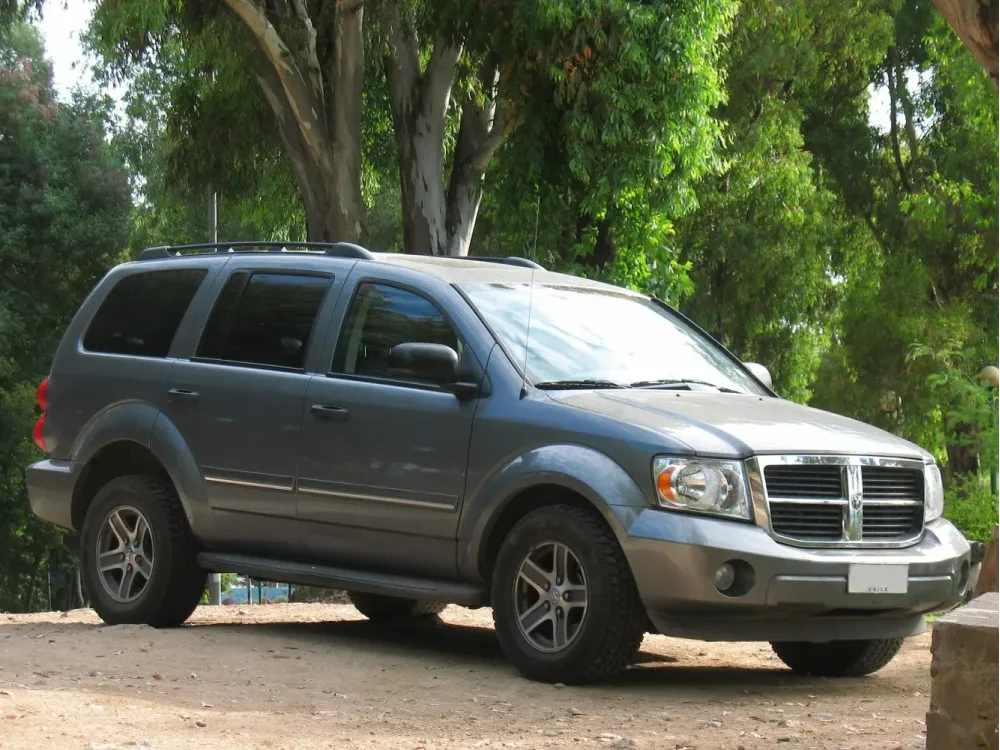
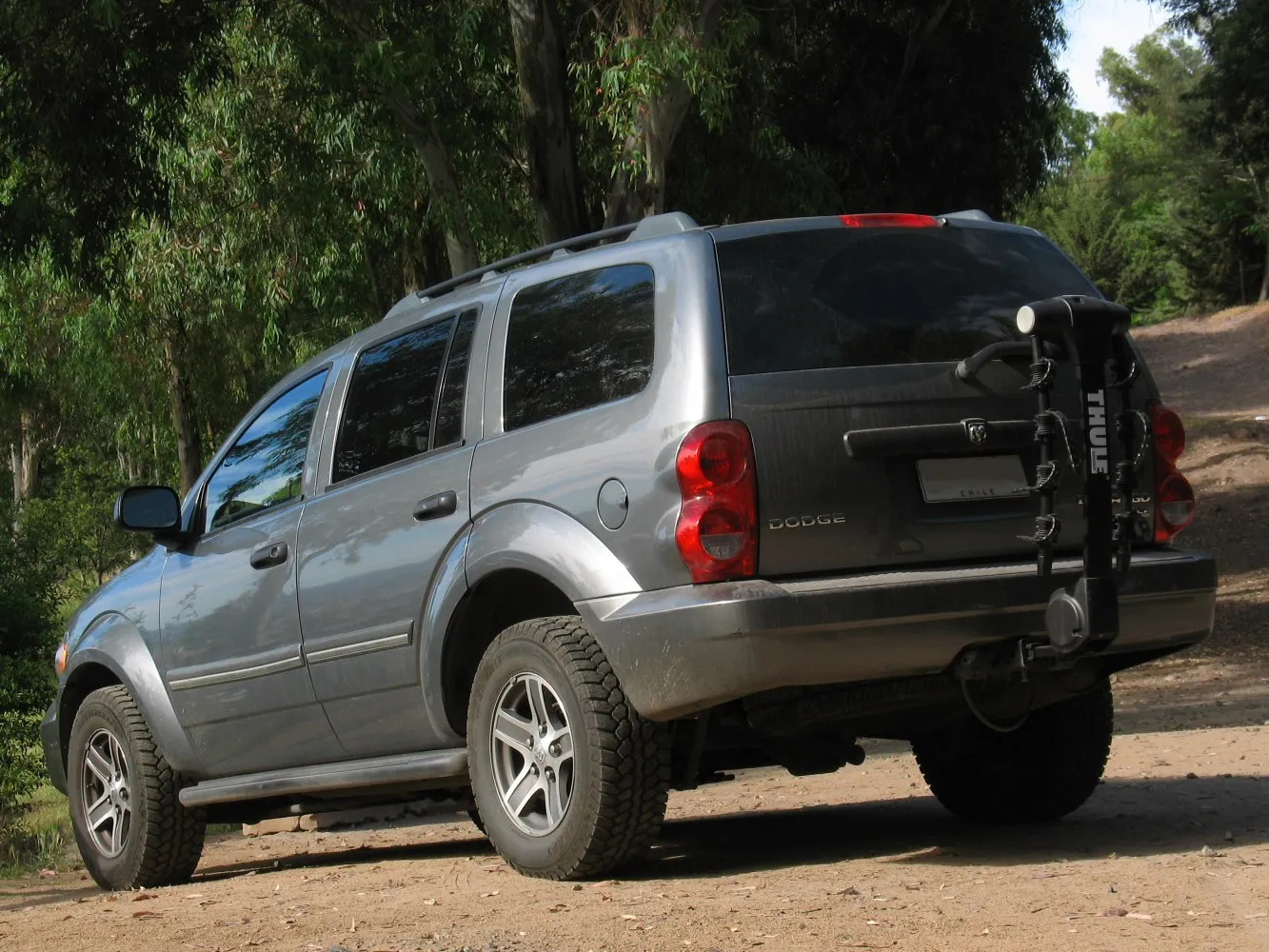
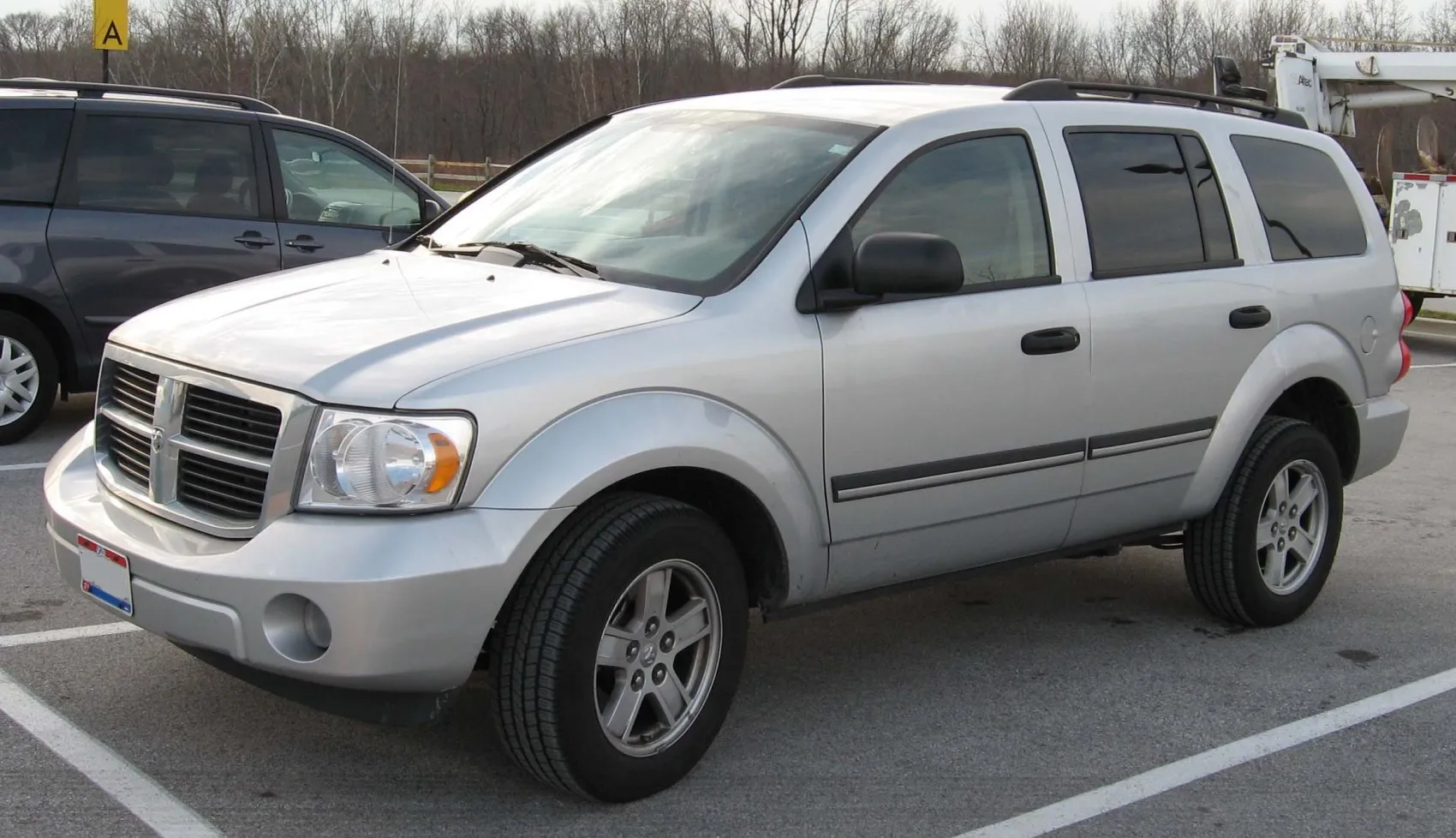
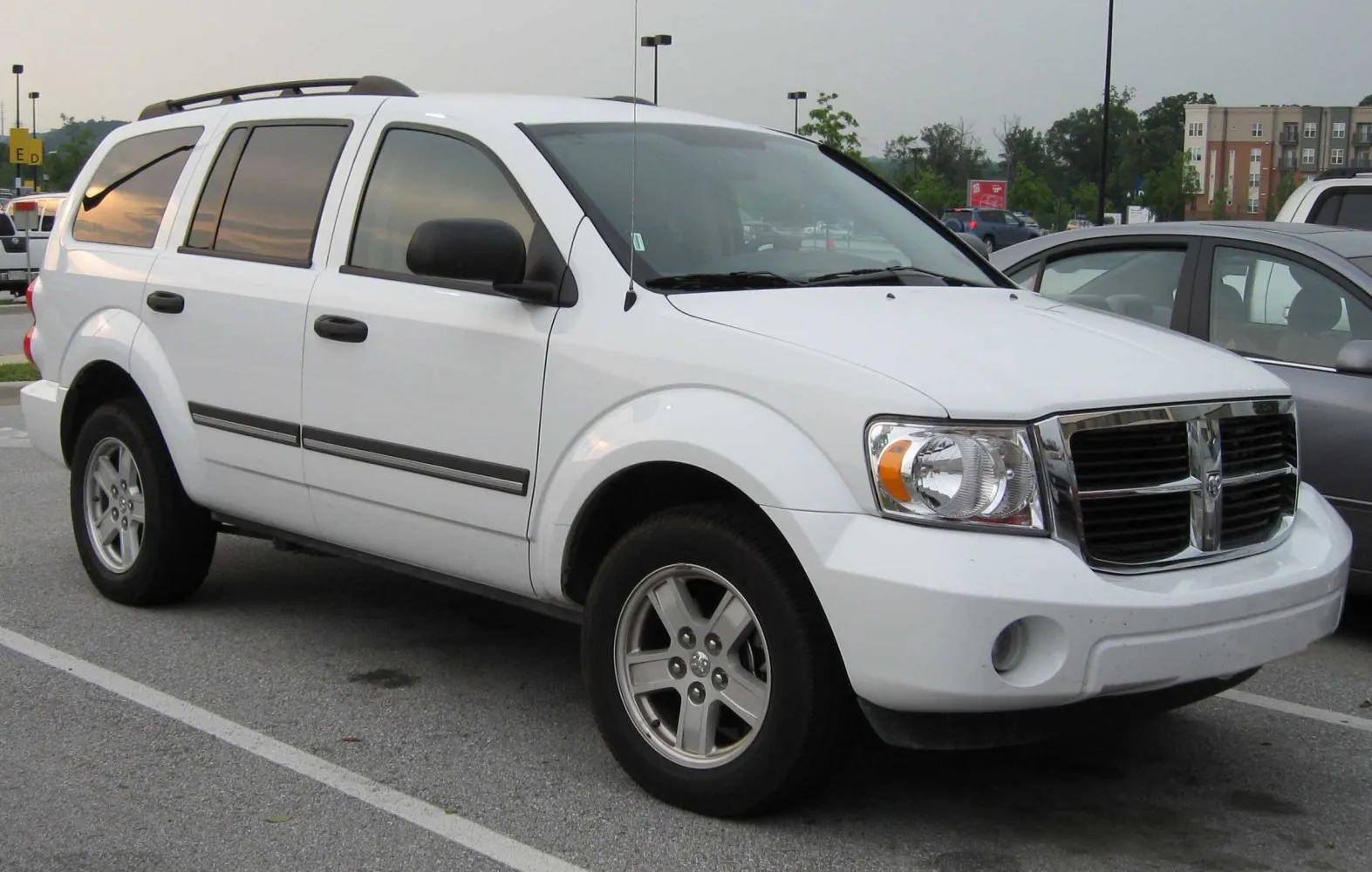
Click on image to view the full photo gallery
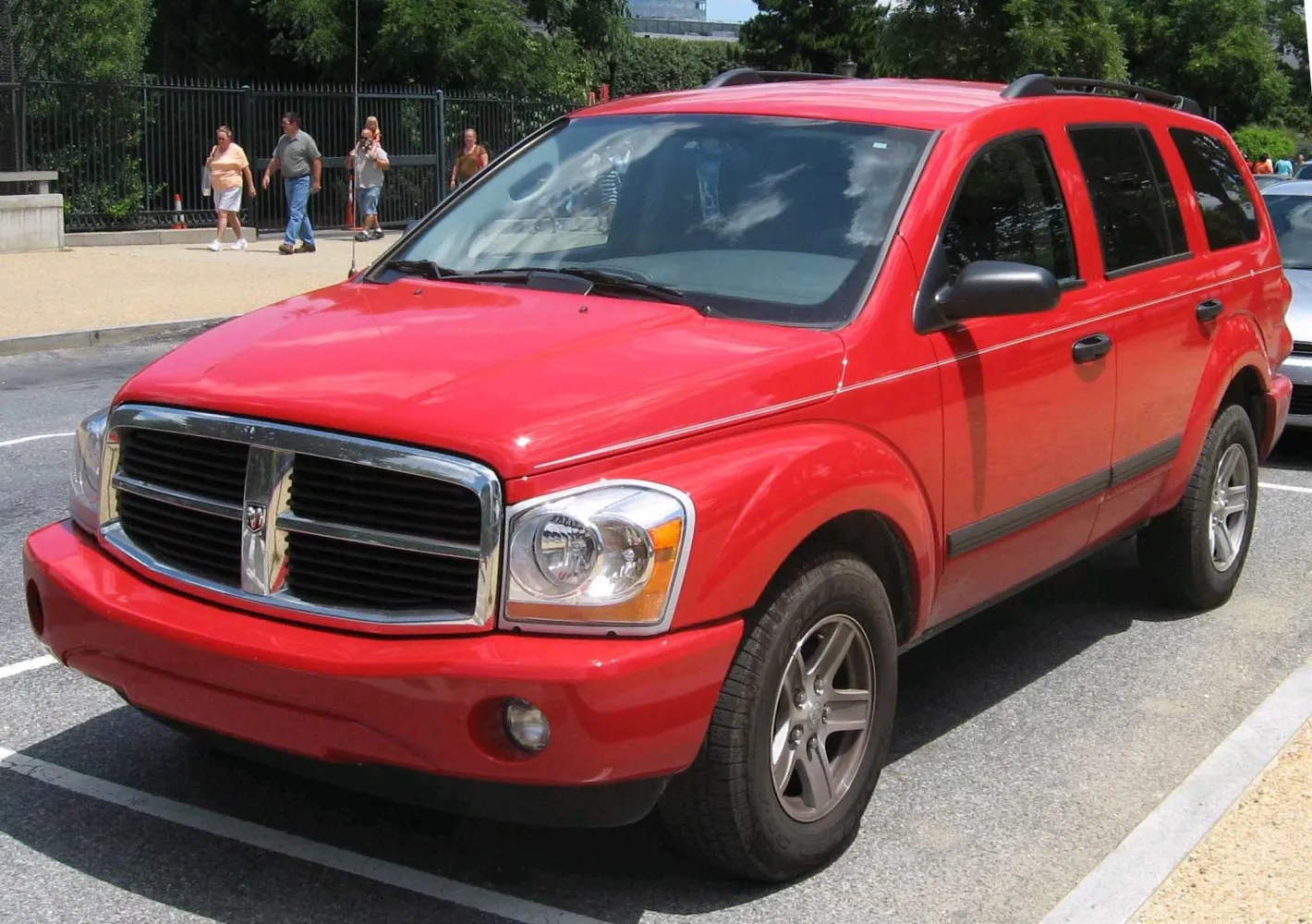
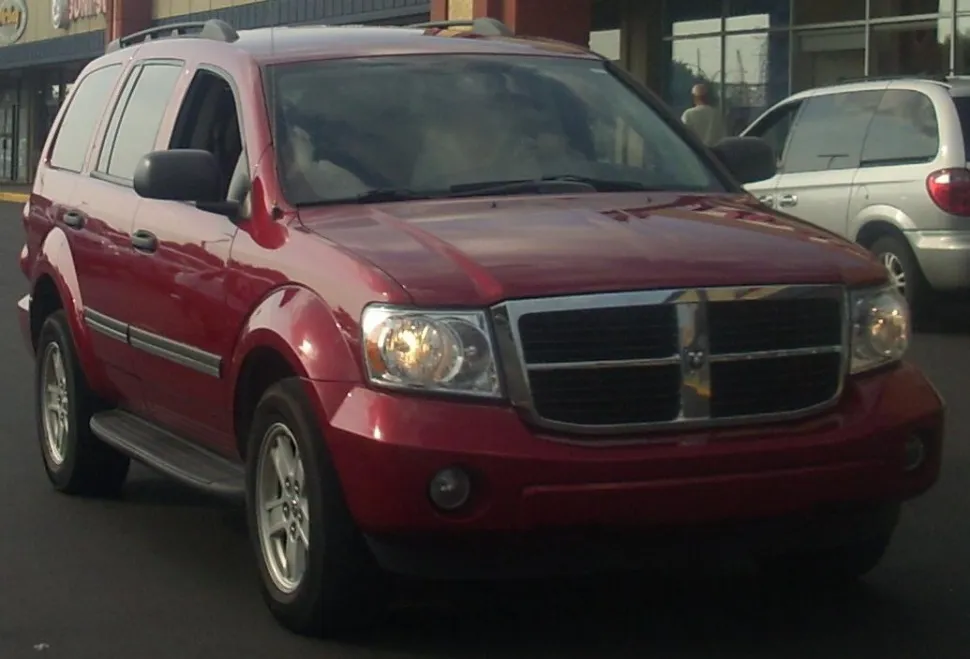
Dodge Durango II (HB, facelift 2006) 3.7 Magnum V6 (210 Hp) Automatic
Overall Rating
Dodge Durango:
The Dodge Durango is a mid-size SUV produced by Dodge starting with the 1998 model year. The first two generations were very similar in that both were based on the Dodge Dakota and Dodge Ram, both featured a body-on-frame construction and both were produced at the Newark Assembly Plant in Newark, Delaware through the 2009 model year.
The third-generation Durango began with the 2011 model year. It is built on the same platform as the Jeep Grand Cherokee, features unibody construction, and has been assembled at the Jefferson North Assembly Plant in Detroit, Michigan, since late 2010....(Read more on Wikipedia)
II (HB, facelift 2006) Overview:
Dodge Durango (II (HB, facelift 2006)). With 319 Nm of torque, it offers ample pulling power. At around 2096 kg, it’s on the heavier side. Rear‑wheel drive offers dynamic handling and sporty feedback. A sport utility vehicle offering higher ground clearance and versatile cargo space. Seating for 5 makes it ideal for daily use.
3.7 Magnum V6 (210 Hp) Automatic Verdict:

Performance Verdict
Provides adequate power for daily driving and light duties, but feels strained with heavy loads, passengers, or at highway speeds. Not ideal for serious towing.
Fuel Economy
While the most 'efficient' option, it's still quite thirsty for a V6 in a large SUV, especially in urban settings. Expect high running costs.
Pros and Cons:
Pros:
- • Powerful V8 engine options, especially the HEMI
- • High towing capacity for its class
- • Spacious and versatile interior (up to 8 seats)
- • Rugged, classic American SUV styling
- • Available AWD for all-weather capability
Cons:
- • Poor fuel economy across all engines
- • Interior materials can feel dated compared to rivals
- • Handling can be ponderous and truck-like
- • Some known reliability issues with electronics and minor components
- • Large turning radius in urban environments
Specifications:
Specifications are compared to those of the previous generation(II (HB): 2004 - 2006).
| General: | |
|---|---|
| Brand: | Dodge |
| Model: | Durango |
| Generation: | II (HB, facelift 2006) |
| Modification (Engine): | 3.7 Magnum V6 (210 Hp) Automatic |
| Start of production: | 2006 |
| End of production: | December, 2008 |
| Powertrain Architecture: | Internal Combustion engine |
| Body type: | SUV |
| Seats: | 5-8 |
| Doors: | 5 |
| Engine: | |
|---|---|
| Power: | 210 Hp @ 5200 rpm. Same horsepower |
| Power per litre: | 56.7 Hp/l [186mm more] |
| Torque: | 319 Nm @ 4000 rpm. |
| Engine Model/Code: | EKG More details about the engine EKG |
| Engine displacement: | 3701 |
| Number of cylinders: | 6 |
| Engine configuration: | V-engine |
| Number of valves per cylinder: | 2 |
| Fuel injection system: | Multi-port manifold injection |
| Engine aspiration: | Naturally aspirated engine |
| Valvetrain: | SOHC |
| Engine oil capacity: | 4.7 l |
| Coolant: | 12.9 l |
| Engine layout: | Front, Longitudinal |
| Cylinder Bore: | 93 mm mm |
| Piston Stroke: | 90.8 mm mm |
| Compression ratio: | 9.7:1 |
| Maximum engine speed: | 5800 rpm. |
| Performance: | |
|---|---|
| Fuel Type: | Petrol (Gasoline) |
| Fuel consumption (economy) - urban: | 16.8 l/100 km |
| Fuel consumption (economy) - extra urban: | 12.4 l/100 km |
| Fuel consumption (economy) - urban (EPA): | 16.8 l/100 km |
| Fuel consumption (economy) - extra urban (EPA): | 12.4 l/100 km |
| Emission standard: | SULEV I |
| Weight-to-power ratio: | 10 kg/Hp, 100.2 Hp/tonne |
| Weight-to-torque ratio: | 6.6 kg/Nm, 152.2 Nm/tonne |
| Space: | |
|---|---|
| Kerb Weight: | 2096 |
| Max. weight: | 2903 |
| Max load: | 807 |
| Trunk (boot) space - maximum: | 3070 l |
| Trunk (boot) space - minimum: | 569 l |
| Permitted trailer load with brakes (12%): | 1746 kg |
| Fuel tank capacity: | 102 l |
| Size: | |
|---|---|
| Ramp-over (brakeover) angle: | 22.8° |
| Length: | 5101 mm mm [186mm more] |
| Width: | 1930 mm mm [119mm more] |
| Height: | 1887 mm mm [96mm more] |
| Wheelbase: | 3027 mm mm [81mm more] |
| Front track: | 1636 mm |
| Rear (Back) track: | 1636 mm |
| Ride height (ground clearance): | 221 mm |
| Minimum turning circle (turning diameter): | 12.2 m [above average] |
| Approach angle: | 26.8° |
| Departure angle: | 29.9° |
| Powertrain: | |
|---|---|
| Drivetrain Architecture | The Internal combustion engine (ICE) drives the rear wheels of the vehicle. |
| Drive wheel | Rear wheel drive |
| Number of gears | 4 |
| Transmission type | Automatic |
| Front brakes | Ventilated discs, 336x28 mm [Best for performance and cooling.] |
| Rear brakes | Disc, 352x22 mm [above average] |
| Assisting systems | ABS (Anti-lock braking system) |
| Steering type | Steering rack and pinion |
| Power steering | Hydraulic Steering |
| Tires size | 245/70 R17; 265/65 R17; 265/60 R18; 265/50 R20 |
| Wheel rims size | 7J x 17; 8J x 18; 8J x 20 |
| Front suspension | Independent torsion bar, double wishbone, Transverse stabilizer |
| Rear suspension | Rigid axle suspension, Transverse stabilizer, Coil spring |









Driven it? Loved it? Hated it? Share your honest review!