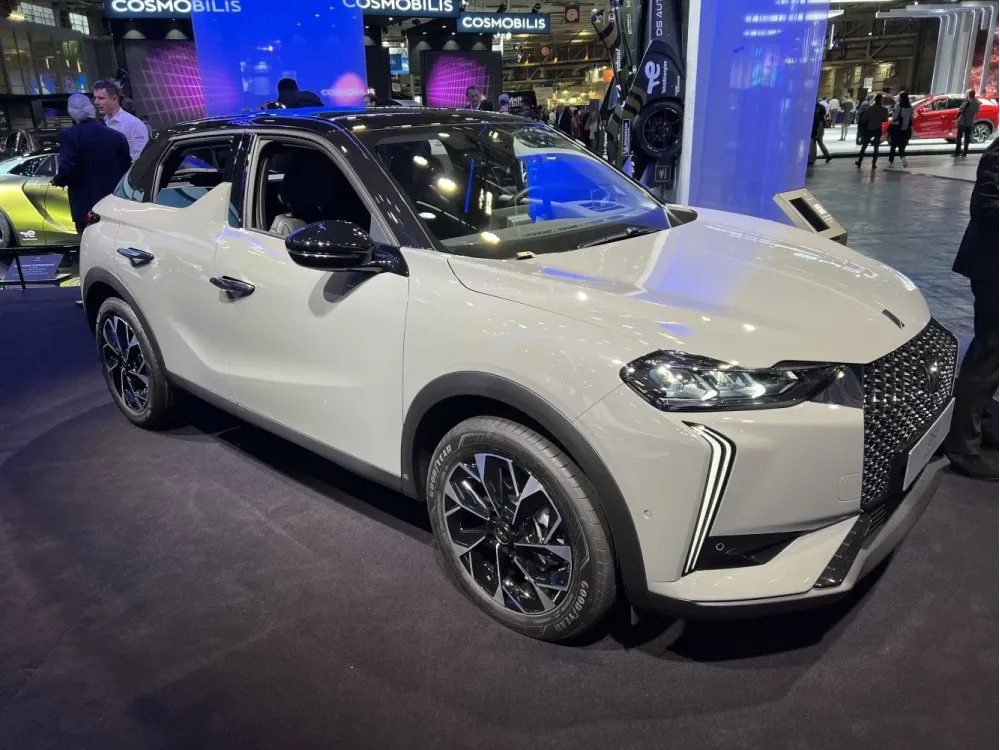
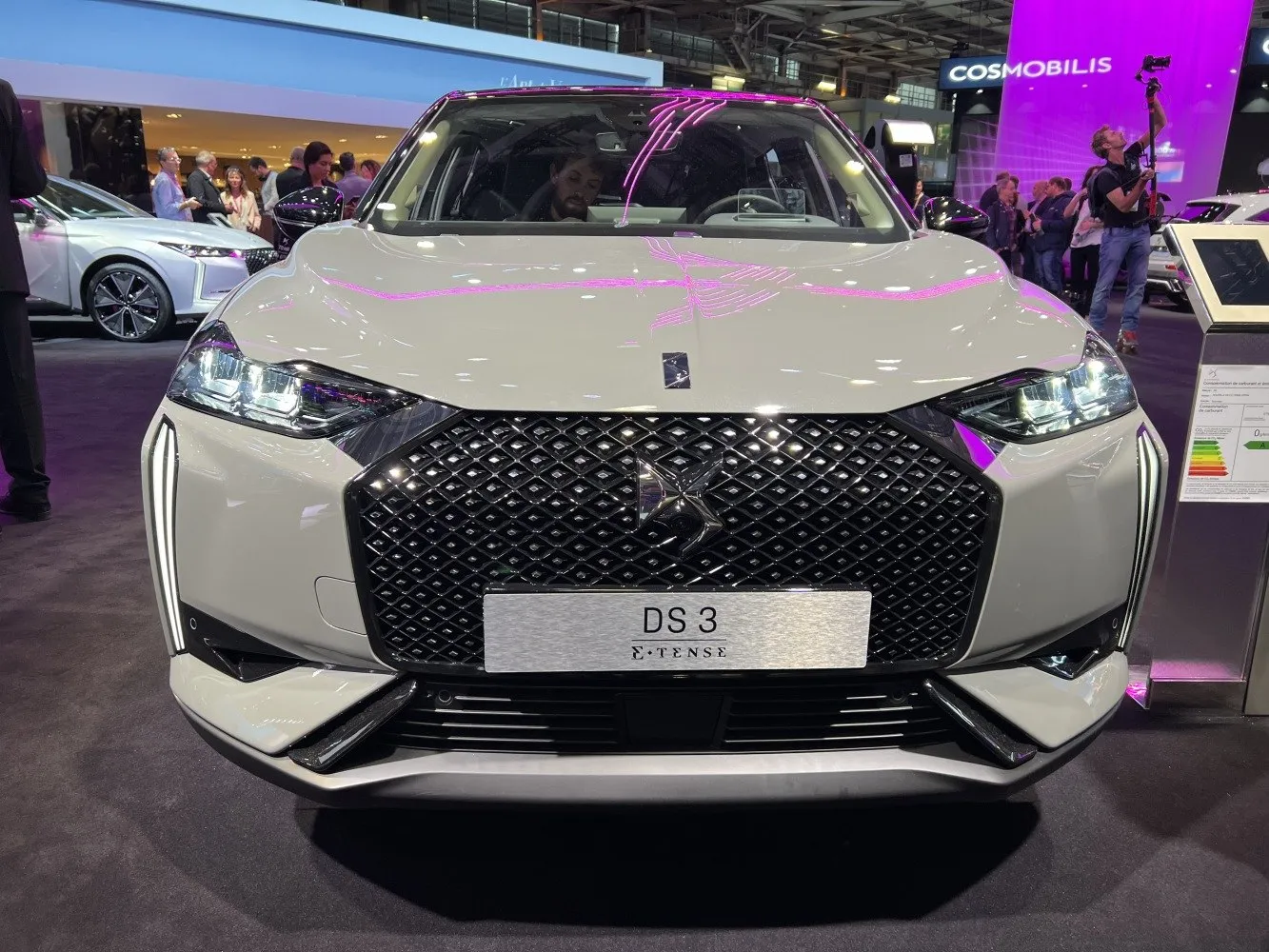
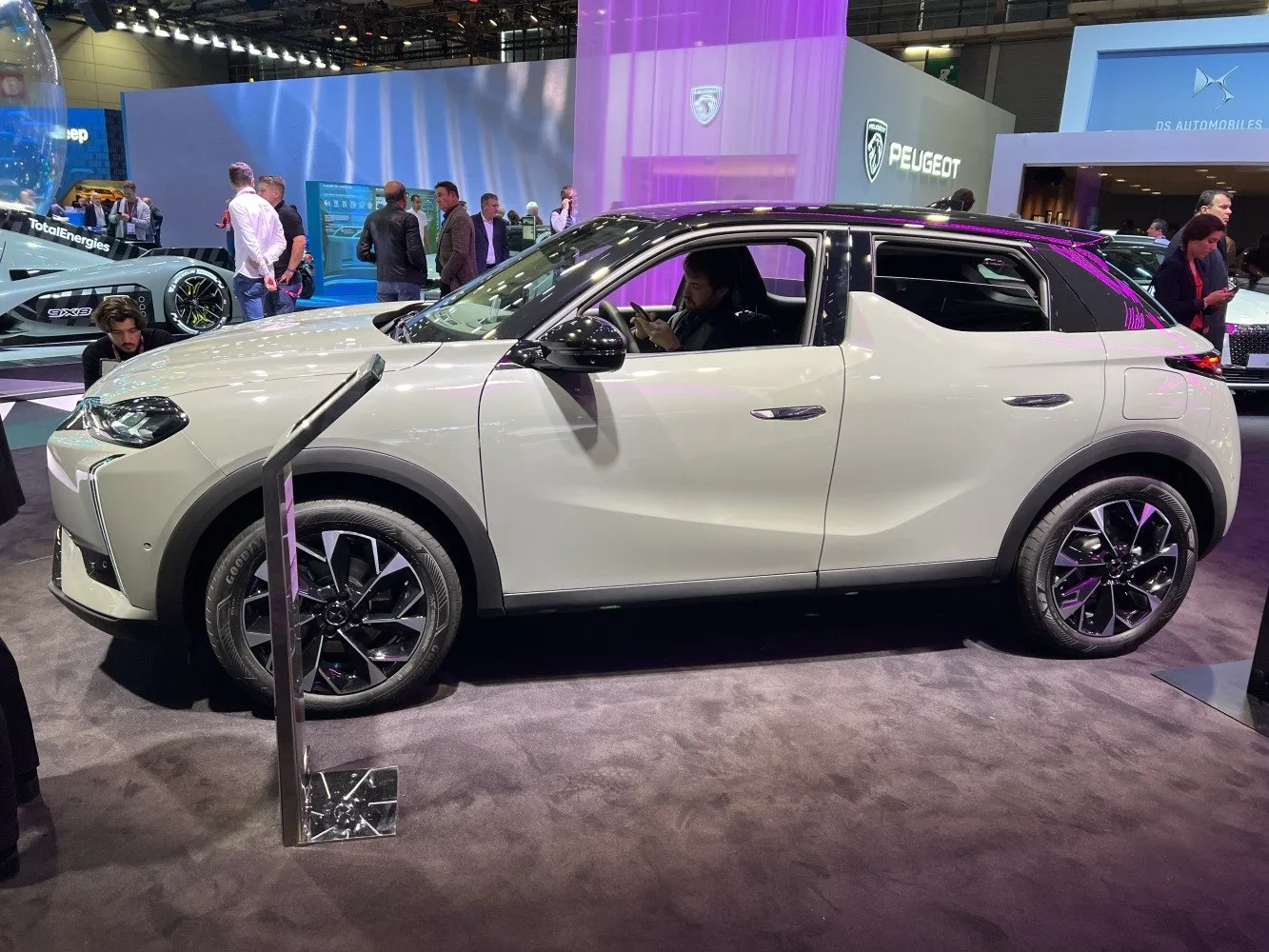
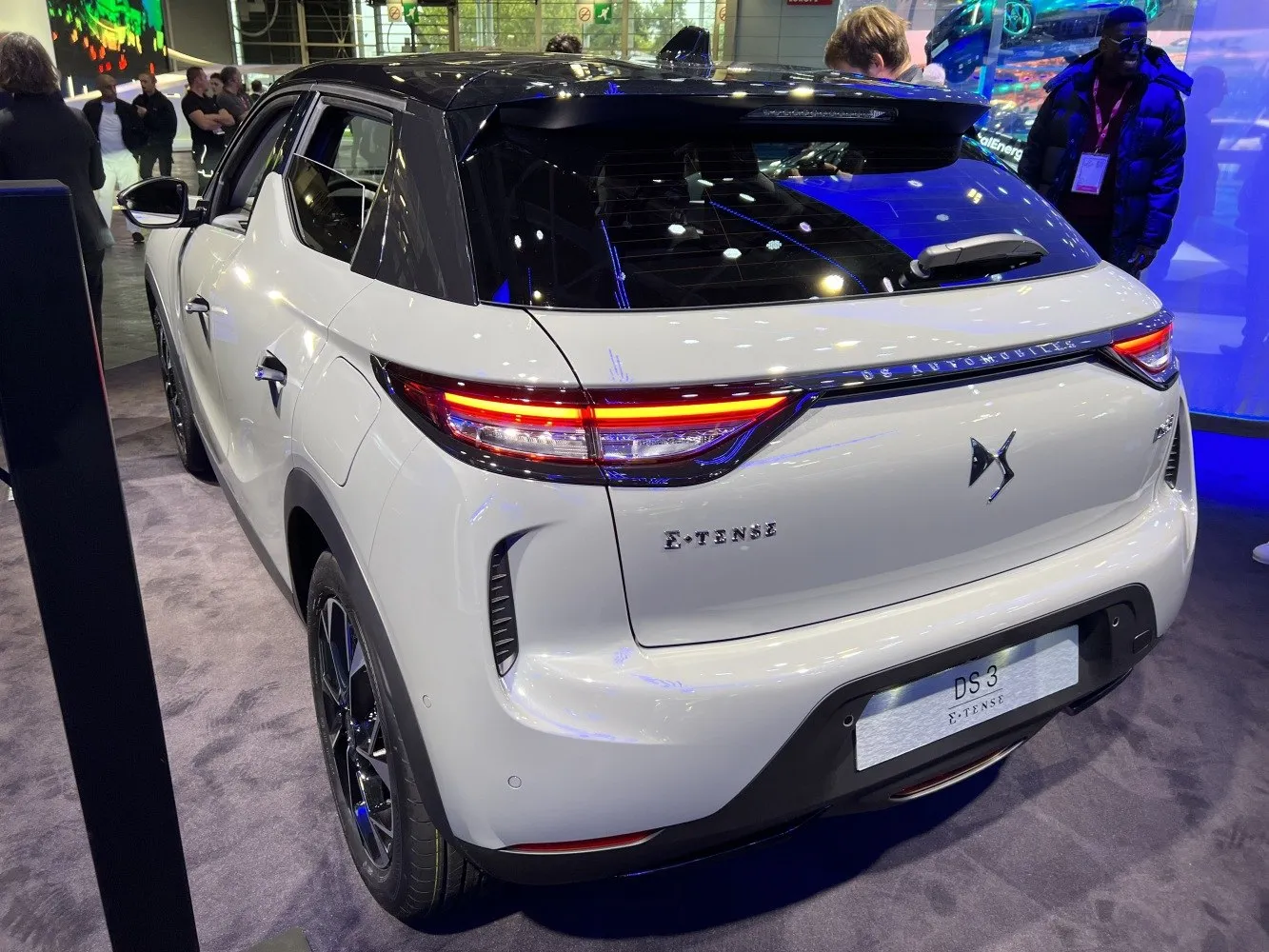
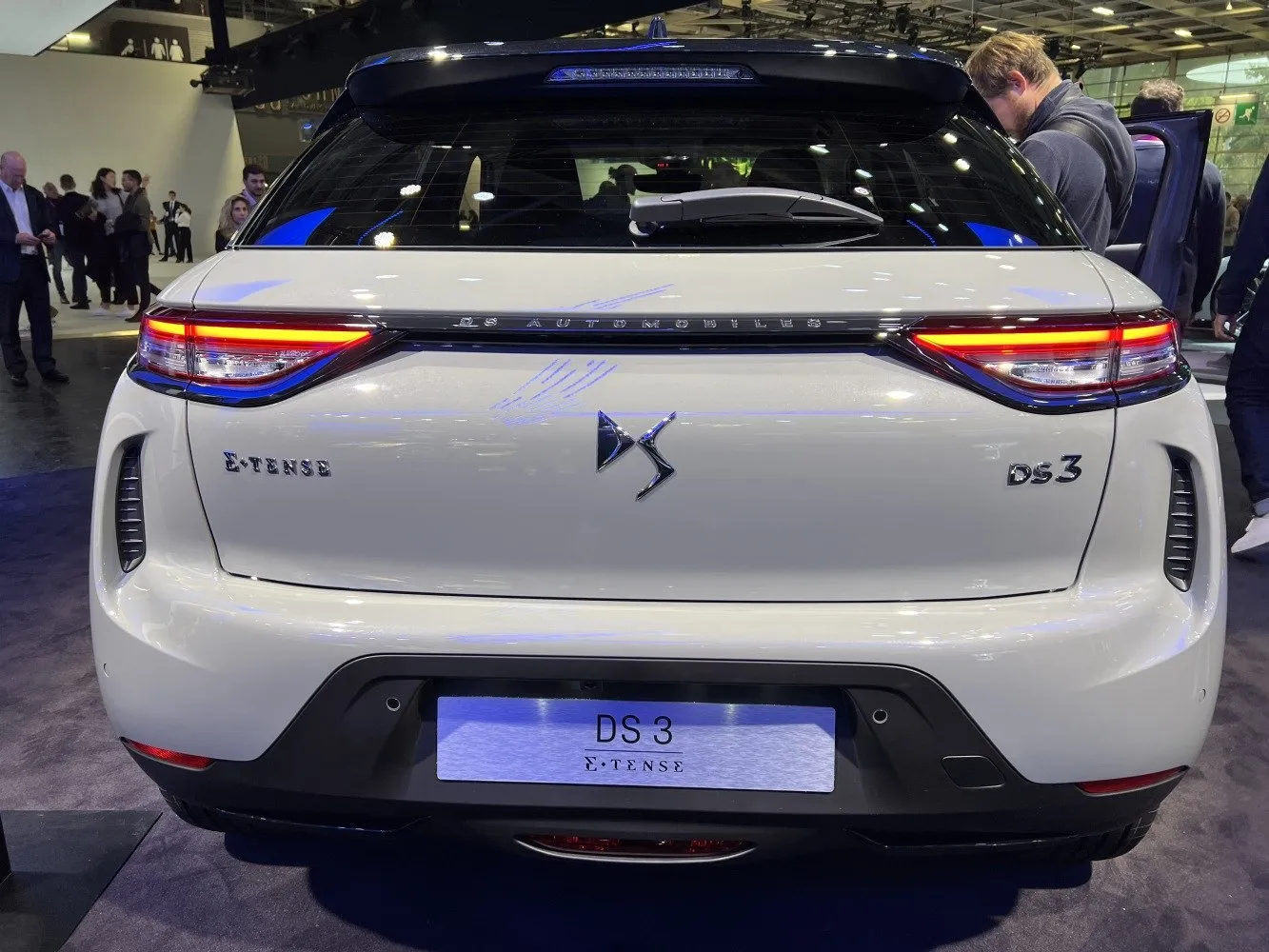
DS 3 facelift 2023 e-Tense 54 kWh (156 Hp)
DS 3:
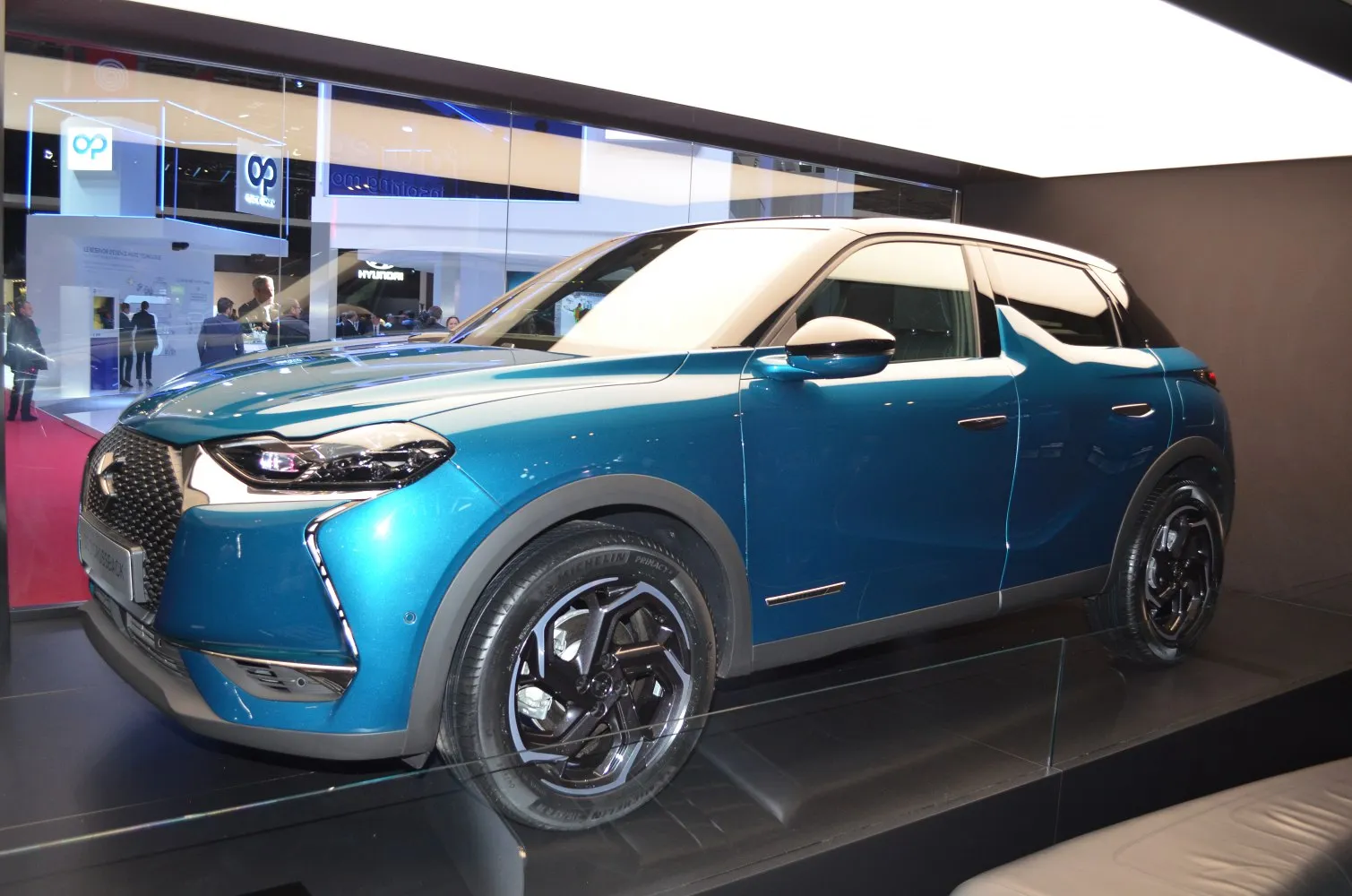
The DS 3 is a luxury supermini initially produced by the French automobile manufacturer Citroën and officially launched in January 2010. Positioned below the DS 4, this was the first and entry-level model from the DS premium sub-brand , which was spun-off in 2016 into DS Automobiles.
Originally manufactured as a three-door supermini hatchback with a convertible variation from 2009 to 2019, the second generation became a five-door Crossover SUV, named as DS 3 Crossback from 2018 to 2022....(Read more on Wikipedia)
facelift 2023 Overview:
DS 3 (facelift 2023). With a weight of 1550 kg, it falls in the mid‑range. Front‑wheel drive delivers efficiency and easy handling. Acceleration is good (0–100 km/h in 9 s). The top speed reaches 150 km/h. A vehicle that combines characteristics of SUVs and hatchbacks for versatility. Seating for 5 makes it ideal for daily use.
Pros and Cons:
Pros:
- • Adequate and balanced power output (130 hp) for versatile driving.
- • Balanced fuel consumption of 6 L/100 km for its class.
- • Ventilated disc brakes for reliable cooling and stopping power.
- • Standard trunk space (350 L) suitable for daily needs.
- • Turbocharged engine ensures better torque delivery at low RPMs.
Specifications:
Specifications are compared to those of the previous generation(Crossback: 2019 - 2022).
| General: |
| Brand: | DS |
|---|
| Model: | 3 |
|---|
| Generation: | facelift 2023 |
|---|
| Modification (Engine): | e-Tense 54 kWh (156 Hp) |
|---|
| Start of production: | 2023 |
|---|
| Powertrain Architecture: | BEV (Electric Vehicle) |
|---|
| Body type: | Crossover |
|---|
| Seats: | 5 |
|---|
| Doors: | 5 |
|---|
| Performance: |
| Fuel Type: | Electricity |
|---|
| Acceleration 0 - 100 km/h: | 9 sec |
|---|
| Acceleration 0 - 62 mph: | 9 sec |
|---|
| Maximum speed: | 150 km/h |
|---|
| Weight-to-power ratio: | 9.9 kg/Hp, 100.6 Hp/tonne |
|---|
| Weight-to-torque ratio: | 6 kg/Nm, 167.7 Nm/tonne |
|---|
| Acceleration 0 - 60 mph: | 8.6 sec |
|---|
| Space: |
| Kerb Weight: | 1550 |
|---|
| Max. weight: | 2008 |
|---|
| Max load: | 458 |
|---|
| Trunk (boot) space - maximum: | 1050 l |
|---|
| Trunk (boot) space - minimum: | 350 l |
|---|
| Size: |
| Length: | 4118 mm mm [Same length.] |
|---|
| Width: | 1791 mm mm [Same width.] |
|---|
| Height: | 1534 mm mm [Same height.] |
|---|
| Wheelbase: | 2558 mm mm [Same wheelbase.] |
|---|
| Width with mirrors folded: | 1802 mm |
|---|
| Width including mirrors: | 1988 mm |
|---|
| Front track: | 1548 mm |
|---|
| Rear (Back) track: | 1557 mm |
|---|
| Front overhang: | 860 mm |
|---|
| Rear overhang: | 700 mm |
|---|
| Minimum turning circle (turning diameter): | 10.7 m [above average] |
|---|
| Powertrain: |
| Drivetrain Architecture | One electric motor drives the front wheels. |
|---|
| Drive wheel | Front wheel drive |
|---|
| Number of gears | 1 |
|---|
| Transmission type | Automatic |
|---|
| Front brakes | Ventilated discs [Best for performance and cooling.] |
|---|
| Rear brakes | Drum [bad for performance and cooling.] |
|---|
| Assisting systems | ABS (Anti-lock braking system) |
|---|
| Steering type | Steering rack and pinion |
|---|
| Power steering | Electric Steering |
|---|
| Tires size | 215/60 R17; 215/55 R18; 195/60 R18 |
|---|
| Wheel rims size | 6.5J x 17; 7J x 18 |
|---|
| Front suspension | Independent, type McPherson with coil spring and anti-roll bar |
|---|
| Rear suspension | Semi-independent, coil spring |
|---|
| Electric: |
| Gross battery capacity: | 54 kWh |
|---|
| Battery technology: | Lithium-ion (Li-Ion) |
|---|
| Battery location: | Below the floor, under the front seats |
|---|
| System power: | 156 Hp |
|---|
| System torque: | 260 Nm @ 500-4060 rpm. |
|---|
| All-electric range: | 395-402 km |
|---|
| Electric motor power: | 156 Hp |
|---|
| Electric motor Torque: | 260 Nm @ 500-4060 rpm. |
|---|
| Average Energy consumption: | 15.5 kWh/100 km |
|---|
| Electric motor location: | Front axle, Transverse |
|---|
| Average Energy consumption (WLTP): | 15.5 kWh/100 km |
|---|
| All-electric range (WLTP): | 395-402 km |
|---|






Driven it? Loved it? Hated it? Share your honest review!