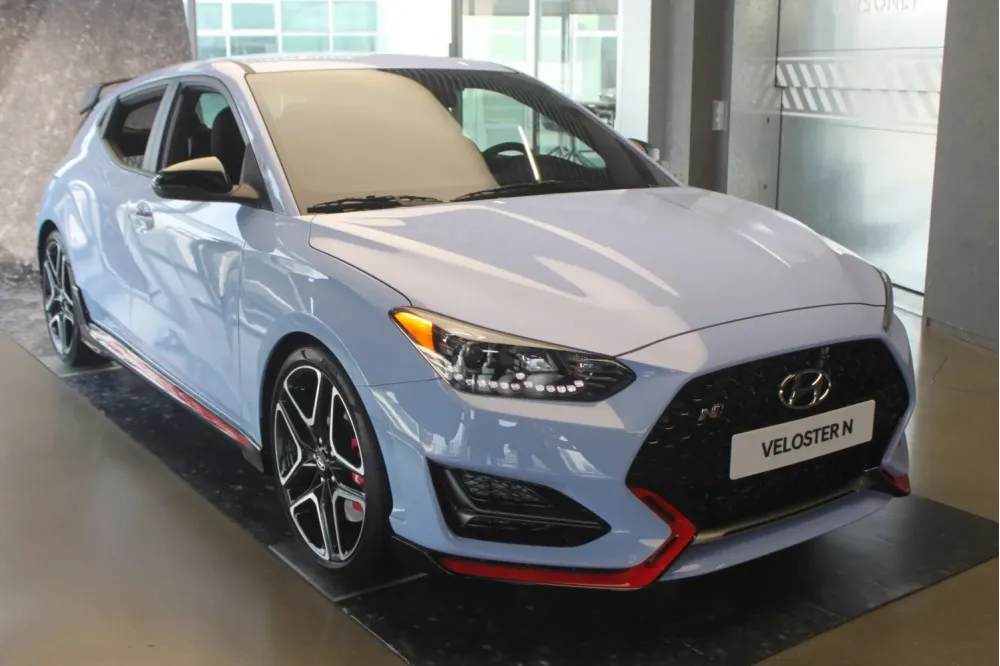
Click on image to view the full photo gallery
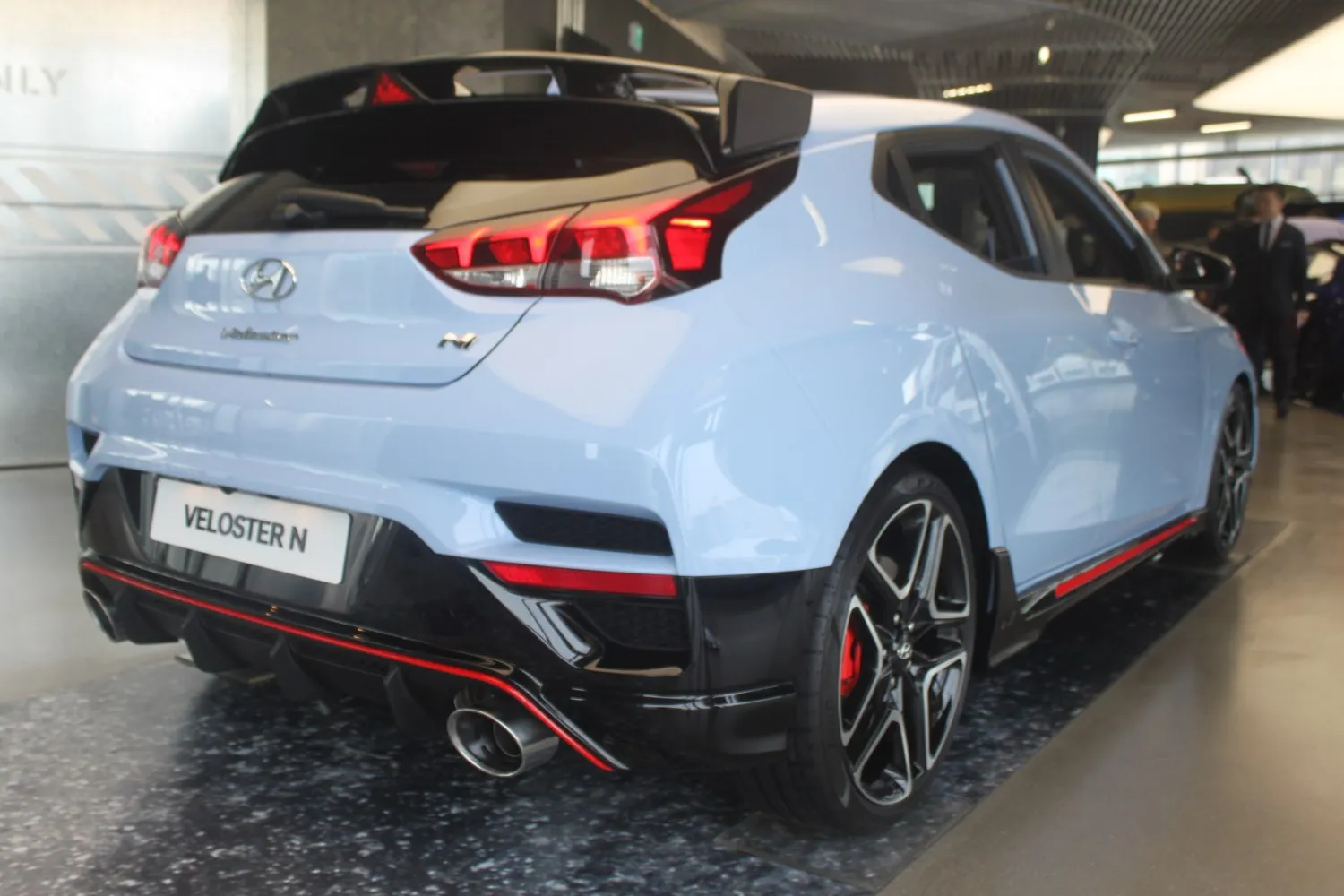
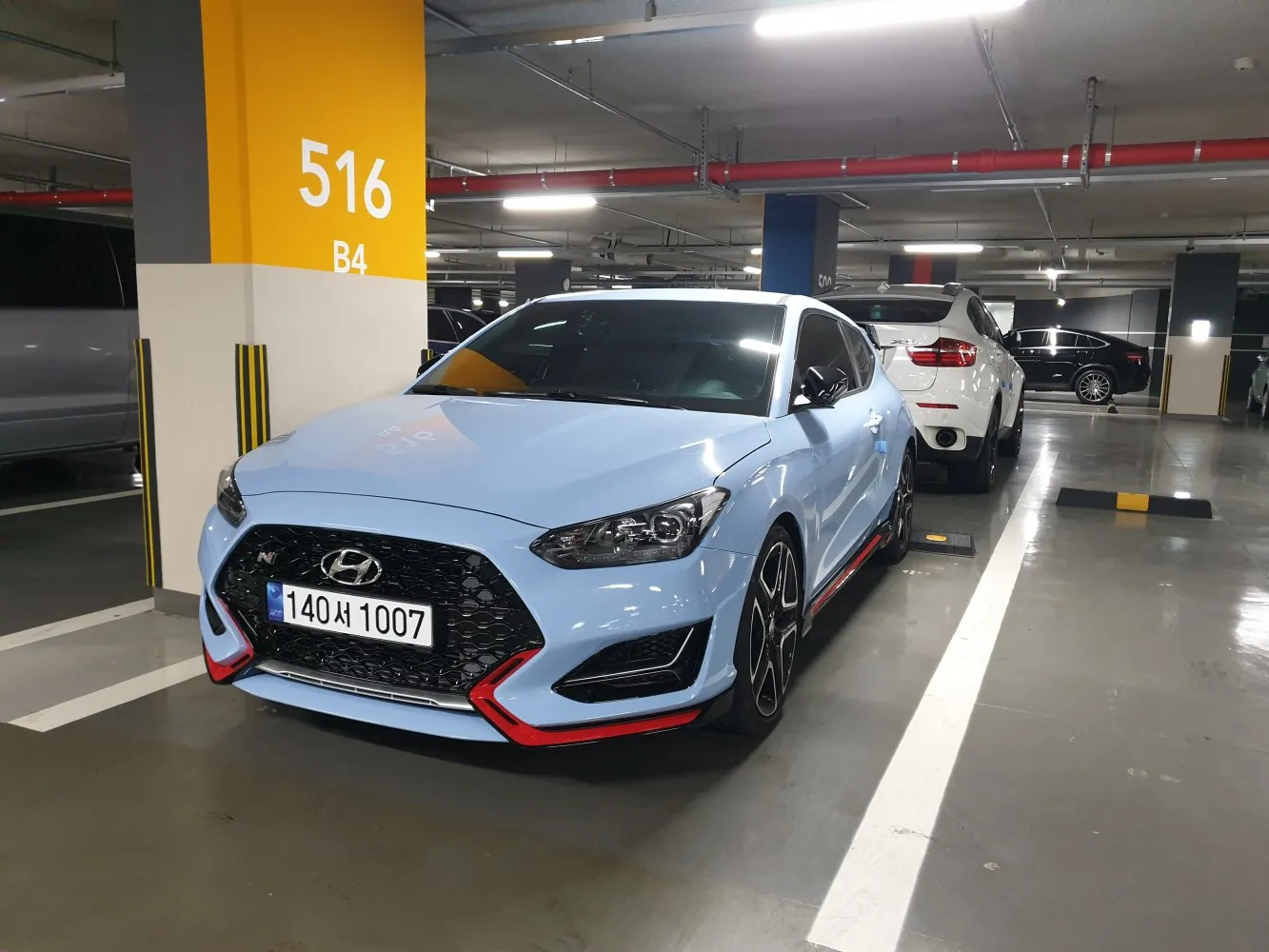
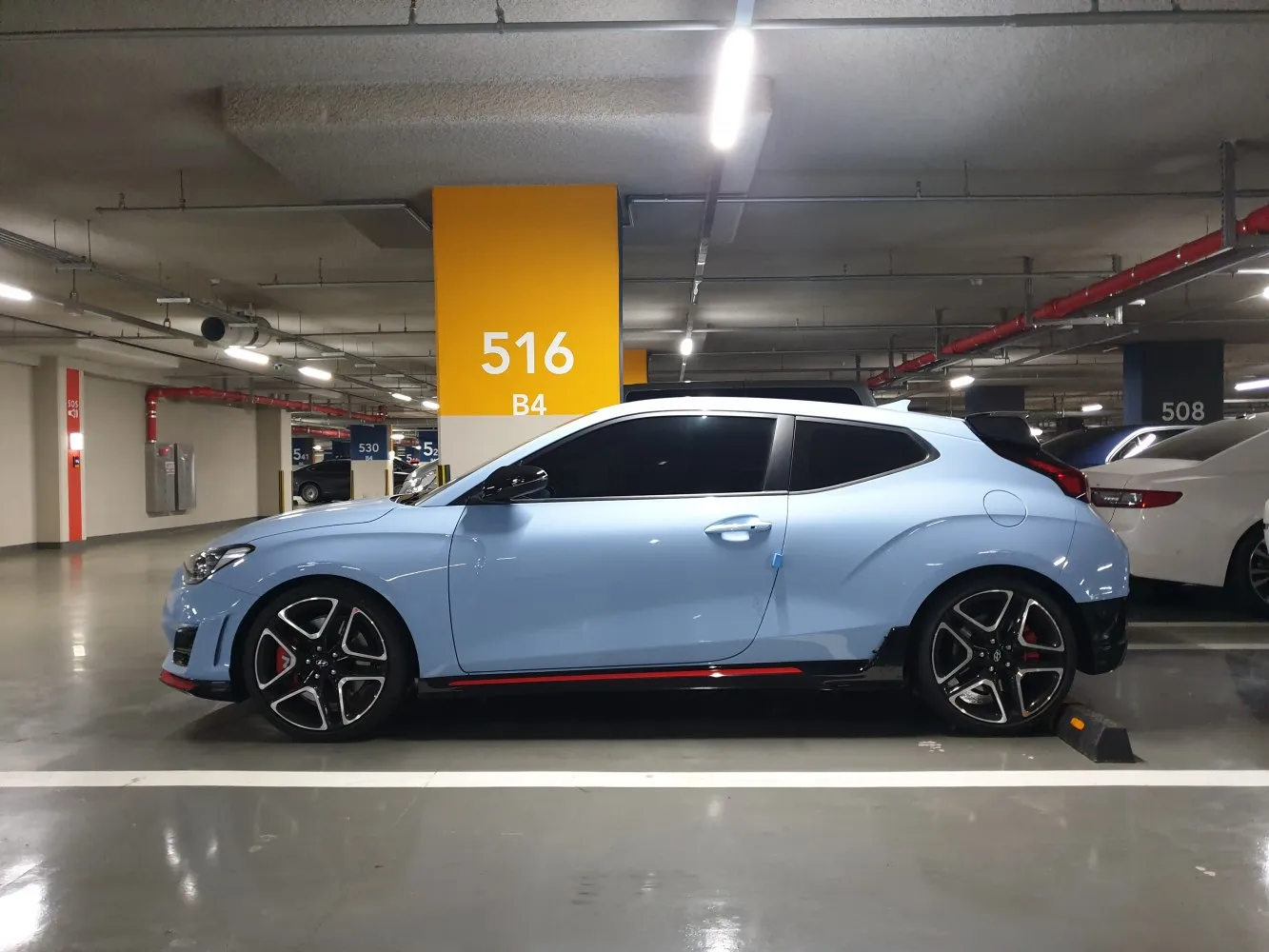
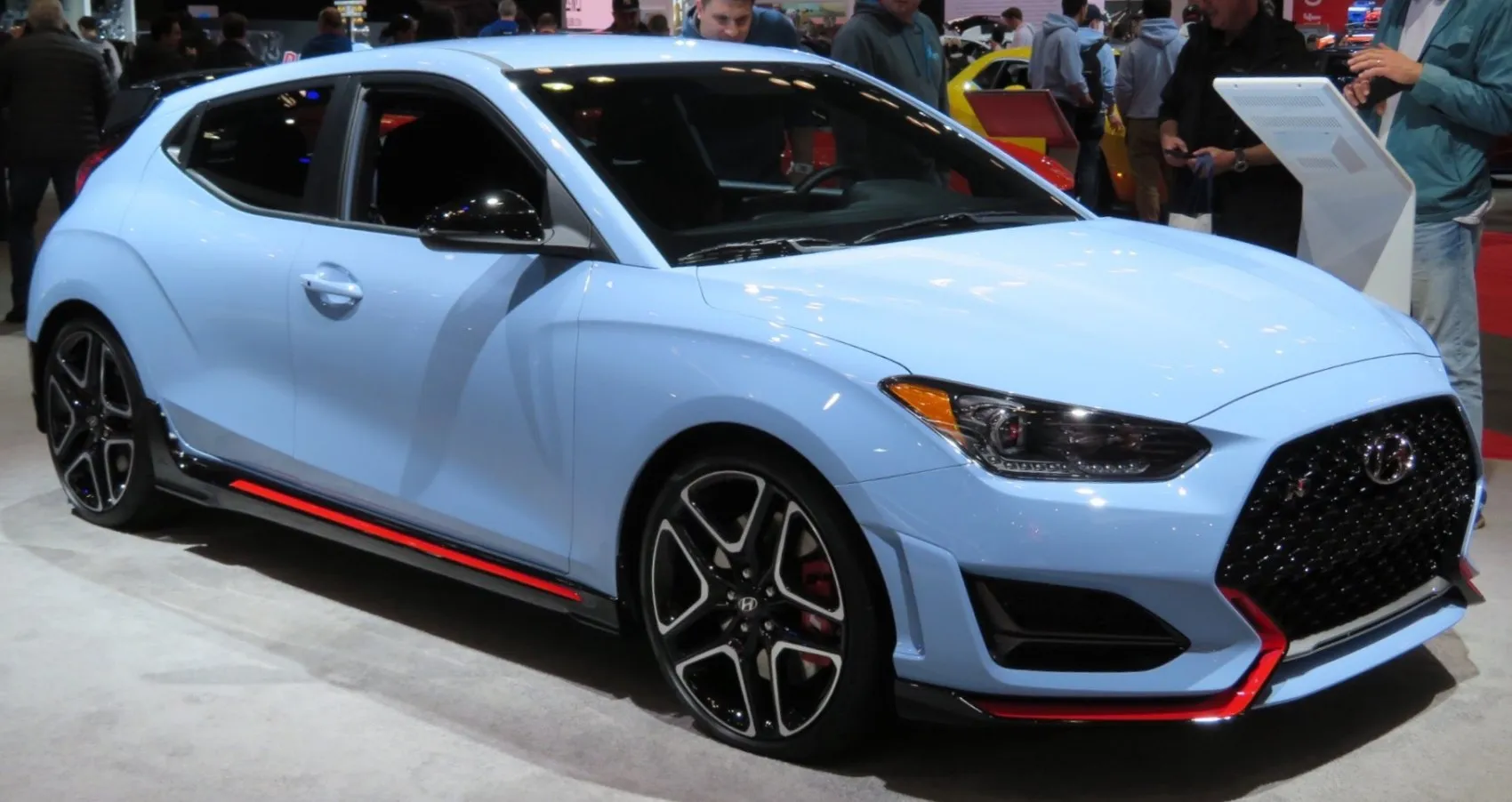
Hyundai Veloster N 2.0 Turbo GDI (250 Hp)
Overall Rating
Hyundai Veloster:
The Hyundai Veloster is a compact car which was produced by Hyundai from 2011 until 2022. The car differs from most other hatchbacks with its asymmetrical door configuration, featuring one large door on the driver side and two smaller doors on the passenger side. This configuration is more common on commercial vehicles and minivans.
The Hyundai HND-3 concept was the third sport compact concept car styled at Hyundai's Design and Technical Center. It featured a 2. 0-liter DOHC Theta inline four-cylinder engine and five-speed automatic transmission....(Read more on Wikipedia)
N Overview:
Hyundai Veloster (N). With 353 Nm of torque, it offers ample pulling power. It has moderate fuel consumption (~10.7 l/100km). With a weight of 1379 kg, it falls in the mid‑range. Front‑wheel drive delivers efficiency and easy handling. A two-door car with a fixed roof, known for its sporty design and dynamic performance. A compact car with a rear door that swings upward to provide access to the cargo area. Seating for 4 makes it ideal for daily use.
The Hyundai Veloster N, based on the second-generation Veloster, was not specifically tested by Euro NCAP. The first-generation Veloster received a 3-star rating in 2011, but this does not apply to the N generation.
2.0 Turbo GDI (250 Hp) Verdict:

Performance Verdict
Offers strong acceleration and a highly engaging driving experience, characteristic of a true hot hatch, with excellent power delivery.
Fuel Economy
Fuel economy is reasonable for a performance-oriented turbocharged engine, though spirited driving will naturally increase consumption.
Pros and Cons:
Pros:
- • Engaging driving dynamics and handling
- • Powerful and responsive turbocharged engines
- • Distinctive and aggressive styling
- • Excellent value for performance
- • Standard manual transmission for driver engagement
Cons:
- • Stiff ride quality may not suit all drivers
- • Limited rear visibility due to design
- • Interior quality could be improved in some areas
- • Fuel economy can be high with aggressive driving
Specifications:
Specifications are compared to those of the previous generation(II: 2018 - ).
| General: | |
|---|---|
| Brand: | Hyundai |
| Model: | Veloster |
| Generation: | N |
| Modification (Engine): | 2.0 Turbo GDI (250 Hp) |
| Start of production: | 2019 |
| Powertrain Architecture: | Internal Combustion engine |
| Body type: | Coupe, Hatchback |
| Seats: | 4 |
| Doors: | 4 |
| Engine: | |
|---|---|
| Power: | 250 Hp @ 6000 rpm. Same horsepower |
| Power per litre: | 125.1 Hp/l [26mm more] |
| Torque: | 353 Nm @ 1450-4000 rpm. |
| Engine Model/Code: | Theta II / G4KH More details about the engine Theta II / G4KH |
| Engine displacement: | 1998 |
| Number of cylinders: | 4 |
| Engine configuration: | Inline |
| Number of valves per cylinder: | 4 |
| Fuel injection system: | Direct injection |
| Engine aspiration: | Turbocharger, Intercooler |
| Valvetrain: | DOHC, E-CVVT |
| Engine oil capacity: | 4.8 l |
| Coolant: | 7.4 l |
| Engine layout: | Front, Transverse |
| Cylinder Bore: | 86 mm mm |
| Piston Stroke: | 86 mm mm |
| Compression ratio: | 9.5:1 |
| Performance: | |
|---|---|
| Fuel Type: | Petrol (Gasoline) |
| Fuel consumption (economy) - urban: | 10.7 l/100 km |
| Fuel consumption (economy) - extra urban: | 8.4 l/100 km |
| Fuel consumption (economy) - combined: | 9.4 l/100 km |
| Weight-to-power ratio: | 5.5 kg/Hp, 181.6 Hp/tonne |
| Weight-to-torque ratio: | 3.9 kg/Nm, 256.4 Nm/tonne |
| Space: | |
|---|---|
| Kerb Weight: | 1377-1382 |
| Max. weight: | 1850 |
| Max load: | 468-473 |
| Trunk (boot) space - minimum: | 563 l |
| Fuel tank capacity: | 50 l |
| Size: | |
|---|---|
| Length: | 4265 mm mm [26mm more] |
| Width: | 1811 mm mm [10mm more] |
| Height: | 1400 mm mm [Same height.] |
| Wheelbase: | 2649 mm mm [Same wheelbase.] |
| Front track: | 1557 mm |
| Rear (Back) track: | 1567 mm |
| Powertrain: | |
|---|---|
| Drivetrain Architecture | The Internal combustion engine (ICE) drives the front wheels of the vehicle. |
| Drive wheel | Front wheel drive |
| Number of gears | 6 |
| Transmission type | Manual |
| Front brakes | Ventilated discs, 330 mm [Best for performance and cooling.] |
| Rear brakes | Disc, 300 mm |
| Assisting systems | ABS (Anti-lock braking system) |
| Steering type | Steering rack and pinion |
| Power steering | Electric Steering |
| Tires size | 225/40 R18 |
| Wheel rims size | 7.5J x 18 |
| Front suspension | Independent, type McPherson with coil spring and anti-roll bar |
| Rear suspension | Independent multi-link spring suspension with stabilizer |
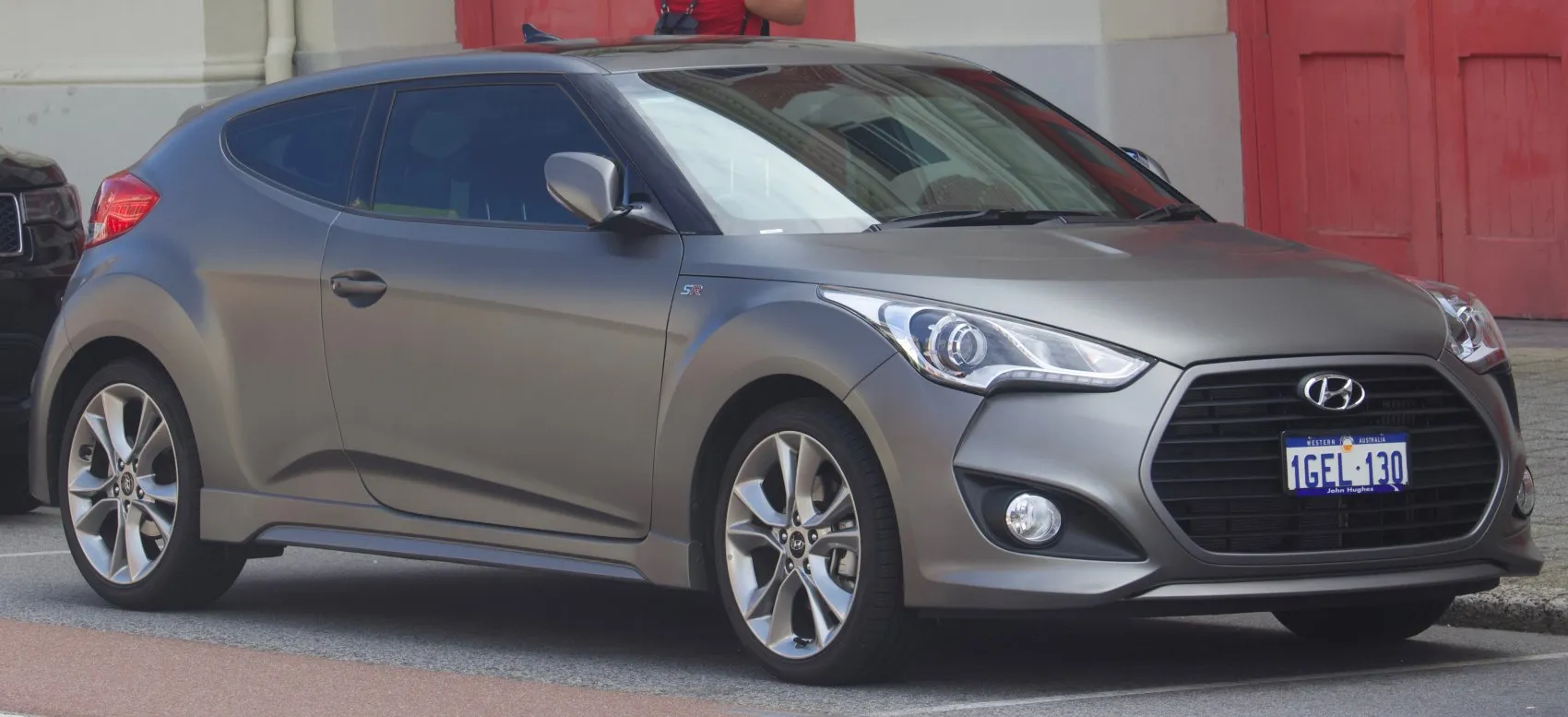
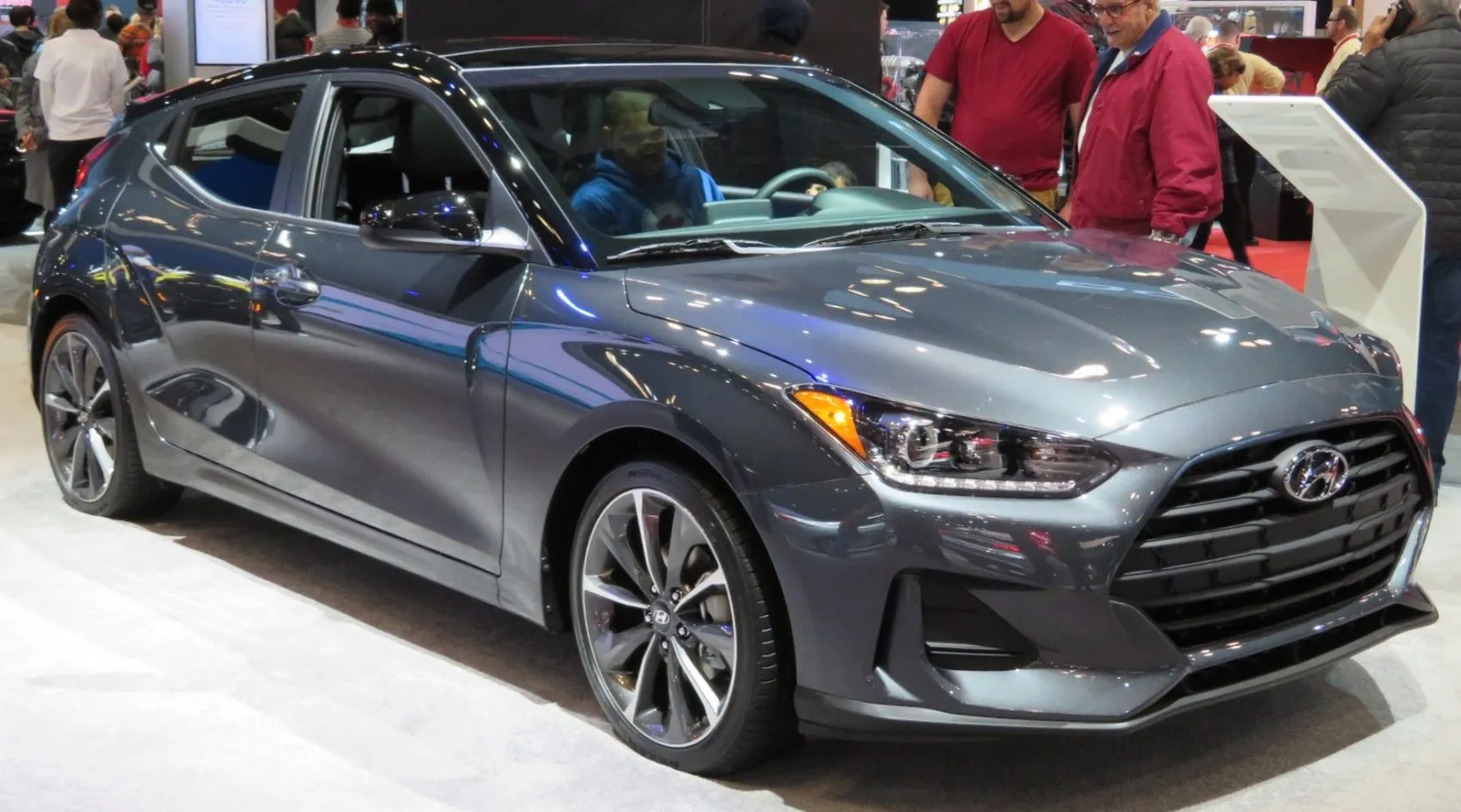







Behind the wheel of the Hyundai Veloster. How does it handle on the road?